第34章動物の栄養と消化器系
Essential Nutrients必須栄養素
While the animal body can synthesize many of the molecules required for function from the organic precursors, there are some nutrients that need to be consumed from food. These nutrients are termed essential nutrients, meaning they must be eaten, and the body cannot produce them.
動物の体は、その機能に必要な多くの分子を有機前駆体から合成できるが、食物から摂取しなければならない栄養素もある。これらを必須栄養素という。つまり、体でつくることができず、食べて得なければならない栄養素である。
The omega-3 alpha-linolenic acid and the omega-6 linoleic acid are essential fatty acids needed to make some membrane phospholipids. Vitamins are another class of essential organic molecules that are required in small quantities for many enzymes to function and, for this reason, are considered to be coenzymes. Absence or low levels of vitamins can have a dramatic effect on health, as outlined in Table 34.1 and Table 34.2. Both fat-soluble and water-soluble vitamins must be obtained from food. Minerals, listed in Table 34.3, are inorganic essential nutrients that must be obtained from food. Among their many functions, minerals help in structure and regulation and are considered cofactors. Certain amino acids also must be procured from food and cannot be synthesized by the body. These amino acids are the “essential” amino acids. The human body can synthesize only 11 of the 20 required amino acids; the rest must be obtained from food. The essential amino acids are listed in Table 34.4.
英語のヒント
オメガ3系のα-リノレン酸とオメガ6系のリノール酸は、一部の膜リン脂質をつくるために必要な必須脂肪酸である。ビタミンは必須有機分子の別の一群で、多くの酵素が働くために少量必要であり、そのため補酵素とみなされる。表34.1と表34.2に示すように、ビタミンの欠如や不足は健康に大きな影響を与えうる。脂溶性ビタミンも水溶性ビタミンも、食物から得なければならない。表34.3の無機質は、食物から得なければならない無機の必須栄養素である。さまざまな機能の中で、無機質は構造と調節を助け、補因子とみなされる。また、一部のアミノ酸は体内で合成できず、食物から得なければならない。これらが「必須」アミノ酸である。ヒトの体が合成できるのは、必要な20種類のアミノ酸のうち11種類だけで、残りは食物から得なければならない。必須アミノ酸を表34.4に示す。
Water-soluble Essential Vitamins 水溶性の必須ビタミン |
|||
|---|---|---|---|
Vitamin ビタミン |
Function 機能 |
Deficiencies Can Lead To 欠乏によって起こりうること |
Sources 供給源 |
Vitamin B1 (Thiamine) ビタミンB1(チアミン) |
Needed by the body to process lipids, proteins, and carbohydrates; coenzyme removes CO2 from organic compounds 体内での脂質、タンパク質、炭水化物の処理に必要。補酵素として有機化合物からCO2を取り除く。 |
Muscle weakness, Beriberi: reduced heart function, CNS problems 筋力低下、脚気:心機能の低下、中枢神経系の問題 |
Milk, meat, dried beans, whole grains 牛乳、肉、乾燥豆、全粒穀物 |
Vitamin B2 (Riboflavin) ビタミンB2(リボフラビン) |
Takes an active role in metabolism, aiding in the conversion of food to energy (FAD and FMN) 代謝で積極的な役割を果たし、食物のエネルギーへの変換を助ける(FADおよびFMN)。 |
Cracks or sores on the outer surface of the lips (cheilosis); inflammation and redness of the tongue; moist, scaly skin inflammation (seborrheic dermatitis) 唇の外面のひび割れやただれ(口唇症)、舌の炎症と発赤、湿潤し鱗屑を伴う皮膚の炎症(脂漏性皮膚炎) |
Meat, eggs, enriched grains, vegetables 肉、卵、栄養強化穀物、野菜 |
Vitamin B3 (Niacin) ビタミンB3 (ナイアシン) |
Used by the body to release energy from carbohydrates and to process alcohol; required for the synthesis of sex hormones; component of coenzyme NAD+ and NADP+ 炭水化物からのエネルギー放出やアルコールの処理に使われる。性ホルモンの合成に必要。補酵素NAD+とNADP+の構成成分。 |
Pellagra, which can result in dermatitis, diarrhea, dementia, and death ペラグラ。皮膚炎、下痢、認知症、死をもたらすことがある。 |
Meat, eggs, grains, nuts, potatoes 肉、卵、穀物、ナッツ、ジャガイモ |
Vitamin B5 (Pantothenic acid) ビタミンB5 (パントテン酸) |
Assists in producing energy from foods (lipids, in particular); component of coenzyme A 食物、特に脂質からのエネルギー産生を助ける。補酵素Aの構成成分。 |
Fatigue, numbness or burning sensation in hands and feet 疲労、手足のしびれや灼熱感 |
Meat, whole grains, milk, fruits, vegetables 肉、全粒穀物、牛乳、果物、野菜 |
Vitamin B6 (Pyridoxine) ビタミンB6 (ピリドキシン) |
The principal vitamin for processing amino acids and lipids; also helps convert nutrients into energy アミノ酸と脂質の処理における主要なビタミン。栄養素をエネルギーへ変えるのも助ける。 |
Irritability, depression, confusion, mouth sores or ulcers, anemia, muscular twitching 易刺激性、抑うつ、混乱、口内のただれや潰瘍、貧血、筋のぴくつき |
Meat, dairy products, whole grains, orange juice 肉、乳製品、全粒穀物、オレンジジュース |
Vitamin B7 (Biotin) ビタミンB7 (ビオチン) |
Used in energy and amino acid metabolism, fat synthesis, and fat breakdown; helps the body use blood sugar エネルギーとアミノ酸の代謝、脂肪の合成・分解に使われる。体が血糖を利用するのを助ける。 |
Hair loss, dermatitis, depression, numbness and tingling in the extremities; neuromuscular disorders 脱毛、皮膚炎、抑うつ、四肢のしびれやピリピリ感、神経筋障害 |
Meat, eggs, legumes and other vegetables 肉、卵、豆類およびその他の野菜 |
Vitamin B9 (Folic acid) ビタミンB9 (葉酸) |
Assists the normal development of cells, especially during fetal development; helps metabolize nucleic and amino acids 特に胎児発生期に、細胞の正常な発達を助ける。核酸とアミノ酸の代謝を助ける。 |
Deficiency during pregnancy is associated with birth defects, such as neural tube defects and anemia 妊娠中の欠乏は、神経管欠損などの先天異常や貧血と関連する。 |
Leafy green vegetables, whole wheat, fruits, nuts, legumes 緑色の葉物野菜、全粒小麦、果物、ナッツ、豆類 |
Vitamin B12 (Cobalamin) ビタミンB12(コバラミン) |
Maintains healthy nervous system and assists with blood cell formation; coenzyme in nucleic acid metabolism 神経系の健康を維持し、血球の形成を助ける。核酸代謝の補酵素。 |
Anemia, neurological disorders, numbness, loss of balance 貧血、神経障害、しびれ、平衡感覚の喪失 |
Meat, eggs, animal products 肉、卵、動物性食品 |
Vitamin C (Ascorbic acid) ビタミンC(アスコルビン酸) |
Helps maintain connective tissue: bone, cartilage, and dentin; boosts the immune system 骨、軟骨、象牙質などの結合組織の維持を助ける。免疫系を強める。 |
Scurvy, which results in bleeding, hair and tooth loss; joint pain and swelling; delayed wound healing 壊血病。出血、脱毛、歯の脱落、関節の痛みや腫れ、創傷治癒の遅延をもたらす。 |
Citrus fruits, broccoli, tomatoes, red sweet bell peppers 柑橘類、ブロッコリー、トマト、赤いパプリカ |
Fat-soluble Essential Vitamins 脂溶性の必須ビタミン |
|||
|---|---|---|---|
Vitamin ビタミン |
Function 機能 |
Deficiencies Can Lead To 欠乏によって起こりうること |
Sources 供給源 |
Vitamin A (Retinol) ビタミンA(レチノール) |
Critical to the development of bones, teeth, and skin; helps maintain eyesight, enhances the immune system, fetal development, gene expression 骨、歯、皮膚の発達に不可欠。視力の維持を助け、免疫系、胎児の発達、遺伝子発現を促進する。 |
Night-blindness, skin disorders, impaired immunity 夜盲症、皮膚障害、免疫機能の低下 |
Dark green leafy vegetables, yellow-orange vegetables, fruits, milk, butter 濃緑色の葉物野菜、黄〜橙色の野菜、果物、牛乳、バター |
Vitamin D ビタミンD |
Critical for calcium absorption for bone development and strength; maintains a stable nervous system; maintains a normal and strong heartbeat; helps in blood clotting 骨の発達と強度に必要なカルシウム吸収に不可欠。神経系の安定と、正常で力強い心拍を維持する。血液凝固を助ける。 |
Rickets, osteomalacia, immunity くる病、骨軟化症、免疫 |
Cod liver oil, milk, egg yolk タラの肝油、牛乳、卵黄 |
Vitamin E (Tocopherol) ビタミンE(トコフェロール) |
Lessens oxidative damage of cells and prevents lung damage from pollutants; vital to the immune system 細胞の酸化的損傷を減らし、汚染物質による肺の損傷を防ぐ。免疫系に不可欠。 |
Deficiency is rare; anemia, nervous system degeneration 欠乏はまれ。貧血、神経系の変性。 |
Wheat germ oil, unrefined vegetable oils, nuts, seeds, grains 小麦胚芽油、未精製の植物油、ナッツ、種子、穀物 |
Vitamin K (Phylloquinone) ビタミンK(フィロキノン) |
Essential to blood clotting 血液凝固に必須。 |
Bleeding and easy bruising 出血、あざができやすくなること |
Leafy green vegetables, tea 緑色の葉物野菜、茶 |
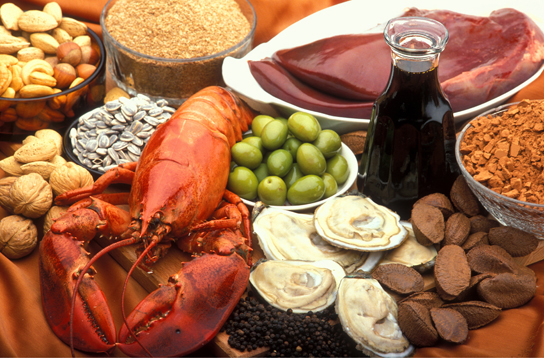

Figure 34.15図 34.15
A healthy diet should include a variety of foods to ensure that needs for essential nutrients are met. (credit: Keith Weller, USDA ARS)
健康的な食事には、必須栄養素の必要量を満たせるよう、多様な食品を含めるべきである。(クレジット:Keith Weller、USDA ARS)
Minerals and Their Function in the Human Body 無機質とヒトの体内での機能 |
|||
|---|---|---|---|
Mineral 無機質 |
Function 機能 |
Deficiencies Can Lead To 欠乏によって起こりうること |
Sources 供給源 |
*Calcium *カルシウム |
Needed for muscle and neuron function; heart health; builds bone and supports synthesis and function of blood cells; nerve function 筋とニューロンの機能、心臓の健康に必要。骨をつくり、血球の合成と機能を支える。神経機能。 |
Osteoporosis, rickets, muscle spasms, impaired growth 骨粗鬆症、くる病、筋けいれん、成長障害 |
Milk, yogurt, fish, green leafy vegetables, legumes 牛乳、ヨーグルト、魚、緑色の葉物野菜、豆類 |
*Chlorine *塩素 |
Needed for production of hydrochloric acid (HCl) in the stomach and nerve function; osmotic balance 胃での塩酸(HCl)の産生と神経機能に必要。浸透圧の平衡。 |
Muscle cramps, mood disturbances, reduced appetite 筋けいれん、気分の障害、食欲低下 |
Table salt 食塩 |
Copper (trace amounts) 銅(微量) |
Required component of many redox enzymes, including cytochrome c oxidase; cofactor for hemoglobin synthesis シトクロムcオキシダーゼなど、多くの酸化還元酵素に必要な成分。ヘモグロビン合成の補因子。 |
Copper deficiency is rare 銅欠乏はまれ。 |
Liver, oysters, cocoa, chocolate, sesame, nuts レバー、カキ、ココア、チョコレート、ゴマ、ナッツ |
Iodine ヨウ素 |
Required for the synthesis of thyroid hormones 甲状腺ホルモンの合成に必要。 |
Goiter 甲状腺腫 |
Seafood, iodized salt, dairy products 魚介類、ヨウ素添加塩、乳製品 |
Iron 鉄 |
Required for many proteins and enzymes, notably hemoglobin, to prevent anemia 特にヘモグロビンをはじめ、多くのタンパク質と酵素に必要で、貧血を防ぐ。 |
Anemia, which causes poor concentration, fatigue, and poor immune function 貧血。それにより集中力低下、疲労、免疫機能低下が起こる。 |
Red meat, leafy green vegetables, fish (tuna, salmon), eggs, dried fruits, beans, whole grains 赤身肉、緑色の葉物野菜、魚(マグロ、サケ)、卵、乾燥果実、豆、全粒穀物 |
*Magnesium *マグネシウム |
Required cofactor for ATP formation; bone formation; normal membrane functions; muscle function ATP形成に必要な補因子。骨形成、正常な膜機能、筋機能。 |
Mood disturbances, muscle spasms 気分の障害、筋けいれん |
Whole grains, leafy green vegetables 全粒穀物、緑色の葉物野菜 |
Manganese (trace amounts) マンガン(微量) |
A cofactor in enzyme functions; trace amounts are required 酵素機能の補因子。微量が必要。 |
Manganese deficiency is rare マンガン欠乏はまれ。 |
Common in most foods 大半の食物に広く含まれる。 |
Molybdenum (trace amounts) モリブデン(微量) |
Acts as a cofactor for three essential enzymes in humans: sulfite oxidase, xanthine oxidase, and aldehyde oxidase ヒトの三つの必須酵素、亜硫酸オキシダーゼ、キサンチンオキシダーゼ、アルデヒドオキシダーゼの補因子として働く。 |
Molybdenum deficiency is rare モリブデン欠乏はまれ。 |
|
*Phosphorus *リン |
A component of bones and teeth; helps regulate acid-base balance; nucleotide synthesis 骨と歯の構成成分。酸塩基平衡の調節を助ける。ヌクレオチド合成。 |
Weakness, bone abnormalities, calcium loss 脱力、骨の異常、カルシウムの喪失 |
Milk, hard cheese, whole grains, meats 牛乳、硬質チーズ、全粒穀物、肉 |
*Potassium *カリウム |
Vital for muscles, heart, and nerve function 筋、心臓、神経の機能に不可欠。 |
Cardiac rhythm disturbance, muscle weakness 心拍リズムの乱れ、筋力低下 |
Legumes, potato skin, tomatoes, bananas 豆類、ジャガイモの皮、トマト、バナナ |
Selenium (trace amounts) セレン(微量) |
A cofactor essential to activity of antioxidant enzymes like glutathione peroxidase; trace amounts are required グルタチオンペルオキシダーゼなどの抗酸化酵素の活性に必須の補因子。微量が必要。 |
Selenium deficiency is rare セレン欠乏はまれ。 |
Common in most foods 大半の食物に広く含まれる。 |
*Sodium *ナトリウム |
Systemic electrolyte required for many functions; acid-base balance; water balance; nerve function 多くの機能に必要な全身性の電解質。酸塩基平衡、水分平衡、神経機能。 |
Muscle cramps, fatigue, reduced appetite 筋けいれん、疲労、食欲低下 |
Table salt 食塩 |
Zinc (trace amounts) 亜鉛(微量) |
Required for several enzymes such as carboxypeptidase, liver alcohol dehydrogenase, and carbonic anhydrase カルボキシペプチダーゼ、肝アルコール脱水素酵素、炭酸脱水酵素など、複数の酵素に必要。 |
Anemia, poor wound healing, can lead to short stature 貧血、創傷治癒不良。低身長につながることもある。 |
Common in most foods 大半の食物に広く含まれる。 |
*Greater than 200mg/day required *一日あたり200mgを超える量が必要。 |
|||
Essential Amino Acids 必須アミノ酸 |
|
|---|---|
Amino acids that must be consumed 摂取しなければならないアミノ酸 |
Amino acids anabolized by the body 体内で同化・合成されるアミノ酸 |
isoleucine イソロイシン |
alanine アラニン |
leucine ロイシン |
selenocysteine セレノシステイン |
lysine リシン |
aspartate アスパラギン酸 |
methionine メチオニン |
cysteine システイン |
phenylalanine フェニルアラニン |
glutamate グルタミン酸 |
tryptophan トリプトファン |
glycine グリシン |
valine バリン |
proline プロリン |
histidine* ヒスチジン* |
serine セリン |
threonine トレオニン |
tyrosine チロシン |
arginine* アルギニン* |
asparagine アスパラギン |
*The human body can synthesize histidine and arginine, but not in the quantities required, especially for growing children. *ヒトの体はヒスチジンとアルギニンを合成できるが、特に成長期の子どもでは、必要な量を満たせない。 |
|