第34章動物の栄養と消化器系
34.1 Digestive Systems34.1 消化系
Learning Objectives学習目標
By the end of this section, you will be able to do the following:
この節を学ぶと、次のことができるようになる。
- Explain the processes of digestion and absorption消化と吸収の過程を説明する。
- Compare and contrast different types of digestive systemsさまざまな種類の消化系の共通点と相違点を比較する。
- Explain the specialized functions of the organs involved in processing food in the body体内で食物を処理する器官の、特化した機能を説明する。
- Describe the ways in which organs work together to digest food and absorb nutrients器官が協力して食物を消化し、栄養素を吸収する仕組みを説明する。
Animals obtain their nutrition from the consumption of other organisms. Depending on their diet, animals can be classified into the following categories: plant eaters (herbivores), meat eaters (carnivores), and those that eat both plants and animals (omnivores). The nutrients and macromolecules present in food are not immediately accessible to the cells. There are a number of processes that modify food within the animal body in order to make the nutrients and organic molecules accessible for cellular function. As animals evolved in complexity of form and function, their digestive systems have also evolved to accommodate their various dietary needs.
英語のヒント
動物は他の生物を食べることで栄養を得る。食性に応じて、動物は植物を食べるもの(草食動物)、肉を食べるもの(肉食動物)、植物と動物の両方を食べるもの(雑食動物)に分類できる。食物に含まれる栄養素や高分子を、細胞がすぐに利用できるわけではない。栄養素や有機分子を細胞の機能に利用できるよう、動物の体内では食物を変える数々の過程が行われる。動物の形態や機能が複雑に進化するにつれ、その多様な食性上の要求に対応するよう、消化系も進化してきた。
Herbivores, Omnivores, and Carnivores草食動物、雑食動物、肉食動物
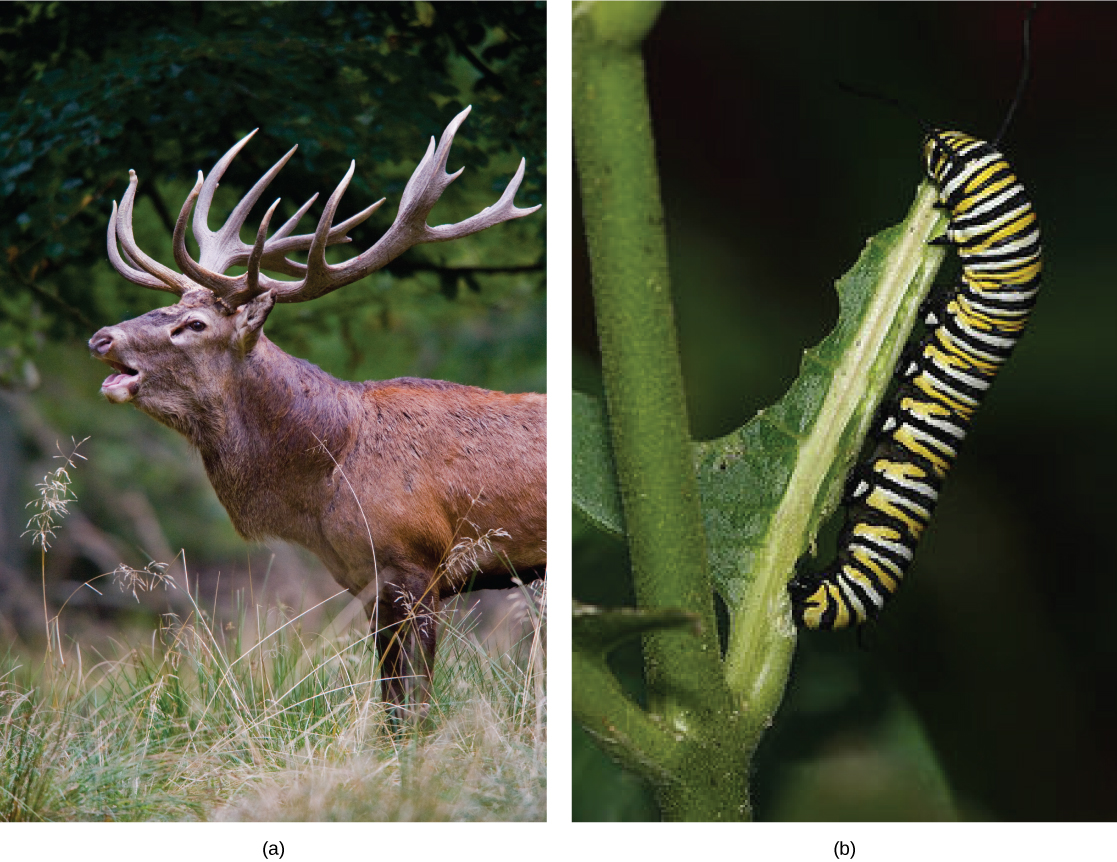
Herbivores are animals whose primary food source is plant-based. Examples of herbivores, as shown in Figure 34.2 include vertebrates like deer, koalas, and some bird species, as well as invertebrates such as crickets and caterpillars. These animals have evolved digestive systems capable of handling large amounts of plant material. Herbivores can be further classified into frugivores (fruit-eaters), granivores (seed eaters), nectivores (nectar feeders), and folivores (leaf eaters).
英語のヒント
草食動物は、主な食物源を植物に依存する動物である。図34.2に示す草食動物の例には、シカ、コアラ、一部の鳥類などの脊椎動物だけでなく、コオロギやイモムシなどの無脊椎動物も含まれる。これらの動物は、大量の植物質を処理できる消化系を進化させてきた。草食動物はさらに、果実食、種子食、花蜜食、葉食に分類できる。
OpenStax, Rice University; Biology 2e. (credit a: modification of work by Bill Ebbesen; credit b: modification of work by Doug Bowman) · CC BY 4.0 · Source出典
Figure 34.2図 34.2
Herbivores, like this (a) mule deer and (b) monarch caterpillar, eat primarily plant material. (credit a: modification of work by Bill Ebbesen; credit b: modification of work by Doug Bowman)
この(a)ミュールジカや(b)オオカバマダラの幼虫のような草食動物は、主に植物質を食べる。(クレジットa:Bill Ebbesenの作品を改変、b:Doug Bowmanの作品を改変)
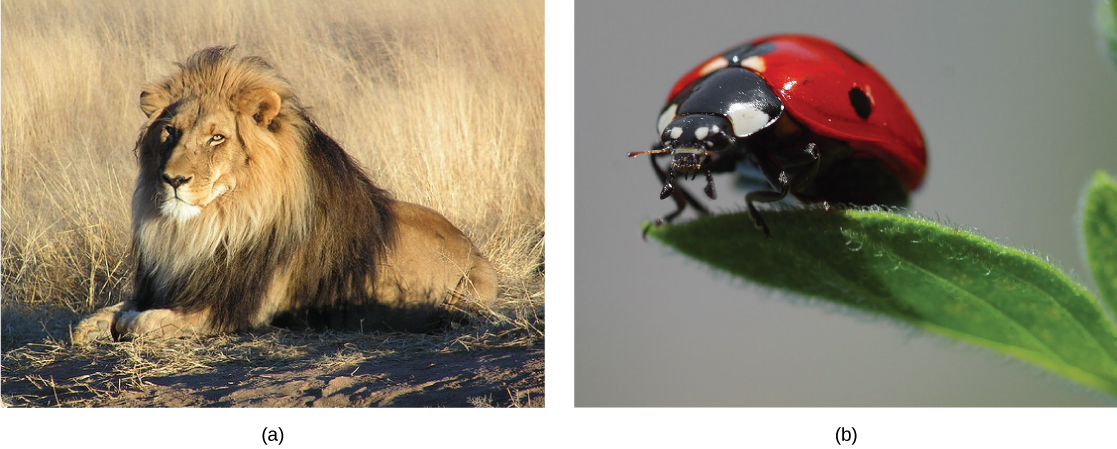
Carnivores are animals that eat other animals. The word carnivore is derived from Latin and literally means “meat eater.” Wild cats such as lions, shown in Figure 34.3a and tigers are examples of vertebrate carnivores, as are snakes and sharks, while invertebrate carnivores include sea stars, spiders, and ladybugs, shown in Figure 34.3b. Obligate carnivores are those that rely entirely on animal flesh to obtain their nutrients; examples of obligate carnivores are members of the cat family, such as lions and cheetahs. Facultative carnivores are those that also eat non-animal food in addition to animal food. Note that there is no clear line that differentiates facultative carnivores from omnivores; dogs would be considered facultative carnivores.
英語のヒント
OpenStax, Rice University; Biology 2e. (credit a: modification of work by Kevin Pluck; credit b: modification of work by Jon Sullivan) · CC BY 4.0 · Source出典
Figure 34.3図 34.3
Carnivores like the (a) lion eat primarily meat. The (b) ladybug is also a carnivore that consumes small insects called aphids. (credit a: modification of work by Kevin Pluck; credit b: modification of work by Jon Sullivan)
(a)ライオンのような肉食動物は、主に肉を食べる。(b)テントウムシも、アブラムシという小さな昆虫を食べる肉食動物である。(クレジットa:Kevin Pluckの作品を改変、b:Jon Sullivanの作品を改変)
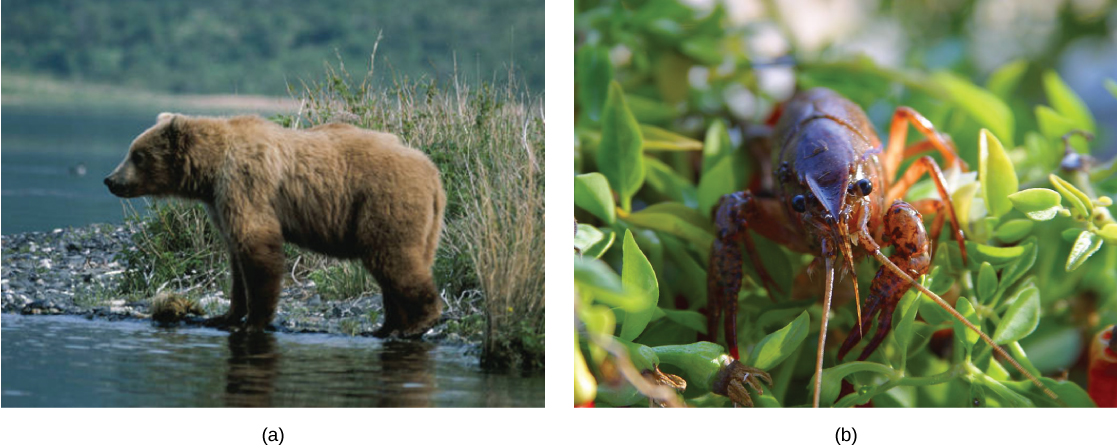
Omnivores are animals that eat both plant- and animal-derived food. In Latin, omnivore means to eat everything. Humans, bears (shown in Figure 34.4a), and chickens are example of vertebrate omnivores; invertebrate omnivores include cockroaches and crayfish (shown in Figure 34.4b).
英語のヒント
OpenStax, Rice University; Biology 2e. (credit a: modification of work by Dave Menke; credit b: modification of work by Jon Sullivan) · CC BY 4.0 · Source出典
Figure 34.4図 34.4
Omnivores like the (a) bear and (b) crayfish eat both plant and animal based food. (credit a: modification of work by Dave Menke; credit b: modification of work by Jon Sullivan)
(a)クマや(b)ザリガニのような雑食動物は、植物性と動物性の両方の食物を食べる。(クレジットa:Dave Menkeの作品を改変、b:Jon Sullivanの作品を改変)
Invertebrate Digestive Systems無脊椎動物の消化系
Animals have evolved different types of digestive systems to aid in the digestion of the different foods they consume. The simplest example is that of a gastrovascular cavity and is found in organisms with only one opening for digestion. Platyhelminthes (flatworms), Ctenophora (comb jellies), and Cnidaria (coral, jelly fish, and sea anemones) use this type of digestion. Gastrovascular cavities, as shown in Figure 34.5a, are typically a blind tube or cavity with only one opening, the “mouth”, which also serves as an “anus”. Ingested material enters the mouth and passes through a hollow, tubular cavity. Cells within the cavity secrete digestive enzymes that break down the food. The food particles are engulfed by the cells lining the gastrovascular cavity.
英語のヒント
動物は、摂取するさまざまな食物の消化を助けるため、異なる種類の消化系を進化させてきた。最も単純な例は胃水管腔で、消化のための開口部を一つだけ持つ生物に見られる。扁形動物(扁形動物門)、クシクラゲ(有櫛動物門)、サンゴ・クラゲ・イソギンチャク(刺胞動物門)は、この方式で消化を行う。図34.5aに示す胃水管腔は、通常、一つの開口部「口」しか持たない盲端の管または腔であり、この口は「肛門」としても機能する。摂取した物質は口から入り、中空の管状の腔を通る。腔内の細胞は食物を分解する消化酵素を分泌する。食物粒子は、胃水管腔を裏打ちする細胞に取り込まれる。
The alimentary canal, shown in Figure 34.5b, is a more advanced system: it consists of one tube with a mouth at one end and an anus at the other. Earthworms are an example of an animal with an alimentary canal. Once the food is ingested through the mouth, it passes through the esophagus and is stored in an organ called the crop; then it passes into the gizzard where it is churned and digested. From the gizzard, the food passes through the intestine, the nutrients are absorbed, and the waste is eliminated as feces, called castings, through the anus.
英語のヒント
図34.5bに示す消化管は、より高度な系で、一端に口、もう一端に肛門を持つ一本の管からなる。ミミズは消化管を持つ動物の一例である。口から取り込まれた食物は食道を通り、嗉嚢という器官に貯蔵される。その後、砂嚢に入り、かき混ぜられて消化される。食物は砂嚢から腸へ進み、そこで栄養素が吸収される。不要物は、糞塊と呼ばれる糞として肛門から排出される。
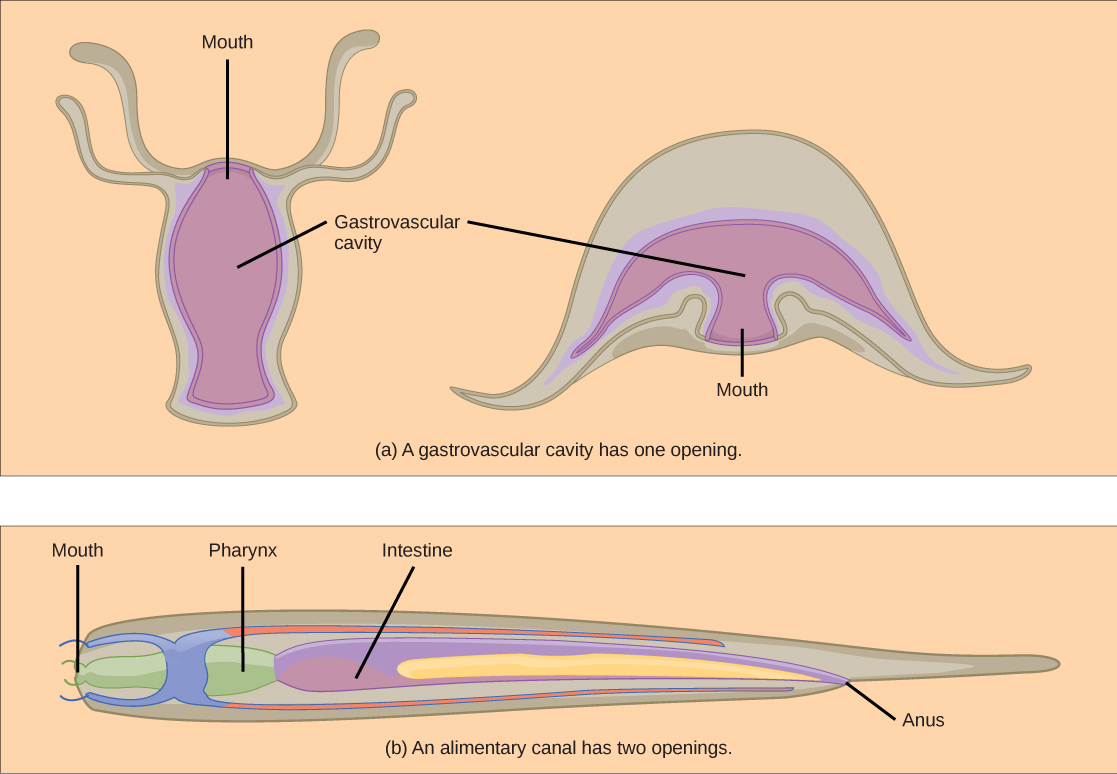


Figure 34.5図 34.5
(a) A gastrovascular cavity has a single opening through which food is ingested and waste is excreted, as shown in this hydra and in this jellyfish medusa. (b) An alimentary canal has two openings: a mouth for ingesting food, and an anus for eliminating waste, as shown in this nematode.
(a)このヒドラとクラゲのメデューサに見られるように、胃水管腔には一つの開口部しかなく、そこから食物を取り込み、不要物を排出する。(b)この線虫に見られるように、消化管には、食物を取り込む口と不要物を排出する肛門という二つの開口部がある。