第23章原生生物
23.4 Ecology of Protists23.4 原生生物の生態
Learning Objectives学習目標
By the end of this section, you will be able to do the following:
この節を学ぶと、次のことができるようになる。
- Describe the role that protists play in the ecosystem原生生物が生態系で果たす役割を説明する。
- Describe important pathogenic species of protists重要な病原性原生生物の種を説明する。
Protists function in various ecological niches. Whereas some protist species are essential components of the food chain and generators of biomass, others function in the decomposition of organic materials. Still other protists are dangerous human pathogens or causative agents of devastating plant diseases.
英語のヒント
原生生物は、さまざまな生態的地位で働く。一部の種は、食物連鎖に不可欠な構成要素であり、バイオマスの生産者でもある。一方、別の種は有機物の分解に働く。さらに別の原生生物は、ヒトの危険な病原体や、植物に甚大な被害を与える病気の原因となる。
Primary Producers/Food Sources一次生産者・食物源
Protists are essential sources of food and provide nutrition for many other organisms. In some cases, as with zooplankton, protists are consumed directly. Alternatively, photosynthetic protists serve as producers of nutrition for other organisms. Paramecium bursaria and several other species of ciliates are mixotrophic due to a symbiotic relationship with green algae. This is a temporary version of the secondarily endosymbiotic chloroplast found in Euglena. But these symbiotic associations are not restricted to protists. For instance, photosynthetic dinoflagellates called zooxanthellae provide nutrients for the coral polyps (Figure 23.32) that house them, giving corals a boost of energy to secrete their calcium carbonate skeleton. In turn, the corals provide the protist with a protected environment and the compounds needed for photosynthesis. This type of symbiotic relationship is important in nutrient-poor environments. Without dinoflagellate symbionts, corals lose algal pigments in a process called coral bleaching, and they eventually die. This explains why reef-building corals typically do not reside in waters deeper than 20 meters: insufficient light reaches those depths for dinoflagellates to photosynthesize.
英語のヒント
原生生物は不可欠な食物源であり、多くの他の生物に栄養を供給する。動物プランクトンの場合のように、原生生物が直接食べられることもある。別の場合には、光合成原生生物が、他の生物のための栄養の生産者となる。Paramecium bursariaや他のいくつかの繊毛虫は、緑藻との共生関係によって混合栄養性である。これは、Euglenaに見られる二次的な細胞内共生由来の葉緑体の、一時的な形である。しかし、このような共生関係は原生生物だけに限られない。たとえば、褐虫藻と呼ばれる光合成性の渦鞭毛藻は、自分を内部にすまわせるサンゴのポリプ(図23.32)へ栄養を供給し、サンゴが炭酸カルシウムの骨格を分泌するためのエネルギーを補う。その見返りに、サンゴは原生生物に、安全な環境と光合成に必要な化合物を与える。この共生関係は、栄養の乏しい環境で重要である。共生渦鞭毛藻がいなくなると、サンゴは白化と呼ばれる過程で藻類の色素を失い、やがて死ぬ。これが、造礁サンゴが通常は水深20メートルより深い所に生息しない理由である。その深さには、渦鞭毛藻が光合成を行うのに十分な光が届かない。
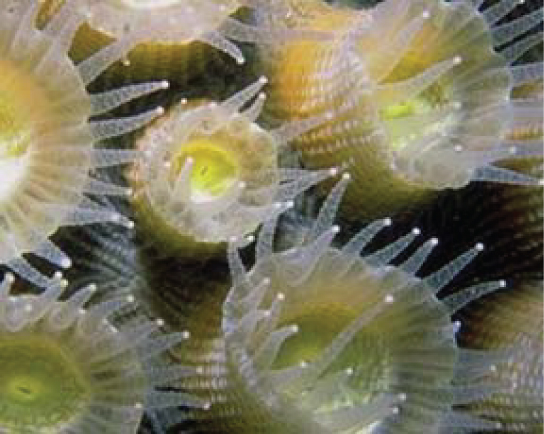

Figure 23.32図 23.32
Coral with symbiotic dinoflagellates. Coral polyps obtain nutrition through a symbiotic relationship with dinoflagellates.
共生渦鞭毛藻をもつサンゴ。サンゴのポリプは、渦鞭毛藻との共生関係を通じて栄養を得る。
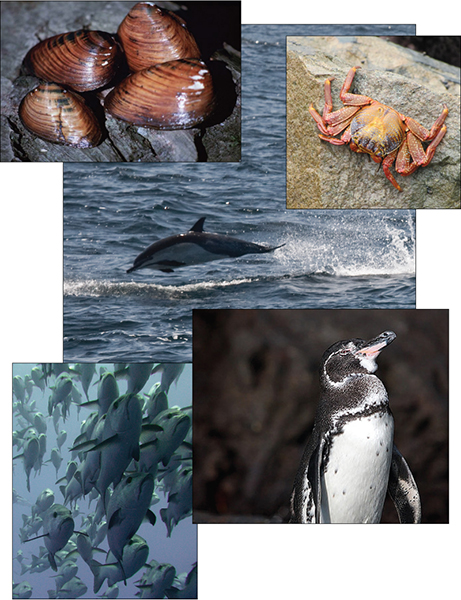
The protists and their products of photosynthesis are essential—directly or indirectly—to the survival of organisms ranging from bacteria to mammals (Figure 23.33). As primary producers, protists feed a large proportion of the world’s aquatic species. (On land, terrestrial plants serve as primary producers.) In fact, approximately 25 percent of the world’s photosynthesis is conducted by photosynthetic protists, particularly dinoflagellates, diatoms, and multicellular algae.
英語のヒント
原生生物とその光合成産物は、細菌から哺乳類までの生物の生存に、直接または間接に不可欠である(図23.33)。一次生産者として、原生生物は世界の水生生物種の大きな割合を養う。(陸上では、陸上植物が一次生産者を務める。)実際、世界の光合成の約25%は、光合成原生生物、特に渦鞭毛藻、珪藻、多細胞藻類によって行われる。
OpenStax, Rice University; Biology 2e. (credit “mollusks”: modification of work by Craig Stihler, USFWS; credit “crab”: modification of work by David Berkowitz; credit “dolphin”: modification of work by Mike Baird; credit “fish”: modification of work by Tim Sheerman-Chase; credit “penguin”: modification of work by Aaron Logan) · CC BY 4.0 · Source出典

Figure 23.33図 23.33
Protists contribute to the food chain. Virtually all aquatic organisms depend directly or indirectly on protists for food. (credit “mollusks”: modification of work by Craig Stihler, USFWS; credit “crab”: modification of work by David Berkowitz; credit “dolphin”: modification of work by Mike Baird; credit “fish”: modification of work by Tim Sheerman-Chase; credit “penguin”: modification of work by Aaron Logan)
原生生物は食物連鎖に寄与する。ほぼすべての水生生物は、食物を直接または間接に原生生物に依存する。(軟体動物のクレジット:USFWSのCraig Stihlerによる作品を改変。カニ:David Berkowitzによる作品を改変。イルカ:Mike Bairdによる作品を改変。魚:Tim Sheerman-Chaseによる作品を改変。ペンギン:Aaron Loganによる作品を改変)
Protists do not create food sources only for sea-dwelling organisms. Recall that certain anaerobic parabasalid species exist in the digestive tracts of termites and wood-eating cockroaches, where they contribute an essential step in the digestion of cellulose ingested by these insects as they consume wood.
英語のヒント
原生生物が食物源を作る相手は、海にすむ生物だけではない。ある種の嫌気性パラバサリアが、シロアリや木材を食べるゴキブリの消化管に存在することを思い出そう。そこでは、昆虫が木材を食べて取り込んだセルロースを消化するうえで、不可欠な段階を担っている。
Human Pathogensヒトの病原体
As we have seen, a pathogen is anything that causes disease. Parasitic organisms live in or on a host organism and harm the organism. A small number of protists are serious pathogenic parasites that must infect other organisms to survive and propagate. For example, protist parasites include the causative agents of malaria, African sleeping sickness, amoebic encephalitis, and waterborne gastroenteritis in humans. Other protist pathogens prey on plants, effecting massive destruction of food crops.
英語のヒント
これまで見たように、病原体とは病気を起こすあらゆるものを指す。寄生生物は宿主の内部や表面で暮らし、宿主に害を与える。少数の原生生物は、生存と増殖のために他の生物へ感染しなければならない、重大な病原性寄生者である。たとえば、寄生性原生生物には、ヒトのマラリア、アフリカ睡眠病、アメーバ性脳炎、水系感染性胃腸炎の病原体が含まれる。別の病原性原生生物は植物を襲い、食用作物を大規模に破壊する。
Plasmodium SpeciesPlasmodium属の種
In 2015 WHO reported over 200 million cases of malaria, mostly in Africa, South America, and southern Asia. However, it is not well known that malaria was also a prevalent and debilitating disease of the North Central region of the United States, particularly Michigan, with its thousands of lakes and numerous swamps. Prior to the civil war, and the drainage of many swamps, virtually everyone who immigrated to Michigan picked up malaria (ague as it was called in the late 1800s), and the pale, sallow, bloated faces of that period were the rule. The only healthy faces were worn by those immigrants who had just arrived. In fact, there were more deaths due to malaria in Michigan than those from the Civil War.
英語のヒント
2015年、WHOは2億件を超えるマラリア症例を報告し、その大部分はアフリカ、南米、南アジアで発生した。しかし、マラリアがかつて米国中北部、特に数千の湖と多数の湿地をもつミシガンでも、蔓延する衰弱性の病気だったことは、あまり知られていない。南北戦争と、多くの湿地の排水が行われる前には、ミシガンへ移住したほぼ全員がマラリアにかかった。1800年代後半には「エイグ」と呼ばれ、当時は、青白く、黄ばんで、むくんだ顔が普通だった。健康な顔をしていたのは、到着したばかりの移住者だけであった。実際、ミシガンのマラリアによる死者は、南北戦争による死者よりも多かった。
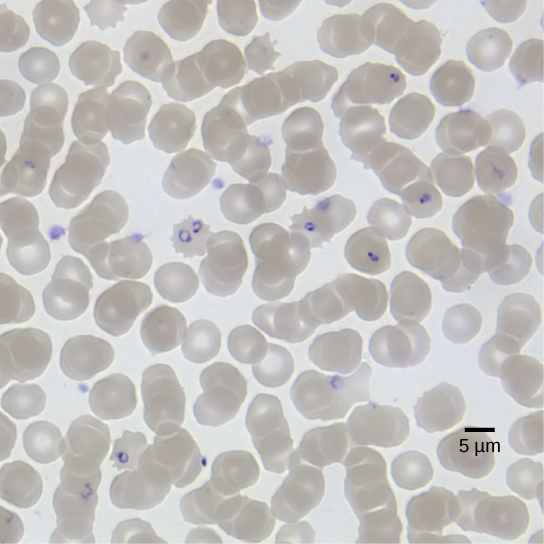
We now know that malaria is caused by several species of the apicomplexan protist genus Plasmodium. Members of Plasmodium must sequentially require both a mosquito and a vertebrate to complete their life cycle. In vertebrates, the parasite develops in liver cells (the exoerythrocytic stage) and goes on to infect red blood cells (the erythrocytic stage), bursting from and destroying the blood cells with each asexual replication cycle (Figure 23.34). Of the four Plasmodium species known to infect humans, P. falciparum accounts for 50 percent of all malaria cases and is the primary (and deadliest) cause of disease-related fatalities in tropical regions of the world. In 2015, it was estimated that malaria caused over 400,000 deaths, mostly in African children. During the course of malaria, P. falciparum can infect and destroy more than one-half of a human’s circulating blood cells, leading to severe anemia. In response to waste products released as the parasites burst from infected blood cells, the host immune system mounts a massive inflammatory response with episodes of delirium-inducing fever (paroxysms) as parasites lyse red blood cells, spilling parasite waste into the bloodstream. P. falciparum is transmitted to humans by the African mosquito, Anopheles gambiae. Techniques to kill, sterilize, or avoid exposure to this highly aggressive mosquito species are crucial to malaria control. Ironically, a type of genetic control has arisen in parts of the world where malaria is endemic. Possession of one copy of the HbS beta globin allele results in malaria resistance. Unfortunately, this allele also has an unfortunate second effect; when homozygous it causes sickle cell disease.
英語のヒント
現在では、マラリアは、アピコンプレクサに属する原生生物Plasmodium属の複数の種によって引き起こされると分かっている。Plasmodiumは、生活環を完結するために、蚊と脊椎動物の両方を順に必要とする。脊椎動物内では、寄生体は肝細胞で発育し(赤外型期)、続いて赤血球へ感染する(赤内型期)。無性増殖の周期のたびに、血球を破って出て、破壊する(図23.34)。ヒトに感染すると知られている4種のPlasmodiumのうち、P. falciparumは全マラリア症例の50%を占め、世界の熱帯地域における病気に関連した死亡の主要かつ最も致死的な原因である。2015年には、マラリアによって40万人以上が死亡し、大部分はアフリカの子どもだったと推定された。マラリアの経過中、P. falciparumは、ヒトの循環血球の半分以上に感染して破壊し、重度の貧血を引き起こすことがある。寄生体が感染血球を破って出る際に放出する老廃物に反応して、宿主の免疫系は大規模な炎症反応を起こす。寄生体が赤血球を溶解し、その老廃物が血流へ流れ込むと、せん妄を誘発する発熱の発作が起こる。P. falciparumは、アフリカの蚊Anopheles gambiaeによってヒトへ伝播する。この非常に攻撃的な蚊を殺す、不妊化する、あるいは接触を避ける技術は、マラリア対策に極めて重要である。皮肉にも、マラリアが風土病となっている地域では、ある種の遺伝的な防御が生じた。HbS型βグロビン対立遺伝子を1コピーもつと、マラリアへの抵抗性が生じる。残念ながら、この対立遺伝子には不都合なもう一つの作用もあり、ホモ接合になると鎌状赤血球症を引き起こす。
OpenStax, Rice University; Biology 2e. (credit: modification of work by Michael Zahniser; scale-bar data from Matt Russell) · CC BY 4.0 · Source出典

Figure 23.34図 23.34
Malaria parasite. Red blood cells are shown to be infected with P. falciparum, the causative agent of malaria. In this light microscopic image taken using a 100× oil immersion lens, the ring-shaped P. falciparum stains purple. (credit: modification of work by Michael Zahniser; scale-bar data from Matt Russell)
マラリア原虫。マラリア病原体P. falciparumに感染した赤血球を示す。100倍の油浸レンズで撮影した光学顕微鏡像で、輪状のP. falciparumが紫色に染まっている。(クレジット:Michael Zahniserによる作品を改変。スケールバーのデータ:Matt Russell)