第23章原生生物
Trypanosomesトリパノソーマ
Trypanosoma brucei (Figure 23.35), transmitted by tsetse flies (Glossina spp.) in Africa, and related flies in South America, is a flagellated endoparasite responsible for the deadly disease nagana in cattle and horses, and for African sleeping sickness in humans. This trypanosome confounds the human immune system by changing its thick layer of surface glycoproteins with each infectious cycle. (The glycoproteins are identified by the immune system as foreign antigens, and a specific antibody defense is mounted against the parasite.) However, T. brucei has thousands of possible antigens, and with each subsequent generation, the protist switches to a glycoprotein coating with a different molecular structure. In this way, T. brucei is capable of replicating continuously without the immune system ever succeeding in clearing the parasite. Without treatment, T. brucei attacks red blood cells, causing the patient to lapse into a coma and eventually die. During epidemic periods, mortality from the disease can be high. Greater surveillance and control measures lead to a reduction in reported cases; some of the lowest numbers reported in 50 years (fewer than 10,000 cases in all of sub-Saharan Africa) have happened since 2009.
英語のヒント
Trypanosoma brucei(図23.35)は、アフリカではツェツェバエ(Glossina属)、南米では近縁のハエによって伝播する、鞭毛をもつ内部寄生者である。ウシやウマに致死的なナガナ病を、ヒトにアフリカ睡眠病を引き起こす。このトリパノソーマは、感染周期ごとに表面の糖タンパク質の厚い層を変え、ヒトの免疫系を翻弄する。(免疫系は糖タンパク質を異物の抗原として認識し、寄生体に対する特異的抗体による防御を起こす。)しかし、T. bruceiには数千通りの抗原の可能性があり、次の世代になるたびに、分子構造の異なる糖タンパク質の被覆へ切り替わる。このようにして、免疫系が寄生体を除去できないまま、T. bruceiは増殖を続けられる。治療しなければ、赤血球を攻撃し、患者は昏睡に陥り、やがて死亡する。流行期には、この病気の死亡率は高くなりうる。監視と対策の強化は、報告症例の減少につながる。2009年以降には、サハラ以南アフリカ全体で1万件未満という、50年間で最も低い水準の一部が報告されている。
In Latin America, another species of trypanosome, T. cruzi, is responsible for Chagas disease. T. cruzi infections are mainly caused by a blood-sucking “kissing bug” in the genus Triatoma. These “true bugs” bite the host during the night and then defecate on the wound, transmitting the trypanosome to the victim. The victim scratches the wound, further inoculating the site with trypanosomes at the location of the bite. After about 10 weeks, individuals enter the chronic phase but most never develop further symptoms. In about 30 percent of cases, however, the trypanosome causes further damage, especially to the heart and digestive system tissues in the chronic phase of infection, leading to malnutrition and heart failure due to abnormal heart rhythms. An estimated 10 million people are infected with Chagas disease, and it is estimated to cause 10,000-12,000 deaths per year.
英語のヒント
ラテンアメリカでは、別種のトリパノソーマT. cruziが、シャーガス病を引き起こす。T. cruziの感染は、主にTriatoma属の吸血性の「キッシングバグ」によって起こる。このカメムシの仲間は、夜に宿主を刺し、その傷に排便して、トリパノソーマを感染させる。被害者が傷をかくと、刺された場所へトリパノソーマがさらに入り込む。約10週間後に慢性期へ入るが、大部分の人は、それ以上の症状を発症しない。しかし約30%では、慢性感染期に、特に心臓と消化器系の組織にさらなる損傷が生じ、栄養失調や、不整脈による心不全につながる。シャーガス病の感染者は推定1,000万人で、年間10,000〜12,000人が死亡すると推定される。
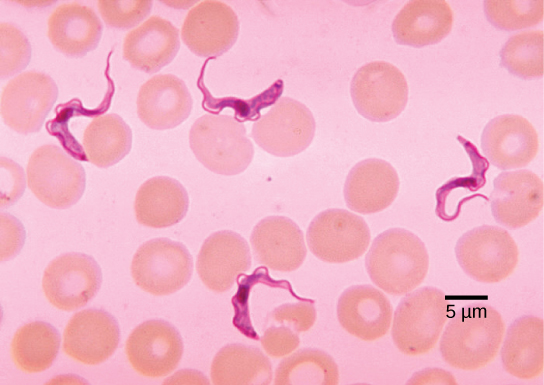
OpenStax, Rice University; Biology 2e. (credit: modification of work by Dr. Myron G. Shultz; scale-bar data from Matt Russell) · CC BY 4.0 · Source出典
Figure 23.35図 23.35
Trypanosomes. Trypanosomes are shown among red blood cells. (credit: modification of work by Dr. Myron G. Shultz; scale-bar data from Matt Russell)
トリパノソーマ。赤血球の間にトリパノソーマが見える。(クレジット:Dr. Myron G. Shultzによる作品を改変。スケールバーのデータ:Matt Russell)
Plant Parasites植物の寄生者
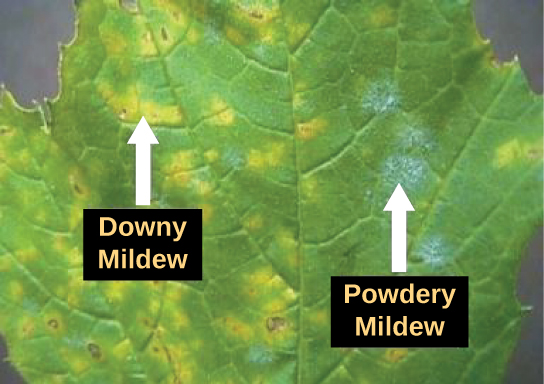
Protist parasites of terrestrial plants include agents that destroy food crops. The oomycete Plasmopara viticola parasitizes grape plants, causing a disease called downy mildew (Figure 23.36). Grape plants infected with P. viticola appear stunted and have discolored, withered leaves. The spread of downy mildew nearly collapsed the French wine industry in the nineteenth century.
英語のヒント
陸上植物に寄生する原生生物には、食用作物を破壊する病原体が含まれる。卵菌Plasmopara viticolaはブドウに寄生し、べと病を引き起こす(図23.36)。感染したブドウは生育不良となり、葉が変色してしおれる。19世紀には、べと病の拡大によって、フランスのワイン産業が崩壊寸前に追い込まれた。
OpenStax, Rice University; Biology 2e. (credit: modification of work by USDA) · CC BY 4.0 · Source出典
Figure 23.36図 23.36
Protist plant infections. Both downy and powdery mildews on this grape leaf are caused by an infection of P. viticola. (credit: modification of work by USDA)
原生生物による植物の感染。このブドウの葉のべと病とうどんこ病は、いずれもP. viticolaの感染によって起こる。(クレジット:USDAによる作品を改変)
Phytophthora infestans is an oomycete responsible for potato late blight, which causes potato stalks and stems to decay into black slime (Figure 23.37). Widespread potato blight caused by P. infestans precipitated the well-known Irish potato famine in the nineteenth century that claimed the lives of approximately 1 million people and led to the emigration of at least 1 million more from Ireland. Late blight continues to plague potato crops in certain parts of the United States and Russia, wiping out as much as 70 percent of crops when no pesticides are applied.
英語のヒント
Phytophthora infestansは、ジャガイモ疫病の原因となる卵菌で、ジャガイモの柄や茎を黒い粘液状に腐らせる(図23.37)。P. infestansによる広範な疫病は、19世紀の有名なアイルランドのジャガイモ飢饉を引き起こした。この飢饉は約100万人の命を奪い、さらに少なくとも100万人がアイルランドから移住する原因となった。疫病は、現在も米国やロシアの一部でジャガイモ栽培を苦しめており、農薬を用いない場合、収穫の70%もの損失をもたらす。
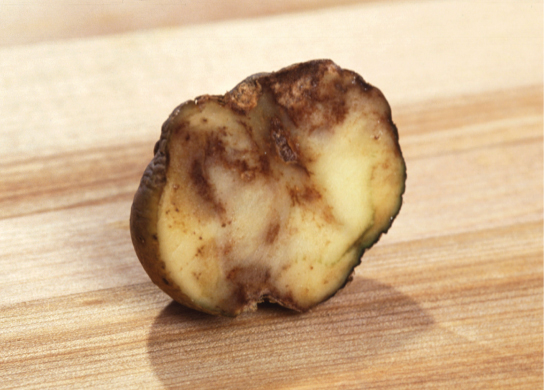


Figure 23.37図 23.37
Potato blight. These unappetizing remnants result from an infection with P. infestans, the causative agent of potato late blight. (credit: USDA)
ジャガイモ疫病。この食欲をそそらない残骸は、疫病の病原体P. infestansへの感染によるものである。(クレジット:USDA)
Protist Decomposers分解者としての原生生物
The fungus-like protist saprobes are specialized to absorb nutrients from nonliving organic matter, such as dead organisms or their wastes. For instance, many types of oomycetes grow on dead animals or algae. Saprobic protists have the essential function of returning inorganic nutrients to the soil and water. This process allows for new plant growth, which in turn generates sustenance for other organisms along the food chain. Indeed, without saprobe species, such as protists, fungi, and bacteria, life would cease to exist as all organic carbon became “tied up” in dead organisms.
英語のヒント
菌類に似た腐生性原生生物は、死んだ生物や排出物など、生きていない有機物から栄養分を吸収することに特化している。たとえば、多くの種類の卵菌は、死んだ動物や藻類の上で成長する。腐生性原生生物は、無機栄養分を土や水へ戻すという、不可欠な機能を担う。この過程は新しい植物の成長を可能にし、植物はさらに、食物連鎖を通じて他の生物の栄養となる。実際、原生生物、菌類、細菌などの腐生種がいなければ、すべての有機炭素が死んだ生物の中に「閉じ込められ」、生命は存在できなくなるだろう。