第23章原生生物
Stramenopiles: Diatoms, Brown Algae, Golden Algae and Oomycetesストラメノパイル:珪藻、褐藻、黄金色藻、卵菌
The other subgroup of chromalveolates, the stramenopiles, includes photosynthetic marine algae and heterotrophic protists. The chloroplast of these algae is derived from red alga. The identifying feature of this group is the presence of a textured, or “hairy,” flagellum. Many stramenopiles also have an additional flagellum that lacks hair-like projections (Figure 23.26). Members of this subgroup range in size from single-celled diatoms to the massive and multicellular kelp.
英語のヒント
クロムアルベオラータのもう一つの下位群であるストラメノパイルには、光合成を行う海産藻類と、従属栄養性原生生物が含まれる。これらの藻類の葉緑体は紅藻に由来する。この群を見分ける特徴は、表面に構造のある、すなわち「毛のある」鞭毛をもつことである。多くのストラメノパイルは、毛状突起のない鞭毛も、もう1本もつ(図23.26)。この下位群の大きさは、単細胞の珪藻から、巨大な多細胞のケルプまで及ぶ。
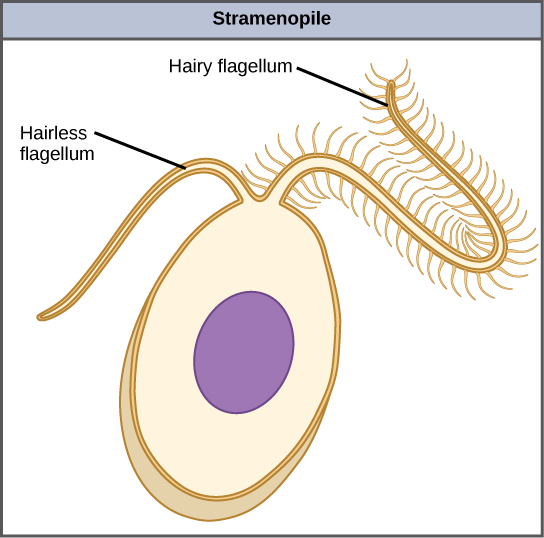

Figure 23.26図 23.26
Stramenopile flagella. This stramenopile cell has a single hairy flagellum and a secondary smooth flagellum.
ストラメノパイルの鞭毛。この細胞は、毛のある鞭毛1本と、もう1本の滑らかな鞭毛をもつ。
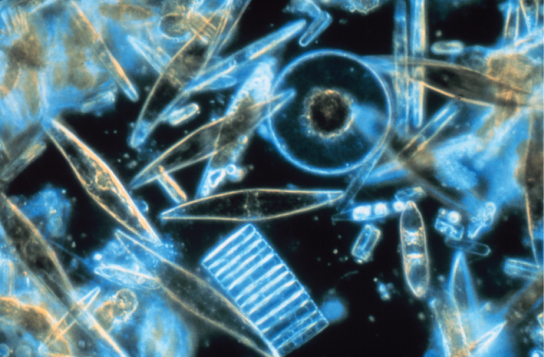
The diatoms are unicellular photosynthetic protists that encase themselves in intricately patterned, glassy cell walls composed of silicon dioxide in a matrix of organic particles (Figure 23.27). These protists are a component of freshwater and marine plankton. Most species of diatoms reproduce asexually, although some instances of sexual reproduction and sporulation also exist. Some diatoms exhibit a slit in their silica shell, called a raphe. By expelling a stream of mucopolysaccharides from the raphe, the diatom can attach to surfaces or propel itself in one direction.
英語のヒント
珪藻は、単細胞の光合成原生生物であり、有機粒子の基質に二酸化ケイ素が含まれる、複雑な模様をもつガラス質の細胞壁に包まれる(図23.27)。これらの原生生物は、淡水と海水のプランクトンの一部を構成する。大部分の珪藻は無性生殖するが、有性生殖や胞子形成の例もある。一部の珪藻は、シリカの殻に、縦溝と呼ばれる裂け目をもつ。この縦溝からムコ多糖を流れとして放出することで、表面に付着したり、一方向へ進んだりできる。
OpenStax, Rice University; Biology 2e. (credit: Prof. Gordon T. Taylor, Stony Brook University, NSF, NOAA) · CC BY 4.0 · Source出典

Figure 23.27図 23.27
Diatoms. Assorted diatoms, visualized here using light microscopy, live among annual sea ice in McMurdo Sound, Antarctica. Diatoms range in size from 2 to 200 µm. (credit: Prof. Gordon T. Taylor, Stony Brook University, NSF, NOAA)
珪藻。光学顕微鏡で観察した多様な珪藻は、南極のマクマード湾の一年氷の間に生息する。珪藻の大きさは2〜200 µmである。(クレジット:Prof. Gordon T. Taylor、Stony Brook University、NSF、NOAA)
During periods of nutrient availability, diatom populations bloom to numbers greater than can be consumed by aquatic organisms. The excess diatoms die and sink to the sea floor where they are not easily reached by saprobes that feed on dead organisms. As a result, the carbon dioxide that the diatoms had consumed and incorporated into their cells during photosynthesis is not returned to the atmosphere. Along with rhizarians and other shelled protists, diatoms help to maintain a balanced carbon cycle.
英語のヒント
栄養分が利用できる時期には、珪藻の個体数は、水生生物が食べきれないほどに増加する。余った珪藻は死んで海底へ沈み、死んだ生物を食べる腐生生物が容易には届かない所へ移る。その結果、珪藻が光合成の際に消費し、細胞へ取り込んだ二酸化炭素は、大気へ戻らない。珪藻は、リザリアや他の有殻原生生物とともに、炭素循環のバランス維持を助ける。
Like diatoms, golden algae are largely unicellular, although some species can form large colonies. Their characteristic gold color results from their extensive use of carotenoids, a group of photosynthetic pigments that are generally yellow or orange in color. Golden algae are found in both freshwater and marine environments, where they form a major part of the plankton community.
英語のヒント
黄金色藻は、珪藻と同様に主に単細胞だが、大きな群体を作れる種もある。その特徴的な金色は、一般に黄色や橙色を呈する光合成色素群のカロテノイドを、多く利用することに由来する。黄金色藻は、淡水と海水の両方の環境に見られ、プランクトン群集の主要な部分を構成する。
The brown algae are primarily marine, multicellular organisms that are known colloquially as seaweeds. Giant kelps are a type of brown alga. Some brown algae have evolved specialized tissues that resemble terrestrial plants, with root-like holdfasts, stem-like stipes, and leaf-like blades that are capable of photosynthesis. The stipes of giant kelps are enormous, extending in some cases for 60 meters. Like the green algae, brown algae have a variety of life cycles, including alternation of generations. In the brown algae genus Laminaria, haploid spores develop into multicellular gametophytes, which produce haploid gametes that combine to produce diploid organisms that then become multicellular organisms with a different structure from the haploid form (Figure 23.28).
英語のヒント
褐藻は主に海産の多細胞生物で、日常的には海藻として知られる。ジャイアントケルプは褐藻の一種である。一部の褐藻は、陸上植物に似た特殊化した組織を進化させており、根のような付着器、茎のような茎状部、光合成できる葉のような葉状部をもつ。ジャイアントケルプの茎状部は巨大で、60メートルまで伸びる場合がある。緑藻と同様に、褐藻には世代交代を含む多様な生活環がある。褐藻のLaminaria属では、半数体の胞子が多細胞の配偶体へ発達し、半数体の配偶子を作る。配偶子は融合して二倍体の生物となり、さらに半数体とは異なる構造の多細胞生物となる(図23.28)。
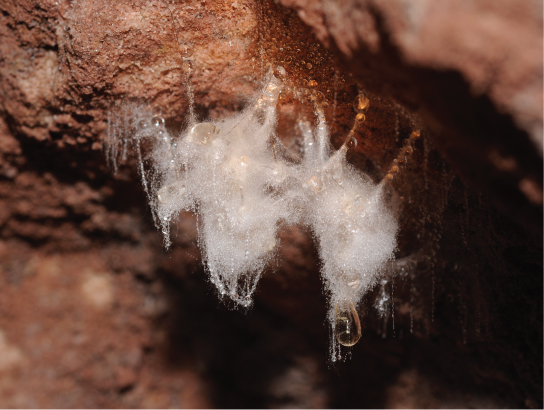
The water molds, oomycetes (“egg fungus”), were so-named based on their fungus-like morphology, but molecular data have shown that the water molds are not closely related to fungi. The oomycetes are characterized by a cellulose-based cell wall and an extensive network of filaments that allow for nutrient uptake. As diploid spores, many oomycetes have two oppositely directed flagella (one hairy and one smooth) for locomotion. The oomycetes are nonphotosynthetic and include many saprobes and parasites. The saprobes appear as white fluffy growths on dead organisms (Figure 23.29). Most oomycetes are aquatic, but some parasitize terrestrial plants. One plant pathogen is Phytophthora infestans, the causative agent of late blight of potatoes, such as occurred in the nineteenth century Irish potato famine.
英語のヒント
水カビである卵菌(「卵の菌」)は、菌類に似た形態に基づいて命名されたが、分子データは菌類と近縁でないことを示した。卵菌は、セルロースを主成分とする細胞壁と、栄養の取り込みを可能にする、広範な糸状体の網を特徴とする。多くの卵菌は、二倍体の胞子の段階で、移動用に互いに逆方向を向く2本の鞭毛をもち、1本には毛があり、もう1本は滑らかである。卵菌は光合成を行わず、多くの腐生生物と寄生生物を含む。腐生性のものは、死んだ生物の上に白い綿毛状の生育物として現れる(図23.29)。大部分の卵菌は水生だが、陸上植物に寄生するものもある。植物病原体の一つはPhytophthora infestansで、19世紀のアイルランドのジャガイモ飢饉で起きたような、ジャガイモ疫病を引き起こす。
OpenStax, Rice University; Biology 2e. (credit: modification of work by Thomas Bresson) · CC BY 4.0 · Source出典

Figure 23.29図 23.29
Oomycetes. A saprobic oomycete engulfs a dead insect. (credit: modification of work by Thomas Bresson)
卵菌。腐生性の卵菌が、死んだ昆虫を包んでいる。(クレジット:Thomas Bressonによる作品を改変)