第22章原核生物:細菌と古細菌
22.5 Beneficial Prokaryotes22.5 有益な原核生物
Learning Objectives学習目標
By the end of this section, you will be able to do the following:
この節を終えると、次のことができるようになる。
- Explain the need for nitrogen fixation and how it is accomplished窒素固定が必要な理由と、その仕組みを説明する。
- Describe the beneficial effects of bacteria that colonize our skin and digestive tracts皮膚や消化管に定着する細菌の有益な効果を説明する。
- Identify prokaryotes used during the processing of food食品加工に使われる原核生物を挙げる。
- Describe the use of prokaryotes in bioremediationバイオレメディエーションにおける原核生物の利用を説明する。
Fortunately, only a few species of prokaryotes are pathogenic! Prokaryotes also interact with humans and other organisms in a number of ways that are beneficial. For example, prokaryotes are major participants in the carbon and nitrogen cycles. They produce or process nutrients in the digestive tracts of humans and other animals. Prokaryotes are used in the production of some human foods, and also have been recruited for the degradation of hazardous materials. In fact, our life would not be possible without prokaryotes!
英語のヒント
幸いなことに、病原性をもつ原核生物は、ごく少数の種だけである。原核生物は、ヒトやほかの生物と、さまざまな有益な形で関わってもいる。たとえば、炭素循環と窒素循環の主要な担い手である。ヒトやほかの動物の消化管で、栄養分を作ったり加工したりする。食品の一部の生産に使われ、有害物質の分解にも利用されてきた。実際、原核生物なしでは、私たちの生活は成り立たない。
Cooperation between Bacteria and Eukaryotes: Nitrogen Fixation細菌と真核生物の協力:窒素固定
Nitrogen is a very important element to living things, because it is part of nucleotides and amino acids that are the building blocks of nucleic acids and proteins, respectively. Nitrogen is usually the most limiting element in terrestrial ecosystems, with atmospheric nitrogen, N2, providing the largest pool of available nitrogen. However, eukaryotes cannot use atmospheric, gaseous nitrogen to synthesize macromolecules. Fortunately, nitrogen can be “fixed,” meaning it is converted into a more accessible form—ammonia (NH3)—either biologically or abiotically.
英語のヒント
窒素は、生物にとって非常に重要な元素である。それぞれ核酸とタンパク質の構成単位となる、ヌクレオチドとアミノ酸の一部だからである。陸上生態系では通常、最も不足して成長を制限する元素であり、大気中の窒素N2が、利用可能な窒素の最大の蓄えである。しかし真核生物は、大気中の窒素ガスを高分子の合成に使えない。幸い、窒素は生物的にも非生物的にも「固定」できる。つまり、より利用しやすい形、アンモニアNH3へ変換できる。
Abiotic nitrogen fixation occurs as a result of physical processes such as lightning or by industrial processes. Biological nitrogen fixation (BNF) is exclusively carried out by prokaryotes: soil bacteria, cyanobacteria, and Frankia spp. (filamentous bacteria interacting with actinorhizal plants such as alder, bayberry, and sweet fern). After photosynthesis, BNF is the most important biological process on Earth. The overall nitrogen fixation equation below represents a series of redox reactions (Pi stands for inorganic phosphate).
英語のヒント
非生物的な窒素固定は、雷のような物理過程や、工業的な過程によって起こる。生物的窒素固定(BNF)を行うのは原核生物だけである。土壌細菌、シアノバクテリア、Frankia属の種が担う。Frankiaは、ハンノキ、ヤマモモ、スイートファーンなどのアクチノリザル植物と相互作用する、糸状の細菌である。BNFは、光合成に次いで地球上で最も重要な生物過程である。下の窒素固定の総反応式は、一連の酸化還元反応を表す。Piは無機リン酸を示す。
The total fixed nitrogen through BNF is about 100 to 180 million metric tons per year, which contributes about 65 percent of the nitrogen used in agriculture.
BNFによって固定される窒素の総量は、年間約1億〜1億8000万トンで、農業で使われる窒素の約65%を供給している。
Cyanobacteria are the most important nitrogen fixers in aquatic environments. In soil, members of the genera Clostridium and Azotobacter are examples of free-living, nitrogen-fixing bacteria. Other bacteria live symbiotically with legume plants, providing the most important source of fixed nitrogen. Symbionts may fix more nitrogen in soils than free-living organisms by a factor of 10. Soil bacteria, collectively called rhizobia, are able to symbiotically interact with legumes to form nodules, specialized structures where nitrogen fixation occurs (Figure 22.27). Nitrogenase, the enzyme that fixes nitrogen, is inactivated by oxygen, so the nodule provides an oxygen-free area for nitrogen fixation to take place. The oxygen is sequestered by a form of plant hemoglobin called leghemoglobin, which protects the nitrogenase, but releases enough oxygen to support respiratory activity.
英語のヒント
シアノバクテリアは、水域で最も重要な窒素固定生物である。土壌では、Clostridium属やAzotobacter属の生物が、自由生活性の窒素固定細菌の例となる。別の細菌はマメ科植物と共生し、固定窒素の最も重要な供給源となる。共生体は、自由生活性の生物の10倍もの窒素を土壌で固定することがある。まとめて根粒菌と呼ばれる土壌細菌は、マメ科植物と共生的に相互作用し、窒素固定が起こる特殊な構造、根粒を形成できる(図22.27)。窒素を固定する酵素ニトロゲナーゼは、酸素によって不活性化されるため、根粒は窒素固定のための無酸素領域を提供する。酸素は、レグヘモグロビンと呼ばれる植物ヘモグロビンの一種によって隔離される。これはニトロゲナーゼを守りながら、呼吸活動を支えるだけの酸素を放出する。
Symbiotic nitrogen fixation provides a natural and inexpensive plant fertilizer: It reduces atmospheric nitrogen to ammonia, which is easily usable by plants. The use of legumes is an excellent alternative to chemical fertilization and is of special interest to sustainable agriculture, which seeks to minimize the use of chemicals and conserve natural resources. Through symbiotic nitrogen fixation, the plant benefits from using an endless source of nitrogen: the atmosphere. The bacteria benefit from using photosynthates (carbohydrates produced during photosynthesis) from the plant and having a protected niche. In addition, the soil benefits from being naturally fertilized. Therefore, the use of rhizobia as biofertilizers is a sustainable practice.
英語のヒント
共生的窒素固定は、自然で安価な植物の肥料を提供する。大気中の窒素を、植物が容易に使えるアンモニアへ還元するのである。マメ科植物の利用は、化学肥料の優れた代替となり、化学物質の使用を最小限に抑えて天然資源を保全しようとする、持続可能な農業で特に関心を集めている。共生的窒素固定によって、植物は大気という尽きることのない窒素源を利用できる。一方、細菌は植物から光合成産物、すなわち光合成で作られた炭水化物を受け取り、守られたニッチを得る。さらに、土壌も自然に肥沃になるという利益を受ける。したがって、根粒菌を生物肥料として使うことは、持続可能な方法である。
Why are legumes so important? Some, like soybeans, are key sources of agricultural protein. Some of the most important legumes consumed by humans are soybeans, peanuts, peas, chickpeas, and beans. Other legumes, such as alfalfa, are used to feed cattle.
英語のヒント
マメ科植物は、なぜそれほど重要なのだろうか。ダイズのように、農業で得られるタンパク質の主要供給源となるものがある。ヒトが食べる重要なマメ科植物には、ダイズ、ラッカセイ、エンドウ、ヒヨコマメ、インゲンマメなどがある。アルファルファのような別のマメ科植物は、ウシの飼料として使われる。
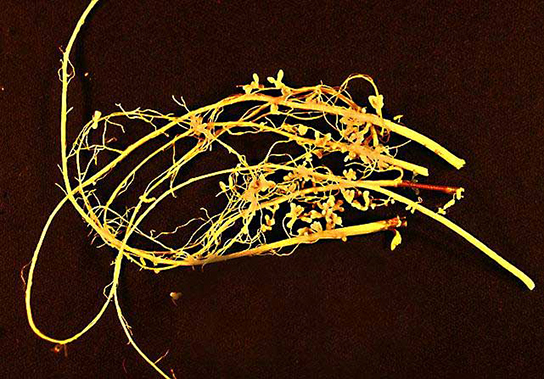

Figure 22.27図 22.27
Nitrogen-fixation nodules on soybean roots. Soybean (Glycine max) is a legume that interacts symbiotically with the soil bacterium Bradyrhizobium japonicum to form specialized structures on the roots called nodules where nitrogen fixation occurs. (credit: USDA)
ダイズの根の窒素固定根粒。ダイズGlycine maxは、土壌細菌Bradyrhizobium japonicumと共生的に相互作用するマメ科植物で、根に根粒と呼ばれる特殊な構造を作り、そこで窒素固定が起こる。(クレジット:USDA)