第22章原核生物:細菌と古細菌
Biofilms and Diseaseバイオフィルムと病気
Recall that biofilms are microbial communities that are very difficult to destroy. They are responsible for diseases such as Legionnaires’ disease, otitis media (ear infections), and various infections in patients with cystic fibrosis. They produce dental plaque and colonize catheters, prostheses, transcutaneous and orthopedic devices, contact lenses, and internal devices such as pacemakers. They also form in open wounds and burned tissue. In healthcare environments, biofilms grow on hemodialysis machines, mechanical ventilators, shunts, and other medical equipment. In fact, 65 percent of all infections acquired in the hospital (nosocomial infections) are attributed to biofilms. Biofilms are also related to diseases contracted from food because they colonize the surfaces of vegetable leaves and meat, as well as food-processing equipment that isn’t adequately cleaned.
英語のヒント
バイオフィルムは、破壊するのが非常に難しい微生物群集であることを思い出してほしい。レジオネラ症、中耳炎、嚢胞性線維症の患者のさまざまな感染症などを引き起こす。歯垢を作り、カテーテル、人工補装具、経皮器具、整形外科器具、コンタクトレンズ、ペースメーカーなどの体内器具に定着する。開放創や、やけどの組織にも形成される。医療環境では、血液透析装置、人工呼吸器、シャント、ほかの医療器具に生育する。実際、病院で獲得する全感染症、すなわち院内感染の65%は、バイオフィルムに起因するとされる。また、野菜の葉や食肉の表面、十分に洗浄されていない食品加工設備に定着するため、食品を介してかかる病気にも関わる。
Biofilm infections develop gradually and may not cause immediate symptoms. They are rarely resolved by host defense mechanisms. Once an infection by a biofilm is established, it is very difficult to eradicate, because biofilms tend to be resistant to most methods used to control microbial growth, including antibiotics. The matrix that attaches the cells to a substrate and to other another protects the cells from antibiotics or drugs. In addition, since biofilms grow slowly, they are less responsive to agents that interfere with cell growth. It has been reported that biofilms can resist up to 1,000 times the antibiotic concentrations used to kill the same bacteria when they are free-living or planktonic. An antibiotic dose that large would harm the patient; therefore, scientists are working on new ways to get rid of biofilms.
英語のヒント
バイオフィルム感染は徐々に進行し、すぐには症状を起こさないことがある。宿主の防御機構によって解消されることはまれである。いったん感染が成立すると、抗生物質を含め、微生物の増殖を抑える大半の方法に耐性を示す傾向があるため、根絶は非常に難しい。細胞を基質や互いにつなぎ止めるマトリックスが、抗生物質や薬から細胞を守る。さらに、バイオフィルムはゆっくり成長するため、細胞増殖を妨げる薬剤への反応も弱い。自由生活、すなわち浮遊状態の同じ細菌を殺すのに使う抗生物質濃度の、最大1000倍にも耐えられると報告されている。そのような大量の抗生物質は患者を傷つけるため、科学者は、バイオフィルムを除く新たな方法を研究している。
Antibiotics: Are We Facing a Crisis?抗生物質:私たちは危機に直面しているのか
The word antibiotic comes from the Greek anti meaning “against” and bios meaning “life.” An antibiotic is a chemical, produced either by microbes or synthetically, that is hostile to or prevents the growth of other organisms. Today’s media often address concerns about an antibiotic crisis. Are the antibiotics that easily treated bacterial infections in the past becoming obsolete? Are there new “superbugs”—bacteria that have evolved to become more resistant to our arsenal of antibiotics? Is this the beginning of the end of antibiotics? All these questions challenge the healthcare community.
英語のヒント
antibioticという語は、ギリシャ語で「対抗」を意味するantiと、「生命」を意味するbiosに由来する。抗生物質は、微生物が作るか、人工的に合成される化学物質で、ほかの生物に対抗し、その増殖を妨げる。今日のメディアは、抗生物質の危機への懸念をしばしば取り上げる。過去には細菌感染を容易に治療していた抗生物質が、役に立たなくなりつつあるのだろうか。手持ちの抗生物質に対して、より耐性をもつよう進化した、新しい「スーパーバグ」がいるのだろうか。これは抗生物質の終わりの始まりなのだろうか。これらはすべて、医療界が向き合う問いである。
One of the main causes of antibiotic resistance in bacteria is overexposure to antibiotics. The imprudent and excessive use of antibiotics has resulted in the natural selection of resistant forms of bacteria. The antibiotic kills most of the infecting bacteria, and therefore only the resistant forms remain. These resistant forms reproduce, resulting in an increase in the proportion of resistant forms over non-resistant ones. In addition to transmission of resistance genes to progeny, lateral transfer of resistance genes on plasmids can rapidly spread these genes through a bacterial population. A major misuse of antibiotics is in patients with viral infections like colds or the flu, against which antibiotics are useless. Another problem is the excessive use of antibiotics in livestock. The routine use of antibiotics in animal feed promotes bacterial resistance as well. In the United States, 70 percent of the antibiotics produced are fed to animals. These antibiotics are given to livestock in low doses, which maximize the probability of resistance developing, and these resistant bacteria are readily transferred to humans.
英語のヒント
細菌の抗生物質耐性の主な原因の一つは、抗生物質への過剰な曝露である。軽率で過度な使用により、耐性をもつ細菌が自然選択されてきた。抗生物質は感染細菌の大半を殺すため、耐性型だけが残る。それが増殖し、非耐性型に対する耐性型の割合が高まる。耐性遺伝子は子孫へ伝わるだけでなく、プラスミド上で水平伝達され、細菌集団へ急速に広がることもある。大きな誤用の一つは、風邪やインフルエンザのように、抗生物質の効かないウイルス感染症の患者へ使うことである。家畜への過剰使用も問題である。飼料での常用も、細菌の耐性を促す。米国では、製造される抗生物質の70%が動物へ与えられる。家畜には低用量で投与され、それが耐性の発達確率を最大化する。こうした耐性菌は、容易にヒトへ伝わる。
One of the Superbugs: MRSAスーパーバグの一つ:MRSA
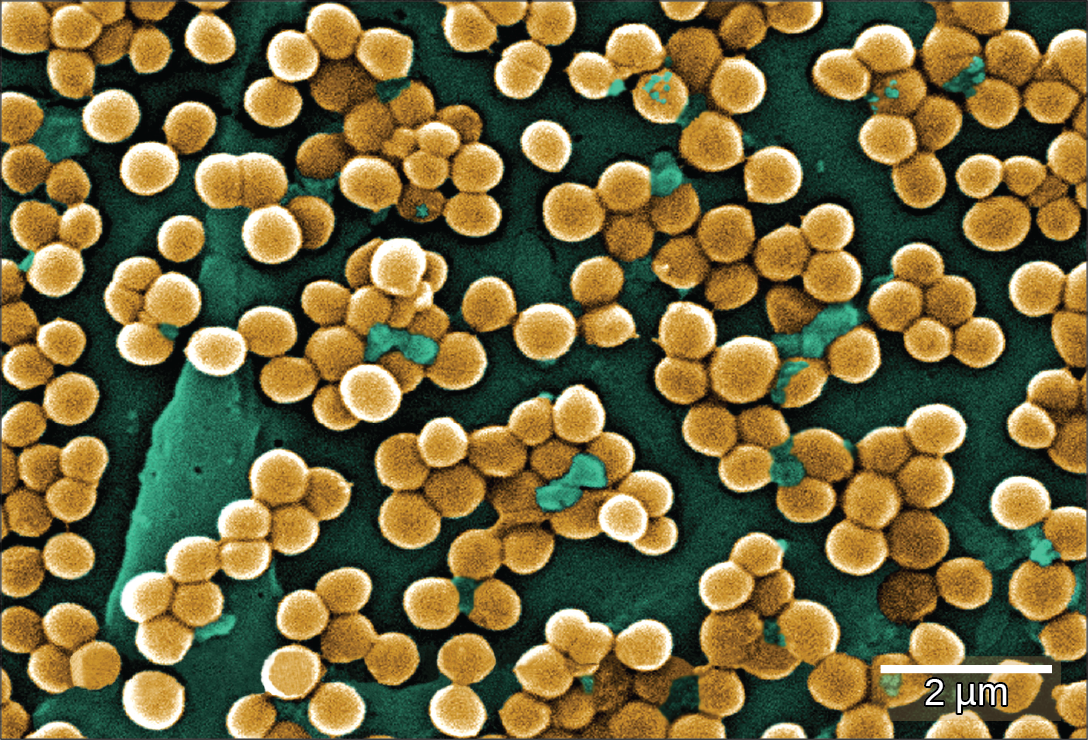
The imprudent use of antibiotics has paved the way for the expansion of resistant bacterial populations. For example, Staphylococcus aureus, often called “staph,” is a common bacterium that can live in the human body and is usually easily treated with antibiotics. However, a very dangerous strain, methicillin-resistant Staphylococcus aureus (MRSA) has made the news over the past few years (Figure 22.25). This strain is resistant to many commonly used antibiotics, including methicillin, amoxicillin, penicillin, and oxacillin. MRSA can cause infections of the skin, but it can also infect the bloodstream, lungs, urinary tract, or sites of injury. While MRSA infections are common among people in healthcare facilities, they have also appeared in healthy people who haven’t been hospitalized, but who live or work in tight populations (like military personnel and prisoners). Researchers have expressed concern about the way this latter source of MRSA targets a much younger population than those residing in care facilities. The Journal of the American Medical Association reported that, among MRSA-afflicted persons in healthcare facilities, the average age is 68, whereas people with “community-associated MRSA” (CA-MRSA) have an average age of 23. Naimi, TS, LeDell, KH, Como-Sabetti, K, et al. Comparison of community- and health care-associated methicillin-resistant Staphylococcus aureus infection. JAMA 290 (2003): 2976–84, doi: 10.1001/jama.290.22.2976.
英語のヒント
抗生物質の軽率な使用は、耐性菌集団の拡大への道を開いてきた。たとえば、しばしばstaphと呼ばれるStaphylococcus aureus、黄色ブドウ球菌は、ヒトの体内に住むことができる一般的な細菌で、通常は抗生物質で容易に治療できる。しかし、メチシリン耐性黄色ブドウ球菌、MRSAという非常に危険な株が、ここ数年、ニュースになっている(図22.25)。この株は、メチシリン、アモキシシリン、ペニシリン、オキサシリンなど、よく使われる多くの抗生物質に耐性をもつ。皮膚感染症を起こすほか、血流、肺、尿路、損傷部位へ感染することもある。MRSA感染は医療施設にいる人によく見られるが、入院歴のない健康な人でも、軍人や受刑者など、密集した集団で暮らしたり働いたりする人に現れている。研究者は、この後者のMRSAが、ケア施設の入所者よりはるかに若い集団を侵すことに懸念を示している。Journal of the American Medical Associationの報告では、医療施設でMRSAに感染した人の平均年齢は68歳だが、「市中関連MRSA」(CA-MRSA)の人は平均23歳である。Naimi, TS、LeDell, KH、Como-Sabetti, Kほか。「市中関連と医療関連のメチシリン耐性Staphylococcus aureus感染の比較」。JAMA 290(2003):2976–84、doi:10.1001/jama.290.22.2976。
OpenStax, Rice University; Biology 2e. (credit: modification of work by Janice Haney Carr; scale-bar data from Matt Russell) · CC BY 4.0 · Source出典

Figure 22.25図 22.25
MRSA. This scanning electron micrograph shows methicillin-resistant Staphylococcus aureus bacteria, commonly known as MRSA. S. aureus is not always pathogenic, but can cause diseases such as food poisoning and skin and respiratory infections. (credit: modification of work by Janice Haney Carr; scale-bar data from Matt Russell)
MRSA。この走査型電子顕微鏡写真は、一般にMRSAとして知られる、メチシリン耐性Staphylococcus aureusを示す。S. aureusは常に病原性というわけではないが、食中毒や、皮膚・呼吸器感染症などを起こすことがある。(クレジット:Janice Haney Carrの作品を改変。スケールバーのデータ:Matt Russell)
In summary, the medical community is facing an antibiotic crisis. Some scientists believe that after years of being protected from bacterial infections by antibiotics, we may be returning to a time in which a simple bacterial infection could again devastate the human population. Researchers are developing new antibiotics, but it takes many years of research and clinical trials, plus financial investments in the millions of dollars, to generate an effective and approved drug.
英語のヒント
まとめると、医療界は抗生物質の危機に直面している。抗生物質によって細菌感染から長年守られてきた後、単純な細菌感染が再び人々に壊滅的な被害を与えうる時代へ、戻りつつあるのかもしれないと考える科学者もいる。研究者は新しい抗生物質を開発しているが、有効で承認を受けた薬を生み出すには、何年もの研究と臨床試験に加え、何百万ドルもの資金投資が必要である。