第22章原核生物:細菌と古細菌
Early Biotechnology: Cheese, Bread, Wine, Beer, and Yogurt初期のバイオテクノロジー:チーズ、パン、ワイン、ビール、ヨーグルト
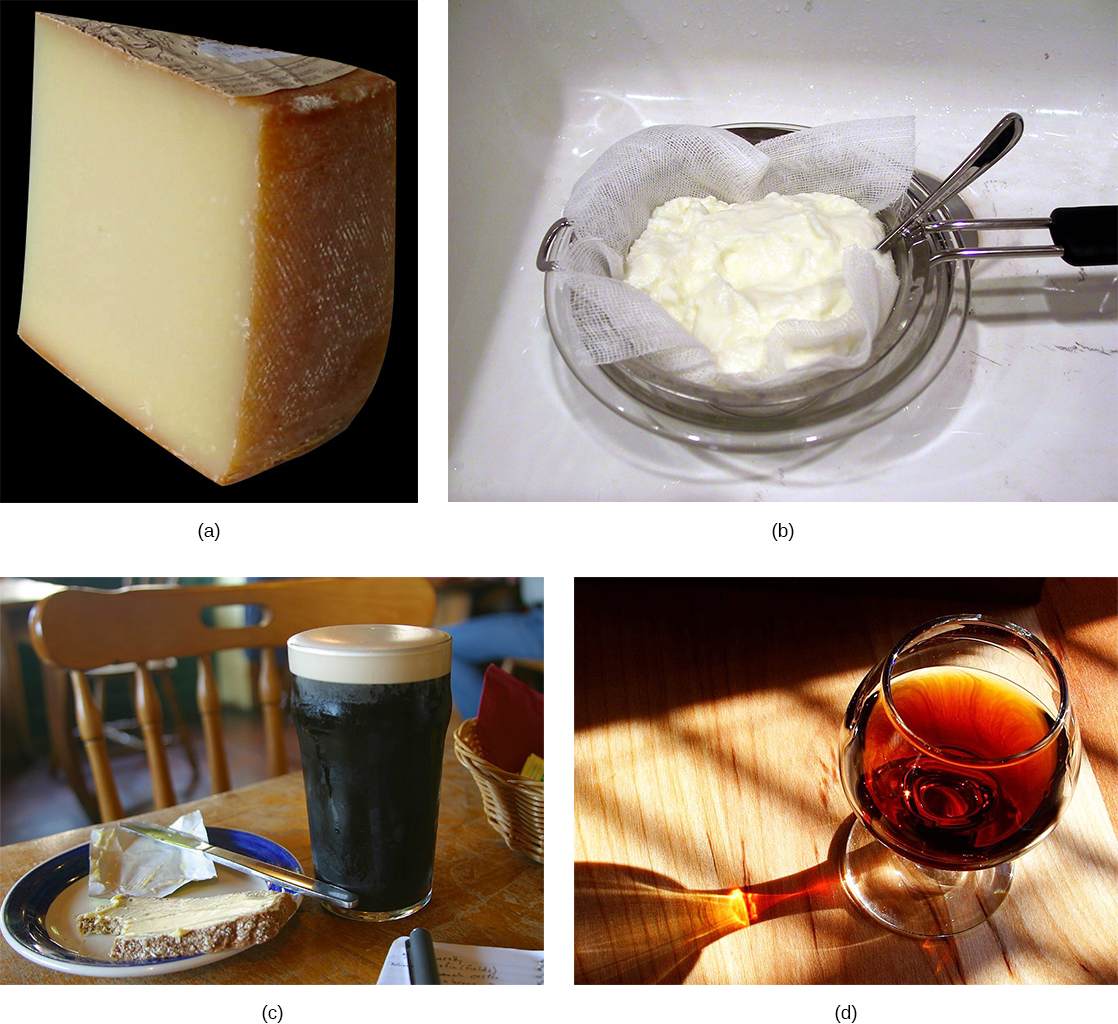
According to the United Nations Convention on Biological Diversity, biotechnology is “any technological application that uses biological systems, living organisms, or derivatives thereof, to make or modify products or processes for specific use." http://www.cbd.int/convention/articles/?a=cbd-02, United Nations Convention on Biological Diversity: Article 2: Use of Terms. The concept of “specific use” involves some sort of commercial application. Genetic engineering, artificial selection, antibiotic production, and cell culture are current topics of study in biotechnology and will be described in later chapters. However, humans were using prokaryotes before the term biotechnology was even coined. Some of the products of this early biotechnology as familiar as cheese and yogurt employ bacteria, while other microbes, such as yeast, a fungus (Figure 22.29), are used to produce bread, wine, and beer.
英語のヒント
国連の生物多様性条約によると、バイオテクノロジーとは、「特定の用途のために製品や工程を作り、または変えるため、生物システム、生物、またはその派生物を使う、あらゆる技術的応用」である。国連生物多様性条約、第2条「用語」。「特定の用途」という概念には、何らかの商業的応用が含まれる。遺伝子工学、人為選択、抗生物質の生産、細胞培養は、現在のバイオテクノロジー研究の主題であり、後の章で説明する。しかし、バイオテクノロジーという語が作られる前から、ヒトは原核生物を利用していた。初期のバイオテクノロジーの製品には、細菌を使うチーズやヨーグルトのような身近なものがある。一方、パン、ワイン、ビールの生産には、菌類である酵母のような、ほかの微生物が使われる(図22.29)。
OpenStax, Rice University; Biology 2e. (credit bread: modification of work by F. Rodrigo/Wikimedia Commons; credit wine: modification of work by Jon Sullivan; credit beer and bread: modification of work by Kris Miller; credit yogurt: modification of work by Jon Sullivan) · CC BY 4.0 · Source出典

Figure 22.29図 22.29
Some foods produced by microorganisms. Some of the products derived from the use of prokaryotes in early biotechnology include (a) cheese, (b) yogurt, (c) beer and bread, and (d) wine. (credit bread: modification of work by F. Rodrigo/Wikimedia Commons; credit wine: modification of work by Jon Sullivan; credit beer and bread: modification of work by Kris Miller; credit yogurt: modification of work by Jon Sullivan)
微生物で作る食品の例。初期のバイオテクノロジーにおける原核生物利用の産物には、(a)チーズ、(b)ヨーグルト、(c)ビールとパン、(d)ワインがある。(クレジット・パン:F. Rodrigo/Wikimedia Commonsの作品を改変。ワイン:Jon Sullivanの作品を改変。ビールとパン:Kris Millerの作品を改変。ヨーグルト:Jon Sullivanの作品を改変)
Cheese production began around 4,000 to 7,000 years ago when humans began to breed animals and process their milk. Fermentation in this case preserves nutrients: Milk will spoil relatively quickly, but when processed as cheese, it is more stable. As for beer, the oldest records of brewing are about 6,000 years old and were an integral part of the Sumerian culture. Evidence indicates that the Sumerians discovered fermentation by chance. Wine has been produced for about 4,500 years, and evidence suggests that cultured milk products, like yogurt, have existed for at least 4,000 years.
英語のヒント
チーズの生産は、約4000〜7000年前、人が動物を飼育し、乳を加工し始めたころに始まった。この場合、発酵は栄養分を保存する。乳は比較的早く腐るが、チーズに加工すると、より安定して保存できる。ビールについては、醸造の最古の記録は約6000年前で、シュメール文化に欠かせない一部だった。証拠によると、シュメール人は偶然に発酵を発見した。ワインは約4500年間作られており、ヨーグルトのような発酵乳製品は、少なくとも4000年前から存在したことを示す証拠がある。
Using Prokaryotes to Clean up Our Planet: Bioremediation原核生物で地球をきれいにする:バイオレメディエーション
Microbial bioremediation is the use of prokaryotes (or microbial metabolism) to remove pollutants. Bioremediation has been used to remove agricultural chemicals (e.g., pesticides, fertilizers) that leach from soil into groundwater and the subsurface. Certain toxic metals and oxides, such as selenium and arsenic compounds, can also be removed from water by bioremediation. The reduction of SeO4-2 to SeO3-2 and to Se0 (metallic selenium) is a method used to remove selenium ions from water. Mercury (Hg) is an example of a toxic metal that can be removed from an environment by bioremediation. As an active ingredient of some pesticides, mercury is used in industry and is also a by-product of certain processes, such as battery production. Methyl mercury is usually present in very low concentrations in natural environments, but it is highly toxic because it accumulates in living tissues. Several species of bacteria can carry out the biotransformation of toxic mercury into nontoxic forms. These bacteria, such as Pseudomonas aeruginosa, can convert Hg+2 into Hg0, which is nontoxic to humans.
英語のヒント
微生物によるバイオレメディエーションは、原核生物、または微生物の代謝を使って汚染物質を除くことである。土壌から地下水や地下へ溶け出す農薬や肥料などの農業用化学物質を取り除くために使われてきた。セレンやヒ素の化合物など、特定の有毒な金属や酸化物も、水から除ける。SeO4-2をSeO3-2、さらに金属セレンSe0へ還元することは、水からセレンイオンを除く方法の一つである。水銀Hgも、バイオレメディエーションで環境から除ける有毒金属の例である。一部の農薬の有効成分として水銀は工業利用され、電池製造など、特定の工程の副産物でもある。メチル水銀は自然環境には通常ごく低濃度で存在するが、生体組織に蓄積するため、毒性が非常に高い。いくつかの細菌種は、有毒な水銀を無毒の形へ生物変換できる。Pseudomonas aeruginosaなどの細菌は、Hg+2を、ヒトに無毒なHg0へ変換できる。
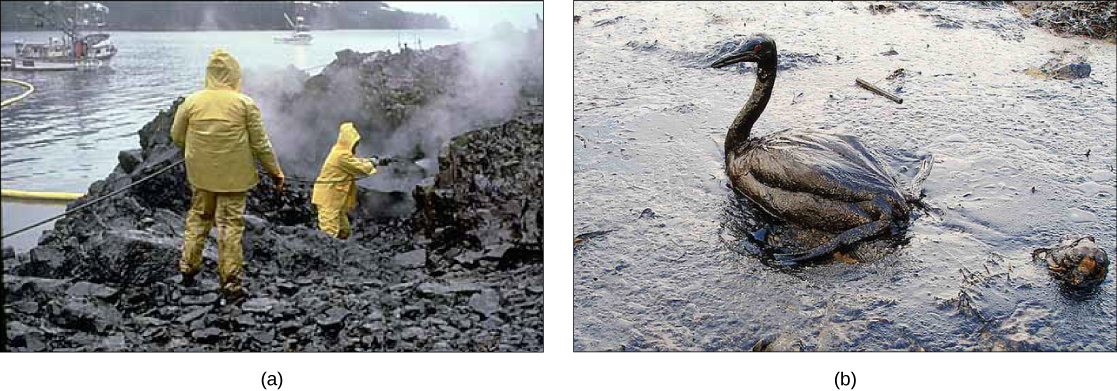
One of the most useful and interesting examples of the use of prokaryotes for bioremediation purposes is the cleanup of oil spills. The significance of prokaryotes to petroleum bioremediation has been demonstrated in several oil spills in recent years, such as the Exxon Valdez spill in Alaska (1989) (Figure 22.30), the Prestige oil spill in Spain (2002), the spill into the Mediterranean from a Lebanon power plant (2006), and more recently, the BP oil spill in the Gulf of Mexico (2010). In the case of oil spills in the ocean, ongoing natural bioremediation tends to occur, since there are oil-consuming bacteria in the ocean prior to the spill. In addition to these naturally occurring oil-degrading bacteria, humans select and engineer bacteria that possess the same capability with increased efficacy and spectrum of hydrocarbon compounds that can be processed. Bioremediation is enhanced by the addition of inorganic nutrients that help bacteria to grow.
英語のヒント
原核生物によるバイオレメディエーションで、最も有用で興味深い例の一つは、流出油の除去である。原核生物が石油の生物浄化に重要であることは、近年のいくつもの流出事故で示されている。1989年のアラスカのエクソン・バルディーズ号事故(図22.30)、2002年のスペインのプレスティージ号事故、2006年のレバノンの発電所から地中海への流出、さらに最近の2010年のメキシコ湾でのBPの事故などである。海の流出事故では、事故前から油を消費する細菌が海にいるため、自然のバイオレメディエーションが継続的に起こりやすい。自然に存在する油分解細菌に加え、人は同じ能力をもつ細菌を選び、改変して、処理効率と、処理できる炭化水素化合物の範囲を広げている。細菌の成長を助ける無機栄養素を加えることによって、生物浄化は促進される。
Some hydrocarbon-degrading bacteria feed on hydrocarbons in the oil droplet, breaking down the hydrocarbons into smaller subunits. Some species, such as Alcanivorax borkumensis, produce surfactants that solubilize the oil (making it soluble in water), whereas other bacteria degrade the oil into carbon dioxide. Under ideal conditions, it has been reported that up to 80 percent of the nonvolatile components in oil can be degraded within one year of the spill. Other oil fractions containing aromatic and highly branched hydrocarbon chains are more difficult to remove and remain in the environment for longer periods of time.
英語のヒント
一部の炭化水素分解細菌は、油滴中の炭化水素を食べ、それをより小さな構成単位へ分解する。Alcanivorax borkumensisなどの種は、油を可溶化し、水に溶けるようにする界面活性剤を作る。一方、油を二酸化炭素へ分解する細菌もいる。理想的な条件では、油の不揮発性成分の最大80%が、流出後1年以内に分解されると報告されている。芳香族や、高度に枝分かれした炭化水素鎖を含む、ほかの油の成分は除去しにくく、より長く環境中に残る。
OpenStax, Rice University; Biology 2e. (credit a: modification of work by NOAA; credit b: modification of work by GOLUBENKOV, NGO: Saving Taman) · CC BY 4.0 · Source出典

Figure 22.30図 22.30
Prokaryotes and bioremediation. (a) Cleaning up oil after the Exxon Valdez spill in Alaska, workers hosed oil from beaches and then used a floating boom to corral the oil, which was finally skimmed from the water surface. Some species of bacteria are able to solubilize and degrade the oil. (b) One of the most catastrophic consequences of oil spills is the damage to fauna. (credit a: modification of work by NOAA; credit b: modification of work by GOLUBENKOV, NGO: Saving Taman)
英語のヒント
原核生物とバイオレメディエーション。(a)アラスカのエクソン・バルディーズ号事故後の油の除去では、作業員が浜辺の油をホースで洗い流し、浮遊式のオイルフェンスで囲い集め、最後に水面からすくい取った。一部の細菌種は、油を可溶化して分解できる。(b)油流出の最も壊滅的な結果の一つが、動物相への被害である。(クレジットa:NOAAの作品を改変。クレジットb:GOLUBENKOV、NGO: Saving Tamanの作品を改変)