第26章種子植物
26.4 The Role of Seed Plants26.4 種子植物の役割
Learning Objectives学習目標
By the end of this section, you will be able to do the following:
この節を学び終えると、次のことができるようになる。
- Explain how angiosperm diversity is due, in part, to multiple complex interactions with animals被子植物の多様性の一部が、動物との多様で複雑な相互作用に由来することを説明する。
- Describe ways in which pollination occurs受粉が起こる方法を述べる。
- Discuss the roles that plants play in ecosystems and how deforestation threatens plant biodiversity植物が生態系で果たす役割と、森林破壊が植物の生物多様性を脅かす仕組みを論じる。
Without seed plants, life as we know it would not be possible. Plants play a key role in the maintenance of terrestrial ecosystems through the stabilization of soils, cycling of carbon, and climate moderation. Large tropical forests release oxygen and act as carbon dioxide “sinks.” Seed plants provide shelter to many life forms, as well as food for herbivores, thereby indirectly feeding carnivores. Plant secondary metabolites are used for medicinal purposes and industrial production. Virtually all animal life is dependent on plants for survival.
英語のヒント
種子植物がなければ、私たちの知る生命のあり方は成り立たない。植物は土壌を安定させ、炭素を循環させ、気候を和らげることで、陸上生態系の維持に重要な役割を果たす。広大な熱帯林は酸素を放出し、二酸化炭素の「吸収源」として働く。種子植物は多くの生物にすみかを与え、草食動物には食物も供給するため、間接的には肉食動物も養っている。植物の二次代謝産物は医療や工業生産に利用される。事実上、ほぼすべての動物は生存を植物に依存している。
Animals and Plants: Herbivory動物と植物:植食
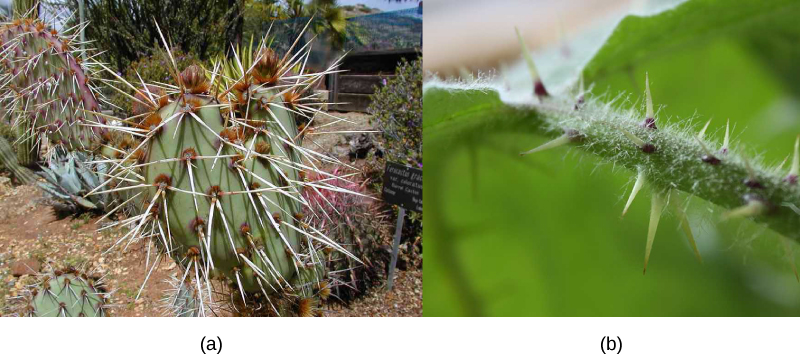
Coevolution of flowering plants and insects is a hypothesis that has received much attention and support, especially because both angiosperms and insects diversified at about the same time in the middle Mesozoic. Many authors have attributed the diversity of plants and insects to both pollination and herbivory, or the consumption of plants by insects and other animals. Herbivory is believed to have been as much a driving force as pollination. Coevolution of herbivores and plant defenses is easily and commonly observed in nature. Unlike animals, most plants cannot outrun predators or use mimicry to hide from hungry animals (although mimicry has been used to entice pollinators). A sort of arms race exists between plants and herbivores. To “combat” herbivores, some plant seeds—such as acorn and unripened persimmon—are high in alkaloids and therefore unsavory to some animals. Other plants are protected by bark, although some animals developed specialized mouth pieces to tear and chew vegetal material. Spines and thorns (Figure 26.20) deter most animals, except for mammals with thick fur, and some birds have specialized beaks to get past such defenses.
英語のヒント
顕花植物と昆虫の共進化という仮説は、多くの注目と支持を集めてきた。とくに、被子植物と昆虫の両方が中生代の中頃というほぼ同じ時期に多様化したことが、その理由となっている。多くの著者は、植物と昆虫の多様性を、受粉と植食の両方に結びつけている。植食とは、昆虫などの動物が植物を食べることである。植食は受粉に劣らぬ進化の原動力になったと考えられている。植食動物と植物の防御の共進化は、自然界で広く容易に観察できる。動物とは違い、ほとんどの植物は捕食者より速く走って逃げたり、擬態で空腹の動物から隠れたりできない(ただし、送粉者を誘い寄せるために擬態が使われることはある)。植物と植食動物の間には、一種の軍拡競争が存在する。植食動物と「闘う」ために、ドングリや未熟なカキのように、アルカロイドを多く含み、一部の動物にはおいしく感じられない種子をつける植物がある。樹皮で身を守る植物もあるが、動物のなかには植物質を引き裂いてかむための特殊な口器を発達させたものもいる。針状のとげや枝由来のとげ(図26.20)は、厚い毛皮をもつ哺乳類を除く多くの動物を阻む。一部の鳥は、こうした防御をくぐり抜ける特殊なくちばしをもつ。
OpenStax, Rice University; Biology 2e. (credit a: modification of work by Jon Sullivan; credit b: modification of work by I. Sáček, Sr.) · CC BY 4.0 · Source出典
Figure 26.20図 26.20
Plant defenses. (a) Spines and (b) thorns are examples of plant defenses. (credit a: modification of work by Jon Sullivan; credit b: modification of work by I. Sáček, Sr.)
植物の防御。(a)針状のとげと(b)枝由来のとげは、植物の防御の例である。(出典a:Jon Sullivanの作品を改変、b:I. Sáček, Sr.の作品を改変)
Herbivory has been exploited by seed plants for their own benefit. The dispersal of fruits by herbivorous animals is a striking example of mutualistic relationships. The plant offers to the herbivore a nutritious source of food in return for spreading the plant’s genetic material to a wider area.
英語のヒント
種子植物は、植食を自分たちの利益にも利用している。植食動物による果実の散布は、相利共生の顕著な例である。植物は栄養豊かな食物を植食動物に提供し、その見返りとして、自らの遺伝物質をより広い地域へ運んでもらう。
An extreme example of coevolution (discovered by Daniel Janzen) between an animal and a plant is exemplified by Mexican acacia trees and their attendant acacia ants Pseudomyrmex spp. (this is termed myrmecophytism). The trees support the ants with shelter and food: The ants nest in the hollows of large thorns produced by the tree and feed on sugary secretions produced at the ends of the leaves. The sugar pellets also help to keep the ants from interfering with insect pollinators. In return, ants discourage herbivores, both invertebrates and vertebrates, by stinging and attacking leaf-eaters and insects ovipositing on the plants. The ants also help to remove potential plant pathogens, such as fungal growths. Another case of insect-plant coevolution is found in bracken fern (Pteridium aquilinum), whose subspecies are found throughout the world. Bracken ferns produce a number of “secondary plant compounds” in their adult fronds that serve as defensive compounds against nonadapted insect attack (these compounds include cyanogenic glucosides, tannins, and phenolics). However, during the “fiddlehead” or crozier stage, bracken secretes nutritious sugary and proteinaceous compounds from special “nectaries” that attract ants and even species of jumping spiders, all of which defend the plant’s croziers until they are fully unfolded. These opportunistic groups of protective arthropods greatly reduce the damage that otherwise would occur during the early stages of growth.
英語のヒント
動物と植物の共進化の極端な例として、メキシコのアカシアと、それにすみつくアカシアアリPseudomyrmex属の関係がある。ダニエル・ジャンゼンが発見したこの関係は、アリ植物共生と呼ばれる。木はアリにすみかと食物を提供する。アリは木がつくる大きなとげの空洞に巣をつくり、葉の先端から出る糖分の多い分泌物を食べる。糖分を含む粒は、アリが送粉昆虫の活動を妨げないようにする働きもある。その見返りに、アリは葉を食べる動物や植物に産卵する昆虫を刺したり攻撃したりして、無脊椎動物と脊椎動物の両方の植食者を遠ざける。菌類の増殖など、植物の病気を引き起こしかねないものの除去にも役立つ。昆虫と植物の共進化の別の例は、世界中に亜種が分布するワラビ(Pteridium aquilinum)に見られる。ワラビは成長した葉に多様な「植物二次化合物」をつくる。青酸配糖体、タンニン、フェノール類などの化合物は、それらに適応していない昆虫の攻撃に対する防御として働く。一方、若い葉が渦巻き状になった「フィドルヘッド」または巻葉の段階では、ワラビは特殊な「蜜腺」から、糖やタンパク質に富む栄養物を分泌する。これにアリや一部のハエトリグモまでが集まり、葉が完全に開くまで巻葉を守る。機会に応じて集まるこうした保護役の節足動物は、いなければ成長初期に生じる被害を大きく減らす。
Animals and Plants: Pollination動物と植物:受粉
Flowers pollinated by wind are usually small, feathery, and visually inconspicuous. Grasses are a successful group of flowering plants that are wind pollinated. They produce large amounts of powdery pollen carried over large distances by the wind. Some large trees such as oaks, maples, and birches are also wind pollinated.
英語のヒント
風で受粉する花は、通常小さく羽毛状で、見た目が目立たない。イネ科は風媒で繁栄した顕花植物の一群である。粉状の花粉を大量につくり、その花粉は風で遠くまで運ばれる。オーク、カエデ、カバノキなどの大木にも、風媒のものがある。
More than 80 percent of angiosperms depend on animals for pollination (technically the transfer of pollen from the anther to the stigma). Consequently, plants have developed many adaptations to attract pollinators. With over 200,000 different plants dependent on animal pollination, the plant needs to advertise to its pollinators with some specificity. The specificity of specialized plant structures that target animals can be very surprising. It is possible, for example, to determine the general type of pollinators favored by a plant by observing the flower’s physical characteristics. Many bird or insect-pollinated flowers secrete nectar, which is a sugary liquid. They also produce both fertile pollen, for reproduction, and sterile pollen rich in nutrients for birds and insects. Many butterflies and bees can detect ultraviolet light, and flowers that attract these pollinators usually display a pattern of ultraviolet reflectance that helps them quickly locate the flower's center. In this manner, pollinating insects collect nectar while at the same time are dusted with pollen (Figure 26.21). Large, red flowers with little smell and a long funnel shape are preferred by hummingbirds, who have good color perception, a poor sense of smell, and need a strong perch. White flowers that open at night attract moths. Other animals—such as bats, lemurs, and lizards—can also act as pollinating agents. Any disruption to these interactions, such as the disappearance of bees, for example as a consequence of colony collapse disorders, can lead to disaster for agricultural industries that depend heavily on pollinated crops.
英語のヒント
被子植物の80%以上は、受粉を動物に頼っている。厳密には、受粉とは花粉が葯から柱頭へ移動することである。このため、植物は送粉者を引き寄せる多くの適応を発達させてきた。20万種以上もの植物が動物による受粉に依存するため、植物はある程度特定の相手に向けて、自分の存在を知らせる必要がある。動物を相手とする植物の特殊な構造には、驚くほどの特異性が見られる。例えば、花の形態的特徴を観察すれば、その植物が好む送粉者のおおまかな種類を判断できる。鳥や昆虫に受粉してもらう多くの花は、糖分を含む液体である花蜜を分泌する。また、生殖用の稔性花粉と、鳥や昆虫の栄養になる不稔花粉の両方をつくる。多くのチョウやハチは紫外線を感知でき、これらを引き寄せる花は通常、花の中心をすばやく見つけられるような紫外線反射の模様を示す。こうして送粉昆虫は花蜜を集めると同時に、花粉を体に付着させる(図26.21)。匂いが弱く、細長い漏斗形をした大きな赤い花は、ハチドリに好まれる。ハチドリは色の知覚に優れるが嗅覚は乏しく、しっかりした止まり場所を必要とする。夜に開く白い花はガを引き寄せる。コウモリ、キツネザル、トカゲなど、ほかの動物も送粉者になる。こうした相互作用が乱れると、受粉を必要とする作物に大きく依存する農業に災難が生じうる。例えば、蜂群崩壊症候群などによってハチが姿を消す場合がそれに当たる。
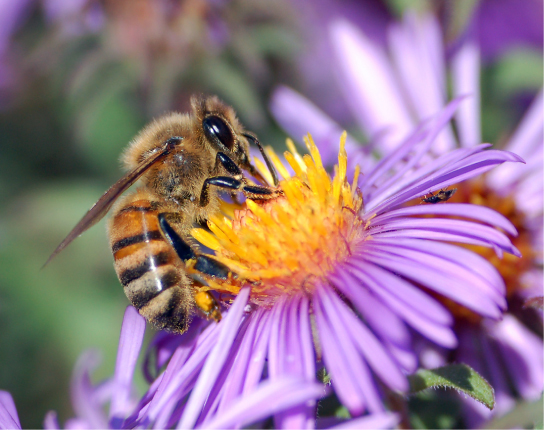


Figure 26.21図 26.21
Pollination. As a bee collects nectar from a flower, it is dusted by pollen, which it then disperses to other flowers. (credit: John Severns)
受粉。ハチが花蜜を集めると体に花粉がつき、その花粉をほかの花へ運ぶ。(出典:John Severns)