第26章種子植物
Diversity of Gymnosperms裸子植物の多様性
Modern gymnosperms are classified into four phyla. Coniferophyta, Cycadophyta, and Ginkgophyta are similar in their pattern of seed development and also in their production of secondary cambium (cells that generate the vascular system of the trunk or stem and are partially specialized for water transportation). However, the three phyla are not closely related phylogenetically to each other. Gnetophyta are considered the closest group to angiosperms because they produce true xylem tissue, with vessels as well as the tracheids found in the rest of the gymnosperms. It is possible that vessel elements arose independently in the two groups
英語のヒント
現在の裸子植物は四つの門に分類される。球果植物門、ソテツ植物門、イチョウ植物門は、種子の発達の様式と、二次形成層をつくる点で似ている。二次形成層の細胞は、幹や茎の維管束系を生み出し、一部は水の輸送に特化する。しかし、これら三つの門は、系統的に互いに近縁というわけではない。グネツム植物門は、他の裸子植物にもある仮道管に加えて道管をもつ、真の木部組織をつくることから、被子植物に最も近い群と考えられている。道管要素は、二つの群で独立に生じた可能性もある。
Conifers (Coniferophyta)針葉樹(球果植物門)
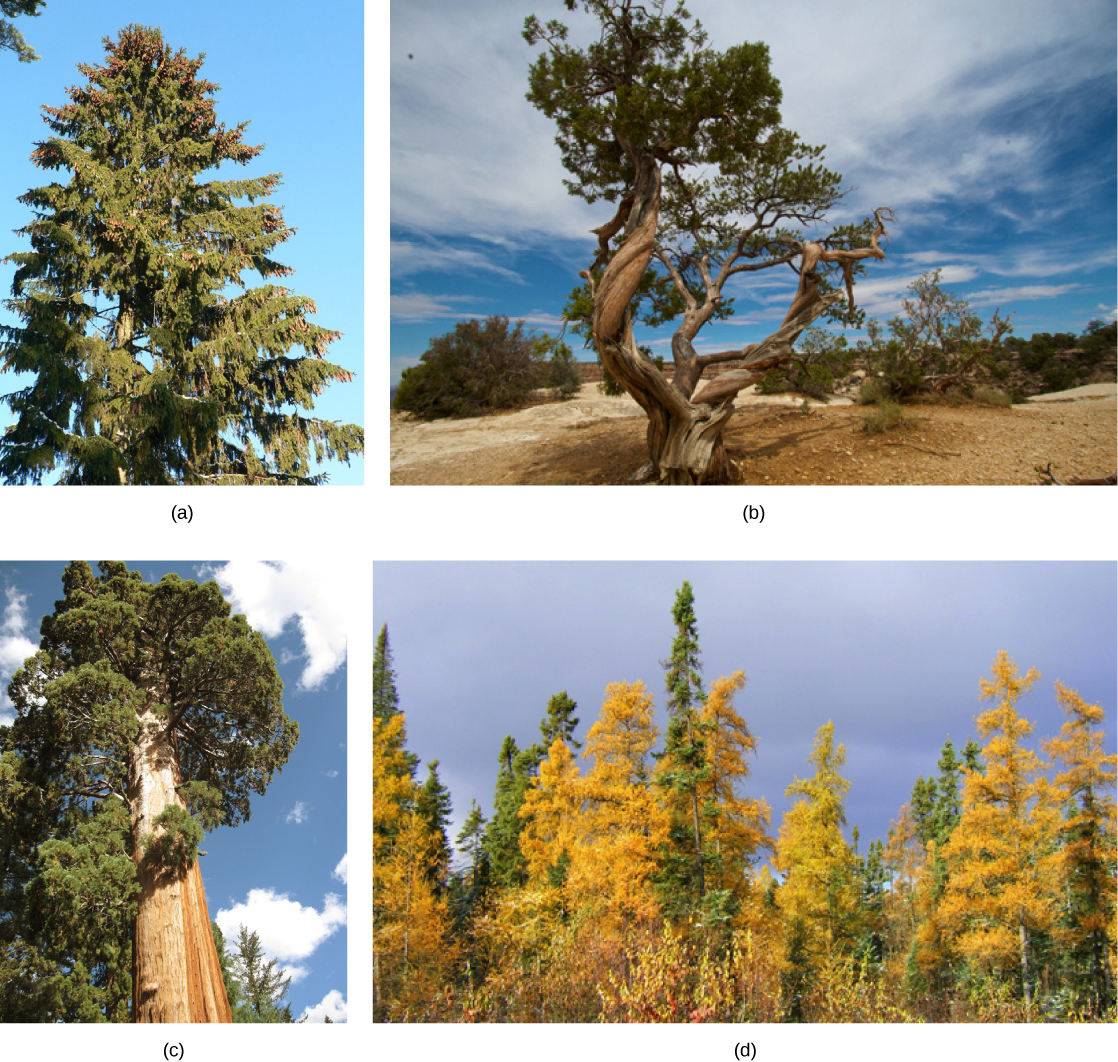
Conifers are the dominant phylum of gymnosperms, with the greatest variety of species (Figure 26.9). Typical conifers are tall trees that bear scale-like or needle-like leaves. Water evaporation from leaves is reduced by their narrow shape and a thick cuticle. Snow easily slides off needle-shaped leaves, keeping the snow load light, thus reducing broken branches. Such adaptations to cold and dry weather explain the predominance of conifers at high altitudes and in cold climates. Conifers include familiar evergreen trees such as pines, spruces, firs, cedars, sequoias, and yews. A few species are deciduous and lose their leaves in fall. The bald cypress, dawn redwood, European larch and the tamarack (Figure 26.9c) are examples of deciduous conifers. Many coniferous trees are harvested for paper pulp and timber. The wood of conifers is more primitive than the wood of angiosperms; it contains tracheids, but no vessel elements, and is therefore referred to as “soft wood.”
英語のヒント
針葉樹は、裸子植物の中で優占する門であり、最も多様な種を含む(図26.9)。典型的な針葉樹は、鱗片状または針状の葉をつける高木である。葉が細く、クチクラが厚いため、葉からの水の蒸発が抑えられる。針状の葉からは雪が容易に滑り落ち、積雪の荷重が小さく保たれるので、枝の折損も減る。このような寒く乾燥した気候への適応によって、高地や寒冷地で針葉樹が優占する理由を説明できる。針葉樹には、マツ、トウヒ、モミ、ヒマラヤスギ、セコイア、イチイなど、よく知られた常緑樹が含まれる。少数の種は落葉性で、秋に葉を落とす。ラクウショウ、メタセコイア、ヨーロッパカラマツ、アメリカカラマツ(図26.9c)は、落葉性針葉樹の例である。多くの針葉樹は、製紙用パルプや材木のために伐採される。針葉樹の材は、被子植物の材より原始的で、仮道管を含むが道管要素を含まないため、「軟材」と呼ばれる。
OpenStax, Rice University; Biology 2e. (credit a: modification of work by Rosendahl; credit b: modification of work by Alan Levine; credit c: modification of work by Wendy McCormic; credit d: modification of work by Micky Zlimen) Embedded rights notice: Public domain image, not copyrighted, no rights reserved, royalty free stock photo, free for any use including commercial. · CC BY 4.0 · Source出典
Figure 26.9図 26.9
Conifers. Conifers are the dominant form of vegetation in cold or arid environments and at high altitudes. Shown here are the (a) evergreen spruce Picea sp., (b) juniper Juniperus sp., (c) coastal redwood or sequoia Sequoia sempervirens, and (d) the tamarack Larix laricina. Notice the deciduous yellow leaves of the tamarack. (credit a: modification of work by Rosendahl; credit b: modification of work by Alan Levine; credit c: modification of work by Wendy McCormic; credit d: modification of work by Micky Zlimen)
針葉樹。針葉樹は、寒冷または乾燥した環境や高地で、植生の主要な形となる。ここには、(a)常緑のトウヒ属の一種 Picea sp.、(b)ビャクシン属の一種 Juniperus sp.、(c)コーストレッドウッド、すなわちセコイア Sequoia sempervirens、(d)アメリカカラマツ Larix laricina を示す。アメリカカラマツの、黄色くなって落葉する葉に注目しよう。(a:Rosendahl の作品を改変、b:Alan Levine の作品を改変、c:Wendy McCormic の作品を改変、d:Micky Zlimen の作品を改変)
Cycadsソテツ類
Cycads thrive in mild climates, and are often mistaken for palms because of the shape of their large, compound leaves. Cycads bear large strobili or cones (Figure 26.10), and may be pollinated by beetles rather than wind, which is unusual for a gymnosperm. Large cycads dominated the landscape during the age of dinosaurs in the Mesozoic, but only a hundred or so smaller species persisted to modern times. They face possible extinction, and several species are protected through international conventions. Because of their attractive shape, they are often used as ornamental plants in gardens in the tropics and subtropics.
英語のヒント
ソテツ類は温暖な気候でよく育ち、大きな複葉の形から、しばしばヤシと間違えられる。大きな胞子嚢穂、すなわち球果をつけ(図26.10)、風ではなく甲虫によって受粉することがある。これは裸子植物としては珍しい。中生代の恐竜の時代には、大型のソテツ類が景観の主役だったが、現代まで存続したのは百種ほどの小型の種だけである。絶滅のおそれに直面しており、いくつかの種は国際条約によって保護されている。姿が美しいため、熱帯や亜熱帯の庭園で観賞植物としてよく用いられる。
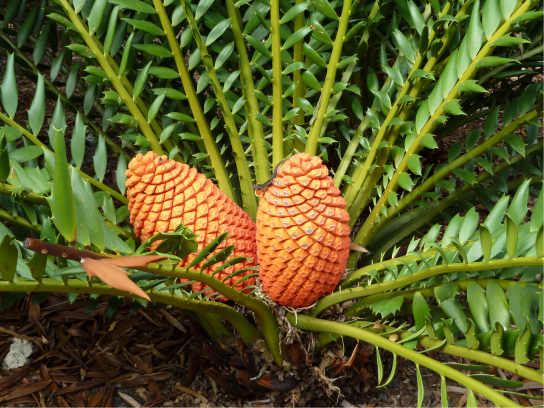
Figure 26.10図 26.10
Cycad. This cycad, Encephalartos ferox, has large cones and broad, fern-like leaves. (credit: Wendy Cutler)
ソテツ類。このソテツの一種 Encephalartos ferox は、大きな球果と、シダに似た幅広い葉をもつ。(出典:Wendy Cutler)
Ginkgophytesイチョウ類
The single surviving species of the ginkgophytes group is Ginkgo biloba (Figure 26.11). Its fan-shaped leaves—unique among seed plants because they feature a dichotomous venation pattern—turn yellow in autumn and fall from the tree. For centuries, G. biloba was cultivated by Chinese Buddhist monks in monasteries, which ensured its preservation. It is planted in public spaces because it is unusually resistant to pollution. Male and female organs are produced on separate plants. Typically, gardeners plant only male trees because the seeds produced by the female plant have an off-putting smell of rancid butter.
英語のヒント
イチョウ類で現存する種は、イチョウ Ginkgo biloba 一種だけである(図26.11)。扇形の葉には二又分岐の葉脈があり、この点で種子植物の中でも独特である。葉は秋に黄色くなり、木から落ちる。何世紀にもわたり、中国の仏僧が寺院でイチョウを栽培し、それによって存続が確保された。汚染に非常に強いため、公共の場所にも植えられる。雄性器官と雌性器官は、別々の個体に形成される。雌株の種子には、腐敗したバターのような不快なにおいがあるため、通常、造園では雄株だけを植える。
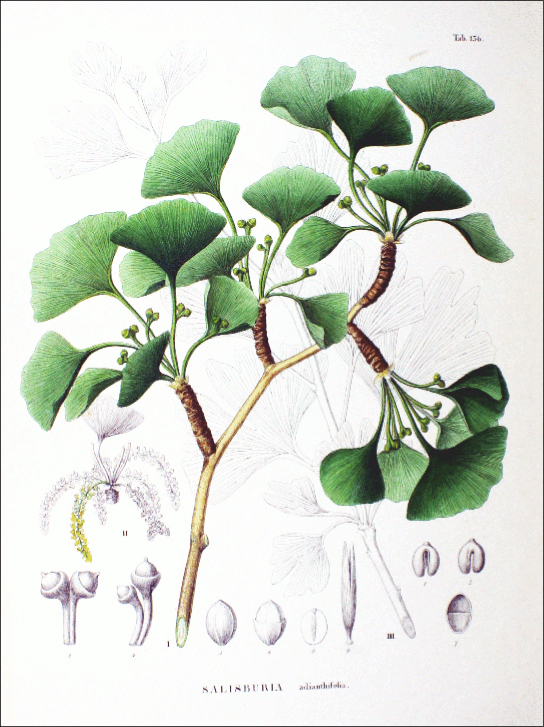


Figure 26.11図 26.11
Ginkgo. This plate from the 1870 book Flora Japonica, Sectio Prima (Tafelband) depicts the leaves and fruit of Ginkgo biloba, as drawn by Philipp Franz von Siebold and Joseph Gerhard Zuccarini.
イチョウ。1870年刊の『Flora Japonica, Sectio Prima(Tafelband)』のこの図版は、Philipp Franz von Siebold と Joseph Gerhard Zuccarini が描いたイチョウ Ginkgo biloba の葉と果実を示す。
Gnetophytesグネツム類
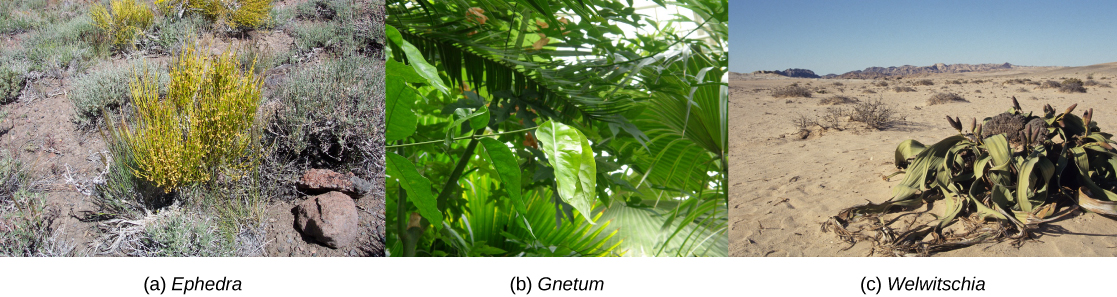
The phylogenetic position of the gnetophytes is not currently resolved. Their possession of vessel elements suggests they are the closest relative to modern angiosperms. However, molecular analysis places them closer to the conifers. The three living genera are quite dissimilar: Ephedra, Gnetum, and Welwitschia (Figure 26.12), which may indicate that the group is not monophyletic. Like angiosperms, they have broad leaves. Ephedra (Figure 26.12a) occurs in dry areas of the West Coast of the United States and Mexico. Ephedra’s small, scale-like leaves are the source of the compound ephedrine, which is used in medicine as a potent decongestant. Because ephedrine is similar to amphetamines, both in chemical structure and neurological effects, its use is restricted to prescription drugs. Gnetum species (Figure 26.12b) are found in some parts of Africa, South America, and Southeast Asia, and include trees, shrubs and vines. Welwitschia (Figure 26.12c) is found in the Namib desert, and is possibly the oddest member of the group. It produces only two leaves, which grow continuously throughout the life of the plant (some plants are hundreds of years old). Like the ginkgos, Welwitschia produces male and female gametes on separate plants.
英語のヒント
グネツム類の系統的位置は、現在も解決していない。道管要素をもつことは、現生被子植物の最も近い類縁群であることを示唆する。しかし、分子解析では針葉樹により近い位置に置かれる。現存する三属、マオウ属 Ephedra、グネツム属 Gnetum、ウェルウィッチア属 Welwitschia は、互いにかなり異なっている(図26.12)。これは、この群が単系統ではないことを示している可能性がある。被子植物と同じく、幅広い葉をもつ。マオウ属(図26.12a)は、米国西海岸とメキシコの乾燥地に生育する。小さな鱗片状の葉は、医薬品で強力なうっ血除去薬として使われる化合物、エフェドリンの原料となる。エフェドリンは化学構造と神経系への作用の両面でアンフェタミンに似ているため、その使用は処方薬に限られる。グネツム属の種(図26.12b)は、アフリカ、南米、東南アジアの一部に見られ、高木、低木、つる植物を含む。ウェルウィッチア(図26.12c)はナミブ砂漠に生育し、おそらくこの群で最も奇妙な植物である。葉は二枚しかつくらず、その葉は植物の一生を通じて伸び続ける。数百歳に達する個体もある。イチョウと同様、ウェルウィッチアは雄性配偶子と雌性配偶子を別々の個体でつくる。
OpenStax, Rice University; Biology 2e. (credit a: modification of work by USDA; credit b: modification of work by Malcolm Manners; credit c: modification of work by Derek Keats) · CC BY 4.0 · Source出典

Figure 26.12図 26.12
(a) Ephedra viridis, known by the common name Mormon tea, grows on the West Coast of the United States and Mexico. (b) Gnetum gnemon grows in Malaysia. (c) The large Welwitschia mirabilis can be found in the Namibian desert. (credit a: modification of work by USDA; credit b: modification of work by Malcolm Manners; credit c: modification of work by Derek Keats)
(a)モルモンティーという通称で知られる Ephedra viridis は、米国西海岸とメキシコに生育する。(b)Gnetum gnemon はマレーシアに生育する。(c)大型の Welwitschia mirabilis は、ナミビアの砂漠で見られる。(a:USDA の作品を改変、b:Malcolm Manners の作品を改変、c:Derek Keats の作品を改変)