第26章種子植物
The Importance of Seed Plants in Human Life人間の生活における種子植物の重要性
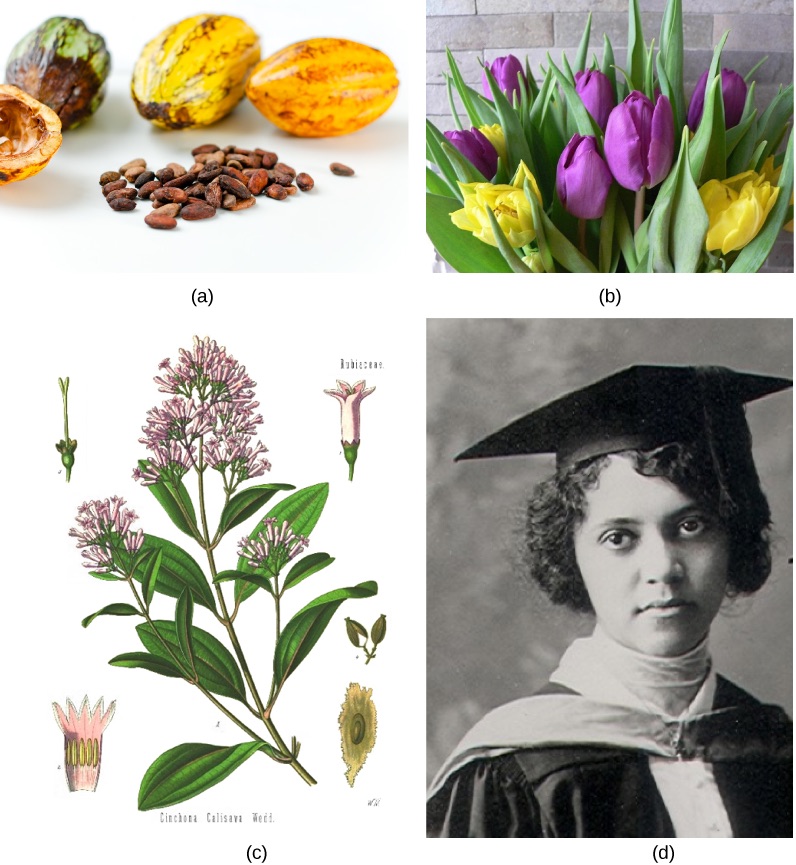
Seed plants are the foundation of human diets across the world (Figure 26.22). Many societies eat almost exclusively vegetarian fare and depend solely on seed plants for their nutritional needs. A few crops (rice, wheat, and potatoes) dominate the agricultural landscape. Many crops were developed during the agricultural revolution, when human societies made the transition from nomadic hunter–gatherers to horticulture and agriculture. Cereals, rich in carbohydrates, provide the staple of many human diets. Beans and nuts supply proteins. Fats are derived from crushed seeds, as is the case for peanut and rapeseed (canola) oils, or fruits such as olives. Animal husbandry also consumes large quantities of crop plants.
英語のヒント
種子植物は世界中で人間の食生活の基盤となっている(図26.22)。多くの社会では、食事のほぼすべてが植物性の食品であり、栄養を種子植物だけに頼っている。農地の大部分を占めるのは、イネ、コムギ、ジャガイモという少数の作物である。多くの作物は、人間社会が移動型の狩猟採集生活から園芸・農耕へ移行した農業革命期に生み出された。炭水化物に富む穀類は、多くの人々の主食となる。豆類やナッツ類はタンパク質を供給する。脂肪は、ラッカセイ油やナタネ(キャノーラ)油のように種子を砕いて得る場合もあれば、オリーブなどの果実から得る場合もある。畜産も大量の作物を消費する。
Staple crops are not the only food derived from seed plants. Various fruits and vegetables provide nutrient macromolecules, vitamins, minerals, and fiber. Sugar, to sweeten dishes, is produced from the monocot sugarcane and the eudicot sugar beet. Drinks are made from infusions of tea leaves, chamomile flowers, crushed coffee beans, or powdered cocoa beans. Spices come from many different plant parts: saffron and cloves are stamens and buds, black pepper and vanilla are seeds, the bark of a bush in the Laurales family supplies cinnamon, and the herbs that flavor many dishes come from dried leaves and fruit, such as the pungent red chili pepper. The volatile oils of a number of flowers and bark provide the scent of perfumes.
英語のヒント
種子植物から得られる食物は、主食作物だけではない。さまざまな果物や野菜は、栄養となる高分子、ビタミン、ミネラル、食物繊維を供給する。料理に甘みをつける砂糖は、単子葉植物のサトウキビと真正双子葉植物のテンサイからつくられる。茶葉、カモミールの花、砕いたコーヒー豆、粉末にしたカカオ豆を浸して抽出すると飲み物になる。香辛料には植物のさまざまな部分が使われる。サフランとクローブは雄しべとつぼみ、黒コショウとバニラは種子であり、クスノキ目の低木の樹皮からはシナモンが得られる。多くの料理に風味を添えるハーブは、辛い赤トウガラシのように、乾燥させた葉や果実から得られる。さまざまな花や樹皮の揮発性油は、香水の香りとなる。
Additionally, no discussion of seed plant contribution to human diet would be complete without the mention of alcohol. Fermentation of plant-derived sugars and starches is used to produce alcoholic beverages in all societies. In some cases, the beverages are derived from the fermentation of sugars from fruit, as with wines and, in other cases, from the fermentation of carbohydrates derived from seeds, as with beers. The sharing of foods and beverages also contributes to human social ritual.
英語のヒント
さらに、種子植物が人間の食生活に果たす役割は、酒に触れずには語り尽くせない。あらゆる社会で、植物由来の糖やデンプンを発酵させて酒類がつくられる。ワインのように果実の糖を発酵させてつくる場合もあれば、ビールのように種子由来の炭水化物を発酵させてつくる場合もある。食べ物や飲み物を分かち合うことは、人間の社会的な儀礼にも役立っている。
Seed plants have many other uses, including providing wood as a source of timber for construction, fuel, and material to build furniture. Most paper is derived from the pulp of coniferous trees. Fibers of seed plants such as cotton, flax, and hemp are woven into cloth. Textile dyes, such as indigo, were mostly of plant origin until the advent of synthetic chemical dyes.
英語のヒント
種子植物には、ほかにも多くの用途がある。木材は建築用材や燃料、家具の材料となる。紙の大部分は針葉樹のパルプからつくられる。ワタ、アマ、アサなどの種子植物の繊維は、織って布にする。藍などの繊維染料は、合成化学染料が登場するまで、そのほとんどが植物由来だった。
Lastly, it is more difficult to quantify the benefits of ornamental seed plants. These grace private and public spaces, adding beauty and serenity to human lives and inspiring painters and poets alike.
英語のヒント
最後に、観賞用の種子植物がもたらす恩恵は、数値化するのがさらに難しい。こうした植物は私的な場所や公共の空間を彩り、人々の暮らしに美しさと安らぎを添え、画家にも詩人にも着想を与える。
OpenStax, Rice University; Biology 2e. (credit a: modification of work by "Everjean"/Flickr; credit b: modification of work by Rosendahl; credit c: modification of work by Franz Eugen Köhler; credit d: University of Hawaii) · CC BY 4.0 · Source出典

Figure 26.22図 26.22
Human uses of plants. Humans rely on plants for a variety of reasons. (a) Cacao beans were introduced to Europe from the New World, where they were used by Mesoamerican civilizations. Combined with sugar, another plant product, chocolate is a popular food. (b) Flowers like the tulip are cultivated for their beauty. (c) Quinine, extracted from cinchona trees, is used to treat malaria, to reduce fever, and to alleviate pain. (d) Alice Ball developed a way to use a plant-based substance to treat leprosy. (credit a: modification of work by "Everjean"/Flickr; credit b: modification of work by Rosendahl; credit c: modification of work by Franz Eugen Köhler; credit d: University of Hawaii)
人間による植物の利用。人間はさまざまな理由で植物に依存している。(a)カカオ豆は、メソアメリカ文明で利用されていた新世界からヨーロッパへ伝わった。別の植物産物である砂糖と組み合わせたチョコレートは、人気の食品である。(b)チューリップのような花は、その美しさのために栽培される。(c)キナの木から抽出されるキニーネは、マラリアの治療、解熱、鎮痛に使われる。(d)アリス・ボールは植物由来の物質でハンセン病を治療する方法を開発した。(出典a:Everjean/Flickrの作品を改変、b:Rosendahlの作品を改変、c:Franz Eugen Köhlerの作品を改変、d:ハワイ大学)
The medicinal properties of plants have been known to human societies since ancient times. There are references to the use of plants’ curative properties in Egyptian, Babylonian, and Chinese writings from 5,000 years ago. Many modern synthetic therapeutic drugs are derived or synthesized from plant secondary metabolites. Very often, the raw form of the plant or plant-based substance may be unusable even if it demonstrates helpful properties. For example, chaulmoogra oil was somewhat effective for treating leprosy, but it was difficult to apply and painful for patients. In 1915, Alice Ball (at only 23-years old), created a method for extracting the active ester compounds from the oil so that it could be absorbed by the body, creating a much more effective treatment without the negative side effects. The "Ball Technique" remained the preferred method until synthetic medicines replaced it decades later. It is important to note that the same plant extract can be a therapeutic remedy at low concentrations, become an addictive drug at higher doses, and can potentially kill at high concentrations. Table 26.3 presents a few drugs, their plants of origin, and their medicinal applications.
英語のヒント
植物の薬効は、古代から人間社会で知られていた。5,000年前のエジプト、バビロニア、中国の文書にも、植物の治療効果を利用した記述がある。現代の合成治療薬の多くは、植物の二次代謝産物に由来するか、それらをもとに合成される。有用な性質が見られても、植物や植物由来の物質を未加工のままでは使えないことが少なくない。例えば、大風子油にはハンセン病に対するある程度の治療効果があったが、投与が難しく、患者に痛みを与えた。1915年、当時わずか23歳のアリス・ボールは、油から有効なエステル化合物を抽出し、体に吸収させる方法を生み出した。これにより、望ましくない副作用を伴わず、はるかに効果的な治療が可能になった。「ボール法」は、数十年後に合成薬へ置き換わるまで、優先して用いられる治療法であり続けた。同じ植物抽出物でも、低濃度なら治療薬になり、投与量が増えると依存性薬物になり、高濃度では命を奪う可能性もあることに注意しよう。表26.3に、いくつかの薬、その由来となる植物、医療での用途を示す。
Plant Origin of Medicinal Compounds and Medical Applications 薬用化合物の植物由来と医療用途 |
||
|---|---|---|
Plant 植物 |
Compound 化合物 |
Application 用途 |
Deadly nightshade (Atropa belladonna) ベラドンナ(Atropa belladonna) |
Atropine アトロピン |
Dilate eye pupils for eye exams 眼科検査で瞳孔を拡張する |
Foxglove (Digitalis purpurea) ジギタリス(Digitalis purpurea) |
Digitalis ジギタリス |
Heart disease, stimulates heart beat 心疾患。心拍を刺激する |
Yam (Dioscorea spp.) ヤマノイモ属(Dioscorea属) |
Steroids ステロイド |
Steroid hormones: contraceptive pill and cortisone ステロイドホルモン:経口避妊薬とコルチゾン |
Ephedra (Ephedra spp.) マオウ(Ephedra属) |
Ephedrine エフェドリン |
Decongestant and bronchiole dilator 鼻づまりの緩和薬、細気管支拡張薬 |
Pacific yew (Taxus brevifolia) アメリカイチイ(Taxus brevifolia) |
Taxol タキソール |
Cancer chemotherapy; inhibits mitosis がん化学療法。有糸分裂を阻害する |
Opium poppy (Papaver somniferum) ケシ(Papaver somniferum) |
Opioids オピオイド |
Analgesic (reduces pain without loss of consciousness) and narcotic (reduces pain with drowsiness and loss of consciousness) in higher doses 鎮痛薬(意識を失わせずに痛みを軽減する)。高用量では麻薬性作用を示す(眠気や意識消失を伴って痛みを軽減する) |
Quinine tree (Cinchona spp.) キナ(Cinchona属) |
Quinine キニーネ |
Antipyretic (lowers body temperature) and antimalarial 解熱薬(体温を下げる)、抗マラリア薬 |
Willow (Salix spp.) ヤナギ(Salix属) |
Salicylic acid (aspirin) サリチル酸(アスピリン) |
Analgesic and antipyretic 鎮痛薬、解熱薬 |
Plant-based medicines are critical to health, but another challenge to their use is the availability and localization of the source. In many cases, as a medicine becomes widely used, supply limitations may lead to high costs and shortages, and any unforeseen issues, such as natural disasters, create challenges with availability. In most cases, scientists and pharmaceutical producers seek synthetic versions of the chemicals, and/or ways to mass produce them outside the normal process of plant growth. Chemist Percy Julian developed ways to mass produce numerous drugs, including methods to synthesize the glaucoma treatment physostigmine, mass produce progesterone from soybeans to prevent miscarriages, and inexpensively synthesize the widely used medicines cortisone and hydrocortisone. Efforts like these greatly increased both the access and consistency of medicines.
英語のヒント
植物由来の医薬品は健康に不可欠だが、その利用には原料の入手しやすさと産地の偏りという課題もある。薬が広く使われるようになると、供給の制約によって価格が上がり、品不足が起こることが多い。自然災害などの予期しない問題も、入手を難しくする。多くの場合、科学者と医薬品製造者は、化合物を合成する方法や、植物の通常の成長過程によらず大量生産する方法を探す。化学者パーシー・ジュリアンは、多くの医薬品の大量生産法を開発した。緑内障治療薬フィゾスチグミンの合成法、流産予防用のプロゲステロンを大豆から大量生産する方法、広く使われるコルチゾンとヒドロコルチゾンを安価に合成する方法などである。こうした取り組みは、医薬品を入手しやすくし、品質の安定性も大きく向上させた。