第26章種子植物
26.3 Angiosperms26.3 被子植物
Learning Objectives学習目標
By the end of this section, you will be able to do the following:
この節を終えると、次のことができるようになる。
- Explain why angiosperms are the dominant form of plant life in most terrestrial ecosystems被子植物が、陸上生態系の大半で優占する理由を説明する。
- Describe the main parts of a flower and their functions花の主要な部分と、それぞれの機能を説明する。
- Detail the life cycle of a typical gymnosperm and angiosperm典型的な裸子植物と被子植物の生活環を詳しく述べる。
- Discuss the similarities and differences between the two main groups of flowering plants被子植物の二つの主要群の類似点と相違点を論じる。
From their humble and still obscure beginning during the early Jurassic period, the angiosperms—or flowering plants—have evolved to dominate most terrestrial ecosystems (Figure 26.13). With more than 300,000 species, the angiosperm phylum (Anthophyta) is second only to insects in terms of diversification.
英語のヒント
ジュラ紀前期の、目立たず、今なおよく分かっていない起源から、被子植物、すなわち花を咲かせる植物は進化し、陸上生態系の大半を支配するようになった(図26.13)。30万種以上を擁する被子植物門(Anthophyta)は、多様化の程度では昆虫に次ぐ。
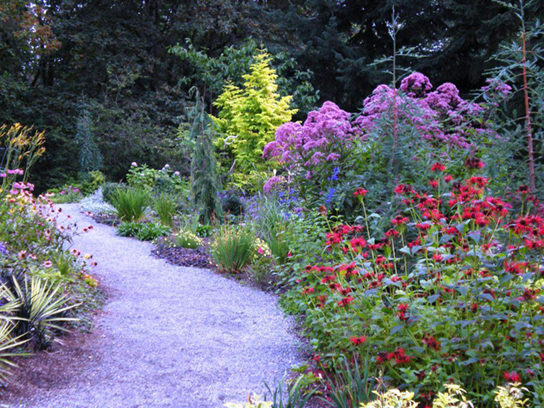

Figure 26.13図 26.13
Flowers. These flowers grow in a botanical garden border in Bellevue, WA. Flowering plants dominate terrestrial landscapes. The vivid colors of flowers and enticing fragrance of flowers are adaptations to pollination by animals like insects, birds, and bats. (credit: Myriam Feldman)
花。これらの花は、ワシントン州ベルビューの植物園の縁取り花壇に咲いている。花を咲かせる植物は、陸上の景観で優占している。鮮やかな色と、引き寄せるような香りは、昆虫、鳥、コウモリなどの動物による受粉への適応である。(出典:Myriam Feldman)
The success of angiosperms is due to two novel reproductive structures: flowers and fruits. The function of the flower is to ensure pollination, often by arthropods, as well as to protect a developing embryo. The colors and patterns on flowers offer specific signals to many pollinating insects or birds and bats that have coevolved with them. For example, some patterns are visible only in the ultraviolet range of light, which can be seen by arthropod pollinators. For some pollinators, flowers advertise themselves as a reliable source of nectar. Flower scent also helps to select its pollinators. Sweet scents tend to attract bees and butterflies and moths, but some flies and beetles might prefer scents that signal fermentation or putrefaction. Flowers also provide protection for the ovule and developing embryo inside a receptacle. The function of the fruit is seed protection and dispersal. Different fruit structures or tissues on fruit—such as sweet flesh, wings, parachutes, or spines that grab—reflect the dispersal strategies that help spread seeds.
英語のヒント
被子植物の成功は、花と果実という二つの新しい生殖構造による。花の役割は、しばしば節足動物が担う受粉を確実にするとともに、発達中の胚を守ることである。花の色や模様は、その植物と共進化してきた、多くの送粉昆虫、鳥、コウモリに特有の合図を送る。例えば、一部の模様は紫外線の波長域でしか見えないが、節足動物の送粉者には見える。ある送粉者に対しては、花は信頼できる蜜の供給源であると宣伝している。花の香りも、送粉者を選ぶ助けになる。甘い香りはハチ、チョウ、ガを引き寄せる傾向があるが、一部のハエや甲虫は、発酵や腐敗を示すにおいを好むことがある。花はまた、花床の内側にある胚珠と発達中の胚を保護する。果実の役割は、種子の保護と散布である。甘い果肉、翼、パラシュート状の部分、引っかかるとげなど、果実に見られるさまざまな構造や組織は、種子を広げる散布戦略を反映している。
Flowers花
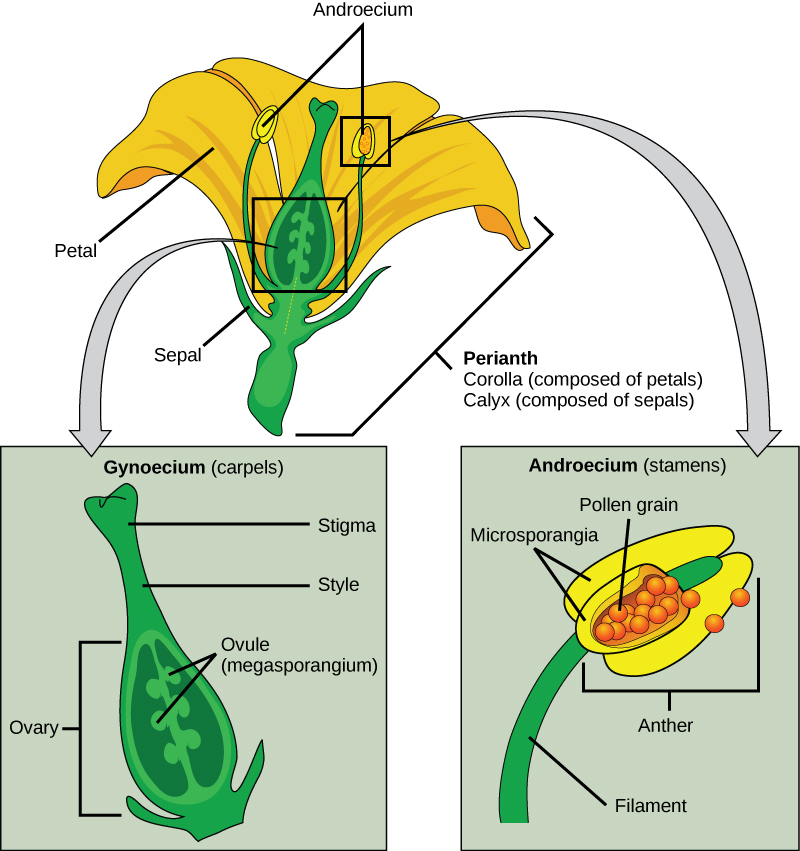
Flowers are modified leaves, or sporophylls, organized around a central receptacle. Although they vary greatly in appearance, virtually all flowers contain the same structures: sepals, petals, carpels, and stamens. The peduncle typically attaches the flower to the plant proper. A whorl of sepals (collectively called the calyx) is located at the base of the peduncle and encloses the unopened floral bud. Sepals are usually photosynthetic organs, although there are some exceptions. For example, the corolla in lilies and tulips consists of three sepals and three petals that look virtually identical. Petals, collectively the corolla, are located inside the whorl of sepals and may display vivid colors to attract pollinators. Sepals and petals together form the perianth. The sexual organs, the female gynoecium and male androecium are located at the center of the flower. Typically, the sepals, petals, and stamens are attached to the receptacle at the base of the gynoecium, but the gynoecium may also be located deeper in the receptacle, with the other floral structures attached above it.
英語のヒント
花は、変形した葉、すなわち胞子葉が、中心にある花床の周囲に配列したものである。見た目は大きく異なるが、ほぼすべての花には、萼片、花弁、心皮、雄しべという共通の構造がある。花柄は通常、花を植物本体につなぐ。花柄の基部には、萼片の輪生があり、まとめて萼と呼ばれる。萼は、まだ開いていない花のつぼみを包む。萼片は通常、光合成を行う器官だが、例外もある。例えば、ユリやチューリップの花冠は、見た目がほぼ同じ三枚の萼片と三枚の花弁からなる。花弁は、まとめて花冠と呼ばれ、萼片の輪生の内側に位置する。送粉者を引き寄せるために、鮮やかな色を示すことがある。萼片と花弁を合わせて、花被という。花の中心には、雌性の雌しべ群と雄性の雄しべ群という生殖器官がある。通常、萼片、花弁、雄しべは、雌しべ群の基部にある花床につく。ただし、雌しべ群が花床のさらに奥にあり、他の花の構造がその上につく場合もある。
As illustrated in Figure 26.14, the innermost part of a perfect flower is the gynoecium, the location in the flower where the eggs will form. The female reproductive unit consists of one or more carpels, each of which has a stigma, style, and ovary. The stigma is the location where the pollen is deposited either by wind or a pollinating arthropod. The sticky surface of the stigma traps pollen grains, and the style is a connecting structure through which the pollen tube will grow to reach the ovary. The ovary houses one or more ovules, each of which will ultimately develop into a seed. Flower structure is very diverse, and carpels may be singular, multiple, or fused. (Multiple fused carpels comprise a pistil.) The androecium, or male reproductive region is composed of multiple stamens surrounding the central carpel. Stamens are composed of a thin stalk called a filament and a sac-like structure called the anther. The filament supports the anther, where the microspores are produced by meiosis and develop into haploid pollen grains, or male gametophytes.
英語のヒント
図26.14に示すように、両性花の最も内側にあるのは雌しべ群であり、ここで卵が形成される。雌性の生殖単位は一枚または複数の心皮からなり、各心皮には柱頭、花柱、子房がある。柱頭は、風や送粉を行う節足動物によって花粉が置かれる場所である。柱頭の粘着性の表面が花粉粒を捕らえる。花柱は、花粉管が子房に到達するために通って伸びる、連結部分である。子房には一つまたは複数の胚珠があり、それぞれが最終的に種子へ発達する。花の構造は非常に多様で、心皮は一枚の場合も、複数の場合も、互いに融合する場合もある。複数の心皮が融合すると、一つの雌しべを構成する。雄しべ群、すなわち雄性の生殖領域は、中心の心皮を取り囲む複数の雄しべからなる。雄しべは、花糸と呼ばれる細い柄と、葯と呼ばれる袋状の構造からなる。花糸は葯を支える。葯では、減数分裂によって小胞子がつくられ、それが半数体の花粉粒、すなわち雄性配偶体へ発達する。
OpenStax, Rice University; Biology 2e. (credit: modification of work by Mariana Ruiz Villareal) · CC BY 4.0 · Source出典

Figure 26.14図 26.14
Flower structure. This image depicts the structure of a perfect flower. Perfect flowers produce both male and female floral organs. The flower shown has only one carpel, but some flowers have a cluster of carpels. Together, all the carpels make up the gynoecium. (credit: modification of work by Mariana Ruiz Villareal)
花の構造。この図は両性花の構造を示す。両性花は、雄性と雌性の両方の花器官をつくる。図の花の心皮は一枚だけだが、複数の心皮が集まった花もある。すべての心皮を合わせて、雌しべ群を構成する。(Mariana Ruiz Villareal の作品を改変)