第39章呼吸器系
Protective Mechanisms防御機構
The air that organisms breathe contains particulate matter such as dust, dirt, viral particles, and bacteria that can damage the lungs or trigger allergic immune responses. The respiratory system contains several protective mechanisms to avoid problems or tissue damage. In the nasal cavity, hairs and mucus trap small particles, viruses, bacteria, dust, and dirt to prevent their entry.
英語のヒント
生物が吸う空気には、ほこり、土ぼこり、ウイルス粒子、細菌などの粒子状物質が含まれ、肺を損傷したり、アレルギー性の免疫反応を引き起こしたりすることがある。呼吸器系には、問題や組織の損傷を防ぐための防御機構がいくつも備わっている。鼻腔では、毛と粘液が小さな粒子、ウイルス、細菌、ほこり、土ぼこりを捕らえ、侵入を防ぐ。
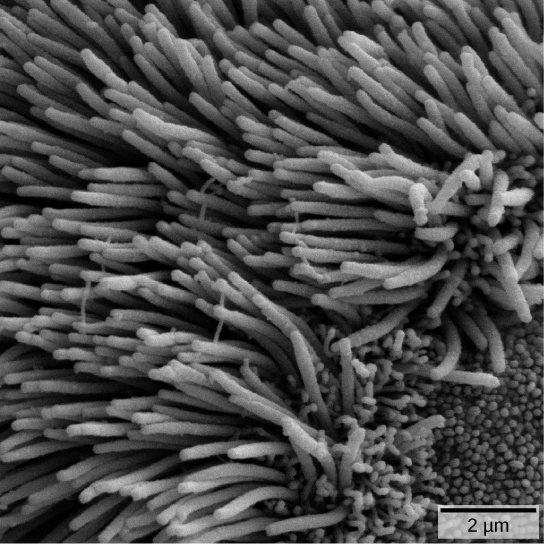
If particulates do make it beyond the nose, or enter through the mouth, the bronchi and bronchioles of the lungs also contain several protective devices. The lungs produce mucus—a sticky substance made of mucin, a complex glycoprotein, as well as salts and water—that traps particulates. The bronchi and bronchioles contain cilia, small hair-like projections that line the walls of the bronchi and bronchioles (Figure 39.11). These cilia beat in unison and move mucus and particles out of the bronchi and bronchioles back up to the throat where it is swallowed and eliminated via the esophagus.
英語のヒント
粒子が鼻を通り抜けたり、口から入ったりしても、肺の気管支と細気管支には、いくつかの防御の仕組みがある。肺は粘液をつくり、粒子を捕らえる。粘液は、複雑な糖タンパク質であるムチンに、塩類と水が加わった粘り気のある物質である。気管支と細気管支には、内壁に並ぶ小さな毛のような突起である繊毛がある(図39.11)。これらの繊毛は一斉に動き、粘液と粒子を気管支・細気管支からのどへ向かって押し上げる。のどまで来た粘液は飲み込まれ、食道を通って取り除かれる。
In humans, for example, tar and other substances in cigarette smoke destroy or paralyze the cilia, making the removal of particles more difficult. In addition, smoking causes the lungs to produce more mucus, which the damaged cilia are not able to move. This causes a persistent cough, as the lungs try to rid themselves of particulate matter, and makes smokers more susceptible to respiratory ailments.
英語のヒント
たとえばヒトでは、たばこの煙に含まれるタールなどの物質が繊毛を破壊したり麻痺させたりし、粒子を取り除きにくくする。また、喫煙によって肺の粘液産生量が増えるが、傷ついた繊毛はその粘液を運べない。肺が粒子状物質を取り除こうとするため、咳が続くようになり、喫煙者は呼吸器の病気にかかりやすくなる。
OpenStax, Rice University; Biology 2e. (credit: Louisa Howard, modification of work by Dartmouth Electron Microscope Facility) · CC BY 4.0 · Source出典

Figure 39.11図 39.11
The bronchi and bronchioles contain cilia that help move mucus and other particles out of the lungs. (credit: Louisa Howard, modification of work by Dartmouth Electron Microscope Facility)
気管支と細気管支には繊毛があり、粘液などの粒子を肺の外へ運ぶのを助ける。(出典:Louisa Howard、Dartmouth Electron Microscope Facilityの作品を改変)
Section Summaryこの節のまとめ
Animal respiratory systems are designed to facilitate gas exchange. In mammals, air is warmed and humidified in the nasal cavity. Air then travels down the pharynx, through the trachea, and into the lungs. In the lungs, air passes through the branching bronchi, reaching the respiratory bronchioles, which house the first site of gas exchange. The respiratory bronchioles open into the alveolar ducts, alveolar sacs, and alveoli. Because there are so many alveoli and alveolar sacs in the lung, the surface area for gas exchange is very large. Several protective mechanisms are in place to prevent damage or infection. These include the hair and mucus in the nasal cavity that trap dust, dirt, and other particulate matter before they can enter the system. In the lungs, particles are trapped in a mucus layer and transported via cilia up to the esophageal opening at the top of the trachea to be swallowed.
動物の呼吸器系は、ガス交換を効率よく行う構造になっている。哺乳類では、空気は鼻腔で温められ、加湿される。その後、咽頭から気管を通って肺へ入る。肺では、枝分かれする気管支を通り、最初のガス交換部位をもつ呼吸細気管支へ達する。呼吸細気管支は、肺胞管、肺胞嚢、肺胞へと通じる。肺には非常に多数の肺胞と肺胞嚢があるため、ガス交換のための表面積は非常に大きい。損傷や感染を防ぐ防御機構もいくつかある。鼻腔の毛と粘液は、ほこり、土ぼこりなどの粒子状物質が呼吸器系へ入る前に捕らえる。肺では粒子が粘液層に捕らえられ、繊毛によって気管の上端にある食道の開口部まで運ばれ、飲み込まれる。
Exercises 1練習問題 1
Exercise 1問題 1
Figure 39.7 Which of the following statements about the mammalian respiratory system is false?
図39.7 哺乳類の呼吸器系について述べた次の文のうち、誤っているものはどれか。
- When we breathe in, air travels from the pharynx to the trachea.息を吸うと、空気は咽頭から気管へ移動する。
- The bronchioles branch into bronchi.細気管支が枝分かれして気管支になる。
- Alveolar ducts connect to alveolar sacs.肺胞管は肺胞嚢につながる。
- Gas exchange between the lung and blood takes place in the alveolus.肺と血液の間のガス交換は肺胞で起こる。
Solution解き方
図39.7 B
Review Questions確認問題
Exercises 2–4練習問題 2–4
Exercise 2問題 2
The respiratory system ________.
呼吸器系は____。
- provides body tissues with oxygen体の組織に酸素を供給する
- provides body tissues with oxygen and carbon dioxide体の組織に酸素と二酸化炭素を供給する
- establishes how many breaths are taken per minute1分間の呼吸数を決める
- provides the body with carbon dioxide体に二酸化炭素を供給する
Solution解き方
A
A
Exercise 3問題 3
Air is warmed and humidified in the nasal passages. This helps to ________.
空気は鼻の通り道で温められ、加湿される。これは____のに役立つ。
- ward off infection感染を防ぐ
- decrease sensitivity during breathing呼吸時の感受性を低下させる
- prevent damage to the lungs肺の損傷を防ぐ
- all of the above上のすべて
Solution解き方
C
C
Exercise 4問題 4
Which is the order of airflow during inhalation?
吸気時に空気が通る順序はどれか。
- nasal cavity, trachea, larynx, bronchi, bronchioles, alveoli鼻腔、気管、喉頭、気管支、細気管支、肺胞
- nasal cavity, larynx, trachea, bronchi, bronchioles, alveoli鼻腔、喉頭、気管、気管支、細気管支、肺胞
- nasal cavity, larynx, trachea, bronchioles, bronchi, alveoli鼻腔、喉頭、気管、細気管支、気管支、肺胞
- nasal cavity, trachea, larynx, bronchioles, bronchi, alveoli鼻腔、気管、喉頭、細気管支、気管支、肺胞
Solution解き方
B
B
Critical Thinking Questions考察問題
Exercises 5–6練習問題 5–6
Exercise 5問題 5
Describe the function of these terms and describe where they are located: main bronchus, trachea, alveoli, and acinus.
主気管支、気管、肺胞、腺房について、それぞれの機能と位置を説明しなさい。
Solution解き方
The main bronchus is the conduit in the lung that funnels air to the airways where gas exchange occurs. The main bronchus attaches the lungs to the very end of the trachea where it bifurcates. The trachea is the cartilaginous structure that extends from the pharynx to the primary bronchi. It serves to funnel air to the lungs. The alveoli are the sites of gas exchange; they are located at the terminal regions of the lung and are attached to the respiratory bronchioles. The acinus is the structure in the lung where gas exchange occurs.
主気管支は、ガス交換の行われる気道へ空気を導く肺内の管である。気管が二分する末端と肺をつなぐ。気管は、咽頭から主気管支まで伸びる軟骨性の構造で、肺へ空気を導く。肺胞はガス交換の場所であり、肺の末端領域にあって呼吸細気管支につながる。腺房は、ガス交換が行われる肺内の構造である。
Exercise 6問題 6
How does the structure of alveoli maximize gas exchange?
肺胞の構造は、どのようにガス交換を最大限に行えるようにしているか。
Solution解き方
The sac-like structure of the alveoli increases their surface area. In addition, the alveoli are made of thin-walled parenchymal cells. These features allow gases to easily diffuse across the cells.
肺胞は袋状の構造をもち、表面積が大きくなっている。また、壁の薄い実質細胞からできている。これらの特徴によって、気体は細胞を容易に通り抜けて拡散できる。
alveolar duct
肺胞管
duct that extends from the terminal bronchiole to the alveolar sac
終末細気管支から肺胞嚢まで伸びる管。
alveolar sac
肺胞嚢
structure consisting of two or more alveoli that share a common opening
共通の開口部をもつ2個以上の肺胞からなる構造。
alveolus
肺胞
(plural: alveoli) (also, air sac) terminal region of the lung where gas exchange occurs
英語の複数形はalveoli。air sacともいう。ガス交換が起こる肺の末端領域。
bronchus
気管支
(plural: bronchi) smaller branch of cartilaginous tissue that stems off of the trachea; air is funneled through the bronchi to the region where gas exchange occurs in alveoli
英語の複数形はbronchi。気管から分かれる、より細い軟骨性組織の枝。気管支を通して、肺胞でガス交換が行われる領域へ空気が導かれる。
bronchiole
細気管支
airway that extends from the main tertiary bronchi to the alveolar sac
第三次気管支の主要部から肺胞嚢まで伸びる気道。
diaphragm
横隔膜
domed-shaped skeletal muscle located under lungs that separates the thoracic cavity from the abdominal cavity
肺の下にあるドーム状の骨格筋で、胸腔と腹腔を隔てる。
larynx
喉頭
voice box, a short passageway connecting the pharynx and the trachea
声を出す器官。咽頭と気管をつなぐ短い通路。
mucin
ムチン
complex glycoprotein found in mucus
粘液に含まれる複雑な糖タンパク質。
mucus
粘液
sticky protein-containing fluid secretion in the lung that traps particulate matter to be expelled from the body
肺で分泌される、タンパク質を含む粘り気のある液体。粒子状物質を捕らえ、体外への排出を助ける。
nasal cavity
鼻腔
opening of the respiratory system to the outside environment
呼吸器系が外部環境へ開く部分。
particulate matter
粒子状物質
small particle such as dust, dirt, viral particles, and bacteria that are in the air
ほこり、土ぼこり、ウイルス粒子、細菌など、空気中にある小さな粒子。
pharynx
咽頭
throat; a tube that starts in the internal nares and runs partway down the neck, where it opens into the esophagus and the larynx
のど。内鼻孔に始まり、首の途中まで下って食道と喉頭に開く管。
primary bronchus
主気管支
(also, main bronchus) region of the airway within the lung that attaches to the trachea and bifurcates to each lung where it branches into secondary bronchi
main bronchusともいう。気管につながり、左右の肺へ分かれて、そこで第二次気管支へ枝分かれする肺内の気道の領域。
respiratory bronchiole
呼吸細気管支
terminal portion of the bronchiole tree that is attached to the terminal bronchioles and alveoli ducts, alveolar sacs, and alveoli
細気管支樹の末端部で、終末細気管支と、肺胞管・肺胞嚢・肺胞につながる。
terminal bronchiole
終末細気管支
region of bronchiole that attaches to the respiratory bronchioles
呼吸細気管支につながる細気管支の領域。
trachea
気管
cartilaginous tube that transports air from the larynx to the primary bronchi
喉頭から主気管支へ空気を運ぶ軟骨性の管。