第21章ウイルス
21.3 Prevention and Treatment of Viral Infections21.3 ウイルス感染の予防と治療
Learning Objectives学習目標
By the end of this section, you will be able to do the following:
この節を終えると、次のことができるようになる。
- Identify major viral illnesses that affect humansヒトに影響する主なウイルス疾患を挙げる。
- Compare vaccinations and anti-viral drugs as medical approaches to virusesウイルスに対する医療的方法として、ワクチン接種と抗ウイルス薬を比較する。
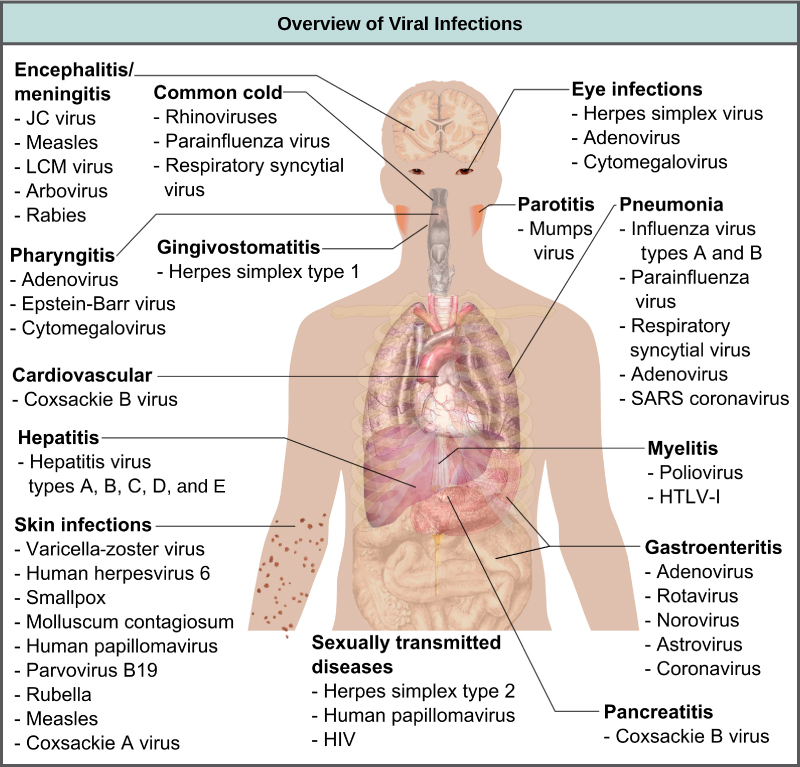
Viruses cause a variety of diseases in animals, including humans, ranging from the common cold to potentially fatal illnesses like meningitis (Figure 21.13). These diseases can be treated by antiviral drugs or by vaccines; however, some viruses, such as HIV, are capable both of avoiding the immune response and of mutating within the host organism to become resistant to antiviral drugs.
英語のヒント
ウイルスは、ヒトを含む動物に、普通の風邪から、髄膜炎のように命に関わりうる病気まで、さまざまな疾患を起こす(図21.13)。これらの病気には抗ウイルス薬やワクチンが用いられる。しかし、HIVなどの一部のウイルスは、免疫応答を回避できるだけでなく、宿主個体内で変異して抗ウイルス薬への耐性を獲得することもできる。
OpenStax, Rice University; Biology 2e. (credit: modification of work by Mikael Häggström) · CC BY 4.0 · Source出典

Figure 21.13図 21.13
A sampling of human viruses. Viruses can cause dozens of ailments in humans, ranging from mild illnesses to serious diseases. (credit: modification of work by Mikael Häggström)
英語のヒント
ヒトに感染するウイルスの例。ウイルスはヒトに、軽い病気から重篤な疾患まで、何十種類もの病気を引き起こしうる。(クレジット:Mikael Häggströmの作品を改変)
Vaccines for Prevention予防のためのワクチン
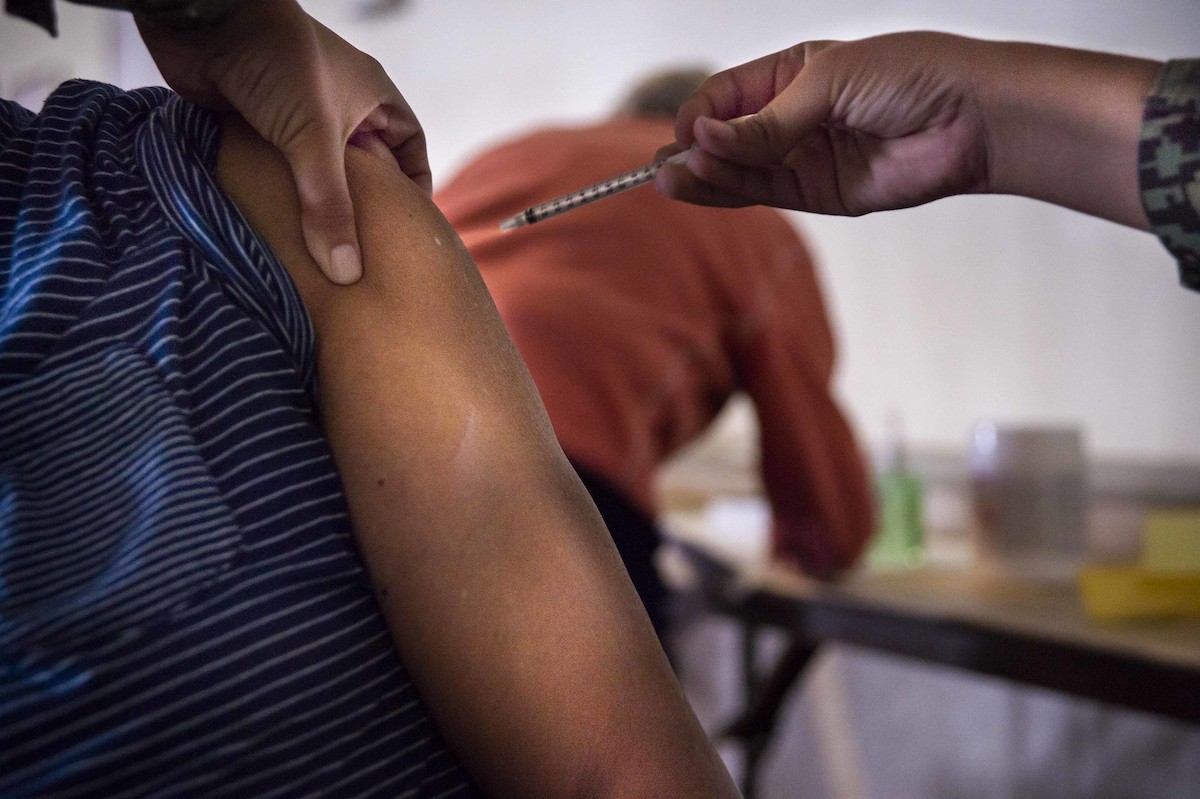
The primary method of controlling viral disease is by vaccination, which is intended to prevent outbreaks by building immunity to a virus or virus family (Figure 21.14). Vaccines may be prepared using live viruses, killed viruses, or molecular subunits of the virus. Note that the killed viral vaccines and subunit viruses are both incapable of causing disease, nor is there any valid evidence that vaccinations contribute to autism.
英語のヒント
ウイルス疾患を制御する主な方法は、ワクチン接種である。あるウイルスやウイルス群に対する免疫をつけ、流行を防ぐことを目的とする(図21.14)。ワクチンは、生きたウイルス、不活化したウイルス、またはウイルスの分子構成部分を使って作ることができる。不活化ウイルスワクチンとサブユニットワクチンは、どちらも病気を引き起こせない。また、ワクチン接種が自閉症の発症に寄与するという妥当な証拠もない。
Live viral vaccines are designed in the laboratory to cause few symptoms in recipients while giving them protective immunity against future infections. Polio was one disease that represented a milestone in the use of vaccines. Polio epidemics occurred with increasing frequency and impact as the twentieth century progressed, becoming a terrifying and tragic event each summer. Tens of thousands of people died and many more were paralyzed; children made up a large portion of the victims. Using killed virus tested on HeLa cell line (originally obtained from Henrietta Lacks and then mass produced to meet the need), Jonas Salk developed a successful vaccine. Mass immunization campaigns in the 1950s (killed vaccine) and 1960s (live vaccine) significantly reduced the incidence of the disease. The success of the polio vaccine paved the way for the routine dispensation of childhood vaccines against measles, mumps, rubella, chickenpox, and other diseases.
英語のヒント
生ウイルスワクチンは、接種を受けた人にはほとんど症状を起こさず、将来の感染に対する防御免疫を与えるよう、実験室で作られる。ポリオは、ワクチン利用の歴史に重要な節目を刻んだ病気の一つである。20世紀が進むにつれ、ポリオの流行は頻度も影響も増し、毎年夏に起こる恐ろしい悲劇となった。何万人もの人が亡くなり、それをはるかに上回る人が麻痺を残した。犠牲者の多くは子どもだった。ジョナス・ソークは、HeLa細胞株で試験した不活化ウイルスを使って、有効なワクチンを開発した。この細胞株は、最初にヘンリエッタ・ラックスから得られ、その後、需要を満たすために大量に作られた。1950年代の不活化ワクチンと1960年代の生ワクチンによる大規模な予防接種運動は、この病気の発生率を大幅に下げた。ポリオワクチンの成功は、麻疹、おたふくかぜ、風疹、水痘などの病気に対する小児の定期予防接種への道を開いた。
The issue with using live vaccines (which are usually more effective than killed vaccines), is the low but significant danger that these viruses will revert to their disease-causing form by back mutations. Live vaccines are usually made by attenuating (weakening) the “wild-type” (disease-causing) virus by growing it in the laboratory in tissues or at temperatures different from what the virus is accustomed to in the host. Adaptations to these new cells or temperatures induce mutations in the genomes of the virus, allowing it to grow better in the laboratory while inhibiting its ability to cause disease when reintroduced into conditions found in the host. These attenuated viruses thus still cause infection, but they do not grow very well, allowing the immune response to develop in time to prevent major disease. Back mutations occur when the vaccine undergoes mutations in the host such that it readapts to the host and can again cause disease, which can then be spread to other humans in an epidemic. This type of scenario happened as recently as 2007 in Nigeria where mutations in a polio vaccine led to an epidemic of polio in that country.
英語のヒント
生ワクチンは通常、不活化ワクチンより効果が高いが、問題は、ウイルスが復帰変異によって病気を引き起こす形へ戻る危険が、低いながらも無視できないことである。生ワクチンは通常、病気を起こす「野生型」ウイルスを実験室で培養し、弱毒化して作る。培養には、宿主内でウイルスが慣れているものとは異なる組織や温度を使う。新たな細胞や温度への適応によって、ウイルスゲノムに変異が起こる。それにより、実験室では増えやすくなる一方、宿主内にある条件へ戻したときに病気を起こす能力が抑えられる。そのため、弱毒化ウイルスは依然として感染を起こすものの、あまりよく増殖せず、重大な病気を防ぐのに間に合うよう免疫応答が発達する。復帰変異は、ワクチンのウイルスが宿主内で変異し、宿主に再び適応して病気を起こせるようになるときに起こる。その病気はほかの人へも広まり、流行につながりうる。このような事態は、比較的最近の2007年にもナイジェリアで起こった。ポリオワクチンの変異によって、同国でポリオの流行が起きたのである。
Some vaccines are in continuous development because certain viruses, such as influenza and HIV, have a high mutation rate compared to that of other viruses and normal host cells. With influenza, mutations in the surface molecules of the virus help the organism evade the protective immunity that may have been obtained in a previous influenza season, making it necessary for individuals to get vaccinated every year. Other viruses, such as those that cause the childhood diseases measles, mumps, and rubella, mutate so infrequently that the same vaccine is used year after year.
英語のヒント
インフルエンザやHIVなど、一部のウイルスは、ほかのウイルスや通常の宿主細胞より変異率が高いため、ワクチンの開発が継続的に行われている。インフルエンザでは、ウイルス表面の分子の変異が、以前の流行期に得た可能性のある防御免疫を回避するのに役立つ。そのため、毎年のワクチン接種が必要になる。一方、小児の病気である麻疹、おたふくかぜ、風疹を起こすウイルスなどは、変異が非常にまれなので、同じワクチンが毎年使われている。
OpenStax, Rice University; Biology 2e. (credit: Navy Medicine) Embedded rights notice: Public Domain · CC BY 4.0 · Source出典

Figure 21.14図 21.14
Vaccinations are designed to boost immunity to a virus to prevent infection. (credit: Navy Medicine)
ワクチン接種は、ウイルスに対する免疫を強め、感染を防ぐように作られている。(クレジット:Navy Medicine)