第21章ウイルス
Plant Viruses植物ウイルス
Most plant viruses, like the tobacco mosaic virus, have single-stranded (+) RNA genomes. However, there are also plant viruses in most other virus categories. Unlike bacteriophages, plant viruses do not have active mechanisms for delivering the viral genome across the protective cell wall. For a plant virus to enter a new host plant, some type of mechanical damage must occur. This damage is often caused by weather, insects, animals, fire, or human activities like farming or landscaping. Movement from cell to cell within a plant can be facilitated by viral modification of plasmodesmata (cytoplasmic threads that pass from one plant cell to the next). Additionally, plant offspring may inherit viral diseases from parent plants. Plant viruses can be transmitted by a variety of vectors, through contact with an infected plant’s sap, by living organisms such as insects and nematodes, and through pollen. The transfer of a virus from one plant to another is known as horizontal transmission, whereas the inheritance of a virus from a parent is called vertical transmission.
英語のヒント
タバコモザイクウイルスのように、大半の植物ウイルスは一本鎖プラスRNAゲノムをもつ。しかし、他の大半のウイルスカテゴリーにも植物ウイルスは存在する。バクテリオファージとは異なり、植物ウイルスは保護的な細胞壁を越えてゲノムを運ぶ能動的な仕組みをもたない。新しい宿主植物へ入るには、何らかの機械的損傷が必要である。損傷は、天候、昆虫、動物、火災、農作業や造園などの人間活動によって起こることが多い。植物内での細胞間移動は、ウイルスによる原形質連絡の改変で促進されうる。原形質連絡は、隣接する植物細胞を結ぶ細胞質の糸状のつながりである。また、子の植物が親からウイルス病を受け継ぐこともある。植物ウイルスは、感染した植物の樹液との接触、昆虫や線虫などの生物、花粉など、さまざまな媒介を通じて伝わる。ある植物から別の植物へのウイルスの移動を水平伝播、親からの継承を垂直伝播と呼ぶ。
Symptoms of viral diseases vary according to the virus and its host (Table 21.4). One common symptom is hyperplasia, the abnormal proliferation of cells that causes the appearance of plant tumors known as galls. Other viruses induce hypoplasia, or decreased cell growth, in the leaves of plants, causing thin, yellow areas to appear. Still other viruses affect the plant by directly killing plant cells, a process known as cell necrosis. Other symptoms of plant viruses include malformed leaves; black streaks on the stems of the plants; altered growth of stems, leaves, or fruits; and ring spots, which are circular or linear areas of discoloration found in a leaf.
英語のヒント
ウイルス病の症状は、ウイルスと宿主によって異なる(表21.4)。一般的な症状の1つは過形成で、細胞の異常増殖によって、こぶと呼ばれる植物の腫瘍が現れる。別のウイルスは葉に低形成、すなわち細胞成長の低下を起こし、薄く黄色い部分を生じさせる。さらに別のウイルスは、細胞壊死と呼ばれる過程で植物細胞を直接殺す。他にも、葉の奇形、茎の黒い筋、茎・葉・果実の成長の変化、葉に見られる円形や線状の変色部分である輪紋などが、植物ウイルスの症状に含まれる。
Some Common Symptoms of Plant Viral Diseases 植物ウイルス病の一般的な症状の例 |
|
|---|---|
Symptom 症状 |
Appears as 現れ方 |
Hyperplasia 過形成 |
Galls (tumors) こぶ(腫瘍) |
Hypoplasia 低形成 |
Thinned, yellow splotches on leaves 葉の薄く黄色い斑 |
Cell necrosis 細胞壊死 |
Dead, blackened stems, leaves, or fruit 枯れて黒くなった茎・葉・果実 |
Abnormal growth patterns 異常な成長パターン |
Malformed stems, leaves, or fruit 茎、葉、果実の変形 |
Discoloration 変色 |
Yellow, red, or black lines, or rings in stems, leaves, or fruit 茎、葉、果実の黄色、赤色、黒色の線や輪 |
Plant viruses can seriously disrupt crop growth and development, significantly affecting our food supply. They are responsible for poor crop quality and quantity globally, and can bring about huge economic losses annually. Others viruses may damage plants used in landscaping. Some viruses that infect agricultural food plants include the name of the plant they infect, such as tomato spotted wilt virus, bean common mosaic virus, and cucumber mosaic virus. In plants used for landscaping, two of the most common viruses are peony ring spot and rose mosaic virus. There are far too many plant viruses to discuss each in detail, but symptoms of bean common mosaic virus result in lowered bean production and stunted, unproductive plants. In the ornamental rose, the rose mosaic disease causes wavy yellow lines and colored splotches on the leaves of the plant.
英語のヒント
植物ウイルスは作物の成長と発達を大きく妨げ、私たちの食料供給に重大な影響を与えうる。世界各地で作物の品質と収穫量の低下を引き起こし、毎年莫大な経済的損失を生むことがある。造園に使う植物に被害を与えるウイルスもある。農業で食料として育てる植物に感染するウイルスの中には、トマト黄化えそウイルス、インゲンマメモザイクウイルス、キュウリモザイクウイルスのように、感染する植物の名前を含むものがある。造園用植物で特によく見られるウイルスには、シャクヤク輪紋ウイルスとバラモザイクウイルスがある。植物ウイルスはあまりに多く、すべてを詳しく論じることはできないが、インゲンマメモザイクウイルスの症状は、豆の収量低下や、発育が悪く実りの少ない植物をもたらす。観賞用のバラでは、バラモザイク病によって、葉に波状の黄色い線や色のついた斑点ができる。
Animal Viruses動物ウイルス
Animal viruses, unlike the viruses of plants and bacteria, do not have to penetrate a cell wall to gain access to the host cell. The virus may even induce the host cell to cooperate in the infection process. Non-enveloped or “naked” animal viruses may enter cells in two different ways. As a protein in the viral capsid binds to its receptor on the host cell, the virus may be taken inside the cell via a vesicle during the normal cell process of receptor-mediated endocytosis. An alternative method of cell penetration used by non-enveloped viruses is for capsid proteins to undergo shape changes after binding to the receptor, creating channels in the host cell membrane. The viral genome is then “injected” into the host cell through these channels in a manner analogous to that used by many bacteriophages.
英語のヒント
動物ウイルスは、植物や細菌のウイルスと異なり、宿主細胞へ入るために細胞壁を貫通する必要がない。感染過程に協力するよう宿主細胞へ働きかけることさえある。エンベロープをもたない、つまり「裸の」動物ウイルスは、二つの異なる方法で細胞へ入る。ウイルスカプシドのタンパク質が宿主細胞上の受容体へ結合すると、通常の細胞過程である受容体介在性エンドサイトーシスの際に、小胞を介してウイルスが細胞内へ取り込まれることがある。エンベロープをもたないウイルスが用いるもう一つの侵入方法は、受容体への結合後にカプシドタンパク質の形が変わり、宿主細胞膜にチャネルを作るというものだ。その後、多くのバクテリオファージが使う方法と類似した仕方で、ウイルスゲノムがそのチャネルを通って宿主細胞へ「注入」される。
Enveloped viruses also have two ways of entering cells after binding to their receptors: receptor-mediated endocytosis, or fusion. Many enveloped viruses enter the cell by receptor-mediated endocytosis in a fashion similar to that seen in some non-enveloped viruses. On the other hand, fusion only occurs with enveloped virions. These viruses, which include HIV among others, use special fusion proteins in their envelopes to cause the envelope to fuse with the plasma membrane of the cell, thus releasing the genome and capsid of the virus into the cell cytoplasm.
英語のヒント
エンベロープをもつウイルスにも、受容体への結合後に細胞へ入る方法が二つある。受容体介在性エンドサイトーシスと融合である。多くのエンベロープウイルスは、一部のエンベロープをもたないウイルスで見られるのと同様の仕方で、受容体介在性エンドサイトーシスによって細胞へ入る。一方、融合はエンベロープをもつビリオンでのみ起こる。HIVなどを含むこれらのウイルスは、エンベロープ内の特殊な融合タンパク質を使い、エンベロープを細胞膜と融合させる。それによって、ウイルスのゲノムとカプシドが細胞質へ放出される。
After making their proteins and copying their genomes, animal viruses complete the assembly of new virions and exit the cell. As we have already discussed using the example the influenza virus, enveloped animal viruses may bud from the cell membrane as they assemble themselves, taking a piece of the cell’s plasma membrane in the process. On the other hand, non-enveloped viral progeny, such as rhinoviruses, accumulate in infected cells until there is a signal for lysis or apoptosis, and all virions are released together.
英語のヒント
動物ウイルスは、タンパク質を作り、ゲノムを複製した後、新しいビリオンの組み立てを終えて細胞を出る。インフルエンザウイルスを例にすでに説明したように、エンベロープをもつ動物ウイルスは、組み立てられながら細胞膜から出芽し、その過程で細胞膜の一部を取り込むことがある。一方、ライノウイルスなど、エンベロープをもたない子孫ウイルスは、溶解やアポトーシスのシグナルが生じるまで感染細胞内に蓄積し、すべてのビリオンが一緒に放出される。
As you will learn in the next module, animal viruses are associated with a variety of human diseases. Some of them follow the classic pattern of acute disease, where symptoms get increasingly worse for a short period followed by the elimination of the virus from the body by the immune system and eventual recovery from the infection. Examples of acute viral diseases are the common cold and influenza. Other viruses cause long-term chronic infections, such as the virus causing hepatitis C, whereas others, like herpes simplex virus, only cause intermittent symptoms. Still other viruses, such as human herpesviruses 6 and 7, which in some cases can cause the minor childhood disease roseola, often successfully cause productive infections without causing any symptoms at all in the host, and thus we say these patients have an asymptomatic infection.
英語のヒント
次のモジュールで学ぶように、動物ウイルスはヒトのさまざまな病気と関わる。その一部は急性疾患の典型的な経過をたどる。短期間で症状が次第に悪化し、その後、免疫系がウイルスを体内から排除し、最終的に感染から回復する。急性ウイルス疾患の例は、普通の風邪とインフルエンザである。C型肝炎を起こすウイルスのように、長期間の慢性感染を起こすものもある。一方、単純ヘルペスウイルスなどは、間欠的な症状だけを起こす。さらに、場合によっては小児の軽い病気である突発性発疹を起こすヒトヘルペスウイルス6型と7型などは、宿主にまったく症状を起こさずに産生性感染を成立させることが多い。このような患者は無症候性感染の状態にあるという。
In hepatitis C infections, the virus grows and reproduces in liver cells, causing low levels of liver damage. The damage is so low that infected individuals are often unaware that they are infected, and many infections are detected only by routine blood work on patients with risk factors such as intravenous drug use. On the other hand, since many of the symptoms of viral diseases are caused by immune responses, a lack of symptoms is an indication of a weak immune response to the virus. This allows the virus to escape elimination by the immune system and persist in individuals for years, all the while producing low levels of progeny virions in what is known as a chronic viral disease. Chronic infection of the liver by this virus leads to a much greater chance of developing liver cancer, sometimes as much as 30 years after the initial infection.
英語のヒント
C型肝炎の感染では、ウイルスが肝細胞内で増殖し、軽度の肝障害を起こす。障害がごく軽いため、感染者は感染に気づかないことが多い。感染の多くは、静脈注射による薬物使用などの危険因子をもつ患者に行う通常の血液検査で初めて見つかる。一方、ウイルス疾患の症状の多くは免疫応答によって起こるため、症状がないことは、ウイルスに対する免疫応答が弱いことを示す。これによって、ウイルスは免疫系による排除を逃れ、個体内に何年もとどまる。その間ずっと、慢性ウイルス疾患として知られる状態で、少量の子孫ビリオンを作り続ける。このウイルスによる肝臓の慢性感染は、肝臓がんが生じる確率を大きく高める。がんは最初の感染から30年も経ってから生じることがある。
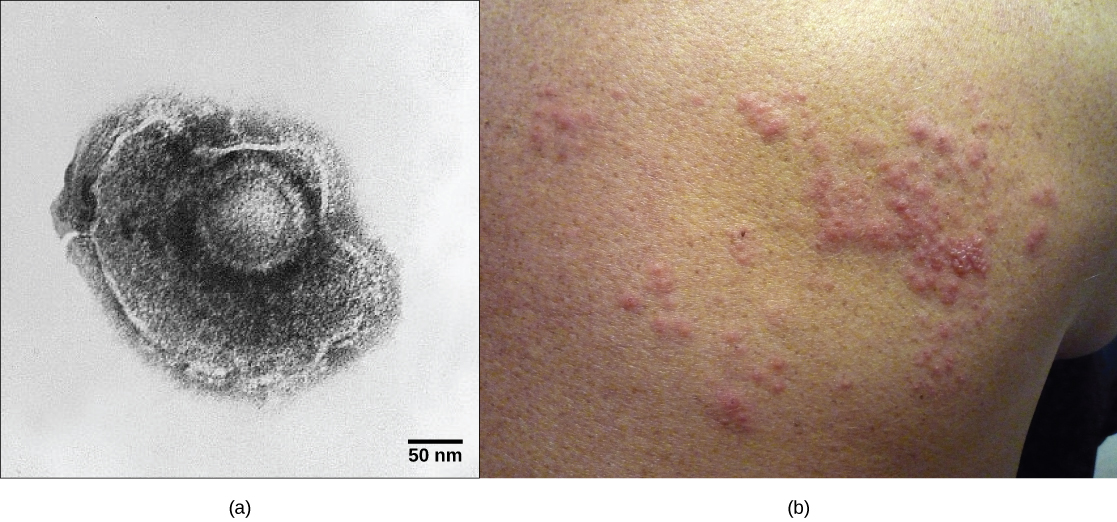
As already discussed, herpes simplex virus can remain in a state of latency in nervous tissue for months, even years. As the virus “hides” in the tissue and makes few if any viral proteins, there is nothing for the immune response to act against, and immunity to the virus slowly declines. Under certain conditions, including various types of physical and psychological stress, the latent herpes simplex virus may be reactivated and undergo a lytic replication cycle in the skin, causing the lesions associated with the disease. Once virions are produced in the skin and viral proteins are synthesized, the immune response is again stimulated and resolves the skin lesions in a few days or weeks by destroying viruses in the skin. As a result of this type of replicative cycle, appearances of cold sores and genital herpes outbreaks only occur intermittently, even though the viruses remain in the nervous tissue for life. Latent infections are common with other herpesviruses as well, including the varicella-zoster virus that causes chickenpox. After having a chickenpox infection in childhood, the varicella-zoster virus can remain latent for many years and reactivate in adults to cause the painful condition known as “shingles” (Figure 21.11).
英語のヒント
すでに説明したように、単純ヘルペスウイルスは神経組織内で数か月、ときには数年も潜伏状態を保つことがある。ウイルスは組織に「隠れ」、ウイルスタンパク質を作るとしてもごくわずかなので、免疫応答が攻撃する対象がなく、ウイルスへの免疫は徐々に低下する。さまざまな身体的・心理的ストレスを含む特定の条件下では、潜伏した単純ヘルペスウイルスが再活性化し、皮膚で溶解性の複製サイクルを進め、病気に伴う病変を引き起こすことがある。皮膚でビリオンが作られ、ウイルスタンパク質が合成されると、免疫応答が再び刺激される。皮膚内のウイルスを破壊し、数日から数週間で皮膚病変を解消する。このような複製サイクルのため、ウイルスは生涯にわたって神経組織内にとどまるにもかかわらず、口唇ヘルペスや性器ヘルペスの発症は間欠的にしか起こらない。潜伏感染は、水痘を起こす水痘・帯状疱疹ウイルスを含む、ほかのヘルペスウイルスでもよく見られる。小児期に水痘に感染した後、水痘・帯状疱疹ウイルスは何年も潜伏し、成人になって再活性化して、「帯状疱疹」と呼ばれる痛みを伴う状態を起こすことがある(図21.11)。
OpenStax, Rice University; Biology 2e. (credit a: modification of work by Dr. Erskine Palmer, B. G. Martin, CDC; credit b: modification of work by “rosmary”/Flickr; scale-bar data from Matt Russell) · CC BY 4.0 · Source出典

Figure 21.11図 21.11
A latent virus infection. (a) Varicella-zoster, the virus that causes chickenpox, has an enveloped icosahedral capsid visible in this transmission electron micrograph. Its double-stranded DNA genome becomes incorporated in the host DNA and can reactivate after latency in the form of (b) shingles, often exhibiting a rash. (credit a: modification of work by Dr. Erskine Palmer, B. G. Martin, CDC; credit b: modification of work by “rosmary”/Flickr; scale-bar data from Matt Russell)
潜伏性のウイルス感染。(a)水痘を起こす水痘・帯状疱疹ウイルスは、この透過型電子顕微鏡写真で見られるように、エンベロープに包まれた正二十面体のカプシドをもつ。その二本鎖DNAゲノムは宿主DNAに組み込まれ、潜伏後に再活性化して、しばしば発疹を伴う(b)帯状疱疹として現れる。(クレジットa:Dr. Erskine Palmer、B. G. Martin、CDCの作品を改変。クレジットb:「rosmary」/Flickrの作品を改変。スケールバーのデータ:Matt Russell)
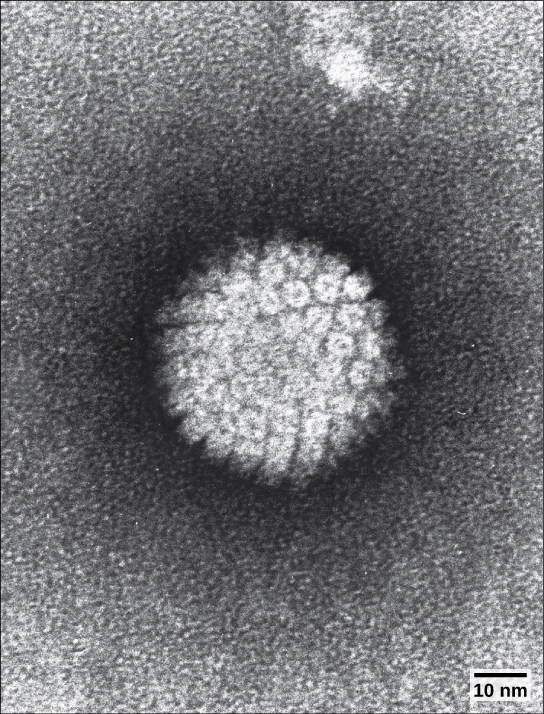
Some animal-infecting viruses, including the hepatitis C virus discussed above, are known as oncogenic viruses: They have the ability to cause cancer. These viruses interfere with the normal regulation of the host cell cycle either by introducing genes that stimulate unregulated cell growth (oncogenes) or by interfering with the expression of genes that inhibit cell growth. Oncogenic viruses can be either DNA or RNA viruses. Cancers known to be associated with viral infections include cervical cancer, caused by human papillomavirus (HPV) (Figure 21.12), liver cancer caused by hepatitis C virus, T-cell leukemia, and several types of lymphoma.
英語のヒント
上で述べたC型肝炎ウイルスなど、動物に感染するウイルスの中には、腫瘍ウイルスと呼ばれるものがある。これらは、がんを引き起こす能力をもつ。制御されない細胞増殖を刺激する遺伝子(がん遺伝子)を導入するか、細胞増殖を抑える遺伝子の発現を妨げることによって、宿主細胞周期の正常な調節を乱す。腫瘍ウイルスにはDNAウイルスもRNAウイルスもある。ウイルス感染との関係が知られるがんには、ヒトパピローマウイルス(HPV)が引き起こす子宮頸がん(図21.12)、C型肝炎ウイルスが引き起こす肝臓がん、T細胞白血病、数種類のリンパ腫がある。
OpenStax, Rice University; Biology 2e. (credit: modification of work by NCI, NIH; scale-bar data from Matt Russell) · CC BY 4.0 · Source出典

Figure 21.12図 21.12
HPV, or human papillomavirus, has a naked icosahedral capsid visible in this transmission electron micrograph and a double-stranded DNA genome that is incorporated into the host DNA. The virus, which is sexually transmitted, is oncogenic and can lead to cervical cancer. (credit: modification of work by NCI, NIH; scale-bar data from Matt Russell)
HPV、すなわちヒトパピローマウイルスは、この透過型電子顕微鏡写真に見える裸の正二十面体カプシドと、宿主DNAに組み込まれる二本鎖DNAゲノムをもつ。性行為によって伝播するこのウイルスには腫瘍形成能力があり、子宮頸がんを引き起こすことがある。(クレジット:NCI、NIHの作品を改変。スケールバーのデータ:Matt Russell)