第18章進化と種の起源
Reproductive Isolation生殖的隔離
Given enough time, the genetic and phenotypic divergence between populations will affect characters that influence reproduction: if individuals of the two populations were brought together, mating would be less likely, but if mating occurred, offspring would be nonviable or infertile. Many types of diverging characters may affect the reproductive isolation, the ability to interbreed, of the two populations.
英語のヒント
十分な時間がたつと、個体群間の遺伝的・表現型的な分岐は、生殖に影響する特徴へ及ぶ。二つの個体群の個体を一緒にしても交配しにくくなり、交配が起きたとしても、子は生存できなかったり、不妊だったりする。分岐するさまざまな特徴が、二つの個体群の交配能力に関わる生殖的隔離に影響しうる。
Reproductive isolation can take place in a variety of ways. Scientists organize them into two groups: prezygotic barriers and postzygotic barriers. Recall that a zygote is a fertilized egg: the first cell of an organism's development that reproduces sexually. Therefore, a prezygotic barrier is a mechanism that blocks reproduction from taking place. This includes barriers that prevent fertilization when organisms attempt reproduction. A postzygotic barrier occurs after zygote formation. This includes organisms that don’t survive the embryonic stage and those that are born sterile.
英語のヒント
生殖的隔離は、さまざまな方法で起こる。科学者は、それらを接合前障壁と接合後障壁の二群に分ける。接合子は受精卵、すなわち有性生殖する生物の発生の最初の細胞であることを思い出そう。接合前障壁は、生殖が起こるのを妨げる仕組みである。生物が生殖を試みたとき、受精を防ぐ障壁も含まれる。接合後障壁は、接合子ができた後に起こる。胚の段階を生き延びられないものや、生まれても不妊であるものが含まれる。
Some types of prezygotic barriers prevent reproduction entirely. Many organisms only reproduce at certain times of the year, often just annually. Differences in breeding schedules, which we call temporal isolation, can act as a form of reproductive isolation. For example, two frog species inhabit the same area, but one reproduces from January to March; whereas, the other reproduces from March to May (Figure 18.17).
英語のヒント
接合前障壁の一部は、生殖を完全に妨げる。多くの生物は一年の特定の時期にしか繁殖せず、年に一度だけの場合も多い。繁殖時期の違いは、時間的隔離と呼ばれ、生殖的隔離の一つの形として働く。例えば、二つのカエル種が同じ地域に住んでいても、一方は1〜3月に繁殖し、もう一方は3〜5月に繁殖する(図18.17)。
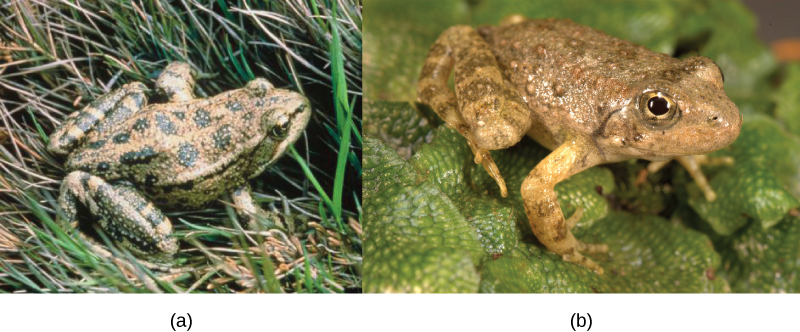
OpenStax, Rice University; Biology 2e. (credit a: modification of work by Mark R. Jennings, USFWS; credit b: modification of work by Alessandro Catenazzi) · CC BY 4.0 · Source出典
Figure 18.17図 18.17
These two related frog species exhibit temporal reproductive isolation. (a) Rana aurora breeds earlier in the year than (b) Rana boylii. (credit a: modification of work by Mark R. Jennings, USFWS; credit b: modification of work by Alessandro Catenazzi)
近縁なこの二つのカエル種は、時間的な生殖的隔離を示す。(a)Rana auroraは、(b)Rana boyliiより年の早い時期に繁殖する。(aのクレジット:Mark R. Jennings、USFWSの作品を改変。b:Alessandro Catenazziの作品を改変)
In some cases, populations of a species move or are moved to a new habitat and take up residence in a place that no longer overlaps with the same species' other populations. We call this situation habitat isolation. Reproduction with the parent species ceases, and a new group exists that is now reproductively and genetically independent. For example, a cricket population that was divided after a flood could no longer interact with each other. Over time, natural selection forces, mutation, and genetic drift will likely result in the two groups diverging (Figure 18.18).
英語のヒント
ある種の個体群が新しい生息環境へ移動したり移されたりして、同じ種のほかの個体群と重ならない場所にすみつくことがある。この状況を生息場所隔離と呼ぶ。親種との繁殖が止まり、生殖的にも遺伝的にも独立した新しい集団ができる。例えば、洪水で分かれたコオロギの個体群は、互いに交流できなくなることがある。時間とともに、自然選択、変異、遺伝的浮動によって、二つの集団が分岐する可能性が高い(図18.18)。
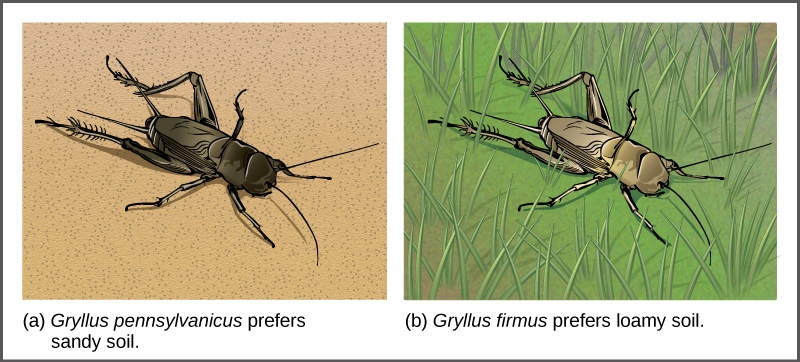
Figure 18.18図 18.18
Speciation can occur when two populations occupy different habitats. The habitats need not be far apart. The cricket (a) Gryllus pennsylvanicus prefers sandy soil, and the cricket (b) Gryllus firmus prefers loamy soil. The two species can live in close proximity, but because of their different soil preferences, they became genetically isolated.
英語のヒント
二つの個体群が異なる生息場所を占めると、種分化が起こりうる。生息場所は遠く離れている必要はない。コオロギの(a)Gryllus pennsylvanicusは砂質土を好み、(b)Gryllus firmusは壌土を好む。二つの種は近くに暮らせるが、好む土壌が異なるため、遺伝的に隔離された。
Behavioral isolation occurs when the presence or absence of a specific behavior prevents reproduction. For example, male fireflies use specific light patterns to attract females. Various firefly species display their lights differently. If a male of one species tried to attract the female of another, she would not recognize the light pattern and would not mate with the male.
英語のヒント
行動的隔離は、特定の行動があるかないかによって、生殖が妨げられるときに起こる。例えば、雄のホタルは、特定の発光パターンで雌を引きつける。種によって発光の仕方は異なる。ある種の雄が別の種の雌を引きつけようとしても、雌はその発光パターンを認識せず、その雄とは交尾しないだろう。
Other prezygotic barriers work when differences in their gamete cells (eggs and sperm) prevent fertilization from taking place. We call this a gametic barrier. Similarly, in some cases closely related organisms try to mate, but their reproductive structures simply do not fit together. For example, damselfly males of different species have differently shaped reproductive organs. If one species tries to mate with the female of another, their body parts simply do not fit together. (Figure 18.19).
英語のヒント
別の接合前障壁は、配偶子の細胞(卵と精子)の違いが受精を妨げるときに働く。これを配偶子障壁と呼ぶ。同様に、近縁の生物が交尾を試みても、生殖器の構造が単に合わない場合がある。例えば、イトトンボの雄は、種によって生殖器の形が異なる。ある種が別の種の雌と交尾しようとしても、体の部分がうまく合わない(図18.19)。

Figure 18.19図 18.19
The shape of the male reproductive organ varies among male damselfly species, and is only compatible with the female of that species. Reproductive organ incompatibility keeps the species reproductively isolated.
英語のヒント
イトトンボの雄の生殖器の形は、種によって異なり、その種の雌にしか適合しない。生殖器が適合しないことで、種は生殖的に隔離されたままになる。
In plants, certain structures aimed to attract one type of pollinator simultaneously prevent a different pollinator from accessing the pollen. The tunnel through which an animal must access nectar can vary widely in length and diameter, which prevents the plant from cross-pollinating with a different species (Figure 18.20).
英語のヒント
植物では、ある種類の花粉媒介者を引きつける構造が、同時に別の花粉媒介者が花粉へ近づくのを妨げる。動物が花蜜に届くために通らなければならない通路は、長さや直径が大きく異なりうる。そのため、植物が別の種と交雑する受粉が妨げられる(図18.20)。
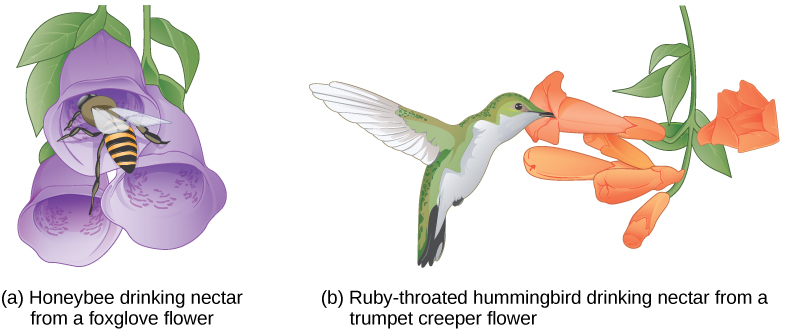


Figure 18.20図 18.20
Some flowers have evolved to attract certain pollinators. The (a) wide foxglove flower is adapted for pollination by bees, while the (b) long, tube-shaped trumpet creeper flower is adapted for pollination by hummingbirds.
英語のヒント
一部の花は、特定の花粉媒介者を引きつけるように進化している。(a)幅の広いジギタリスの花はハチによる受粉に適応し、(b)長い管状のノウゼンカズラの花はハチドリによる受粉に適応している。
When fertilization takes place and a zygote forms, postzygotic barriers can prevent reproduction. Hybrid individuals in many cases cannot form normally in the womb and simply do not survive past the embryonic stages. We call this hybrid inviability because the hybrid organisms simply are not viable. In another postzygotic situation, reproduction leads to hybrid birth and growth that is sterile. Therefore, the organisms are unable to reproduce offspring of their own. We call this hybrid sterility.
英語のヒント
受精が起こって接合子ができても、接合後障壁が生殖を妨げることがある。雑種個体は多くの場合、子宮内で正常に形成されず、胚の段階を越えて生き残れない。雑種生物が生存できないため、これを雑種不生存という。別の接合後の状況では、交配によって雑種が生まれ、成長しても不妊である。そのため、自分自身の子を作れない。これを雑種不稔という。