第5章細胞膜の構造と機能
Channelsチャネル
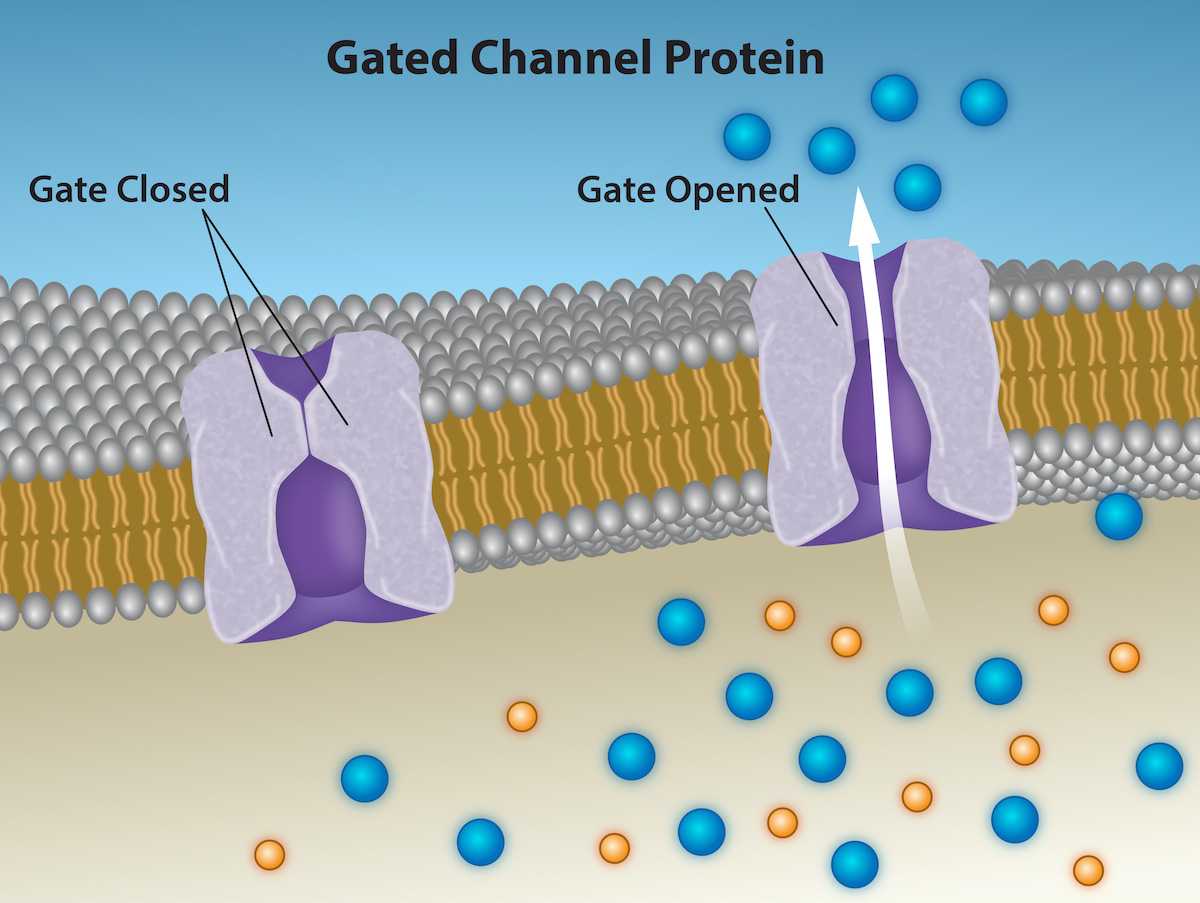
The integral proteins involved in facilitated transport are transport proteins, and they function as either channels for the material or carriers. In both cases, they are transmembrane proteins. Channels are specific for the transported substance. Channel proteins have hydrophilic domains exposed to the intracellular and extracellular fluids. In addition, they have a hydrophilic channel through their core that provides a hydrated opening through the membrane layers (Figure 5.9). Passage through the channel allows polar compounds to avoid the plasma membrane's nonpolar central layer that would otherwise slow or prevent their entry into the cell. Aquaporins are channel proteins that allow water to pass through the membrane at a very high rate.
英語のヒント
促進輸送に関わる内在性タンパク質は輸送タンパク質であり、物質のチャネルか担体として働く。どちらも膜貫通タンパク質である。チャネルには、運ぶ物質に対する特異性がある。チャネルタンパク質には、細胞内液と細胞外液に露出した親水性領域がある。さらに中心部には親水性の通路があり、膜の層を貫く、水で満たされた開口部を作る(図5.9)。極性化合物はチャネルを通ることで、通常なら細胞への侵入を遅らせたり妨げたりする細胞膜の無極性の中央層を避けられる。アクアポリンは、水を非常に速く膜の向こうへ通すチャネルタンパク質である。
OpenStax, Rice University; Biology 2e. Credit: Rao, A., Ryan, K., Tag, A. and Fletcher, S. Department of Biology, Texas A&M University. · CC BY 4.0 · Source出典

Figure 5.9図 5.9
Ion Channel Proteins. Ion channel proteins are gated. When they are closed, no ions can pass through them. However, when a channel opens, select ions diffuse through the channel. Channel proteins are highly specific, letting only a specific ion or subset of ions pass. Credit: Rao, A., Ryan, K., Tag, A. and Fletcher, S. Department of Biology, Texas A&M University.
イオンチャネルタンパク質にはゲートがある。閉じているときは、イオンは通れない。開くと、選ばれたイオンが通路を拡散する。チャネルタンパク質は特異性が高く、特定のイオン、または特定のイオン群だけを通す。クレジット:A. Rao、K. Ryan、A. Tag、S. Fletcher、テキサスA&M大学生物学科。
Channel proteins are either open at all times or they are “gated,” which controls the channel's opening. When a particular ion attaches to the channel protein it may control the opening, or other mechanisms or substances may be involved. In some tissues, sodium and chloride ions pass freely through open channels; whereas, in other tissues a gate must open to allow passage. An example of this occurs in the kidney, where there are both channel forms in different parts of the renal tubules. Cells involved in transmitting electrical impulses, such as nerve and muscle cells, have gated channels for sodium, potassium, and calcium in their membranes. Opening and closing these channels changes the relative concentrations on opposing sides of the membrane of these ions, resulting in facilitating electrical transmission along membranes (in the case of nerve cells) or in muscle contraction (in the case of muscle cells).
英語のヒント
チャネルタンパク質には、常に開いているものと、開閉を調節する「ゲート」をもつものがある。特定のイオンがチャネルタンパク質に結合して開閉を調節する場合もあれば、ほかの仕組みや物質が関わる場合もある。ある組織ではナトリウムイオンと塩化物イオンが開いたチャネルを自由に通るが、別の組織では通過のためにゲートを開く必要がある。例えば腎臓では、尿細管の異なる部分に両方の型がある。神経細胞や筋細胞など、電気的インパルスの伝達に関わる細胞は、膜にナトリウム、カリウム、カルシウムのゲート付きチャネルをもつ。開閉すると膜の両側でこれらのイオンの相対濃度が変化し、神経細胞では膜に沿った電気的伝達を促し、筋細胞では収縮をもたらす。
Carrier Proteins担体タンパク質
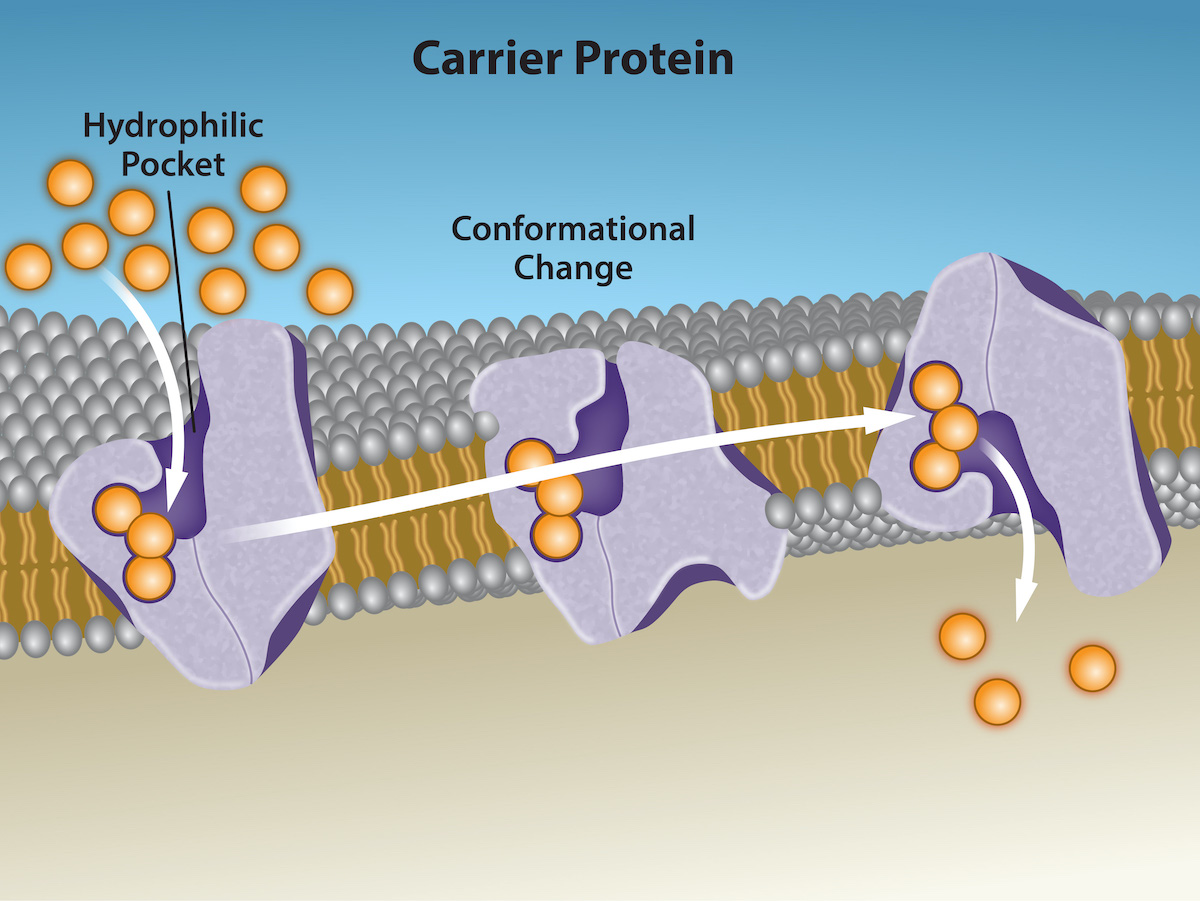
Another type of protein embedded in the plasma membrane is a carrier protein. This aptly named protein binds a substance and, thus triggers a change of its own shape, moving the bound molecule from the cell's outside to its interior (Figure 5.10); depending on the gradient, the material may move in the opposite direction. Carrier proteins are typically specific for a single substance. This selectivity adds to the plasma membrane's overall selectivity. Scientists poorly understand the exact mechanism for the change of shape. Proteins can change shape when their hydrogen bonds are affected, but this may not fully explain this mechanism. Each carrier protein is specific to one substance, and there are a finite number of these proteins in any membrane. This can cause problems in transporting enough material for the cell to function properly. When all of the proteins are bound to their ligands, they are saturated and the rate of transport is at its maximum. Increasing the concentration gradient at this point will not result in an increased transport rate.
英語のヒント
細胞膜に埋め込まれる別の種類のタンパク質が、担体タンパク質である。その名のとおり、物質に結合すると自身の形が変わり、結合した分子を細胞外から内部へ運ぶ(図5.10)。勾配によっては、物質は逆向きにも移動する。通常、担体タンパク質は一つの物質に特異的であり、その選択性が細胞膜全体の選択性を高める。形が変わる正確な仕組みは、まだよく分かっていない。タンパク質は水素結合が影響を受けると形を変えられるが、それだけでは仕組みを完全に説明できないかもしれない。各担体タンパク質は一つの物質に特異的で、どの膜でもその数には限りがある。そのため、細胞の正常な機能に十分な量の物質を運べないことがある。すべての担体がリガンドに結合すると飽和し、輸送速度は最大になる。この時点では、濃度勾配を大きくしても輸送速度は増えない。
OpenStax, Rice University; Biology 2e. Credit: Rao, A., Tag, A. and Fletcher, S. Department of Biology, Texas A&M University. · CC BY 4.0 · Source出典

Figure 5.10図 5.10
Some substances are able to move down their concentration gradient across the plasma membrane with the aid of carrier proteins. Carrier proteins change shape as they move molecules across the membrane. Credit: Rao, A., Tag, A. and Fletcher, S. Department of Biology, Texas A&M University.
一部の物質は担体タンパク質の助けを借り、濃度勾配を下る向きに細胞膜を越えられる。担体タンパク質は、分子を膜の反対側へ運ぶときに形を変える。クレジット:A. Rao、A. Tag、S. Fletcher、テキサスA&M大学生物学科。
An example of this process occurs in the kidney. In one part, the kidney filters glucose, water, salts, ions, and amino acids that the body requires. This filtrate, which includes glucose, then reabsorbs in another part of the kidney. Because there are only a finite number of carrier proteins for glucose, if more glucose is present than the proteins can handle, the excess is not transported and the body excretes this through urine. In a diabetic individual, the term is “spilling glucose into the urine.” A different group of carrier proteins, glucose transport proteins, or GLUTs, are involved in transporting glucose and other hexose sugars through plasma membranes within the body.
英語のヒント
この過程の例は腎臓に見られる。腎臓のある部分では、体に必要なグルコース、水、塩類、イオン、アミノ酸がろ過される。グルコースを含むこのろ液は、次に腎臓の別の部分で再吸収される。グルコースの担体タンパク質の数は限られるため、処理できる量より多くのグルコースがあると、余分は輸送されず、尿から排出される。糖尿病の人では、これを「尿にグルコースがあふれ出す」という。別の担体タンパク質群であるグルコース輸送体、すなわちGLUTは、体内でグルコースなどの六炭糖を細胞膜の向こうへ運ぶことに関わる。
Channel and carrier proteins transport material at different rates. Channel proteins transport much more quickly than carrier proteins. Channel proteins facilitate diffusion at a rate of tens of millions of molecules per second; whereas, carrier proteins work at a rate of a thousand to a million molecules per second.
英語のヒント
チャネルタンパク質と担体タンパク質では、物質を運ぶ速度が異なる。チャネルのほうが、はるかに速い。チャネルは毎秒数千万分子の拡散を促進するのに対し、担体は毎秒1,000〜100万分子の速度で働く。