第30章政府予算と財政政策
The Standardized Employment Deficit or Surplus標準化雇用ベースの財政赤字・黒字
Each year, the nonpartisan Congressional Budget Office (CBO) calculates the standardized employment budget—that is, what the budget deficit or surplus would be if the economy were producing at potential GDP, where people who look for work were finding jobs in a reasonable period of time and businesses were making normal profits, with the result that both workers and businesses would be earning more and paying more taxes. In effect, the standardized employment deficit eliminates the impact of the automatic stabilizers. Figure 30.13 compares the actual budget deficits of recent decades with the CBO’s standardized deficit.
英語のヒント
超党派の議会予算局(CBO)は毎年、標準化雇用予算を計算する。これは、経済が潜在GDPで生産していたなら、財政赤字または黒字がどうなったかを示すものである。その状況では、仕事を探す人々は妥当な期間内に職を見つけ、企業は通常の利益を上げる。その結果、労働者も企業も、より多くを稼ぎ、より多くの税を払うことになる。実質的に、標準化雇用ベースの赤字は、自動安定化装置の影響を取り除く。図30.13は、近年の数十年間の実際の財政赤字と、CBOの標準化赤字を比較している。
Additional Resources追加教材
Comparison of Actual Budget Deficits with the Standardized Employment Deficit実際の財政赤字と標準化雇用ベースの赤字の比較
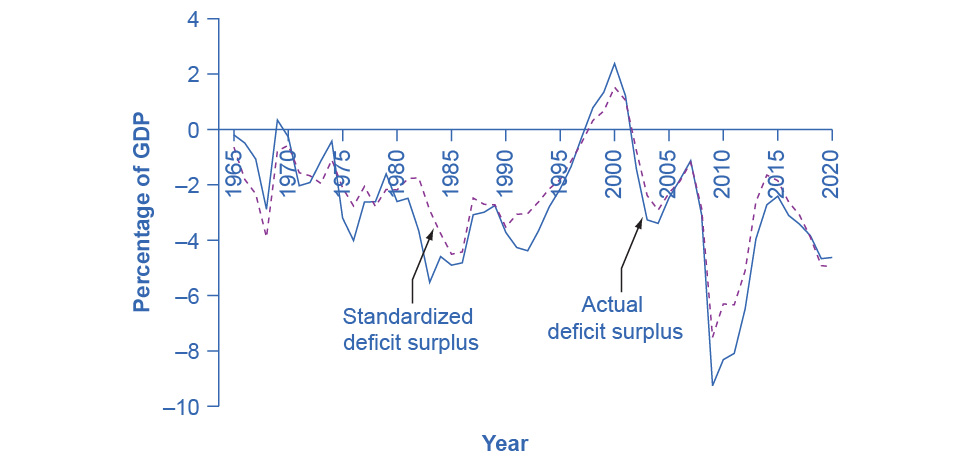

Figure 30.13図 30.13
When the economy is in recession, the standardized employment budget deficit is less than the actual budget deficit because the economy is below potential GDP, and the automatic stabilizers are reducing taxes and increasing spending. When the economy is performing extremely well, the standardized employment deficit (or surplus) is higher than the actual budget deficit (or surplus) because the economy is producing about potential GDP, so the automatic stabilizers are increasing taxes and reducing the need for government spending. (Sources: Actual and Cyclically Adjusted Budget Surpluses/Deficits, https://www.cbo.gov/data/budget-economic-data#8)
英語のヒント
経済が景気後退にあるとき、標準化雇用予算の赤字は、実際の財政赤字より小さい。経済が潜在GDPを下回り、自動安定化装置が税を減らして支出を増やしているためである。経済が非常に好調なとき、標準化雇用ベースの赤字または黒字は、実際の財政赤字または黒字より大きい。経済が潜在GDP程度で生産しているため、自動安定化装置が税を増やし、政府支出の必要を減らしているからである。(出典:実際および景気循環調整後の財政黒字・赤字、https://www.cbo.gov/data/budget-economic-data#8)
Notice that in recession years, like the early 1990s, 2001, or 2009, the standardized employment deficit is smaller than the actual deficit. (These data are only available up until February 2020, so they do not include the effects of the pandemic.) During recessions, the automatic stabilizers tend to increase the budget deficit, so if the economy was instead at full employment, the deficit would be reduced. However, in the late 1990s the standardized employment budget surplus was lower than the actual budget surplus. The gap between the standardized budget deficit or surplus and the actual budget deficit or surplus shows the impact of the automatic stabilizers. More generally, the standardized budget figures allow you to see what the budget deficit would look like with the economy held constant—at its potential GDP level of output.
英語のヒント
1990年代初頭、2001年、2009年など景気後退の年には、標準化雇用ベースの赤字が、実際の赤字より小さいことに注意しよう。(このデータは2020年2月までしか利用できないため、パンデミックの影響は含まない。)景気後退中、自動安定化装置は財政赤字を増やす傾向があるので、経済が代わりに完全雇用にあれば、赤字は減るだろう。しかし、1990年代後半には、標準化雇用予算の黒字は、実際の財政黒字を下回っていた。標準化された財政赤字・黒字と、実際の財政赤字・黒字の差は、自動安定化装置の影響を示す。より一般には、標準化予算の数値から、経済を潜在GDPの生産水準に一定に保った場合、財政赤字がどうなるかを見ることができる。
Automatic stabilizers occur quickly. Lower wages means that a lower amount of taxes is withheld from paychecks right away. Higher unemployment or poverty means that government spending in those areas rises as quickly as people apply for benefits. However, while the automatic stabilizers offset part of the shifts in aggregate demand, they do not offset all or even most of it. Historically, automatic stabilizers on the tax and spending side offset about 10% of any initial movement in the level of output. This offset may not seem enormous, but it is still useful. Automatic stabilizers, like shock absorbers in a car, can be useful if they reduce the impact of the worst bumps, even if they do not eliminate the bumps altogether.
英語のヒント
自動安定化装置は素早く働く。賃金が下がれば、給与から源泉徴収される税額は、直ちに減る。失業や貧困が増えれば、人々が給付を申請するとすぐ、その分野の政府支出が増える。しかし、自動安定化装置は総需要の移動の一部を相殺するものの、すべてを、あるいは大部分さえ相殺するわけではない。歴史的には、税と支出の側の自動安定化装置は、生産水準の当初の動きの約10%を相殺してきた。これは莫大には見えないかもしれないが、それでも有用である。自動安定化装置は、自動車の衝撃吸収装置と同じように、凸凹を完全になくせなくても、最も激しい衝撃の影響を弱めれば役に立つ。
Child Tax Credit児童税額控除
One new form of government spending meant to support working families is an expanded Child Tax Credit (CTC). Under changes which took effect in 2021, qualifying families will receive the credit as a monthly payment directly into their bank accounts. The credit is also an expanded amount: from $2,000 per child to $3,600 per child under the age of 6 (less for children older than that). Introduced by President Joe Biden’s American Rescue Plan, it is hoped that the newly expanded CTC will help reduce child poverty and support families. Because the CTC works like a grant that is automatically extended to households, the CTC is considered a new kind of fiscal policy that is related to a universal basic income policy which some have argued for in the past. By sending money out monthly instead of a lump sum as part of a person’s tax refund, the intention is to help families better manage monthly bills for things like clothes and food.
英語のヒント
働く家族を支えるための新しい政府支出の一つが、拡充された児童税額控除(CTC)である。2021年に発効した変更の下で、条件を満たす家族は、毎月、銀行口座へ直接支払われる形で控除を受け取る。控除額も、子ども1人当たり2,000ドルから、6歳未満の子ども1人当たり3,600ドルへ増えた。それより年上の子どもは、これより少ない。ジョー・バイデン大統領のアメリカ救済計画で導入された、この新たなCTCの拡充は、子どもの貧困を減らし、家族を支えることが期待されている。CTCは家計へ自動的に支給される助成金のように機能するため、過去に一部の人が主張してきたユニバーサル・ベーシック・インカム政策に関連する、新種の財政政策と考えられる。個人の税還付の一部として一括払いする代わりに、毎月お金を送ることで、家族が衣服や食料などの毎月の支払いを、よりうまく管理できるようにすることを意図している。
Key Concepts and Summary重要概念とまとめ
Fiscal policy is conducted both through discretionary fiscal policy, which occurs when the government enacts taxation or spending changes in response to economic events, or through automatic stabilizers, which are taxing and spending mechanisms that, by their design, shift in response to economic events without any further legislation. The standardized employment budget is the calculation of what the budget deficit or budget surplus would have been in a given year if the economy had been producing at its potential GDP in that year. Many economists and politicians criticize the use of fiscal policy for a variety of reasons, including concerns over time lags, the impact on interest rates, and the inherently political nature of fiscal policy. We cover the critique of fiscal policy in the next module.
英語のヒント
財政政策は、経済上の出来事に対応して政府が課税や支出の変更を法制化する裁量的財政政策と、自動安定化装置の両方を通じて行われる。自動安定化装置とは、追加立法がなくても、その設計によって経済上の出来事に応じて変化する、課税と支出の仕組みである。標準化雇用予算とは、ある年に経済が潜在GDPで生産していたなら、その年の財政赤字または黒字がどうなったかという計算である。多くの経済学者や政治家は、時間の遅れ、金利への影響、財政政策に本質的に備わる政治性など、さまざまな理由から財政政策の利用を批判する。次の節では、財政政策への批判を扱う。