第4章労働市場と金融市場
Introduction to Labor and Financial Markets労働市場と金融市場への導入
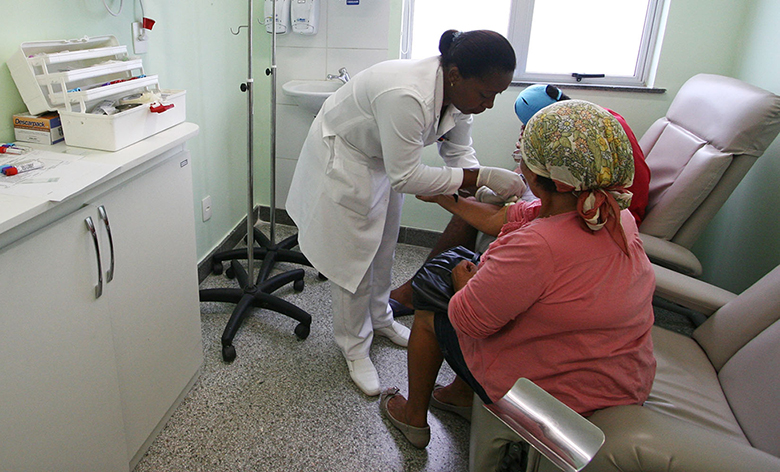
People often think of demand and supply in relation to goods, but labor markets, such as the nursing profession, can also apply to this analysis. (Credit: modification of "Hospital do Subúrbio" by Jaques Wagner Governador/Flickr Creative Commons, CC BY 2.0) · CC BY 2.0 · Source出典

Figure 4.1図 4.1
People often think of demand and supply in relation to goods, but labor markets, such as the nursing profession, can also apply to this analysis. (Credit: modification of "Hospital do Subúrbio" by Jaques Wagner Governador/Flickr Creative Commons, CC BY 2.0)
英語のヒント
需要と供給は財に関して考えられることが多いが、看護職のような労働市場にも同じ分析を適用できる。(クレジット:Jaques Wagner Governador/Flickr Creative Commonsの「Hospital do Subúrbio」を改変、CC BY 2.0)
Learning Objectives学習目標
The theories of supply and demand do not apply just to markets for goods. They apply to any market, even markets for things we may not think of as goods and services like labor and financial services. Labor markets are markets for employees or jobs. Financial services markets are markets for saving or borrowing.
英語のヒント
需要と供給の理論は、財の市場だけに当てはまるのではない。労働や金融サービスのように、財・サービスとしては考えないかもしれないものを含め、どの市場にも適用できる。労働市場は働き手や仕事の市場であり、金融サービス市場は貯蓄や借り入れの市場である。
When we think about demand and supply curves in goods and services markets, it is easy to picture the demanders and suppliers: businesses produce the products and households buy them. Who are the demanders and suppliers in labor and financial service markets? In labor markets job seekers (individuals) are the suppliers of labor, while firms and other employers who hire labor are the demanders for labor. In financial markets, any individual or firm who saves contributes to the supply of money, and any entity that borrows (person, firm, or government) contributes to the demand for money.
英語のヒント
財・サービス市場の需要曲線と供給曲線を考えると、需要者と供給者は想像しやすい。企業が製品を生産し、家計が買う。では、労働市場と金融サービス市場では誰が需要者で、誰が供給者なのだろうか。労働市場では、求職者である個人が労働の供給者であり、企業など、労働を雇う雇用主が需要者である。金融市場では、貯蓄する個人や企業が資金の供給に寄与し、借り入れる個人・企業・政府が資金の需要に寄与する。
As a college student, you most likely participate in both labor and financial markets. Employment is a fact of life for most college students: According to the National Center for Educational Statistics, in 2018 43% of full-time college students and 81% of part-time college students were employed. Most college students are also heavily involved in financial markets, primarily as borrowers. As of the 2018–19 school year, 43% of full-time undergraduate students were receiving loan aid to help finance their education, and those loans averaged $7,300 per year. Many students also borrow for other expenses, like purchasing a car. As this chapter will illustrate, we can analyze labor markets and financial markets with the same tools we use to analyze demand and supply in the goods markets.
英語のヒント
大学生であれば、おそらく労働市場と金融市場の両方に参加している。多くの大学生にとって就労は生活の一部である。全米教育統計センターによれば、2018年には、フルタイムの学生の43%、パートタイムの学生の81%が働いていた。多くの学生は、主に借り手として金融市場にも深く関わる。2018~19年度には、フルタイムの学部学生の43%が、教育費を賄うために貸与型の援助を受け、平均額は年7,300ドルだった。自動車の購入など、ほかの支出のために借り入れる学生も多い。この章では、財市場の需要と供給を分析するのと同じ道具で、労働市場と金融市場を分析できることを示す。