第20章経済成長
Introduction to Economic Growth経済成長への導入
Average Daily Calorie Consumption一日の平均摂取カロリー
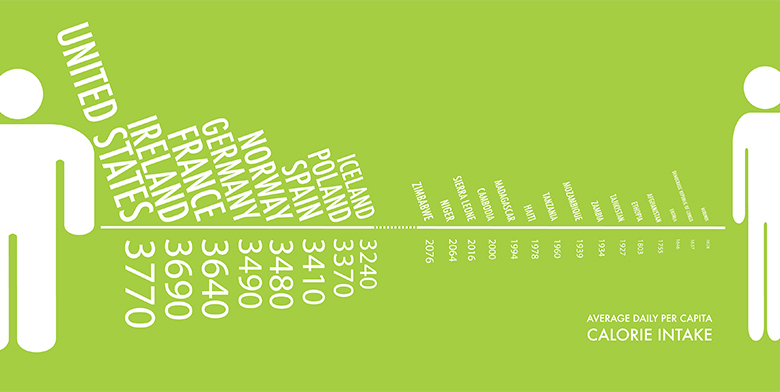
Not only has the number of calories that people consume per day increased, so has the amount of food calories that people are able to afford based on their working wages. (Credit: modification of "Daily Calorie Intake" by Lauren Manning/Flickr Creative Commons, CC BY 2.0) · CC BY 2.0 · Source出典

Figure 20.1図 20.1
Not only has the number of calories that people consume per day increased, so has the amount of food calories that people are able to afford based on their working wages. (Credit: modification of "Daily Calorie Intake" by Lauren Manning/Flickr Creative Commons, CC BY 2.0)
英語のヒント
人々が一日に摂取するカロリーが増えただけでなく、働いて得る賃金で買える食料のカロリー量も増えた。(クレジット:Lauren Manning/Flickr Creative Commonsによる「Daily Calorie Intake」を改変、CC BY 2.0)
Learning Objectives学習目標
Every country worries about economic growth. In the United States and other high-income countries, the question is whether economic growth continues to provide the same remarkable gains in our standard of living as it did during the twentieth century. Meanwhile, can middle-income countries like Brazil, Egypt, or Poland catch up to the higher-income countries, or must they remain in the second tier of per capita income? Of the world’s population of roughly 7.5 billion people, about 1.1 billion are scraping by on incomes that average less than $2 per day, not that different from the standard of living 2,000 years ago. Can the world’s poor be lifted from their fearful poverty? As the 1995 Nobel laureate in economics, Robert E. Lucas Jr., once noted: “The consequences for human welfare involved in questions like these are simply staggering: Once one starts to think about them, it is hard to think about anything else.”
英語のヒント
どの国も経済成長を気にかけている。米国などの高所得国では、経済成長が20世紀と同じように生活水準の目覚ましい向上をもたらし続けるかどうかが問題となる。他方、ブラジル、エジプト、ポーランドのような中所得国は、高所得国に追いつけるのか。それとも一人当たり所得で第2集団にとどまらなければならないのか。世界の約75億人のうち約11億人は、一日平均2ドル未満という、2,000年前の生活水準とあまり変わらない所得で何とか暮らしている。世界の貧しい人々を、恐ろしい貧困から引き上げることはできるのだろうか。1995年のノーベル経済学賞受賞者ロバート・E・ルーカス・ジュニアは、かつてこう述べた。「このような問いが人間の厚生にもたらす結果は、ただただ圧倒的である。ひとたび考え始めると、それ以外のことを考えるのが難しくなる。」
Dramatic improvements in a nation’s standard of living are possible. After the Korean War in the late 1950s, the Republic of Korea, often called South Korea, was one of the poorest economies in the world. Most South Koreans worked in peasant agriculture. According to the British economist Angus Maddison, who devoted life’s work to measuring GDP and population in the world economy, GDP per capita in 1990 international dollars was $854 per year. From the 1960s to the early twenty-first century, a time period well within the lifetime and memory of many adults, the South Korean economy grew rapidly. Over these four decades, GDP per capita increased by more than 6% per year. According to the World Bank, GDP for South Korea now exceeds $30,000 in nominal terms, placing it firmly among high-income countries like Italy, New Zealand, and Israel. Measured by total GDP in 2015, South Korea is the eleventh-largest economy in the world. For a nation of 50 million people, this transformation is extraordinary.
英語のヒント
一国の生活水準を劇的に向上させることは可能である。朝鮮戦争後の1950年代後半、大韓民国、一般に韓国と呼ばれる国は、世界で最も貧しい経済の一つだった。韓国人の大半は小農として働いていた。世界経済のGDPと人口の測定に生涯をささげた英国の経済学者アンガス・マディソンによれば、一人当たりGDPは1990年国際ドルで年854ドルだった。多くの成人の生涯と記憶に十分収まる1960年代から21世紀初頭までの間に、韓国経済は急成長した。この40年間、一人当たりGDPは年6%以上増えた。世界銀行によると、韓国のGDPは現在、名目で30,000ドルを超え、イタリア、ニュージーランド、イスラエルなどと並ぶ高所得国に確実に位置している。2015年のGDP総額で測ると、韓国は世界第11位の経済である。人口5,000万人の国にとって、この変化は並外れている。
South Korea is a standout example, but it is not the only case of rapid and sustained economic growth. Other East Asian nations, like Thailand and Indonesia, have seen very rapid growth as well. China has grown enormously since it enacted market-oriented economic reforms around 1980. GDP per capita in high-income economies like the United States also has grown dramatically albeit over a longer time frame. Since the Civil War, the U.S. economy has transformed from a primarily rural and agricultural economy to an economy based on services, manufacturing, and technology.
英語のヒント
韓国は際立つ例だが、急速で持続的な経済成長の唯一の事例ではない。タイやインドネシアのような他の東アジア諸国でも、非常に速い成長が見られた。中国は1980年ごろに市場志向の経済改革を実施して以来、大きく成長してきた。米国のような高所得経済でも、より長い期間をかけてではあるが、一人当たりGDPは大幅に増えた。南北戦争以来、米国経済は主に農村と農業に基づく経済から、サービス、製造業、技術に基づく経済へ変わった。