第16章情報・リスク・保険
Introduction to Information, Risk, and Insurance情報・リスク・保険への導入
Former President Obama’s Health Care Reformオバマ元大統領の医療改革
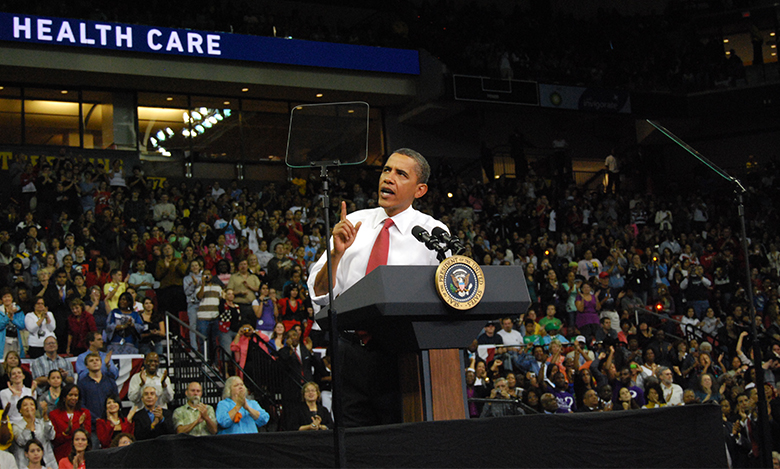
The Patient Protection and Affordable Care Act (PPACA), more commonly known as Obamacare, relates strongly to the topic of this chapter. While originally a controversial topic, it has gained majority approval at 55% as of March 2022. (Credit: “Obama at Healthcare rally at UMD” by Daniel Borman/Flickr Creative Commons, CC BY 2.0) · CC BY 2.0 · Source出典

Figure 16.1図 16.1
The Patient Protection and Affordable Care Act (PPACA), more commonly known as Obamacare, relates strongly to the topic of this chapter. While originally a controversial topic, it has gained majority approval at 55% as of March 2022. (Credit: “Obama at Healthcare rally at UMD” by Daniel Borman/Flickr Creative Commons, CC BY 2.0)
英語のヒント
一般にオバマケアと呼ばれる患者保護・医療費負担適正化法(PPACA)は、本章のテーマと深く関係する。当初は論争を呼んだが、2022年3月には支持率55%と過半数の支持を得ている。(クレジット:Daniel Borman/Flickr Creative Commonsによる「Obama at Healthcare rally at UMD」、CC BY 2.0)
Learning Objectives学習目標
Every purchase is based on a belief about the satisfaction that the good or service will provide. In turn, these beliefs are based on the information that the buyer has available. For many products, the information available to the buyer or the seller is imperfect or unclear, which can either make buyers regret past purchases or avoid making future ones.
英語のヒント
あらゆる購入は、その財やサービスが与えてくれる満足についての予想に基づく。そしてこの予想は、買い手が利用できる情報に基づく。多くの製品では、買い手や売り手が利用できる情報は不完全または不明確であり、そのため買い手が過去の購入を後悔したり、今後の購入を避けたりすることがある。
This chapter discusses how imperfect and asymmetric information affect markets. The first module of the chapter discusses how asymmetric information affects markets for goods, labor, and financial capital. When buyers have less information about the quality of the good (for example, a gemstone) than sellers do, sellers may be tempted to mislead buyers. If a buyer cannot have at least some confidence in the quality of what they are purchasing, then they will be reluctant or unwilling to purchase the products. Thus, we require mechanisms to bridge this information gap, so buyers and sellers can engage in a transaction.
英語のヒント
本章では、不完全情報と非対称な情報が市場にどう影響するかを論じる。最初の節では、情報の非対称性が財・労働・金融資本の市場にどう影響するかを論じる。買い手が財(たとえば宝石)の品質について売り手ほど情報を持っていなければ、売り手は買い手を誤認させようとするかもしれない。買うものの品質について少なくともある程度の確信が持てなければ、買い手は製品の購入に消極的になるか、購入を拒むだろう。そのため、買い手と売り手が取引できるよう、この情報格差を埋める仕組みが必要になる。
The second module of the chapter discusses insurance markets, which also face similar problems of imperfect information. For example, a car insurance company would prefer to sell insurance only to those who are unlikely to have auto accidents—but it is hard for the firm to identify those perfectly safe drivers. Conversely, car insurance buyers would like to persuade the auto insurance company that they are safe drivers and should pay only a low price for coverage. If insurance markets cannot find ways to grapple with these problems of imperfect information, then even people who have low or average risks of making claims may not be able to purchase insurance. The chapter on financial markets (markets for stocks and bonds) will show that the problems of imperfect information can be especially poignant. We cannot eliminate imperfect information, but we can often manage it.
英語のヒント
第2節では、同じように不完全情報の問題に直面する保険市場を論じる。たとえば自動車保険会社は、自動車事故を起こしそうにない人だけに保険を売りたいが、完全に安全な運転者を見分けるのは難しい。逆に、自動車保険の買い手は、自分は安全な運転者であり、補償に対して低い保険料だけを支払えばよいと保険会社を納得させたい。保険市場がこうした不完全情報の問題に対処する方法を見いだせなければ、保険金を請求するリスクが低い人や平均的な人でさえ、保険に加入できないかもしれない。金融市場(株式と債券の市場)の章では、不完全情報の問題がとりわけ深刻になりうることを示す。不完全情報をなくすことはできないが、多くの場合、それに対処することはできる。