第15章貧困と経済的不平等
Introduction to Poverty and Economic Inequality貧困と経済的不平等への導入
Occupying Wall Streetウォール街を占拠する
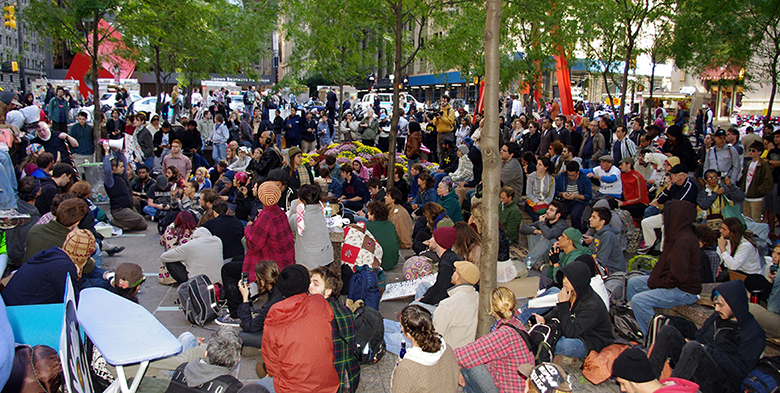
On September 17, 2011, Occupy Wall Street began in New York City’s Wall Street financial district. (Credit: modification of “Occupy Wall Street Day 2 2011 Shankbone” by David Shankbone/Flickr Creative Commons, CC BY 2.0) · CC BY 2.0 · Source出典

Figure 15.1図 15.1
On September 17, 2011, Occupy Wall Street began in New York City’s Wall Street financial district. (Credit: modification of “Occupy Wall Street Day 2 2011 Shankbone” by David Shankbone/Flickr Creative Commons, CC BY 2.0)
英語のヒント
2011年9月17日、「ウォール街を占拠せよ」はニューヨーク市のウォール街金融街で始まった。(クレジット:David Shankbone/Flickr Creative Commonsによる「Occupy Wall Street Day 2 2011 Shankbone」を改変、CC BY 2.0)
Learning Objectives学習目標
The labor markets that determine the pay that workers receive do not take into account how much income a family needs for food, shelter, clothing, and health care. Market forces do not worry about what happens to families when a major local employer goes out of business. Market forces do not take time to contemplate whether those who are earning higher incomes should pay an even higher share of taxes.
英語のヒント
労働者が受け取る給与を決める労働市場は、家族が食料、住居、衣服、医療のためにどれだけの所得を必要とするかを考慮しない。市場の力は、地域の主要な雇用者が廃業したとき、家族がどうなるかを心配しない。高い所得を得る人々が、さらに高い割合の税を払うべきかを考える時間も取らない。
However, labor markets do create considerable income inequalities. In 2020, the median American household income was $67,521 (the median is the level where half of all families had more than that level and half had less). For family households, the median was $86,372; for non-family households, it was $40,464. The Census Bureau also reported that in 2020, there were 37.2 million people living in poverty, representing 11.4% of the population. Think about a family of three—perhaps a single mother with two children—attempting to pay for the basics of life on perhaps $17,916 per year. After paying for rent, healthcare, clothing, and transportation, such a family might have $6,000 to spend on food. Spread over 365 days, the food budget for the entire family would be about $17 per day. To put this in perspective, most cities have restaurants where $17 will buy you an appetizer for one.
英語のヒント
しかし労働市場は、大きな所得不平等を実際に生む。2020年の米国世帯所得の中央値は67,521ドルだった。中央値とは、すべての家族の半分がそれより多く、半分が少ない水準である。家族世帯の中央値は86,372ドル、非家族世帯は40,464ドルだった。国勢調査局はまた、2020年には人口の11.4%に当たる3,720万人が貧困状態にあったと報告した。例えば2人の子どもを持つひとり親の母親という、3人家族が、年におそらく17,916ドルで生活の基本的な費用を払おうとする場合を考えよう。家賃、医療、衣服、交通費を払うと、食費に使えるのは6,000ドルほどかもしれない。365日で割ると、家族全員の食費は1日約17ドルとなる。これを実感するために言えば、ほとんどの都市には、17ドルで1人分の前菜を買う飲食店がある。
This chapter explores how the U.S. government defines poverty, the balance between assisting the poor without discouraging work, and how federal antipoverty programs work. It also discusses income inequality—how economists measure inequality, why inequality has changed in recent decades, the range of possible government policies to reduce inequality, and the danger of a tradeoff that too great a reduction in inequality may reduce incentives for producing output.
英語のヒント
この章では、米国政府が貧困をどう定義するか、労働意欲をそがずに貧しい人々を助けるための均衡、連邦の貧困対策事業がどう働くかを探る。また所得不平等について、経済学者がどう測るか、近年の数十年間になぜ変化したか、不平等を減らすために考えられる政府政策の範囲、不平等を減らしすぎると産出を生む誘因が弱まるというトレードオフの危険も論じる。