第10章独占的競争と寡占
Introduction to Monopolistic Competition and Oligopoly独占的競争と寡占への導入
Competing Brands?競合するブランド?
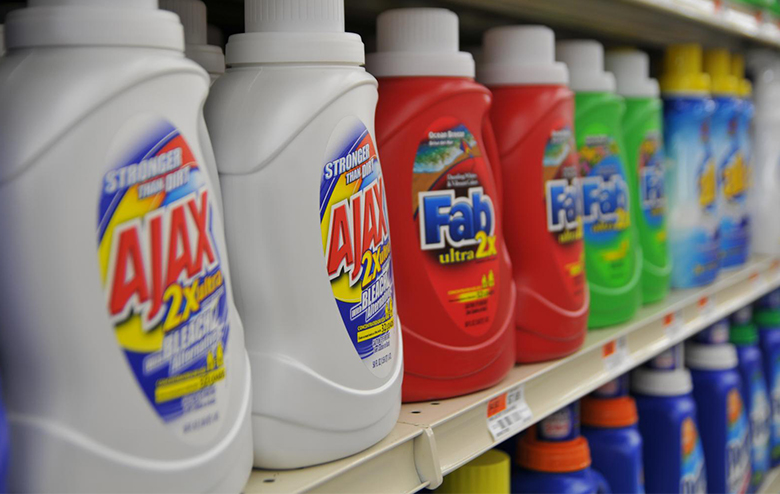
The laundry detergent market is one that is characterized neither as perfect competition nor monopoly. (Credit: modification of “DSC_7174” by Pixel Drip/Flickr Creative Commons, CC BY 2.0) · CC BY 2.0 · Source出典

Figure 10.1図 10.1
The laundry detergent market is one that is characterized neither as perfect competition nor monopoly. (Credit: modification of “DSC_7174” by Pixel Drip/Flickr Creative Commons, CC BY 2.0)
英語のヒント
洗濯洗剤市場は、完全競争とも独占とも言い表せない市場である。(クレジット:Pixel Drip/Flickr Creative Commonsによる「DSC_7174」を改変、CC BY 2.0)
Learning Objectives学習目標
Perfect competition and monopoly are at opposite ends of the competition spectrum. A perfectly competitive market has many firms selling identical products, who all act as price takers in the face of the competition. If you recall, price takers are firms that have no market power. They simply have to take the market price as given.
英語のヒント
完全競争と独占は、競争の範囲の両端にある。完全競争市場には同一の製品を販売する多数の企業があり、どの企業も競争に直面して価格受容者として行動する。思い出してほしいが、価格受容者とは市場支配力を持たない企業である。市場価格を所与として受け入れなければならない。
Monopoly arises when a single firm sells a product for which there are no close substitutes. We consider Microsoft, for instance, as a monopoly because it dominates the operating systems market.
英語のヒント
独占は、近い代替品のない製品を単一の企業が販売するときに生じる。たとえばMicrosoftはオペレーティングシステム市場を支配しているため、独占企業と考えられる。
What about the vast majority of real world firms and organizations that fall between these extremes, firms that we could describe as imperfectly competitive? What determines their behavior? They have more influence over the price they charge than perfectly competitive firms, but not as much as a monopoly. What will they do?
英語のヒント
この両極端の間に位置する現実の企業や組織の大部分、すなわち不完全競争のもとにあると呼べる企業についてはどうだろうか。その行動を決めるものは何か。これらの企業は、完全競争企業よりも自社の設定価格に大きな影響力を持つが、独占企業ほどではない。どのように行動するだろうか。
One type of imperfectly competitive market is monopolistic competition. Monopolistically competitive markets feature a large number of competing firms, but the products that they sell are not identical. Consider, as an example, the Mall of America in Minnesota, the largest shopping mall in the United States. In 2010, the Mall of America had 24 stores that sold women’s “ready-to-wear” clothing (like Ann Taylor and Urban Outfitters), another 50 stores that sold clothing for both men and women (like Banana Republic, J. Crew, and Nordstrom’s), plus 14 more stores that sold women’s specialty clothing (like Motherhood Maternity and Victoria’s Secret). Most of the markets that consumers encounter at the retail level are monopolistically competitive.
英語のヒント
不完全競争市場の一種は独占的競争である。独占的競争市場には競合する多数の企業があるが、販売する製品は同一ではない。一例として、米国最大のショッピングモールであるミネソタ州のモール・オブ・アメリカを考えよう。2010年には、女性用の「既製服」を販売する店舗が24店(Ann TaylorやUrban Outfittersなど)、男女両方の衣料品を販売する店舗がさらに50店(Banana Republic、J. Crew、Nordstrom’sなど)、女性向けの特殊な衣料品を販売する店舗がさらに14店(Motherhood MaternityやVictoria’s Secretなど)あった。消費者が小売段階で接する市場の大部分は独占的競争市場である。
The other type of imperfectly competitive market is oligopoly. Oligopolistic markets are those which a small number of firms dominate. Commercial aircraft provides a good example: Boeing and Airbus each produce slightly less than 50% of the large commercial aircraft in the world. Another example is the U.S. soft drink industry, which Coca-Cola and Pepsi dominate. We characterize oligopolies by high barriers to entry with firms choosing output, pricing, and other decisions strategically based on the decisions of the other firms in the market. In this chapter, we first explore how monopolistically competitive firms will choose their profit-maximizing level of output. We will then discuss oligopolistic firms, which face two conflicting temptations: to collaborate as if they were a single monopoly, or to individually compete to gain profits by expanding output levels and cutting prices. Oligopolistic markets and firms can also take on elements of monopoly and of perfect competition.
英語のヒント
不完全競争市場のもう1つの型が寡占である。寡占市場は、少数の企業が支配する市場である。民間航空機はよい例である。BoeingとAirbusは、それぞれ世界の大型民間航空機の50%弱を生産している。もう1つの例は、Coca-ColaとPepsiが支配する米国の清涼飲料産業である。寡占は参入障壁が高く、企業が市場内の他社の意思決定に基づいて、生産量や価格設定などを戦略的に決めることを特徴とする。この章ではまず、独占的競争企業が利潤を最大にする生産量をどのように選ぶかを調べる。その後、単一の独占企業であるかのように協調する誘惑と、生産量を増やして価格を下げ、個別に競争して利潤を得る誘惑という、相反する2つの誘惑に直面する寡占企業を論じる。寡占市場と寡占企業は、独占と完全競争の要素も持ちうる。