第7章生産・費用・産業構造
Introduction to Production, Costs, and Industry Structure生産・費用・産業構造への導入
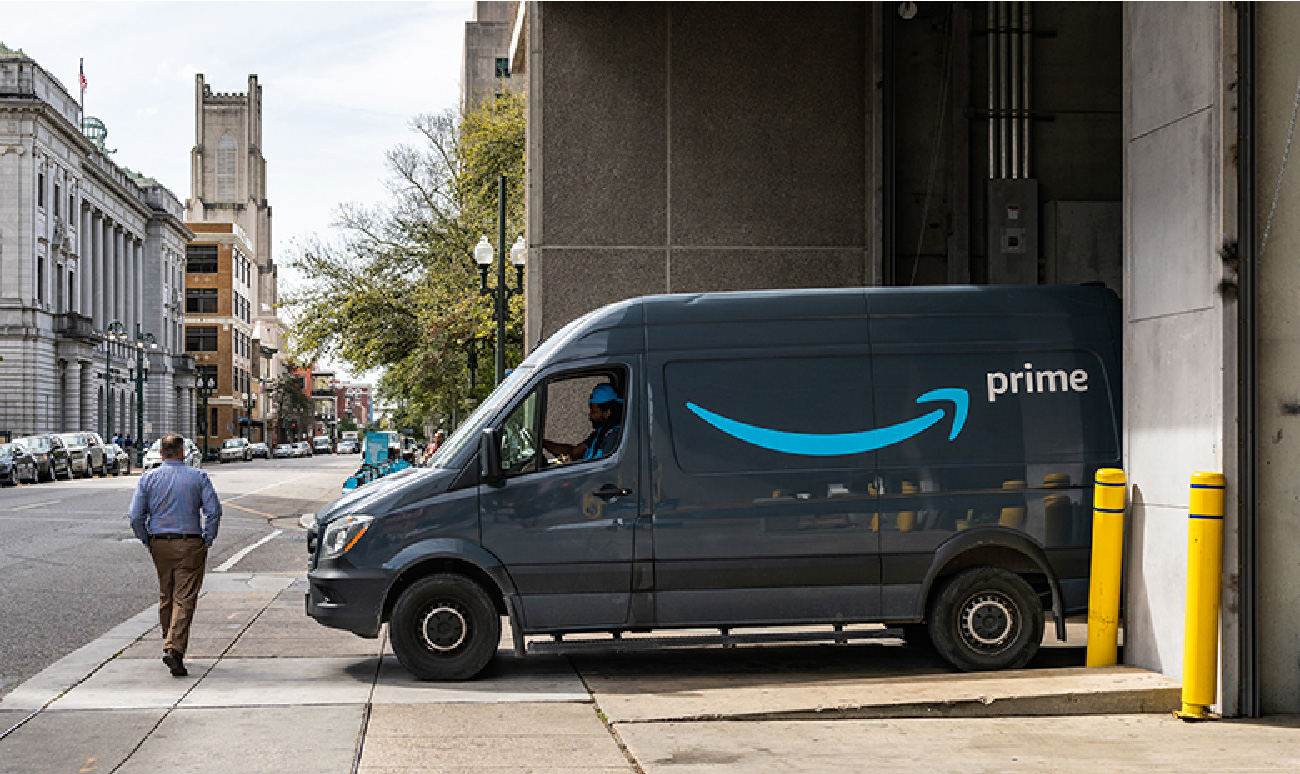
Amazon is an American international electronic commerce company that sells books, among many other things, shipping them directly to the consumer. Until recently there were no brick and mortar Amazon stores. (Credit: modification of “Amazon Prime Delivery Van (50072389511)” by Tony Webster/Wikimedia Commons, CC BY 2.0) · CC BY 2.0 · Source出典
Figure 7.1図 7.1
Amazon is an American international electronic commerce company that sells books, among many other things, shipping them directly to the consumer. Until recently there were no brick and mortar Amazon stores. (Credit: modification of “Amazon Prime Delivery Van (50072389511)” by Tony Webster/Wikimedia Commons, CC BY 2.0)
英語のヒント
Amazonは米国の国際的な電子商取引企業で、本をはじめ多くの商品を販売し、消費者へ直接発送する。最近までAmazonの実店舗はなかった。(クレジット:Tony Webster/Wikimedia Commonsの「Amazon Prime Delivery Van (50072389511)」を改変、CC BY 2.0)
Learning Objectives学習目標
This chapter is the first of four chapters that explores the theory of the firm. This theory explains how firms behave. What does that mean? Let’s define what we mean by the firm. A firm (or producer or business) combines inputs of labor, capital, land, and raw or finished component materials to produce outputs. If the firm is successful, the outputs are more valuable than the inputs. This activity of production goes beyond manufacturing (i.e., making things). It includes any process or service that creates value, including transportation, distribution, wholesale and retail sales.
英語のヒント
本章は、企業の理論を探る四つの章の最初である。この理論は企業の行動を説明する。それは何を意味するのか。まず企業を定義しよう。企業、生産者、事業体は、労働、資本、土地、原材料や完成部品という投入物を組み合わせ、生産物を作る。成功していれば、生産物の価値は投入物を上回る。この生産活動は、物を作る製造業だけではない。輸送、流通、卸売、小売など、価値を作るあらゆる過程やサービスを含む。
Production involves a number of important decisions that define a firm's behavior. These decisions include, but are not limited to:
英語のヒント
生産には、企業の行動を決める重要な意思決定がいくつもある。例えば次のようなものだが、これらに限られない。
- What product or products should the firm produce?
英語のヒント
どの製品を生産すべきか。 - How should the firm produce the products (i.e., what production process should the firm use)?
英語のヒント
どのように製品を生産すべきか。つまり、どの生産過程を使うべきか。 - How much output should the firm produce?
英語のヒント
どれだけ生産すべきか。 - What price should the firm charge for its products?
英語のヒント
製品にいくらの価格を付けるべきか。 - How much labor should the firm employ?
英語のヒント
どれだけの労働を雇うべきか。
The answers to these questions depend on the production and cost conditions facing each firm. That is the subject of this chapter. The answers also depend on the market structure for the product(s) in question. Market structure is a multidimensional concept that involves how competitive the industry is. We define it by questions such as these:
英語のヒント
これらの答えは、各企業が直面する生産と費用の条件による。それが本章の主題である。また、対象製品の市場構造にもよる。市場構造は、産業がどれほど競争的かに関わる多面的な概念だ。次のような問いで定義する。
- How much market power does each firm in the industry possess?
英語のヒント
産業内の各企業は、どれほど市場支配力を持つか。 - How similar is each firm’s product to the products of other firms in the industry?
英語のヒント
各企業の製品は、産業内のほかの企業の製品とどれほど似ているか。 - How difficult is it for new firms to enter the industry?
英語のヒント
新しい企業がその産業へ参入するのは、どれほど難しいか。 - Do firms compete on the basis of price, advertising, or other product differences?
英語のヒント
企業は価格、広告、それ以外の製品の違いのどれに基づいて競争するか。
Figure 7.2 illustrates the range of different market structures, which we will explore in Perfect Competition, Monopoly, and Monopolistic Competition and Oligopoly.
英語のヒント
The Spectrum of Competition競争の広がり
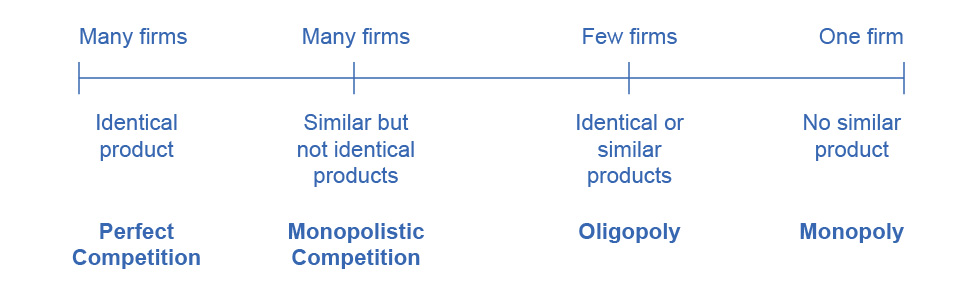


Figure 7.2図 7.2
Firms face different competitive situations. At one extreme—perfect competition—many firms are all trying to sell identical products. At the other extreme—monopoly—only one firm is selling the product, and this firm faces no competition. Monopolistic competition and oligopoly fall between the extremes of perfect competition and monopoly. Monopolistic competition is a situation with many firms selling similar, but not identical products. Oligopoly is a situation with few firms that sell identical or similar products.
英語のヒント
企業が直面する競争状況はさまざまだ。一方の極端である完全競争では、多数の企業が同一の製品を売ろうとする。反対の極端である独占では、一社だけが製品を売り、競争に直面しない。その間に独占的競争と寡占がある。独占的競争では、多数の企業が似ているが同一ではない製品を売る。寡占では、少数の企業が同一または類似の製品を売る。
Let's examine how firms determine their costs and desired profit levels. Then we will discuss the origins of cost, both in the short and long run. Private enterprise, which can be private individual or group business ownership, characterizes the U.S. economy. In the U.S. system, we have the option to organize private businesses as sole proprietorships (one owner), partners (more than one owner), and corporations (legal entitles separate from the owners.
英語のヒント
企業が費用と望ましい利益水準をどう決めるかを調べよう。その後、短期と長期の両方で費用の生じる理由を考える。米国経済の特徴は、個人または集団が所有する民間企業である。米国では、事業を個人事業(所有者1人)、共同事業(所有者が複数)、法人(所有者とは別の法的主体)として組織できる。
When people think of businesses, often corporate giants like Wal-Mart, Microsoft, or General Motors come to mind. However, firms come in all sizes, as Table 7.1 shows. The vast majority of American firms have fewer than 20 employees. As of 2010, the U.S. Census Bureau counted 5.7 million firms with employees in the U.S. economy. Slightly less than half of all the workers in private firms are at the 17,000 large firms, meaning they employ more than 500 workers. Another 35% of workers in the U.S. economy are at firms with fewer than 100 workers. These small-scale businesses include everything from dentists and lawyers to businesses that mow lawns or clean houses. Table 7.1 does not include a separate category for the millions of small “non-employer” businesses where a single owner or a few partners are not officially paid wages or a salary, but simply receive whatever they can earn.
英語のヒント
企業と聞くと、ウォルマート、マイクロソフト、ゼネラルモーターズのような大企業が浮かぶことが多い。しかし表7.1のように、企業の規模はさまざまだ。米国企業の圧倒的多数は従業員20人未満である。2010年、米国国勢調査局は、従業員を持つ企業を570万社と数えた。民間企業の全労働者の半数弱は、500人を超える従業員を持つ17,000社の大企業で働く。さらに35%は100人未満の企業で働く。小規模企業には、歯科医や弁護士から、芝刈りや住宅清掃の事業まで含まれる。表7.1には、数百万ある小さな「非雇用主」事業の独立した分類はない。そこでは、一人の所有者や少数の共同経営者が正式な賃金や給与を受け取らず、稼いだものをそのまま受け取る。
Number of Employees 従業員数 |
Firms (% of total firms) 企業数(全企業に占める割合) |
Number of Paid Employees (% of total employment) 有給従業員数(総雇用に占める割合) |
|---|---|---|
Total 合計 |
5,734,538 |
112.0 million 1億1,200万人 |
0–9 |
4,543,315 (79.2%) |
12.3 million (11.0%) 1,230万人(11.0%) |
10–19 |
617,089 (10.8%) |
8.3 million (7.4%) 830万人(7.4%) |
20–99 |
475,125 (8.3%) |
18.6 million (16.6%) 1,860万人(16.6%) |
100–499 |
81,773 (1.4%) |
15.9 million (14.2%) 1,590万人(14.2%) |
500 or more 500人以上 |
17,236 (0.30%) |
50.9 million (49.8%) 5,090万人(49.8%) |
long run
長期
period of time during which all of a firm’s inputs are variable
英語のヒント
企業のすべての投入物を変えられる期間。