Introduction to the Aggregate Supply–Aggregate Demand Model総供給・総需要モデルへの導入
New Home Construction新築住宅の建設
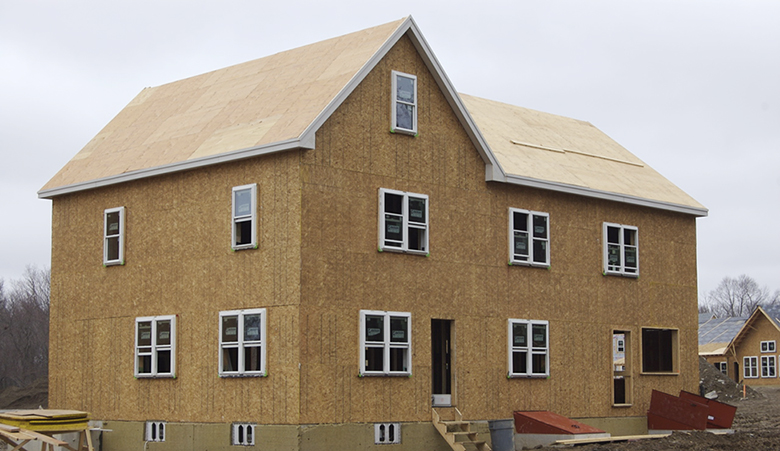
At the peak of the housing bubble, many people across the country were able to secure the loans necessary to build new houses. (Credit: modification of "our house! Again!" by Tim Pierce/Flickr Creative Commons, CC BY 2.0) · CC BY 2.0 · Source出典
Figure 24.1図 24.1
At the peak of the housing bubble, many people across the country were able to secure the loans necessary to build new houses. (Credit: modification of "our house! Again!" by Tim Pierce/Flickr Creative Commons, CC BY 2.0)
英語のヒント
住宅バブルの最盛期には、全国の多くの人が、新しい家を建てるために必要な融資を確保できた。(クレジット:Tim Pierce/Flickr Creative Commonsの「our house! Again!」を改変、CC BY 2.0)
A key part of macroeconomics is the use of models to analyze macro issues and problems. How is the rate of economic growth connected to changes in the unemployment rate? Is there a reason why unemployment and inflation seem to move in opposite directions: lower unemployment and higher inflation from 1997 to 2000, higher unemployment and lower inflation in the early 2000s, lower unemployment and higher inflation in the mid-2000s, and then higher unemployment and lower inflation in 2009? Why did the current account deficit rise so high, but then decline in 2009?
To analyze questions like these, we must move beyond discussing macroeconomic issues one at a time, and begin building economic models that will capture the relationships and interconnections between them. The next three chapters take up this task. This chapter introduces the macroeconomic model of aggregate supply and aggregate demand, how the two interact to reach a macroeconomic equilibrium, and how shifts in aggregate demand or aggregate supply will affect that equilibrium. This chapter also relates the model of aggregate supply and aggregate demand to the three goals of economic policy (growth, unemployment, and inflation), and provides a framework for thinking about many of the connections and tradeoffs between these goals. The chapter on The Keynesian Perspective focuses on the macroeconomy in the short run, where aggregate demand plays a crucial role. The chapter on The Neoclassical Perspective explores the macroeconomy in the long run, where aggregate supply plays a crucial role.