Introduction to Monetary Policy and Bank Regulation金融政策と銀行規制への導入
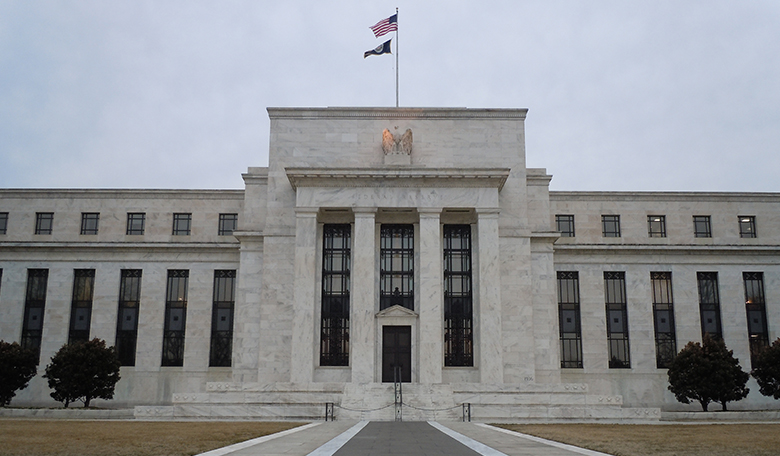
Marriner S. Eccles Federal Reserve Headquarters, Washington D.C.ワシントンD.C.のマリナー・S・エクルズ連邦準備制度本部
Some of the most influential decisions regarding monetary policy in the United States are made behind these doors. (Credit: modification of “Marriner S. Eccles Federal Reserve” by LunchboxLarry/Flickr Creative Commons, CC BY 2.0) · CC BY 2.0 · Source出典
Figure 28.1図 28.1
Some of the most influential decisions regarding monetary policy in the United States are made behind these doors. (Credit: modification of “Marriner S. Eccles Federal Reserve” by LunchboxLarry/Flickr Creative Commons, CC BY 2.0)
英語のヒント
アメリカの金融政策に関する最も影響力のある決定の一部は、この扉の向こうで行われる。(出典:LunchboxLarryによる「Marriner S. Eccles Federal Reserve」/Flickr Creative Commons、CC BY 2.0を改変)
Learning Objectives学習目標
Money, loans, and banks are all interconnected. Money is deposited in bank accounts, which is then loaned to businesses, individuals, and other banks. When the interlocking system of money, loans, and banks works well, economic transactions smoothly occur in goods and labor markets and savers are connected with borrowers. If the money and banking system does not operate smoothly, the economy can either fall into recession or suffer prolonged inflation.
The government of every country has public policies that support the system of money, loans, and banking. However, these policies do not always work perfectly. This chapter discusses how monetary policy works and what may prevent it from working perfectly.