第25章ケインズ派の視点
Introduction to the Keynesian Perspectiveケインズ派の見方への導入
Signs of a Recession景気後退の兆候
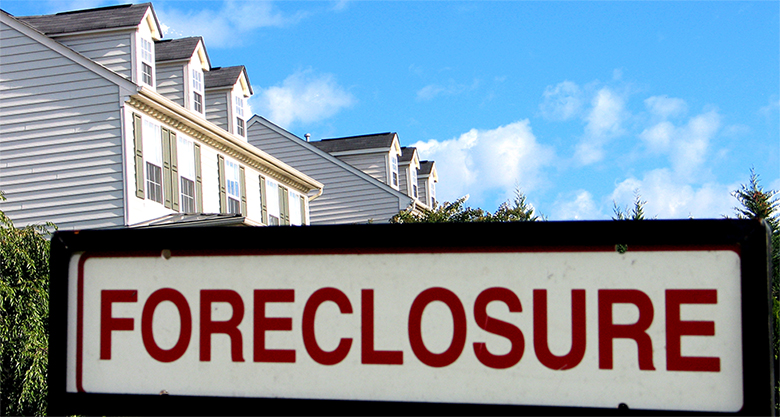
Home foreclosures were just one of the many signs and symptoms of the recent Great Recession. During that time, many businesses closed and many people lost their jobs. (Credit: modification of "Foreclosure" by Taber Andrew Bain/Flickr Creative Commons, CC BY 2.0) · CC BY 2.0 · Source出典
Figure 25.1図 25.1
Home foreclosures were just one of the many signs and symptoms of the recent Great Recession. During that time, many businesses closed and many people lost their jobs. (Credit: modification of "Foreclosure" by Taber Andrew Bain/Flickr Creative Commons, CC BY 2.0)
英語のヒント
住宅の差し押さえは、近年の大不況の多くの兆候や症状の一つにすぎなかった。この間、多くの企業が閉鎖され、多くの人が仕事を失った。(クレジット:Taber Andrew Bain/Flickr Creative Commonsの「Foreclosure」を改変、CC BY 2.0)
Learning Objectives学習目標
We have learned that the level of economic activity, for example output, employment, and spending, tends to grow over time. In Economic Growth we learned the reasons for this trend. The Macroeconomic Perspective pointed out that the economy tends to cycle around the long-run trend. In other words, the economy does not always grow at its average growth rate. Sometimes economic activity grows at the trend rate, sometimes it grows more than the trend, sometimes it grows less than the trend, and sometimes it actually declines. You can see this cyclical behavior in Figure 25.2.
英語のヒント
U.S. Real Domestic Product, Percent Changes 1930–2020米国の実質国内生産の変化率、1930~2020年
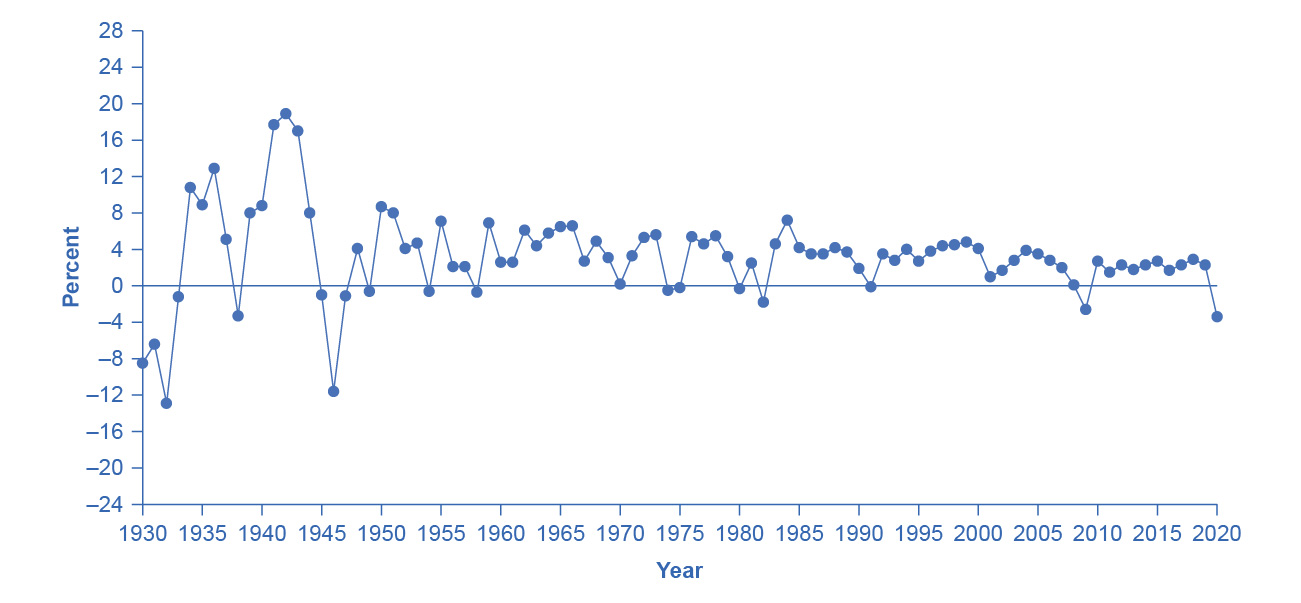


Figure 25.2図 25.2
The chart tracks the percent change in Real GDP since 1930. The magnitude of both recessions and peaks was quite large between 1930 and 1945. (Source: Bureau of Economic Analysis, “National Economic Accounts,” https://apps.bea.gov/itable/index.cfm)
英語のヒント
この図は1930年以降の実質GDPの変化率を追っている。1930~1945年には、景気後退も景気の山も規模がかなり大きかった。(出典:経済分析局「国民経済計算」、https://apps.bea.gov/itable/index.cfm)
This empirical reality raises two important questions: How can we explain the cycles, and to what extent can we moderate them? This chapter (on the Keynesian perspective) and The Neoclassical Perspective explore those questions from two different points of view, building on what we learned in The Aggregate Demand/Aggregate Supply Model.
英語のヒント
この経験的な現実は、二つの重要な問いを提起する。循環をどう説明できるか、そしてどこまで緩和できるか。本章のケインズ派の見方と「新古典派の見方」は、「総需要・総供給モデル」で学んだことに基づき、これらの問いを異なる二つの観点から探る。
Percent Change of U.S. Real Gross Domestic Product.
英語のヒント
米国の実質国内総生産の変化率。