第25章ケインズ派の視点
25.1 Aggregate Demand in Keynesian Analysis25.1 ケインズ派の分析における総需要
Learning Objectives学習目標
Learning Objectives学習目標
By the end of this section, you will be able to:
英語のヒント
この節を学ぶと、次のことができるようになる。
- Explain real GDP, recessionary gaps, and inflationary gaps
英語のヒント
実質GDP、不況ギャップ、インフレギャップを説明する - Recognize the Keynesian AD/AS model
英語のヒント
ケインズ派のAD/ASモデルを理解する - Identify the determining factors of both consumption expenditure and investment expenditure
英語のヒント
消費支出と投資支出の決定要因を特定する - Analyze the factors that determine government spending and net exports
英語のヒント
政府支出と純輸出を決める要因を分析する
The Keynesian perspective focuses on aggregate demand. The idea is simple: firms produce output only if they expect it to sell. Thus, while the availability of the factors of production determines a nation’s potential GDP, the amount of goods and services that actually sell, known as real GDP, depends on how much demand exists across the economy. Figure 25.3 illustrates this point.
英語のヒント
ケインズ派の見方は総需要に焦点を当てる。考え方は単純で、企業は売れると期待するときだけ生産する。したがって、利用可能な生産要素が一国の潜在GDPを決める一方、実際に売れる財やサービスの量、すなわち実質GDPは、経済全体にどれだけ需要があるかによって決まる。図25.3はこの点を示す。
The Keynesian AD/AS Modelケインズ派のAD/ASモデル
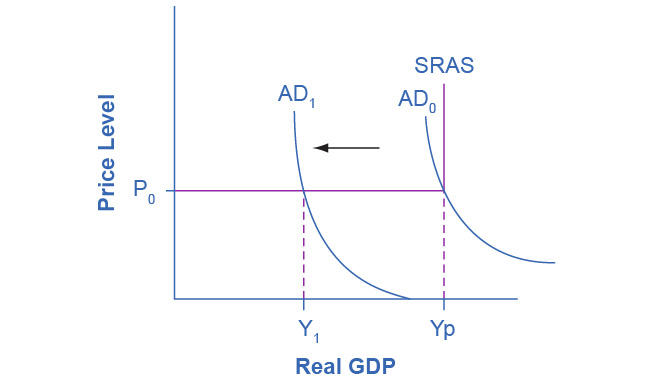

Figure 25.3図 25.3
The Keynesian View of the AD/AS Model uses an SRAS curve, which is horizontal at levels of output below potential and vertical at potential output. Thus, when beginning from potential output, any decrease in AD affects only output, but not prices. Any increase in AD affects only prices, not output.
英語のヒント
ケインズ派のAD/ASモデルは、潜在生産を下回る水準では水平、潜在生産では垂直なSRAS曲線を使う。したがって、潜在生産から出発すると、ADの減少は生産だけに影響し、物価には影響しない。ADの増加は物価だけに影響し、生産には影響しない。
Keynes argued that, for reasons we explain shortly, aggregate demand is not stable—that it can change unexpectedly. Suppose the economy starts where AD intersects SRAS at P0 and Yp. Because Yp is potential output, the economy is at full employment. Because AD is volatile, it can easily fall. Thus, even if we start at Yp, if AD falls, then we find ourselves in what Keynes termed a recessionary gap. The economy is in equilibrium but with less than full employment, as Y1 in Figure 25.3 shows. Keynes believed that the economy would tend to stay in a recessionary gap, with its attendant unemployment, for a significant period of time.
英語のヒント
ケインズは、まもなく説明する理由から、総需要は安定しておらず、予期せず変わりうると論じた。経済が、ADとSRASがP0とYpで交わるところから始まるとしよう。Ypは潜在生産なので、経済は完全雇用にある。ADは変動しやすいため、容易に減る。したがって、Ypから始まっても、ADが減れば、ケインズが不況ギャップと呼んだ状態になる。図25.3のY1が示すように、経済は均衡しているが完全雇用を下回る。ケインズは、経済が失業を伴う不況ギャップに、かなり長くとどまる傾向があると考えた。
In the same way (although we do not show it in the figure), if AD increases, the economy could experience an inflationary gap, where demand is attempting to push the economy past potential output. Consequently, the economy experiences inflation. The key policy implication for either situation is that government needs to step in and close the gap, increasing spending during recessions and decreasing spending during booms to return aggregate demand to match potential output.
英語のヒント
同様に、図には示していないが、ADが増えると、需要が経済を潜在生産より先へ押し出そうとするインフレギャップが生じうる。その結果、経済はインフレを経験する。どちらの状況でも、政策上の重要な含意は、政府が介入してギャップを埋める必要があるということだ。景気後退中には支出を増やし、好況中には減らして、総需要を潜在生産に対応する水準へ戻すのである。
Recall from The Aggregate Supply-Aggregate Demand Model that aggregate demand is total spending, economy-wide, on domestic goods and services. (Aggregate demand (AD) is actually what economists call total planned expenditure. Read the appendix on The Expenditure-Output Model for more on this.) You may also remember that aggregate demand is the sum of four components: consumption expenditure, investment expenditure, government spending, and spending on net exports (exports minus imports). In the following sections, we will examine each component through the Keynesian perspective.
英語のヒント
「総供給・総需要モデル」で学んだように、総需要は国内の財とサービスへの経済全体の総支出である。(実際には総需要ADは、経済学者が総計画支出と呼ぶものである。詳しくは付録「支出・生産モデル」を読もう。)総需要が、消費支出、投資支出、政府支出、純輸出(輸出から輸入を引いた額)への支出という四つの合計であることも、覚えているだろう。以下では、各構成要素をケインズ派の見方から検討する。
What Determines Consumption Expenditure?消費支出は何で決まるか
Consumption expenditure is spending by households and individuals on durable goods, nondurable goods, and services. Durable goods are items that last and provide value over time, such as automobiles. Nondurable goods are things like groceries—once you consume them, they are gone. Recall from The Macroeconomic Perspective that services are intangible things consumers buy, like healthcare or entertainment.
英語のヒント
消費支出は、家計や個人による耐久財、非耐久財、サービスへの支出である。耐久財とは、自動車のように長持ちし、時間を通じて価値を提供するものである。非耐久財とは食料品のように、一度消費すればなくなるものである。「マクロ経済的な見方」で学んだように、サービスは医療や娯楽のような、消費者が買う形のないものである。
Keynes identified three factors that affect consumption:
英語のヒント
ケインズは、消費に影響する三つの要因を特定した。
- Disposable income: For most people, the single most powerful determinant of how much they consume is how much income they have in their take-home pay, also known as disposable income, which is income after taxes.
英語のヒント
可処分所得:大半の人にとって、消費額を決める単独で最も強力な要因は、手取り所得がどれだけあるかである。これは可処分所得、つまり税引き後の所得とも呼ばれる。 - Expected future income: Consumer expectations about future income also are important in determining consumption. If consumers feel optimistic about the future, they are more likely to spend and increase overall aggregate demand. News of recession and troubles in the economy will make them pull back on consumption.
英語のヒント
予想される将来所得:消費者の将来所得への予想も、消費の決定に重要である。将来を楽観すれば、支出して総需要全体を増やす可能性が高い。景気後退や経済の問題についての知らせは、消費を控えさせる。 - Wealth or credit: When households experience a rise in wealth, they may be willing to consume a higher share of their income and to save less. When the U.S. stock market rose dramatically in the late 1990s, for example, U.S. savings rates declined, probably in part because people felt that their wealth had increased and there was less need to save. How do people spend beyond their income, when they perceive their wealth increasing? The answer is borrowing. On the other side, when the U.S. stock market declined about 40% from March 2008 to March 2009, people felt far greater uncertainty about their economic future, so savings rates increased while consumption declined.
英語のヒント
富や信用:家計の富が増えると、所得のより大きな割合を消費し、貯蓄を減らそうとすることがある。例えば、1990年代後半に米国株式市場が大幅に上昇したとき、米国の貯蓄率は低下した。おそらく理由の一部は、人々が自分の富は増えており、貯蓄の必要が減ったと感じたことにある。富が増えていると感じるとき、人々はどうやって所得を超える支出をするのか。答えは借入である。反対に、2008年3月から2009年3月までに米国株式市場が約40%下がったとき、人々は自分の経済的な将来にずっと大きな不確実性を感じ、消費が減る一方で貯蓄率は上がった。
Finally, Keynes noted that a variety of other factors combine to determine how much people save and spend. If household preferences about saving shift in a way that encourages consumption rather than saving, then AD will shift out to the right.
英語のヒント
最後にケインズは、ほかにもさまざまな要因が組み合わさって、人々の貯蓄と支出の額を決めると述べた。家計の貯蓄に関する選好が、貯蓄より消費を促す方向に変わると、ADは右へ外側にシフトする。