第26章新古典派の視点
Introduction to the Neoclassical Perspective新古典派の見方への導入
Impact of the Great Recession大不況の影響
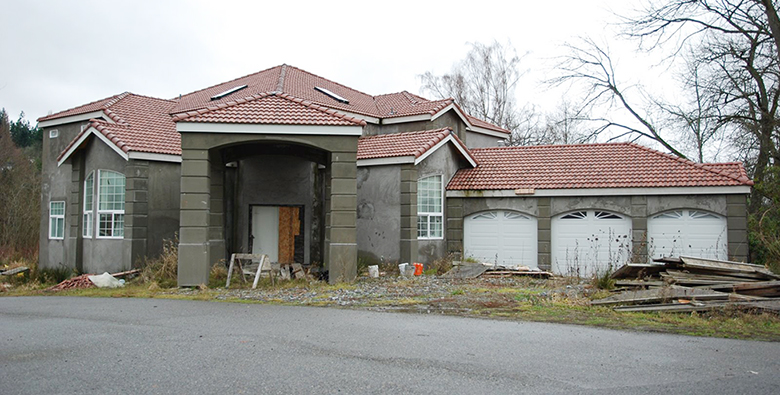
We can see the impact of the Great Recession in many areas of the economy that impact our daily lives. One of the most visible signs was in the housing market where many people were forced to abandon their homes and other buildings, including ones midway through construction. (Credit: modification of "House" by A McLin/Flickr Creative Commons, CC BY 2.0) · CC BY 2.0 · Source出典

Figure 26.1図 26.1
We can see the impact of the Great Recession in many areas of the economy that impact our daily lives. One of the most visible signs was in the housing market where many people were forced to abandon their homes and other buildings, including ones midway through construction. (Credit: modification of "House" by A McLin/Flickr Creative Commons, CC BY 2.0)
英語のヒント
日常生活に関わる経済の多くの分野に、大不況の影響を見ることができる。最も目立つ兆候の一つは住宅市場にあり、多くの人が住宅やその他の建物を、建設途中のものも含めて放棄せざるをえなかった。(クレジット:A McLin/Flickr Creative Commonsの「House」を改変、CC BY 2.0)
Learning Objectives学習目標
In Chicago, Illinois, the highest recorded temperature was 105° in July 1995, while the lowest recorded temperature was 27° below zero in January 1958. Understanding why these extreme weather patterns occurred would be interesting. However, if you wanted to understand the typical weather pattern in Chicago, instead of focusing on one-time extremes, you would need to look at the entire pattern of data over time.
英語のヒント
イリノイ州シカゴの観測史上最高気温は1995年7月の105度で、最低気温は1958年1月の氷点下27度だった。こうした極端な気象パターンがなぜ起きたかを理解するのは興味深いだろう。しかし、シカゴの典型的な気象パターンを理解したければ、一度きりの極端な現象ではなく、時間を通じたデータ全体のパターンを見る必要がある。
A similar lesson applies to the study of macroeconomics. It is interesting to study extreme situations, like the 1930s Great Depression, the 2008–2009 Great Recession, or the pandemic-induced recession of 2020. If you want to understand the whole picture, however, you need to look at the long term. Consider the unemployment rate. The unemployment rate has fluctuated from as low as 3.5% in 1969 to as high as 9.7% in 1982 and 8.1% in 2020. Even as the U.S. unemployment rate rose during recessions and declined during expansions, it kept returning to the general neighborhood of 5.0%. When the nonpartisan Congressional Budget Office carried out its long-range economic forecasts in 2010, it assumed that from 2015 to 2020, after the recession has passed, the unemployment rate would be 5.0%. In February 2020, before the COVID-19 pandemic, the unemployment rate reached a historic low of 3.5% and is back to below 5% as of early 2022. From a long-run perspective, the economy seems to keep adjusting back to this rate of unemployment.
英語のヒント
同様の教訓はマクロ経済学にも当てはまる。1930年代の大恐慌、2008~2009年の大不況、2020年のパンデミックによる景気後退のような極端な状況を研究することは興味深い。しかし全体像を理解したければ、長期を見る必要がある。失業率を考えよう。失業率は1969年の低い3.5%から1982年の高い9.7%、2020年の8.1%まで変動してきた。米国の失業率は景気後退中に上がり、拡大中に下がりながらも、おおむね5.0%付近へ戻り続けた。超党派の議会予算局が2010年に長期経済予測を行った際には、景気後退が過ぎた2015~2020年の失業率を5.0%と仮定した。新型コロナウイルスのパンデミック前の2020年2月に、失業率は歴史的に低い3.5%に達し、2022年初めには再び5%未満となっている。長期的に見ると、経済はこの失業率へ戻るよう調整し続けるように見える。
As the name “neoclassical” implies, this perspective of how the macroeconomy works is a “new” view of the “old” classical model of the economy. The classical view, the predominant economic philosophy until the Great Depression, was that short-term fluctuations in economic activity would rather quickly, with flexible prices, adjust back to full employment. This view of the economy implied a vertical aggregate supply curve at full employment GDP, and prescribed a “hands off” policy approach. For example, if the economy were to slip into recession (a leftward shift of the aggregate demand curve), it would temporarily exhibit a surplus of goods. Falling prices would eliminate this surplus, and the economy would return to full employment level of GDP. No active fiscal or monetary policy was needed. In fact, the classical view was that expansionary fiscal or monetary policy would only cause inflation, rather than increase GDP. The deep and lasting impact of the Great Depression changed this thinking and Keynesian economics, which prescribed active fiscal policy to alleviate weak aggregate demand, became the more mainstream perspective.
英語のヒント
「新古典派」という名が示すように、マクロ経済の働きに関するこの見方は、「古い」古典派経済モデルの「新しい」見方である。大恐慌まで支配的だった古典派の経済思想は、経済活動の短期変動は柔軟な価格によって比較的速く完全雇用へ戻ると考えた。この経済観は、完全雇用GDPで垂直な総供給曲線を意味し、「干渉しない」政策を処方した。例えば経済が景気後退へ滑り込むと(総需要曲線の左方シフト)、一時的に財の供給超過が生じる。価格低下がその超過をなくし、経済は完全雇用GDP水準へ戻る。積極的な財政政策や金融政策は不要だった。実際、古典派の見方では、拡張的な財政・金融政策はGDPを増やさず、インフレを起こすだけだった。大恐慌の深く持続的な影響がこの考えを変え、弱い総需要を和らげる積極的財政政策を処方するケインズ経済学が、より主流の見方となった。