Introduction to the Impacts of Government Borrowing政府借入れの影響への導入
President Lyndon B. Johnsonリンドン・B・ジョンソン大統領
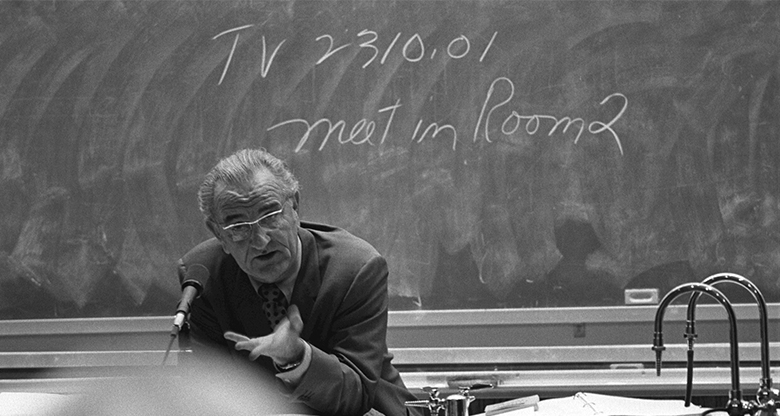
President Lyndon Johnson played a pivotal role in financing higher education. (Credit: modification of "Lyndon Johnson in 1970” by LBJ Museum & Library, Public Domain) · Public Domain · Source出典
Figure 31.1図 31.1
President Lyndon Johnson played a pivotal role in financing higher education. (Credit: modification of "Lyndon Johnson in 1970” by LBJ Museum & Library, Public Domain)
英語のヒント
リンドン・ジョンソン大統領は、高等教育の資金調達で重要な役割を果たした。(クレジット:LBJ Museum & Libraryによる「Lyndon Johnson in 1970」を改変、パブリックドメイン)
Learning Objectives学習目標
Governments have many competing demands for financial support. Any spending should be tempered by fiscal responsibility and by looking carefully at the spending’s impact. When a government spends more than it collects in taxes, it runs a budget deficit. It then needs to borrow. When government borrowing becomes especially large and sustained, it can substantially reduce the financial capital available to private sector firms, as well as lead to trade imbalances and even financial crises.
The Government Budgets and Fiscal Policy chapter introduced the concepts of deficits and debt, as well as how a government could use fiscal policy to address recession or inflation. This chapter begins by building on the national savings and investment identity, which we first introduced in The International Trade and Capital Flows chapter, to show how government borrowing affects firms’ physical capital investment levels and trade balances. A prolonged period of budget deficits may lead to lower economic growth, in part because the funds that the government borrows to fund its budget deficits are typically no longer available for private investment. Moreover, a sustained pattern of large budget deficits can lead to disruptive economic patterns of high inflation, substantial inflows of financial capital from abroad, plummeting exchange rates, and heavy strains on a country’s banking and financial system.