第12章環境保護と負の外部性
Introduction to Environmental Protection and Negative Externalities環境保護と負の外部性への導入
Environmental Debate環境をめぐる論争
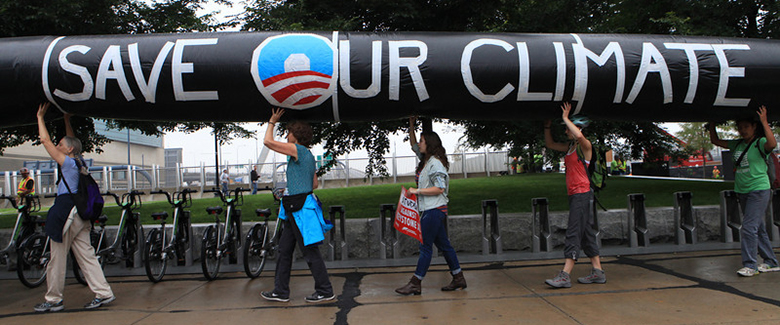
Across the country, countless people have protested, even risking arrest, against the Keystone XL Pipeline. (Credit: modification of "People Risk Arrest at State Department Office in Boston Protesting Keystone XL Pipeline" by NoKXL/Flickr, CC BY 2.0) · CC BY 2.0 · Source出典

Figure 12.1図 12.1
Across the country, countless people have protested, even risking arrest, against the Keystone XL Pipeline. (Credit: modification of "People Risk Arrest at State Department Office in Boston Protesting Keystone XL Pipeline" by NoKXL/Flickr, CC BY 2.0)
英語のヒント
全国で数えきれない人々が、逮捕の危険さえ冒して、Keystone XLパイプラインに抗議してきた。(クレジット:NoKXL/Flickrによる「People Risk Arrest at State Department Office in Boston Protesting Keystone XL Pipeline」を改変、CC BY 2.0)
Learning Objectives学習目標
In 1969, the Cuyahoga River in Ohio was so polluted that it spontaneously burst into flame. Air pollution was so bad at that time that Chattanooga, Tennessee was a city where, as an article from Sports Illustrated put it: “the death rate from tuberculosis was double that of the rest of Tennessee and triple that of the rest of the United States, a city in which the filth in the air was so bad it melted nylon stockings off women’s legs, in which executives kept supplies of clean white shirts in their offices so they could change when a shirt became too gray to be presentable, in which headlights were turned on at high noon because the sun was eclipsed by the gunk in the sky.”
英語のヒント
1969年、オハイオ州のカヤホガ川は、自然に炎を上げるほど汚染されていた。当時の大気汚染はひどく、テネシー州チャタヌーガについてSports Illustratedの記事はこう記した。「結核の死亡率がテネシー州の他の地域の2倍、米国の他の地域の3倍である都市。大気中の汚れがひどいため、女性の脚に履かれたナイロンのストッキングが溶け、幹部たちはシャツが人前に出られないほど灰色になったとき着替えられるよう、清潔な白いシャツを事務所に用意し、空の汚れに太陽が遮られるため、真昼にも車の前照灯を点ける都市である。」
The problem of pollution arises for every economy in the world, whether high-income or low-income, and whether market-oriented or command-oriented. Every country needs to strike some balance between production and environmental quality. This chapter begins by discussing how firms may fail to take certain social costs, like pollution, into their planning if they do not need to pay these costs. Traditionally, policies for environmental protection have focused on governmental limits on how much of each pollutant could be emitted. While this approach has had some success, economists have suggested a range of more flexible, market-oriented policies that reduce pollution at a lower cost. We will consider both approaches, but first let’s see how economists frame and analyze these issues.
英語のヒント
汚染の問題は、高所得か低所得か、市場志向か指令型かを問わず、世界のすべての経済で生じる。どの国も、生産と環境の質の間で何らかのバランスを取る必要がある。この章ではまず、企業が汚染などの特定の社会的費用を支払わなくてよい場合に、それらを計画に織り込まないことがある仕組みを論じる。従来、環境保護政策は、各汚染物質の排出量を政府が制限することに重点を置いてきた。この方法には一定の成果があるが、経済学者は、より低い費用で汚染を減らせる、柔軟で市場を活用するさまざまな政策を提案してきた。両方の方法を検討するが、その前に、経済学者がこれらの問題をどのように捉え、分析するかを見よう。