第12章環境保護と負の外部性
12.3 Market-Oriented Environmental Tools12.3 市場を活用する環境政策手段
Learning Objectives学習目標
Learning Objectives学習目標
By the end of this section, you will be able to:
英語のヒント
この節を学ぶと、次のことができるようになる。
- Show how pollution charges impact firm decisions
英語のヒント
汚染課徴金が企業の意思決定に及ぼす影響を示す - Suggest other laws and regulations that could fall under pollution charges
英語のヒント
汚染課徴金に当たりうる他の法律や規制を提案する - Explain the significance of marketable permits and property rights
英語のヒント
取引可能な排出許可証と財産権の重要性を説明する - Evaluate which policies are most appropriate for various situations
英語のヒント
さまざまな状況にどの政策が最適かを評価する
Market-oriented environmental policies create incentives to allow firms some flexibility in reducing pollution. The three main categories of market-oriented approaches to pollution control are pollution charges, marketable permits, and better-defined property rights. All of these policy tools which we discuss, below, address the shortcomings of command-and-control regulation—albeit in different ways.
英語のヒント
市場を活用する環境政策は、企業に汚染削減上の一定の柔軟性を与える誘因を作る。汚染対策で市場を活用する方法の主要な3分類は、汚染課徴金、取引可能な排出許可証、そして、より明確に定義された財産権である。以下で論じるこれらの政策手段はすべて、方法は異なるが、直接規制の欠点に対処する。
Pollution Charges汚染課徴金
A pollution charge is a tax imposed on the quantity of pollution that a firm emits. A pollution charge gives a profit-maximizing firm an incentive to determine ways to reduce its emissions—as long as the marginal cost of reducing the emissions is less than the tax.
英語のヒント
汚染課徴金は、企業が排出する汚染量に課される税である。汚染課徴金は、排出削減の限界費用が税額を下回るかぎり、利潤を最大化する企業に排出を減らす方法を探す誘因を与える。
For example, consider a small firm that emits 50 pounds per year of small particles, such as soot, into the air. This particulate matter causes respiratory illnesses and also imposes costs on firms and individuals.
英語のヒント
たとえば、すすのような微粒子を年間50ポンド、大気中に排出する小企業を考えよう。この粒子状物質は呼吸器疾患を引き起こし、企業や個人にも費用を負担させる。
Figure 12.3 illustrates the marginal costs that a firm faces in reducing pollution. The marginal cost of pollution reduction, like most marginal cost curves, increases with output, at least in the short run. Reducing the first 10 pounds of particulate emissions costs the firm $300. Reducing the second 10 pounds would cost $500; reducing the third ten pounds would cost $900; reducing the fourth 10 pounds would cost $1,500; and the fifth 10 pounds would cost $2,500. This pattern for the costs of reducing pollution is common, because the firm can use the cheapest and easiest method to make initial reductions in pollution, but additional reductions in pollution become more expensive.
英語のヒント
図12.3は、企業が汚染を減らす際に直面する限界費用を示す。汚染削減の限界費用は、大部分の限界費用曲線と同じように、少なくとも短期には生産量とともに増加する。粒子排出を最初の10ポンド削減する費用は300ドルである。次の10ポンドには500ドル、3番目の10ポンドには900ドル、4番目の10ポンドには1500ドル、5番目の10ポンドには2500ドルかかる。この汚染削減費用のパターンは一般的である。企業は最初の削減には最も安く容易な方法を使えるが、追加的な削減にはより多くの費用がかかるためである。
A Pollution Charge汚染課徴金
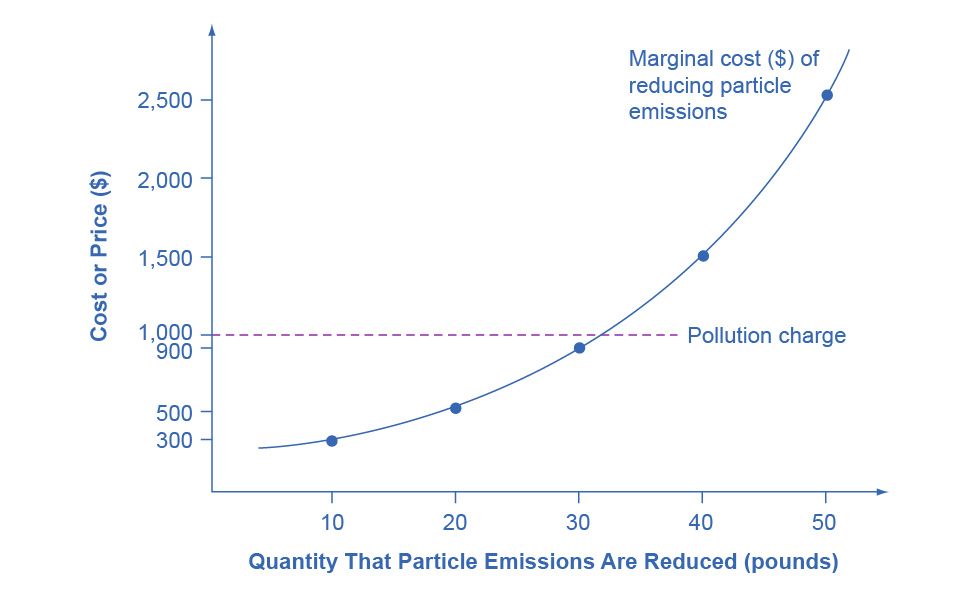

Figure 12.3図 12.3
If a pollution charge is set equal to $1,000, then the firm will have an incentive to reduce pollution by 30 pounds because the $900 cost of these reductions would be less than the cost of paying the pollution charge.
英語のヒント
汚染課徴金を1000ドルに設定すると、企業には汚染を30ポンド減らす誘因がある。その削減費用900ドルが、汚染課徴金を支払う費用より少ないためである。
Imagine the firm now faces a pollution tax of $1,000 for every 10 pounds of particulates it emits. The firm has the choice of either polluting and paying the tax, or reducing the amount of particulates it emits and paying the cost of abatement as the figure shows. How much will the firm pollute and how much will the firm abate? The first 10 pounds would cost the firm $300 to abate. This is substantially less than the $1,000 tax, so the firm will choose to abate. The second 10 pounds would cost $500 to abate, which is still less than the tax, so it will choose to abate. The third 10 pounds would cost $900 to abate, which is slightly less than the $1,000 tax. The fourth 10 pounds would cost $1,500, which is much more costly than paying the tax. As a result, the firm will decide to reduce pollutants by 30 pounds, because the marginal cost of reducing pollution by this amount is less than the pollution tax. With a tax of $1,000, the firm has no incentive to reduce pollution more than 30 pounds.
英語のヒント
今度は、企業が排出する粒子10ポンドごとに1000ドルの汚染税を課されるとしよう。企業は、汚染して税を支払うか、図が示すように粒子の排出を減らして削減費用を支払うかを選べる。企業はどれだけ汚染し、どれだけ削減するだろうか。最初の10ポンドの削減費用は300ドルである。税額1000ドルよりはるかに安いので、企業は削減を選ぶ。次の10ポンドの削減費用は500ドルで、まだ税額より安いため削減する。3番目の10ポンドは900ドルで、税額1000ドルを少し下回る。4番目の10ポンドは1500ドルかかり、納税よりはるかに高くなる。その結果、企業は汚染を30ポンド削減すると決める。この量までの削減の限界費用が汚染税より低いためである。税額1000ドルでは、30ポンドを超えて削減する誘因はない。
A firm that has to pay a pollution tax will have an incentive to figure out the least expensive technologies for reducing pollution. Firms that can reduce pollution cheaply and easily will do so to minimize their pollution taxes; whereas firms that will incur high costs for reducing pollution will end up paying the pollution tax instead. If the pollution tax applies to every source of pollution, then there are no special favoritism or loopholes for politically well-connected producers.
英語のヒント
汚染税を支払わなければならない企業には、汚染を最も安く減らせる技術を見つける誘因がある。安く容易に汚染を減らせる企業は、汚染税を最小化するために削減する。一方、削減に高い費用がかかる企業は、その代わりに汚染税を支払うことになる。汚染税がすべての汚染源に適用されれば、政治的なつながりの強い生産者に対する特別扱いや抜け穴はなくなる。
For an example of a pollution charge at the household level, consider two ways of charging for garbage collection. One method is to have a flat fee per household, no matter how much garbage a household produces. An alternative approach is to have several levels of fees, depending on how much garbage the household produces—and to offer lower or free charges for recyclable materials. As of 2006 (latest statistics available), the EPA had recorded over 7,000 communities that have implemented “pay as you throw” programs. When people have a financial incentive to put out less garbage and to increase recycling, they find ways to make it happen.
英語のヒント
家計段階の汚染課徴金の例として、ごみ収集料金の2つの取り方を考えよう。1つは、ごみの量にかかわらず世帯ごとに定額を課す方法である。もう1つは、ごみの量に応じて料金を段階的に設定し、リサイクル可能なものには低額または無料の料金を設定する方法である。2006年時点(入手できる最新の統計)で、EPAは「捨てる量に応じて払う」制度を実施する地域を7000以上記録していた。ごみを減らし、リサイクルを増やす金銭的誘因があれば、人々はそれを実現する方法を見つける。
A number of environmental policies are really pollution charges, although they often do not travel under that name. For example, the federal government and many state governments impose taxes on gasoline. We can view this tax as a charge on the air pollution that cars generate as well as a source of funding for maintaining roads. Gasoline taxes are far higher in most other countries than in the United States.
英語のヒント
多くの環境政策は、その名で呼ばれないことが多いものの、実際には汚染課徴金である。たとえば、連邦政府や多くの州政府はガソリンに税を課す。この税は道路維持の財源であるとともに、自動車が生む大気汚染への課徴金とも考えられる。他の大部分の国では、ガソリン税は米国よりはるかに高い。
Similarly, the refundable charge of five or 10 cents that only 10 states have for returning recyclable cans and bottles works like a pollution tax that provides an incentive to avoid littering or throwing bottles in the trash. Compared with command-and-control regulation, a pollution tax reduces pollution in a more flexible and cost-effective way.
英語のヒント
同様に、10州だけが実施する、リサイクル可能な缶や瓶の返却時に戻される5セントまたは10セントの預り金は、ポイ捨てや瓶を一般ごみに捨てることを避ける誘因を与える汚染税のように機能する。直接規制に比べ、汚染税はより柔軟で費用効率的な方法で汚染を減らす。