第29章為替相場と国際資金移動
Introduction to Exchange Rates and International Capital Flows為替レートと国際資本移動への導入
Trade Around the World世界各地の貿易
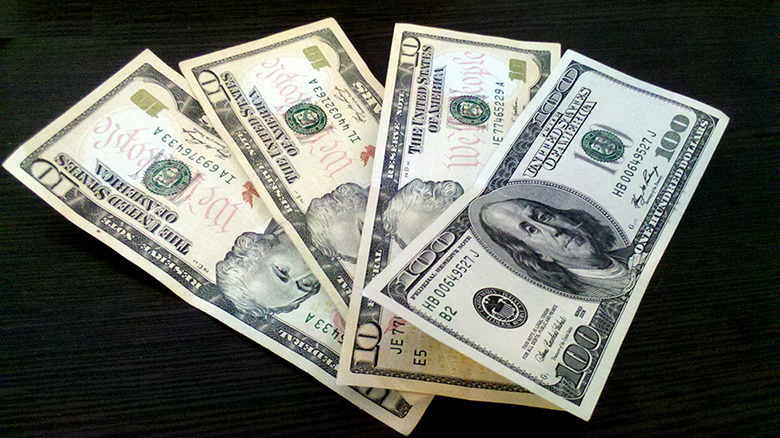
Is a trade deficit between the United States and the European Union good or bad for the U.S. economy? (Credit: modification of “US Dollar banknotes” by Milad Mosapoor/Wikimedia Commons, Public Domain) · Public Domain · Source出典

Figure 29.1図 29.1
Is a trade deficit between the United States and the European Union good or bad for the U.S. economy? (Credit: modification of “US Dollar banknotes” by Milad Mosapoor/Wikimedia Commons, Public Domain)
英語のヒント
アメリカと欧州連合の間の貿易赤字は、アメリカ経済にとってよいことだろうか、悪いことだろうか。(クレジット:Milad Mosapoor/Wikimedia Commonsによる「US Dollar banknotes」を改変、パブリックドメイン)
Learning Objectives学習目標
The world has over 150 different currencies, from the Afghanistan afghani and the Albanian lek all the way through the alphabet to the Zambian kwacha and the Zimbabwean dollar. For international economic transactions, households or firms will wish to exchange one currency for another. Perhaps the need for exchanging currencies will come from a German firm that exports products to Russia, but then wishes to exchange the Russian rubles it has earned for euros, so that the firm can pay its workers and suppliers in Germany. Perhaps it will be a South African firm that wishes to purchase a mining operation in Angola, but to make the purchase it must convert South African rand to Angolan kwanza. Perhaps it will be an American tourist visiting China, who wishes to convert U.S. dollars to Chinese yuan to pay the hotel bill.
英語のヒント
世界には150を超える異なる通貨がある。英語のアルファベット順に並べると、アフガニスタンのアフガニやアルバニアのレクから、ザンビアのクワチャ、ジンバブエのドルまでさまざまである。国際的な経済取引のために、家計や企業は、ある通貨を別の通貨へ交換したいと考える。たとえば、ロシアに製品を輸出するドイツ企業が、ドイツの従業員や仕入先に支払うため、稼いだロシア・ルーブルをユーロへ交換したいという場合がある。アンゴラの採鉱事業を買収したい南アフリカ企業が、その購入のために南アフリカ・ランドをアンゴラ・クワンザへ交換する必要があるかもしれない。中国を訪れているアメリカ人旅行者が、ホテル代を払うため、米ドルを人民元へ交換したい場合もあるだろう。
Exchange rates can sometimes change very swiftly. For example, in the United Kingdom the pound was worth about $1.50 just before the nation voted to leave the European Union (also known as the Brexit vote), in June 2016; the pound fell to $1.37 just after the vote and continued falling to reach 30-year lows a few months later. For firms engaged in international buying, selling, lending, and borrowing, these swings in exchange rates can have an enormous effect on profits.
英語のヒント
為替レートは、ときに非常に素早く変わる。たとえば、イギリスが2016年6月、欧州連合からの離脱、いわゆるBrexitを決める投票を行う直前、ポンドは約1.50ドルだった。投票直後にポンドは1.37ドルへ下がり、その後も下落を続け、数か月後には30年ぶりの安値に達した。国際的な売買や貸借を行う企業にとって、こうした為替レートの変動は、利益に莫大な影響を与えうる。
This chapter discusses the international dimension of money, which involves conversions from one currency to another at an exchange rate. An exchange rate is nothing more than a price—that is, the price of one currency in terms of another currency—and so we can analyze it with the tools of supply and demand. The first module of this chapter begins with an overview of foreign exchange markets: their size, their main participants, and the vocabulary for discussing movements of exchange rates. The following module uses demand and supply graphs to analyze some of the main factors that cause shifts in exchange rates. A final module then brings the central bank and monetary policy back into the picture. Each country must decide whether to allow the market to determine its exchange rate, or have the central bank intervene. All the choices for exchange rate policy involve distinctive tradeoffs and risks.
英語のヒント
この章では、貨幣の国際的側面を論じる。そこには、為替レートに従って、ある通貨から別の通貨へ交換することが含まれる。為替レートは、価格にほかならない。つまり、ある通貨を別の通貨で表した価格であり、需要と供給の道具を使って分析できる。この章の最初の節では、外国為替市場の規模、主な参加者、為替レートの動きを論じるための語彙を概観する。次の節では、需要と供給のグラフを使い、為替レートを変化させる主な要因のいくつかを分析する。最後の節では、中央銀行と金融政策を再び考察に加える。各国は、為替レートの決定を市場に任せるか、中央銀行を介入させるかを決めなければならない。為替レート政策のどの選択肢にも、特有のトレードオフと危険が伴う。