第15章貧困と経済的不平等
Medicaidメディケイド
Congress created Medicaid in 1965. This is a joint health insurance program between both the states and the federal government. The federal government helps fund Medicaid, but each state is responsible for administering the program, determining the level of benefits, and determining eligibility. It provides medical insurance for certain people with low incomes, including those below the poverty line, with a focus on families with children, the elderly, and people with disabilities. About one-third of Medicaid spending is for low-income mothers with children. While an increasing share of the program funding in recent years has gone to pay for nursing home costs for older people who cannot afford to pay for housing. The program ensures that participants receive a basic level of benefits, but because each state sets eligibility requirements and provides varying levels of service, the program differs from state to state.
英語のヒント
議会は1965年にメディケイドを設けた。これは州と連邦政府の共同の医療保険事業である。連邦政府も資金を出すが、各州が運営、給付水準、受給資格の決定を担当する。貧困線以下の人々を含む、低所得の一定の人々に医療保険を提供し、子どものいる家族、高齢者、障害者に重点を置く。メディケイド支出の約3分の1は、子どもを持つ低所得の母親向けである。近年は、住居費を負担できない高齢者の介護施設費用に充てる事業資金の割合が増えている。この事業は参加者に基本的水準の給付を保証するが、各州が受給条件を定め、異なるサービス水準を提供するため、州ごとに異なる。
In the past, a common problem has been that many low-paying jobs pay enough to a breadwinner so that a family could lose its eligibility for Medicaid, yet the job does not offer health insurance benefits. A parent considering such a job might choose not to work rather than lose health insurance for their children. In this way, health insurance can become a part of the poverty trap. Many states recognized this problem in the 1980s and 1990s and expanded their Medicaid coverage to include people earning up to 135% or even 185% of the poverty line. Some states also guaranteed that children would not lose coverage if their parents worked.
英語のヒント
過去によくあった問題は、低賃金の仕事の多くが、家族の稼ぎ手に、メディケイドの資格を失うには十分な給与を払うのに、健康保険の福利厚生を提供しないことだった。そのような仕事を検討する親は、子どもの健康保険を失うより、働かないことを選ぶかもしれない。このように、健康保険が貧困の罠の一部となりうる。多くの州は1980年代と1990年代にこの問題を認識し、所得が貧困線の135%、さらには185%までの人々を含むよう、メディケイドの対象を広げた。親が働いても子どもが保障を失わないことを保証した州もある。
These expanded guarantees cost the government money, of course, but they also helped to encourage those on welfare to enter the labor force. As of 2014, approximately 69.7 million people participated in Medicaid. Of those enrolled, almost half are children. Healthcare expenditures, however, are highest for the elderly population, which comprises approximately 25% of participants. As Figure 15.7 (a) indicates, the largest number of households that enroll in Medicaid are those with children. Lower-income adults are the next largest group enrolled in Medicaid at 38%. People who are blind or have a disability account for 15% of those enrolled, and seniors are 8% of those enrolled. Figure 15.7 (b) shows how much actual Medicaid dollars the government spends for each group. Out of total Medicaid spending, the government spends more on seniors (20%) and people who are blind or have a disability (44%). Thus, 64% of all Medicaid spending goes to seniors, those who are blind, and people with disabilities. Children receive 21% of all Medicaid spending, followed by adults at 15%.
英語のヒント
もちろん、こうした保障の拡大は政府の費用となるが、福祉受給者が労働力へ加わることも促した。2014年時点で、約6,970万人がメディケイドに参加していた。加入者のほぼ半分は子どもである。しかし医療支出が最も高いのは、参加者の約25%を占める高齢者である。図15.7(a)が示すように、メディケイドに加入する世帯で最も多いのは、子どものいる世帯である。次に多いのは低所得の成人で、38%を占める。視覚障害やその他の障害を持つ人が15%、高齢者が8%を占める。図15.7(b)は、政府が各集団に実際にいくら支出するかを示す。メディケイド総支出のうち、高齢者(20%)と、視覚障害やその他の障害を持つ人(44%)に多く支出する。したがって総支出の64%が、高齢者、視覚障害者、その他の障害者に向かう。子どもは21%、成人は15%を受け取る。
Medicaid Enrollment and Spendingメディケイドの加入と支出
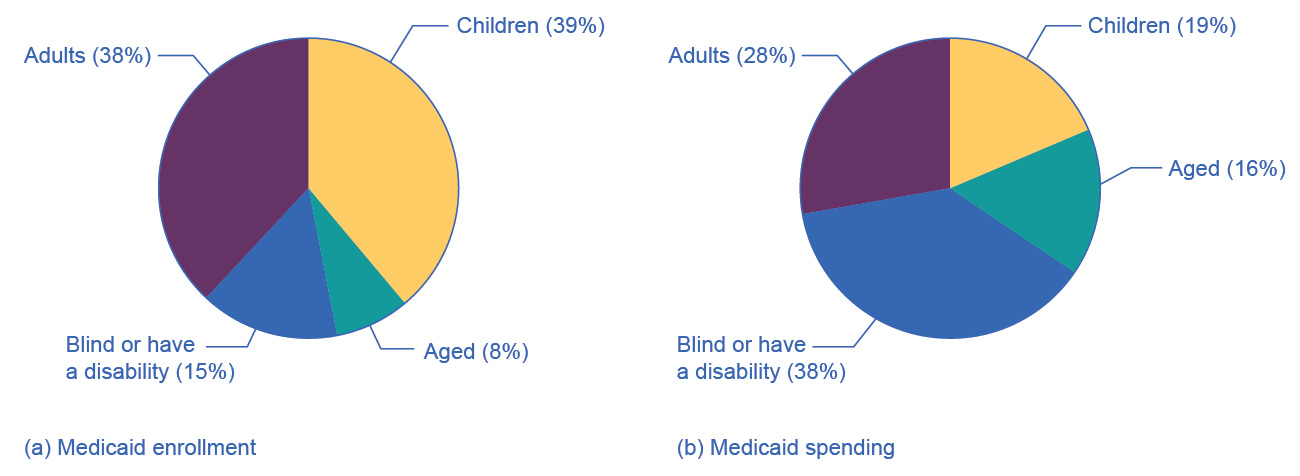

Figure 15.7図 15.7
Part (a) shows the Medicaid enrollment by different populations, with children comprising the largest percentage at 47%, followed by adults at 28%, and those who are blind or have a disability at 16%. Part (b) shows that Medicaid spending is principally for those who are blind or have a disability, followed by the elderly. Although children are the largest population that Medicaid covers, expenditures on children are only at 19%.
英語のヒント
(a)は集団別のメディケイド加入を示し、子どもが最大の47%、成人28%、視覚障害やその他の障害を持つ人16%が続く。(b)は、支出が主に視覚障害やその他の障害を持つ人に向かい、次に高齢者に向かうことを示す。子どもはメディケイドが保障する最大の集団だが、子どもへの支出は19%にすぎない。
Key Concepts and Summary重要概念とまとめ
We call the group of government programs that address poverty the safety net. In the United States, prominent safety net programs include Temporary Assistance to Needy Families (TANF), the Supplemental Nutrition Assistance Program (SNAP), the earned income tax credit (EITC), Medicaid, and the Special Supplemental Food Program for Women, Infants, and Children (WIC).
英語のヒント
貧困に対処する政府事業の集まりを、安全網と呼ぶ。米国の主な安全網事業には、困窮家庭一時扶助(TANF)、補助的栄養支援制度(SNAP)、勤労所得税額控除(EITC)、メディケイド、女性・乳幼児特別補助食料制度(WIC)がある。
Self-Check Questions理解度確認問題
Exercises 17–18練習問題 17–18
Exercise 17問題 17
We have discovered that the welfare system discourages recipients from working because the more income they earn, the less welfare benefits they receive. How does the earned income tax credit attempt to loosen the poverty trap?
英語のヒント
福祉制度では、稼ぐ所得が増えるほど受け取る給付が減るため、受給者の働く意欲をそぐとわかった。勤労所得税額控除は、どのように貧困の罠を緩めようとするか。
Solution解き方
The earned income tax credit works like this: a family receives a tax break that increases according to how much they work. Families that work more get more. In that sense it loosens the poverty trap by encouraging work. As families earn above the poverty level, the earned income tax credit is gradually reduced. For those near-poor families, the earned income tax credit is a partial disincentive to work.
英語のヒント
勤労所得税額控除は、次のように働く。家族は、働く量に応じて増える減税を受ける。より多く働く家族は、より多く受け取る。この意味で、就労を促すことにより貧困の罠を緩める。家族の所得が貧困水準を超えると、控除は徐々に減る。貧困線に近いそれらの家族にとっては、勤労所得税額控除は部分的に就労意欲を弱める。
Exercise 18問題 18
How does the TANF attempt to loosen the poverty trap?
英語のヒント
TANFは、どのように貧困の罠を緩めようとするか。
Solution解き方
TANF attempts to loosen the poverty trap by providing incentives to work in other ways. Specifically, it requires that people work (or complete their education) as a condition of receiving TANF benefits, and it places a time limit on benefits.
英語のヒント
TANFは、別の方法で就労の誘因を与え、貧困の罠を緩めようとする。具体的には、TANF給付を受ける条件として働くか教育を修了することを求め、給付期間に上限を設ける。