第16章情報・リスク・保険
16.2 Insurance and Imperfect Information16.2 保険と不完全情報
Learning Objectives学習目標
Learning Objectives学習目標
By the end of this section, you will be able to:
英語のヒント
この節を学ぶと、次のことができるようになる。
- Explain how insurance works
英語のヒント
保険の仕組みを説明する。 - Identify and evaluate various forms of government and social insurance
英語のヒント
政府保険と社会保険のさまざまな形態を特定し、評価する。 - Discuss the problems caused by moral hazard and adverse selection
英語のヒント
モラルハザードと逆選択によって生じる問題を論じる。 - Analyze the impact of government regulation of insurance
英語のヒント
保険に対する政府規制の影響を分析する。
Insurance is a method that households and firms use to prevent any single event from having a significant detrimental financial effect. Generally, households or firms with insurance make regular payments, called premiums. The insurance company prices these premiums based on the probability of certain events occurring among a pool of people. Members of the group who then suffer a specified bad experience receive payments from this pool of money.
英語のヒント
保険は、一つの出来事が財政面に重大な悪影響を与えることを防ぐために、家計や企業が使う方法である。一般に、保険に加入する家計や企業は、保険料と呼ばれる定期的な支払いを行う。保険会社は、人々の集団の中で特定の出来事が起こる確率に基づいて保険料を決める。集団のうち、指定された不運に見舞われた人は、集められた資金から支払いを受ける。
Many people have several kinds of insurance: health insurance that pays when they receive medical care; car insurance that pays if their car is in an automobile accident; house or renter’s insurance that pays for stolen possessions or items damaged by fire; and life insurance, which pays for the family if the insured individual dies. Table 16.1 lists a set of insurance markets.
英語のヒント
多くの人は何種類もの保険に加入している。診療を受けると支払われる医療保険、自動車事故に遭うと支払われる自動車保険、盗まれた所有物や火災で損傷した品物を補償する住宅保険や借家人保険、被保険者が死亡した場合に家族へ支払われる生命保険などである。表16.1にいくつかの保険市場を示す。
Type of Insurance 保険の種類 |
Who Pays for It? 誰が保険料を払うか |
It Pays Out When . . . どのような場合に支払われるか |
|---|---|---|
Health insurance 医療保険 |
Employers and individuals 雇用主と個人 |
Medical expenses are incurred 医療費が発生する |
Life insurance 生命保険 |
Employers and individuals 雇用主と個人 |
Policyholder dies 保険契約者が死亡する |
Automobile insurance 自動車保険 |
Individuals 個人 |
Car is damaged, stolen, or causes damage to others 車が損傷する、盗まれる、または他人に損害を与える |
Property and homeowner’s insurance 財産保険・住宅所有者保険 |
Homeowners and renters 住宅所有者と借家人 |
Dwelling is damaged or burglarized 住居が損傷するか、空き巣に入られる |
Liability insurance 賠償責任保険 |
Firms and individuals 企業と個人 |
An injury occurs for which you are partly responsible 自分にも一部責任のある負傷が起こる |
Malpractice insurance 専門職賠償責任保険 |
Doctors, lawyers, and other professionals 医師、弁護士、その他の専門職 |
A poor quality of service is provided that causes harm to others 質の低いサービスを提供し、他人に害を与える |
All insurance involves imperfect information in both an obvious way and in a deeper way. At an obvious level, we cannot predict future events with certainty. For example, we cannot know with certainty who will have a car accident, become ill, die, or have his home robbed in the next year. Imperfect information also applies to estimating the risk that something will happen to any individual. It is difficult for an insurance company to estimate the risk that, say, a particular 20-year-old male driver from New York City will have an accident, because even within that group, some drivers will drive more safely than others. Thus, adverse events occur out of a combination of people’s characteristics and choices that make the risks higher or lower and then the good or bad luck of what actually happens.
英語のヒント
すべての保険には、明白な意味でも、より深い意味でも不完全情報が関わる。明白な意味では、将来の出来事を確実には予測できない。たとえば来年、誰が交通事故に遭い、病気になり、亡くなり、家に泥棒が入るかは確実にはわからない。不完全情報は、ある個人に何かが起きるリスクの推定にも関わる。たとえばニューヨーク市に住む特定の20歳の男性運転者が事故を起こすリスクを保険会社が推定するのは難しい。同じ集団の中でも、より安全に運転する人とそうでない人がいるからである。したがって不運な出来事は、リスクを高めたり下げたりする人々の特性や選択と、実際に何が起きるかを左右する運不運との組み合わせによって起こる。
How Insurance Works保険の仕組み
A simplified example of automobile insurance might work this way. Suppose we divide a group of 100 drivers into three groups. In a given year, 60 of those people have only a few door dings or chipped paint, which costs $100 each. Another 30 of the drivers have medium-sized accidents that cost an average of $1,000 in damages, and 10 of the drivers have large accidents that cost $15,000 in damages. For the moment, let’s imagine that at the beginning of any year, there is no way of identifying the drivers who are low-risk, medium-risk, or high-risk. The total damage incurred by car accidents in this group of 100 drivers will be $186,000, that is:
英語のヒント
自動車保険を単純化すると、次のような仕組みになる。100人の運転者を三つの集団に分けるとしよう。ある年、60人はドアの小さなへこみや塗装の剥がれだけで、費用は1人100ドルである。別の30人は平均1000ドルの損害を伴う中規模の事故を起こし、10人は1万5000ドルの損害を伴う大事故を起こす。ひとまず、どの年も年初には、低リスク、中リスク、高リスクの運転者を見分ける方法がないとしよう。この100人の運転者の集団で交通事故によって生じる損害総額は18万6000ドル、すなわち次のようになる。
If each of the 100 drivers pays a $1,860 premium each year, the insurance company will collect the $186,000 that is needed to cover the costs of the accidents that occur.
英語のヒント
100人の運転者がそれぞれ年間1860ドルの保険料を払えば、保険会社は、発生する事故の費用を賄うのに必要な18万6000ドルを集められる。
Since insurance companies have such a large number of clients, they are able to negotiate with health care and other service providers for lower rates than the individual would be able to get, thus increasing the benefit to consumers of becoming insured and saving the insurance company itself money when it pays out claims.
英語のヒント
保険会社は非常に多くの顧客を持つため、医療やその他のサービスの提供者と交渉して、個人では得られない低い料金を実現できる。これによって消費者の保険加入の便益が増し、保険会社自身も保険金を支払う際の出費を節約できる。
Insurance companies receive income, as Figure 16.2 shows, from insurance premiums and investment income. The companies derive income from investing the funds that insurance companies received in the past but did not pay out as insurance claims in prior years. The insurance company receives a rate of return from investing these funds or reserves. The companies typically invest in fairly safe, liquid (easy to convert into cash) investments, as the insurance companies need to be able to readily access these funds when a major disaster strikes.
英語のヒント
図16.2に示すように、保険会社は保険料と投資収益から収入を得る。過去に受け取り、以前の年に保険金として支払わなかった資金を投資して収入を得るのである。保険会社は、この資金、すなわち準備金を運用して収益率を得る。大災害が起きた際にすぐに資金を使える必要があるため、通常はかなり安全で流動性の高い、つまり現金に換えやすい投資を行う。
An Insurance Company: What Comes In, What Goes Out保険会社:入ってくるもの、出ていくもの
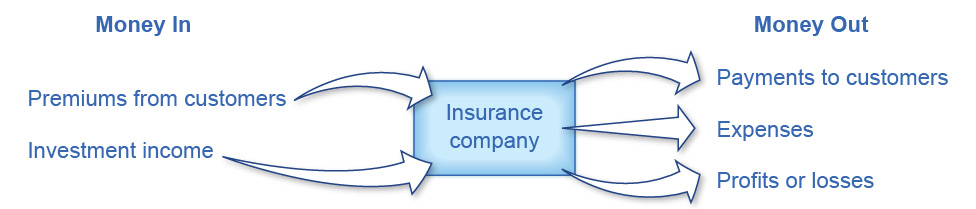

Figure 16.2図 16.2
Money flows into an insurance company through premiums and investments and out through the payment of claims and operating expenses.
英語のヒント
資金は保険料と投資を通じて保険会社へ入り、保険金の支払いと事業費を通じて出ていく。