第1章生命の探究
1.2 Themes and Concepts of Biology1.2 生物学の主題と概念
Learning Objectives学習目標
By the end of this section, you will be able to do the following:
この節を学び終えると、次のことができるようになる。
- Identify and describe the properties of life生命の性質を挙げて説明する。
- Describe the levels of organization among living things生物の構成階層を説明する。
- Recognize and interpret a phylogenetic tree系統樹を見分け、読み取る。
- List examples of different subdisciplines in biology生物学のさまざまな下位分野の例を挙げる。
Biology is the science that studies life, but what exactly is life? This may sound like a silly question with an obvious response, but it is not always easy to define life. For example, a branch of biology called virology studies viruses, which exhibit some of the characteristics of living entities but lack others. Although viruses can attack living organisms, cause diseases, and even reproduce, they do not meet the criteria that biologists use to define life. Consequently, virologists are not biologists, strictly speaking. Similarly, some biologists study the early molecular evolution that gave rise to life. Since the events that preceded life are not biological events, these scientists are also excluded from biology in the strict sense of the term.
英語のヒント
生物学は生命を研究する科学である。では、生命とは正確には何だろうか。答えが明らかな、ばかげた問いに聞こえるかもしれないが、生命を定義することは必ずしも容易ではない。例えば、生物学の一分野であるウイルス学はウイルスを研究するが、ウイルスは生物の特徴の一部を示す一方で、ほかの特徴を欠いている。ウイルスは生物を攻撃し、病気を引き起こし、さらには増殖もできるが、生物学者が生命の定義に用いる基準を満たさない。したがって、厳密にいえば、ウイルス学者は生物学者ではない。同様に、生物学者の中には、生命を生み出した初期の分子進化を研究する人々もいる。生命に先立つ出来事は生物学的な出来事ではないので、これらの科学者も、その語の厳密な意味では生物学の範囲に含まれない。
From its earliest beginnings, biology has wrestled with three questions: What are the shared properties that make something “alive”? Once we know something is alive, how do we find meaningful levels of organization in its structure? Finally, when faced with the remarkable diversity of life, how do we organize the different kinds of organisms so that we can better understand them? As scientists discover new organisms every day, biologists continue to seek answers to these and other questions.
英語のヒント
生物学は、その最初期から三つの問いに取り組んできた。あるものを「生きている」とする共通の性質とは何か。生きていると分かったら、その構造に、意味のある構成上の階層をどのように見いだすのか。そして、生命の驚くべき多様性に直面したとき、生物をよりよく理解するために、そのさまざまな種類をどう整理するのか。科学者が日々新しい生物を発見する中、生物学者はこれらをはじめとする問いへの答えを探し続けている。
Properties of Life生命の性質
All living organisms share several key characteristics or functions: order, sensitivity or response to the environment, reproduction, adaptation, growth and development, regulation/homeostasis, energy processing, and evolution. When viewed together, these eight characteristics serve to define life.
英語のヒント
すべての生物は、秩序、環境への感受性や応答、生殖、適応、成長と発生、調節と恒常性、エネルギーの利用、進化という、いくつかの主要な特徴や機能を共有する。これら八つの特徴を合わせて捉えると、生命を定義することができる。
Order秩序
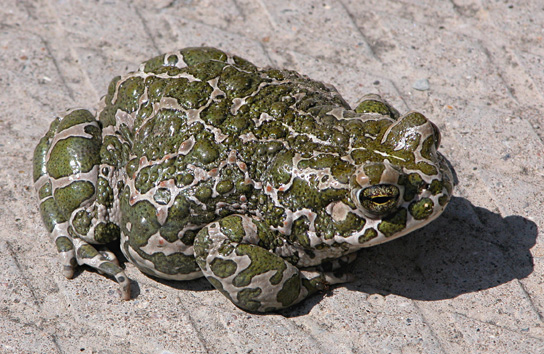
Figure 1.10図 1.10
A toad represents a highly organized structure consisting of cells, tissues, organs, and organ systems. (credit: “Ivengo”/Wikimedia Commons)
英語のヒント
ヒキガエルは、細胞、組織、器官、器官系からなる、高度に組織化された構造の例である。(出典:“Ivengo”/Wikimedia Commons)
Organisms are highly organized, coordinated structures that consist of one or more cells. Even very simple, single-celled organisms are remarkably complex: inside each cell, atoms form molecules. These in turn form cell organelles and other cellular inclusions. In multicellular organisms (Figure 1.10), similar cells form tissues. Tissues, in turn, collaborate to create organs (body structures with a distinct function). Organs work together to form organ systems.
英語のヒント
生物は、一つ以上の細胞からなる、高度に組織化され、協調した構造である。ごく単純な単細胞生物でさえ、驚くほど複雑である。各細胞の内部では原子が分子をつくり、分子はさらに細胞小器官やほかの細胞内の構成物をつくる。多細胞生物(図1.10)では、似た細胞が集まって組織をつくる。組織はさらに協力し、器官(特定の機能をもつ体の構造)をつくる。器官が協働すると、器官系になる。
Sensitivity or Response to Stimuli感受性、または刺激への応答
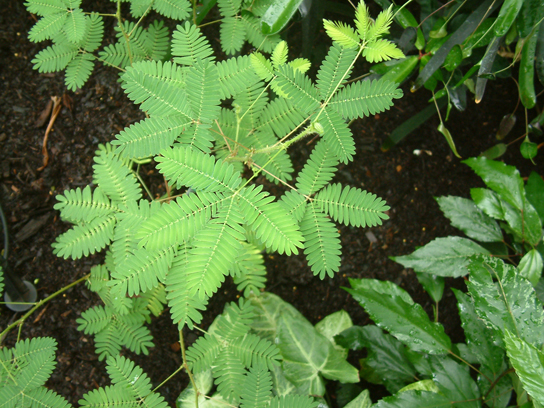


Figure 1.11図 1.11
The leaves of this sensitive plant (Mimosa pudica) will instantly droop and fold when touched. After a few minutes, the plant returns to normal. (credit: Alex Lomas)
英語のヒント
このオジギソウ(Mimosa pudica)の葉は、触れられるとすぐに垂れ下がって閉じる。数分後には元の状態に戻る。(出典:Alex Lomas)
Organisms respond to diverse stimuli. For example, plants can bend toward a source of light, climb on fences and walls, or respond to touch (Figure 1.11). Even tiny bacteria can move toward or away from chemicals (a process called chemotaxis) or light (phototaxis). Movement toward a stimulus is a positive response, while movement away from a stimulus is a negative response.
英語のヒント
生物はさまざまな刺激に応答する。例えば植物は、光源の方へ曲がったり、柵や壁を登ったり、接触に反応したりする(図1.11)。ごく小さな細菌でも、化学物質に近づいたり遠ざかったりする(走化性)ほか、光に近づいたり遠ざかったりする(走光性)。刺激の方へ向かう動きは正の応答、刺激から離れる動きは負の応答である。
Reproduction生殖
Single-celled organisms reproduce by first duplicating their DNA, and then dividing it equally as the cell prepares to divide to form two new cells. Multicellular organisms often produce specialized reproductive cells—gametes and oocyte and sperm cells. After fertilization (the fusion of an oocyte and a sperm cell), a new individual develops. When reproduction occurs, DNA containing genes are passed along to an organism’s offspring. These genes ensure that the offspring will belong to the same species and will have similar characteristics, such as size and shape.
英語のヒント
単細胞生物は、まずDNAを複製し、二つの新しい細胞へ分裂する準備に合わせてDNAを均等に分けることで増殖する。多細胞生物では、配偶子や卵母細胞、精子という、特殊化した生殖細胞をつくることが多い。受精、すなわち卵母細胞と精子の融合の後、新しい個体が発生する。生殖が起こると、遺伝子を含むDNAが子孫へ受け継がれる。これらの遺伝子によって、子孫は同じ種に属し、大きさや形などの似た特徴をもつことになる。
Adaptation適応
All living organisms exhibit a “fit” to their environment. Biologists refer to this fit as adaptation, and it is a consequence of evolution by natural selection, which operates in every lineage of reproducing organisms. Examples of adaptations are diverse and unique, from heat-resistant Archaea that live in boiling hotsprings to the tongue length of a nectar-feeding moth that matches the size of the flower from which it feeds. Adaptations enhance the reproductive potential of the individuals exhibiting them, including their ability to survive to reproduce. Adaptations are not constant. As an environment changes, natural selection causes the characteristics of the individuals in a population to track those changes.
英語のヒント
すべての生物は、自らの環境への「適合」を示す。生物学者は、この適合を適応と呼ぶ。これは、生殖する生物のあらゆる系統で働く、自然選択による進化の結果である。適応の例は多様で独特であり、沸き立つ温泉にすむ耐熱性の古細菌から、蜜を吸う花の大きさに合った、ガの舌の長さにまで及ぶ。適応は、それを示す個体が生き延びて繁殖する能力を含め、繁殖できる可能性を高める。適応は固定されたものではない。環境が変わると、自然選択によって、個体群の中の個体の特徴も、その変化に沿って変わっていく。