第14章労働市場と所得
14.2 Wages and Employment in an Imperfectly Competitive Labor Market14.2 不完全競争的な労働市場の賃金と雇用
Learning Objectives学習目標
Learning Objectives学習目標
By the end of this section, you will be able to:
英語のヒント
この節を学ぶと、次のことができるようになる。
- Define monopsony power
英語のヒント
買手独占力を定義する。 - Explain how imperfectly competitive labor markets determine wages and employment, where employers have market power
英語のヒント
雇用者が市場支配力を持つ不完全競争的な労働市場で、賃金と雇用がどのように決まるかを説明する。
In the chapters on market structure, we observed that while economists use the theory of perfect competition as an ideal case of market structure, there are very few examples of perfectly competitive industries in the real world. What about labor markets? How many labor markets are perfectly competitive? There are probably more examples of perfectly competitive labor markets than perfectly competitive product markets, but that doesn’t mean that all labor markets are competitive.
英語のヒント
市場構造の章では、経済学者が完全競争の理論を市場構造の理想的な場合として用いる一方、現実には完全競争産業の例はごく少ないことを見た。労働市場はどうだろうか。完全競争的な労働市場はいくつあるだろうか。完全競争的な生産物市場より、完全競争的な労働市場の例のほうが、おそらく多いだろう。しかしそれは、すべての労働市場が競争的だという意味ではない。
When a job applicant is bargaining with an employer for a position, the applicant is often at a disadvantage—needing the job more than the employer needs that particular applicant. John Bates Clark (1847–1938), often named as the first great American economist, wrote in 1907: “In the making of the wages contract the individual laborer is always at a disadvantage. He has something which he is obliged to sell and which his employer is not obliged to take, since he [that is, the employer] can reject single men with impunity.”
英語のヒント
求職者が雇用者と職を得るために交渉するとき、求職者はしばしば不利な立場にある。雇用者がその特定の求職者を必要とする以上に、求職者のほうが仕事を必要としている。最初の偉大な米国の経済学者と呼ばれることの多いジョン・ベイツ・クラーク(1847~1938年)は、1907年にこう書いた。「賃金契約を結ぶ際、個々の労働者は常に不利な立場にある。労働者は売らざるをえないものを持つが、雇用者にはそれを買う義務がない。雇用者は、何の不利益も受けずに個々の人を拒否できるからである」。
To give workers more power, the U.S. government has passed, in response to years of labor protests, a number of laws to create a more equal balance of power between workers and employers. These laws include some of the following:
英語のヒント
労働者の力を強めるため、米国政府は長年の労働者の抗議に応え、労働者と雇用者の力の均衡をより平等にするための多くの法律を成立させてきた。これらの法律には、次のようなものがある。
- Setting minimum hourly wages
英語のヒント
最低時給の設定 - Setting maximum hours of work (at least before employers pay overtime rates)
英語のヒント
最長労働時間の設定(少なくとも雇用者が割増残業賃金を払う前まで) - Prohibiting child labor
英語のヒント
児童労働の禁止 - Regulating health and safety conditions in the workplace
英語のヒント
職場の衛生・安全条件の規制 - Preventing discrimination on the basis of race, ethnicity, gender, sexual orientation, and age
英語のヒント
人種、民族、性別、性的指向、年齢に基づく差別の防止 - Requiring employers to provide family leave
英語のヒント
家族のための休暇を与えることの雇用者への義務づけ - Requiring employers to give advance notice of layoffs
英語のヒント
解雇の事前通知を行うことの雇用者への義務づけ - Covering workers with unemployment insurance
英語のヒント
労働者への失業保険の適用 - Setting a limit on the number of immigrant workers from other countries
英語のヒント
外国からの移民労働者数の制限
Table 14.7 lists some prominent U.S. workplace protection laws. Many of the laws listed in the table were only the start of labor market regulations in these areas and have been followed, over time, by other related laws, regulations, and court rulings.
英語のヒント
表14.7は、米国の主要な職場保護法の一部を挙げる。表に挙げた法律の多くは、その分野の労働市場規制の始まりにすぎず、その後、時とともに、ほかの関連する法律、規則、裁判所の判決が続いてきた。
Law 法律 |
Protection 保護 |
|---|---|
National Labor- Management Relations Act of 1935 (the “Wagner Act”) 1935年全国労使関係法(「ワグナー法」) |
Establishes procedures for establishing a union that firms are obligated to follow; sets up the National Labor Relations Board for deciding disputes 企業が従わなければならない組合設立の手続を定め、紛争を裁定する全国労働関係委員会を設置する。 |
Social Security Act of 1935 1935年社会保障法 |
Under Title III, establishes a state-run system of unemployment insurance, in which workers pay into a state fund when they are employed and received benefits for a time when they are unemployed 第3編の下で、州が運営する失業保険制度を設ける。労働者は就業中に州の基金へ払い込み、失業すると一定期間、給付を受ける。 |
Fair Labor Standards Act of 1938 1938年公正労働基準法 |
Establishes the minimum wage, limits on child labor, and rules requiring payment of overtime pay for those in jobs that are paid by the hour and exceed 40 hours per week 最低賃金、児童労働の制限、時給制で週40時間を超えて働く仕事に対して割増残業賃金の支払を義務づける規則を定める。 |
Taft-Hartley Act of 1947 1947年タフト=ハートレー法 |
Allows states to decide whether all workers at a firm can be required to join a union as a condition of employment; in the case of a disruptive union strike, permits the president to declare a “cooling-off period” during which workers have to return to work 企業の全労働者に、雇用条件として組合加入を義務づけられるかどうかを、州が決めることを認める。混乱を引き起こす組合のストライキの際には、労働者が職場に戻らなければならない「冷却期間」を大統領が宣言することを認める。 |
Civil Rights Act of 1964 1964年公民権法 |
Title VII of the Act prohibits discrimination in employment on the basis of race, gender, national origin, religion, or sexual orientation 第7編は、人種、性別、出身国、宗教、性的指向に基づく雇用差別を禁止する。 |
Occupational Health and Safety Act of 1970 1970年労働安全衛生法 |
Creates the Occupational Safety and Health Administration (OSHA), which protects workers from physical harm in the workplace 労働安全衛生局(OSHA)を設置し、職場で労働者の身体に害が及ばないよう保護する。 |
Employee Retirement and Income Security Act of 1974 1974年従業員退職所得保障法 |
Regulates employee pension rules and benefits 従業員年金の規則と給付を規制する。 |
Pregnancy Discrimination Act of 1978 1978年妊娠差別禁止法 |
Prohibits discrimination against women in the workplace who are planning to get pregnant or who are returning to work after pregnancy 妊娠を予定する女性、または妊娠後に職場へ戻る女性に対する職場での差別を禁止する。 |
Immigration Reform and Control Act of 1986 1986年移民改革管理法 |
Prohibits hiring of illegal immigrants; requires employers to ask for proof of citizenship; protects rights of legal immigrants 不法移民の雇用を禁止し、雇用者に市民権の証明を求めるよう義務づけ、合法移民の権利を保護する。 |
Worker Adjustment and Retraining Notification Act of 1988 1988年労働者調整・再訓練通知法 |
Requires employers with more than 100 employees to provide written notice 60 days before plant closings or large layoffs 従業員100人超の雇用者に、工場閉鎖や大量解雇の60日前に書面で通知するよう義務づける。 |
Americans with Disabilities Act of 1990 1990年障害を持つ米国人法 |
Prohibits discrimination against those with disabilities and requires reasonable accommodations for them on the job 英語のヒント障害者への差別を禁止し、職務上の合理的配慮を義務づける。 |
Family and Medical Leave Act of 1993 1993年家族・医療休暇法 |
Allows employees to take up to 12 weeks of unpaid leave per year for family reasons, including birth or family illness 出産や家族の病気を含む家族上の理由で、従業員が年12週間まで無給休暇を取ることを認める。 |
Pension Protection Act of 2006 2006年年金保護法 |
Penalizes firms for underfunding their pension plans and gives employees more information about their pension accounts 英語のヒント年金制度の積立不足に対して企業を罰し、年金口座についてより多くの情報を従業員に与える。 |
Lilly Ledbetter Fair Pay Act of 2009 2009年リリー・レッドベター公正賃金法 |
Restores protection for pay discrimination claims on the basis of sex, race, national origin, age, religion, or disability 性別、人種、出身国、年齢、宗教、障害に基づく賃金差別の申立てに対する保護を回復する。 |
There are two sources of imperfect competition in labor markets. These are demand side sources, that is, labor market power by employers, and supply side sources: labor market power by employees. In this section we will discuss the former. In the next section we will discuss the latter.
英語のヒント
労働市場の不完全競争には2つの源がある。需要側の源、すなわち雇用者による労働市場支配力と、供給側の源、すなわち従業員による労働市場支配力である。この節では前者を、次の節では後者を論じる。
A competitive labor market is one where there are many potential employers for a given type of worker, say a secretary or an accountant. Suppose there is only one employer in a labor market. Because that employer has no direct competition in hiring, if they offer lower wages than would exist in a competitive market, employees will have few options. If they want a job, they must accept the offered wage rate. Since the employer is exploiting its market power, we call the firm a monopsony, a term introduced and widely discussed by Joan Robinson (though she credited scholar Bertrand Hallward with invention of the word). The classical example of monopsony is the sole coal company in a West Virginia town. If coal miners want to work, they must accept what the coal company is paying. This is not the only example of monopsony. Think about surgical nurses in a town with only one hospital. A situation in which employers have at least some market power over potential employees is not that unusual. After all, most firms have many employees while there is only one employer. Thus, even if there is some competition for workers, it may not feel that way to potential employees unless they do their research and find the opposite.
英語のヒント
競争的な労働市場とは、例えば秘書や会計士という、特定の種類の労働者にとって、雇用者となりうる者が多数いる市場である。ある労働市場に雇用者が1者しかいないとする。この雇用者は採用において直接の競争に直面しないため、競争市場で成立するより低い賃金を提示しても、従業員には選択肢がほとんどない。仕事が欲しければ、提示される賃金率を受け入れなければならない。雇用者が市場支配力を利用しているので、この企業を買手独占企業と呼ぶ。買手独占という語はジョーン・ロビンソンが導入し、広く論じた。ただし、彼女は語を作った功績を学者バートランド・ホールワードに帰していた。買手独占の典型例は、ウェストバージニア州の町にある唯一の石炭会社である。炭鉱労働者が働きたければ、その石炭会社が払う賃金を受け入れなければならない。買手独占はこの例に限らない。病院が1つしかない町の手術室看護師を考えよう。雇用者が、雇用される可能性のある従業員に対して、少なくともある程度の市場支配力を持つ状況は、それほど珍しくない。結局、ほとんどの企業には従業員が大勢いるのに、雇用者は1者しかいない。したがって、労働者をめぐる競争が多少あっても、求職者は自分で調べて逆の事実を見つけない限り、そう感じないかもしれない。
How does market power by an employer affect labor market outcomes? Intuitively, one might think that wages will be lower than in a competitive labor market. Let’s prove it. We will tell the story for a monopsonist, but the results will be qualitatively similar, although less extreme, for any firm with labor market power.
英語のヒント
雇用者の市場支配力は、労働市場の結果にどのように影響するだろうか。直観的には、賃金は競争的な労働市場より低くなると考えられる。これを証明しよう。買手独占企業について説明するが、労働市場で支配力を持つどの企業でも、結果はそれほど極端でないとしても、質的には同様になる。
Think back to monopoly. The good news for the firm is that because the monopolist is the sole supplier in the market, it can charge any price it wishes. The bad news is that if it wants to sell a greater quantity of output, it must lower the price it charges. Monopsony is analogous. Because the monopsonist is the sole employer in a labor market, it can offer any wage that it wishes. However, because they face the market supply curve for labor, if they want to hire more workers, they must raise the wage they pay. This creates a quandary, which we can understand by introducing a new concept: the marginal cost of labor. The marginal cost of labor is the cost to the firm of hiring one more worker. However, here is the thing: we assume that the firm is determining how many workers to hire in total. They are not hiring sequentially. Let’s look how this plays out with the example in Table 14.8.
英語のヒント
独占を振り返ろう。企業にとって都合のよい点は、独占企業が市場で唯一の供給者なので、望むどの価格でも設定できることである。都合の悪い点は、より多くの産出物を売りたいなら、請求する価格を下げなければならないことである。買手独占も似ている。買手独占企業は労働市場で唯一の雇用者なので、望むどの賃金でも提示できる。しかし、市場の労働供給曲線に直面するため、より多くの労働者を雇いたければ、支払う賃金を上げなければならない。これが難問を生むが、労働の限界費用という新しい概念を導入すると理解できる。労働の限界費用とは、労働者をもう1人雇うために企業にかかる費用である。ただし、重要なのは、企業が合計で何人の労働者を雇うかを決めると仮定していることである。順番に1人ずつ雇っているのではない。表14.8の例で、これがどう働くかを見よう。
Supply of Labor 労働供給 |
1 |
2 |
3 |
4 |
5 |
Wage Rate 賃金率 |
$1 per hour 1時間当たり1ドル |
$2 per hour 1時間当たり2ドル |
$3 per hour 1時間当たり3ドル |
$4 per hour 1時間当たり4ドル |
$5 per hour 1時間当たり5ドル |
Total Cost of Labor 労働の総費用 |
$1 |
$4 |
$9 |
$16 |
$25 |
Marginal Cost of Labor 労働の限界費用 |
$1 |
$3 |
$5 |
$7 |
$9 |
There are a couple of things to notice from the table. First, the marginal cost increases faster than the wage rate. In fact, for any number of workers more than one, the marginal cost of labor is greater than the wage. This is because to hire one more worker requires paying a higher wage rate, not just for the new worker but for all the previous hires also. We can see this graphically in Figure 14.7.
英語のヒント
表から注目すべき点がいくつかある。第1に、限界費用は賃金率より速く増加する。実際、労働者数が1人を超えるとき、労働の限界費用は常に賃金より大きい。もう1人を雇うには、新しい労働者だけでなく、それ以前に雇う労働者全員にも、より高い賃金率を払う必要があるためである。これを図14.7で見ることができる。
The Marginal Cost of Labor労働の限界費用
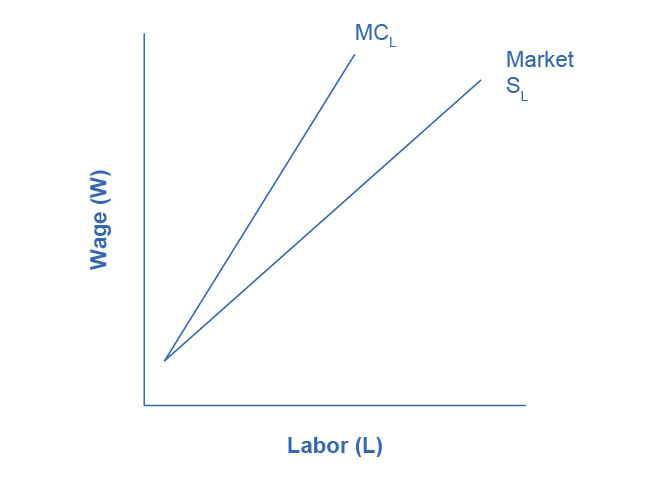
Figure 14.8図 14.8
Since monopsonies are the sole demander for labor, they face the market supply curve for labor. In order to increase employment they must raise the wage they pay not just for new workers, but for all the existing workers they could have hired at the previous lower wage. As a result, the marginal cost of hiring additional labor is greater than the wage, and thus for any level of employment (above the first worker), MCL is above the Market Supply of Labor.
英語のヒント
買手独占企業は唯一の労働需要者なので、市場の労働供給曲線に直面する。雇用を増やすには、新しい労働者だけでなく、以前の低い賃金で雇えた既存の労働者全員についても、支払う賃金を上げなければならない。その結果、追加の労働を雇う限界費用は賃金より大きくなり、したがって最初の1人を超えるどの雇用水準でも、MCLは市場の労働供給より上にある。
Labor Market Outcomes Under Monopsony買手独占の下での労働市場の結果
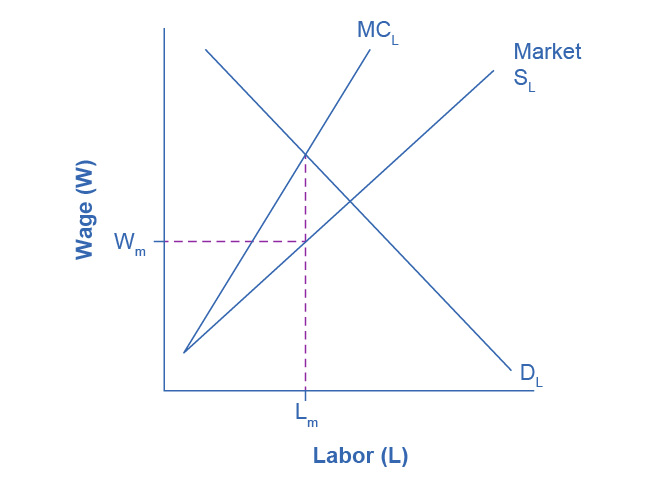


Figure 14.9図 14.9
A monopsony will hire workers up to the point Lm where its demand for labor equals the marginal cost of additional labor, paying the wage Wm given by the supply curve of labor necessary to obtain Lm workers.
英語のヒント
買手独占企業は、労働需要が追加の労働の限界費用と等しくなる点Lmまで労働者を雇い、Lmの労働者を得るのに必要な労働供給曲線で与えられる賃金Wmを払う。