第14章労働市場と所得
Demand for Labor in Perfectly Competitive Output Markets完全競争的な生産物市場における労働需要
The question for any firm is how much labor to hire.
英語のヒント
どの企業にとっても、問題はどれだけの労働を雇うかである。
We can define a Perfectly Competitive Labor Market as one where firms can hire all the labor they want at the going market wage. Think about secretaries in a large city. Employers who need secretaries can probably hire as many as they need if they pay the going wage rate.
英語のヒント
完全競争的な労働市場は、企業が現行の市場賃金で、望むだけすべての労働を雇える市場と定義できる。大都市の秘書を考えよう。秘書を必要とする雇用者は、現行の賃金率を払えば、おそらく必要なだけ雇える。
Graphically, this means that firms face a horizontal supply curve for labor, as Figure 14.3 shows.
英語のヒント
グラフで表すと、図14.3が示すように、企業は水平な労働供給曲線に直面するということである。
Given the market wage, profit maximizing firms hire workers up to the point where: Wmkt = VMPL
英語のヒント
市場賃金が与えられると、利潤を最大化する企業は、Wmkt = VMPLとなる点まで労働者を雇う。
Equilibrium Employment for Firms in a Competitive Labor Market競争的な労働市場における企業の均衡雇用量
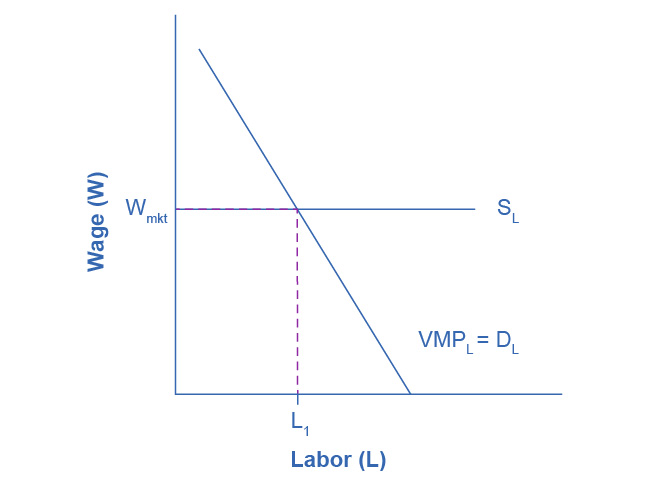
Figure 14.4図 14.4
In a perfectly competitive labor market, firms can hire all the labor they want at the going market wage. Therefore, they hire workers up to the point L1 where the going market wage equals the value of the marginal product of labor.
英語のヒント
完全競争的な労働市場では、企業は現行の市場賃金で、望むだけすべての労働を雇える。したがって、現行の市場賃金が労働の限界生産物価値と等しくなる点L1まで労働者を雇う。
Demand for Labor in Imperfectly Competitive Output Markets不完全競争的な生産物市場における労働需要
If the employer does not sell its output in a perfectly competitive industry, they face a downward sloping demand curve for output, which means that in order to sell additional output the firm must lower its price. This is true if the firm is a monopoly, but it’s also true if the firm is an oligopoly or monopolistically competitive. In this situation, the value of a worker’s marginal product is the marginal revenue, not the price. Thus, the demand for labor is the marginal product times the marginal revenue.
英語のヒント
雇用者が完全競争産業で産出物を売るのでなければ、右下がりの生産物需要曲線に直面する。つまり、追加の産出物を売るには、企業は価格を下げなければならない。これは独占企業の場合に当てはまるが、寡占企業や独占的競争企業の場合にも当てはまる。この状況では、労働者の限界生産物の価値は、価格ではなく限界収入である。したがって労働需要は、限界生産物に限界収入を掛けたものとなる。
The Demand for Labor = MPL x MR = Marginal Revenue Product
英語のヒント
労働需要 = MPL × MR = 限界収入生産物
# Workers (L) 労働者数(L) |
1 |
2 |
3 |
4 |
MPL |
4 |
3 |
2 |
1 |
Marginal Revenue 限界収入 |
$4 |
$3 |
$2 |
$1 |
MRPL |
$16 |
$9 |
$4 |
$1 |
Marginal Revenue Product限界収入生産物
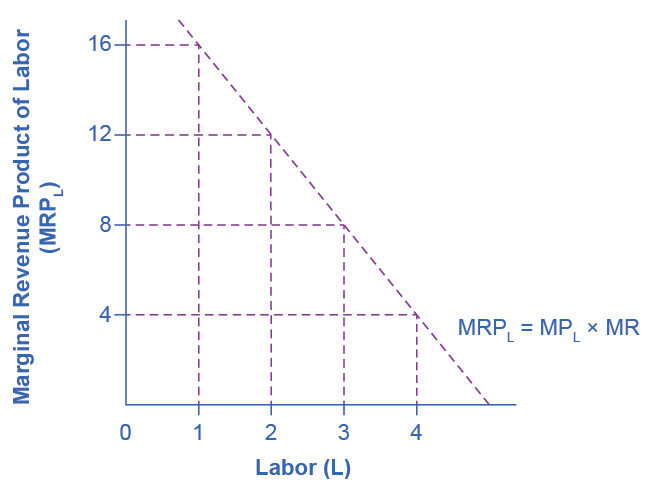
Figure 14.5図 14.5
For firms with some market power in their output market, the value of additional output sold is the firm’s marginal revenue. Since MPL declines with additional labor employed and since MR declines with additional output sold, the firm’s marginal revenue declines as employment increases.
英語のヒント
生産物市場である程度の市場支配力を持つ企業では、追加で売る産出物の価値は、企業の限界収入である。雇用する労働が増えるにつれMPLが減少し、販売する産出物が増えるにつれMRも減少するため、雇用が増えるにつれ企業の限界収入は減少する。
Everything else remains the same as we described above in the discussion of the labor demand in perfectly competitive labor markets. Given the market wage, profit-maximizing firms will hire workers up to the point where the market wage equals the marginal revenue product, as Figure 14.6 shows.
英語のヒント
ほかのすべては、上の完全競争的な労働市場の労働需要についての議論と同じである。市場賃金が与えられると、図14.6が示すように、利潤を最大化する企業は、市場賃金が限界収入生産物と等しくなる点まで労働者を雇う。
Equilibrium Level of Employment for Firms with Market Power市場支配力を持つ企業の均衡雇用水準
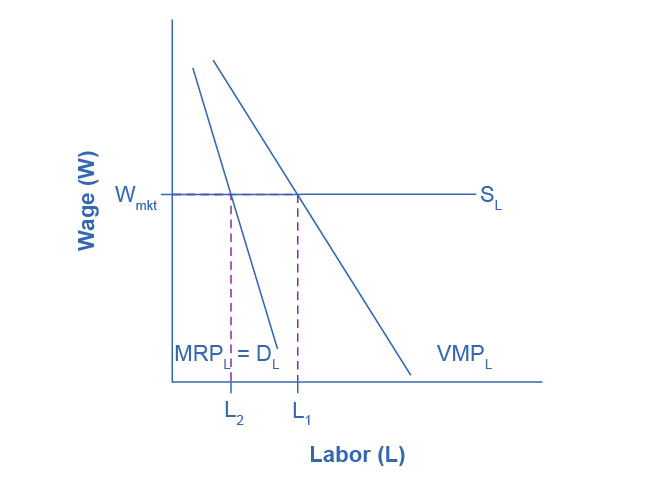


Figure 14.6図 14.6
For firms with market power in their output market, they choose the number of workers, L2, where the going market wage equals the firm’s marginal revenue product. Note that since marginal revenue is less than price, the demand for labor for a firm which has market power in its output market is less than the demand for labor (L1) for a perfectly competitive firm. As a result, employment will be lower in an imperfectly competitive industry than in a perfectly competitive industry.
英語のヒント
生産物市場で市場支配力を持つ企業は、現行の市場賃金が企業の限界収入生産物と等しくなる労働者数L2を選ぶ。限界収入は価格より小さいため、生産物市場で市場支配力を持つ企業の労働需要は、完全競争企業の労働需要L1より小さいことに注意しよう。その結果、不完全競争産業の雇用は、完全競争産業より少なくなる。