第17章金融市場
Bonds債券
An investor who buys a bond expects to receive a rate of return. However, bonds vary in the rates of return that they offer, according to the riskiness of the borrower. We always can divide an interest rate into three components (as we explained in Choice in a World of Scarcity): compensation for delaying consumption, an adjustment for an inflationary rise in the overall level of prices, and a risk premium that takes the borrower’s riskiness into account.
英語のヒント
債券を買う投資家は収益率を期待する。しかし、債券が提示する収益率は借り手の危険度によって異なる。「希少性の世界における選択」で説明したように、利子率は常に三つに分けられる。消費を先送りすることへの補償、インフレによる物価全般の上昇への調整、借り手の危険度を考慮したリスクプレミアムである。
The U.S. government is an extremely safe borrower, so when the U.S. government issues Treasury bonds, it can pay a relatively low interest rate. Firms that appear to be safe borrowers, perhaps because of their sheer size or because they have consistently earned profits over time, will pay a higher interest rate than the U.S. government. Firms that appear to be riskier borrowers, perhaps because they are still growing or their businesses appear shaky, will pay the highest interest rates when they issue bonds. We call bonds that offer high interest rates to compensate for their relatively high chance of default high-yield bonds or junk bonds. A number of today’s well-known firms issued junk bonds in the 1980s when they were starting to grow, including Turner Broadcasting and Microsoft.
英語のヒント
米国政府は極めて安全な借り手なので、国債の発行時に比較的低い利子率を提示できる。規模の大きさや長年の安定した利潤のため安全に見える企業でも、米国政府より高い利子率を払う。まだ成長途上だったり事業が不安定に見えたりして、より危険な借り手と見なされる企業は、債券発行時に最も高い利子率を払う。比較的高い債務不履行の可能性を補うために高い利子率を提示する債券を、ハイイールド債またはジャンク債と呼ぶ。ターナー・ブロードキャスティングやマイクロソフトなど、今日よく知られる多くの企業が、成長し始めた1980年代にジャンク債を発行した。
Additional Resources追加教材
A bond issued by the U.S. government or a large corporation may seem to be relatively low risk: after all, the bond issuer has promised to make certain payments over time, and except for rare bankruptcy cases, these payments will occur. If a corporate bond issuer fails to make the payments that it owes to its bondholders, the bondholders can require that the company declare bankruptcy, sell off its assets, and pay them as much as it can. Even in the case of junk bonds, a wise investor can reduce the risk by purchasing bonds from a wide range of different companies since, even if a few firms go broke and do not pay, they are not all likely to go bankrupt.
英語のヒント
米国政府や大企業が発行する債券は比較的低リスクに見える。発行者は一定の支払いを約束しており、まれな破産の場合を除けば支払われるからである。社債発行者が保有者への支払いを怠れば、保有者は破産の宣言、資産売却、できる限りの返済を求められる。ジャンク債でも、賢い投資家は幅広い企業の債券を買ってリスクを減らせる。数社が倒産して払わなくても、すべてが倒産する可能性は低いからである。
As we noted before, bonds carry an interest rate risk. For example, imagine you decide to buy a 10-year bond for $1,000 that would pay an annual interest rate of 8%. Soon after you buy the bond, interest rates on bonds rise, so that now similar companies are paying an annual rate of 12%. Anyone who buys a $1,000 bond now can receive annual payments of $120 per year, but since your bond was issued at an interest rate of 8%, you have tied up $1,000 and receive payments of only $80 per year. In the meaningful sense of opportunity cost, you are missing out on the higher payments that you could have received. Furthermore, you can calculate the amount you should be willing to pay now for future payments. To place a present discounted value on a future payment, decide what you would need in the present to equal a certain amount in the future. This calculation will require an interest rate. For example, if the interest rate is 25%, then a payment of $125 a year from now will have a present discounted value of $100—that is, you could take $100 in the present and have $125 in the future. (We discuss this further in the appendix on Present Discounted Value.)
英語のヒント
先に述べたように、債券には金利リスクがある。たとえば年利8%を払う10年債を1000ドルで買うとしよう。その直後に債券金利が上がり、同様の企業が年利12%を払うようになった。今1000ドルの債券を買う人は毎年120ドルを受け取れるが、あなたの債券は8%で発行されたため、1000ドルを拘束して年80ドルしか受け取れない。機会費用という意味で、得られたはずの高い支払いを逃している。さらに、将来の支払いに対して現在いくら払ってよいかを計算できる。将来の支払いの割引現在価値を求めるには、将来の一定額に相当する現在の額を決める。この計算には利子率が必要である。たとえば利子率25%なら、1年後の125ドルの支払いの割引現在価値は100ドルとなる。今100ドルがあれば、将来125ドルにできるからだ。(付録「割引現在価値」でさらに論じる。)
In financial terms, a bond has several parts. A bond is basically an “I owe you” note that an investor receives in exchange for capital (money). The bond has a face value. This is the amount the borrower agrees to pay the investor at maturity. The bond has a coupon rate or interest rate, which is usually semi-annual, but can be paid at different times throughout the year. (Bonds used to be paper documents with coupons that investors clipped and turned in to the bank to receive interest.) The bond has a maturity date when the borrower will pay back its face value as well as its last interest payment. Combining the bond’s face value, interest rate, and maturity date, and market interest rates, allows a buyer to compute a bond’s present value, which is the most that a buyer would be willing to pay for a given bond. This may or may not be the same as the face value.
英語のヒント
金融的に見ると、債券はいくつかの部分から成る。基本的には、投資家が資本、すなわちお金と引き換えに受け取る借用証書である。債券には額面があり、これは満期に借り手が投資家へ払うと約束した額である。表面利率、すなわち利子率もあり、利払いは通常半年ごとだが、年内のさまざまな時期に行うこともある。(かつて債券は利札付きの紙で、投資家は利札を切り取り銀行に渡して利子を受け取った。)また満期日があり、借り手は額面と最後の利子を支払う。額面、利子率、満期日、市場金利を組み合わせれば、買い手がその債券に払ってよいと考える上限である現在価値を計算できる。これは額面と同じ場合も異なる場合もある。
The bond yield measures the rate of return a bond is expected to pay over time. Investors can buy bonds when they are issued and they can buy and sell them during their lifetimes. When buying a bond that has been around for a few years, investors should know that the interest rate printed on a bond is often not the same as the bond yield, even on new bonds. Read the next Work It Out feature to see how this happens.
英語のヒント
債券利回りは、債券が時間を通じて支払うと予想される収益率を測る。投資家は発行時に買うことも、償還までの間に売買することもできる。発行後数年たった債券を買うとき、券面に記された利子率は利回りと同じでないことが多く、新発債でもそうだと知っておくべきである。次の「計算してみよう」で、これがどう起こるかを見よう。
Figure 17.5 shows bond yield for two kinds of bonds: 10-year Treasury bonds (which are officially called “notes”) and corporate bonds issued by firms that have been given an AAA rating as relatively safe borrowers by Moody’s, an independent firm that publishes such ratings. Even though corporate bonds pay a higher interest rate, because firms are riskier borrowers than the federal government, the rates tend to rise and fall together. Treasury bonds typically pay more than bank accounts, and corporate bonds typically pay a higher interest rate than Treasury bonds.
英語のヒント
図17.5は二種類の債券利回りを示す。一つは10年物米国国債(正式には「ノート」と呼ばれる)、もう一つは格付けを公表する独立企業ムーディーズから、比較的安全な借り手としてAAA格付けを与えられた企業の社債である。企業は連邦政府より危険な借り手なので、社債の利子率は高いが、両者は一緒に上下する傾向がある。国債は通常、銀行口座より高い利子を払い、社債は通常、国債より高い利子率を払う。
Interest Rates for Corporate Bonds and Ten-Year U.S. Treasury Bonds社債と10年物米国国債の金利
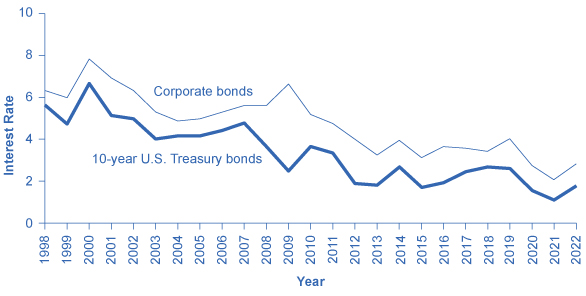

Figure 17.5図 17.5
The interest rates for corporate bonds and U.S. Treasury bonds (officially “notes”) rise and fall together, depending on conditions for borrowers and lenders in financial markets for borrowing. The corporate bonds always pay a higher interest rate, to make up for the higher risk they have of defaulting compared with the U.S. government.
英語のヒント
社債と米国国債(正式には「ノート」)の金利は、借り入れの金融市場における借り手と貸し手の状況に応じて、一緒に上下する。社債は米国政府より高い債務不履行リスクを補うため、常に高い利子率を払う。
The bottom line for bonds: rate of return—low to moderate, depending on the borrower's risk; risk—low to moderate, depending on whether interest rates in the economy change substantially after the bond is issued; liquidity—moderate, because the investor needs to sell the bond before the investor regains the cash.
英語のヒント
債券をまとめると、収益率は借り手のリスクに応じて低〜中程度。リスクは発行後に経済全体の金利が大きく変わるかに応じて低〜中程度。現金を取り戻すには売却が必要なので、流動性は中程度である。