第27章貨幣と銀行制度
27.3 The Role of Banks27.3 銀行の役割
Learning Objectives学習目標
Learning Objectives学習目標
By the end of this section, you will be able to:
英語のヒント
この節を学ぶと、次のことができるようになる。
- Explain how banks act as intermediaries between savers and borrowers
英語のヒント
銀行が貯蓄者と借り手の間の仲介者としてどのように機能するか説明する - Evaluate the relationship between banks, savings and loans, and credit unions
英語のヒント
銀行、貯蓄貸付組合、信用組合の関係を評価する - Analyze the causes of bankruptcy and recessions
英語のヒント
破綻と不況の原因を分析する
Somebody once asked the late bank robber named Willie Sutton why he robbed banks. He answered: “That’s where the money is.” While this may have been true at one time, from the perspective of modern economists, Sutton is both right and wrong. He is wrong because the overwhelming majority of money in the economy is not in the form of currency sitting in vaults or drawers at banks, waiting for a robber to appear. Most money is in the form of bank accounts, which exist only as electronic records on computers. From a broader perspective, however, the bank robber was more right than he may have known. Banking is intimately interconnected with money and consequently, with the broader economy.
英語のヒント
今は亡き銀行強盗ウィリー・サットンに、ある人がなぜ銀行を襲うのかと尋ねたことがある。彼は「そこに金があるからだ」と答えた。かつてはそのとおりだったかもしれないが、現代の経済学者から見ると、サットンは正しくもあり、間違ってもいる。間違っているのは、経済内の貨幣の圧倒的大部分が、銀行の金庫や引き出しで強盗を待つ現金という形では存在しないからである。大部分の貨幣は、コンピューター上の電子記録としてのみ存在する銀行口座という形をとっている。しかし、より広い視点では、この銀行強盗は自分で気づいていた以上に正しかった。銀行業は貨幣と、したがって経済全体と、密接に結びついている。
Banks make it far easier for a complex economy to carry out the extraordinary range of transactions that occur in goods, labor, and financial capital markets. Imagine for a moment what the economy would be like if everybody had to make all payments in cash. When shopping for a large purchase or going on vacation you might need to carry hundreds of dollars in a pocket or purse. Even small businesses would need stockpiles of cash to pay workers and to purchase supplies. A bank allows people and businesses to store this money in either a checking account or savings account, for example, and then withdraw this money as needed through the use of a direct withdrawal, writing a check, or using a debit card.
英語のヒント
銀行は、複雑な経済において、財、労働、金融資本の市場で生じる非常に多様な取引を、はるかに容易にする。誰もがすべての支払いを現金で行わなければならないとしたら、経済がどうなるか少し想像してみよう。高額の買い物や休暇旅行には、ポケットや財布に数百ドルを入れて持ち歩く必要があるかもしれない。小企業でも、従業員への支払いや物資の購入のために、大量の現金を蓄えておかなければならない。銀行を利用すれば、個人や企業はたとえば当座預金口座や貯蓄口座に金を保管し、必要に応じて直接引き出したり、小切手を振り出したり、デビットカードを使ったりして利用できる。
Banks are a critical intermediary in what we call the payment system, which helps an economy exchange goods and services for money or other financial assets. Also, those with extra money that they would like to save can store their money in a bank rather than look for an individual who is willing to borrow it from them and then repay them at a later date. Those who want to borrow money can go directly to a bank rather than trying to find someone to lend them cash. Transaction costs are the costs associated with finding a lender or a borrower for this money. Thus, banks lower transactions costs and act as financial intermediaries—they bring savers and borrowers together. Along with making transactions much safer and easier, banks also play a key role in creating money.
英語のヒント
銀行は、経済で財やサービスを貨幣その他の金融資産と交換するのを助ける、いわゆる決済制度の重要な仲介者である。また、余裕資金を貯蓄したい人は、それを借りて将来返済してくれる個人を探す代わりに、銀行に預けることができる。金を借りたい人も、現金を貸してくれる人を探す代わりに、銀行へ直接行ける。取引費用とは、こうした資金の貸し手や借り手を探す際にかかる費用である。したがって、銀行は取引費用を下げ、貯蓄者と借り手を結びつける金融仲介機関として機能する。銀行は取引をはるかに安全で簡単にするとともに、貨幣の創造にも重要な役割を果たす。
Banks as Financial Intermediaries金融仲介機関としての銀行
An “intermediary” is one who stands between two other parties. Banks are a financial intermediary—that is, an institution that operates between a saver who deposits money in a bank and a borrower who receives a loan from that bank. Financial intermediaries include other institutions in the financial market such as insurance companies and pension funds, but we will not include them in this discussion because they are not depository institutions, which are institutions that accept money deposits and then use these to make loans. All the deposited funds mingle in one big pool, which the financial institution then lends. Figure 27.4 illustrates the position of banks as financial intermediaries, with deposits flowing into a bank and loans flowing out. Of course, when banks make loans to firms, the banks will try to funnel financial capital to healthy businesses that have good prospects for repaying the loans, not to firms that are suffering losses and may be unable to repay.
英語のヒント
「仲介者」は、ほかの二者の間に立つ者である。銀行は金融仲介機関、つまり銀行に預金する貯蓄者と、その銀行から融資を受ける借り手の間で活動する機関である。金融仲介機関には、金融市場の保険会社や年金基金なども含まれるが、ここでは扱わない。これらは、預金を受け入れ、それを貸出しに使う預金取扱機関ではないからである。預けられた資金はすべて一つの大きなプールに集められ、金融機関が貸し出す。図27.4は、預金が銀行へ流入し、貸出しが流出するという、金融仲介機関としての銀行の位置を示している。もちろん、銀行が企業へ融資するときは、損失を出して返済できないかもしれない企業ではなく、返済の見込みが高い健全な企業へ金融資本を振り向けようとする。
Banks as Financial Intermediaries金融仲介機関としての銀行
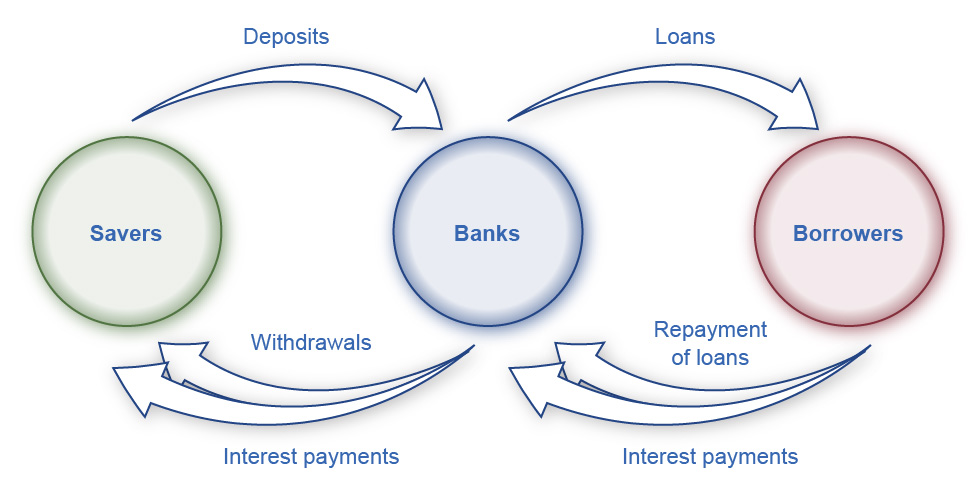

Figure 27.4図 27.4
Banks act as financial intermediaries because they stand between savers and borrowers. Savers place deposits with banks, and then receive interest payments and withdraw money. Borrowers receive loans from banks and repay the loans with interest. In turn, banks return money to savers in the form of withdrawals, which also include interest payments from banks to savers.
英語のヒント
銀行は貯蓄者と借り手の間に位置するため、金融仲介機関として機能する。貯蓄者は銀行に預金し、その後、利息を受け取り、預金を引き出す。借り手は銀行から融資を受け、利息とともに返済する。その後、銀行は払戻しという形で貯蓄者へ金を返し、これには銀行から貯蓄者への利息の支払いも含まれる。