第32章世界のマクロ経済政策
32.2 Improving Countries’ Standards of Living32.2 各国の生活水準を改善する
Learning Objectives学習目標
Learning Objectives学習目標
By the end of this section, you will be able to:
英語のヒント
この節を学ぶと、次のことができるようになる。
- Analyze the growth policies of low-income countries seeking to improve standards of living
英語のヒント
生活水準の改善を目指す低所得国の成長政策を分析する - Analyze the growth policies of middle-income countries, particularly the East Asian Tigers with their focus on technology and market-oriented incentives
英語のヒント
技術と市場志向の誘因に重点を置く東アジアの虎を中心に、中所得国の成長政策を分析する - Analyze the struggles facing economically-challenged countries wishing to enact growth policies
英語のヒント
成長政策の実施を望む、経済的に困難な国が直面する苦闘を分析する - Evaluate the success of sending aid to low-income countries
英語のヒント
低所得国への援助の成果を評価する
Jobs are created in economies that grow. What is the origin of economic growth? According to most economists who believe in the growth consensus, economic growth (as we discussed in Economic Growth) is built on a foundation of productivity improvements. In turn, productivity increases are the result of greater human and physical capital and technology, all interacting in a market-driven economy. In the pursuit of economic growth, however, some countries and regions start from different levels, as the differences in per capita GDP presented earlier in Table 32.2 illustrate.
英語のヒント
Growth Policies for the High-Income Countries高所得国の成長政策
For the high-income countries, the challenge of economic growth is to push continually for a more educated workforce that can create, invest in, and apply new technologies. In effect, the goal of their growth-oriented public policy is to shift their aggregate supply curves to the right (refer to The Aggregate Demand/Aggregate Supply Model). The main public policies targeted at achieving this goal are fiscal policies focused on investment, including investment in human capital, in technology, and in physical plant and equipment. These countries also recognize that economic growth works best in a stable and market-oriented economic climate. For this reason, they use monetary policy to keep inflation low and stable, and to minimize the risk of exchange rate fluctuations, while also encouraging domestic and international competition.
英語のヒント
高所得国にとって、経済成長の課題は、新技術を生み出し、それに投資し、応用できる、より教育水準の高い労働力を絶えず目指すことである。実質的には、成長を志向する公共政策の目標は、総供給曲線を右へ移動させることである(「総需要・総供給モデル」を参照)。この目標の達成を狙う主要な公共政策は、人的資本、技術、工場・設備への投資を含む、投資に重点を置いた財政政策である。これらの国は、安定した市場志向の経済環境で、経済成長が最もうまく進むことも認識している。このため、国内外の競争を促しながら、インフレを低く安定させ、為替レート変動の危険を最小限にするために、金融政策を用いる。
However, early in the second decade of the 2000s, many high-income countries found themselves more focused on the short term than on the long term. The United States, Western Europe, and Japan all experienced a combination of financial crisis and deep recession, and the after-effects of the recession—like high unemployment rates—seemed likely to linger for several years. Most of these governments took aggressive, and in some cases controversial, steps to jump-start their economies by running very large budget deficits as part of expansionary fiscal policy. These countries must adopt a course that combines lower government spending and higher taxes.
英語のヒント
しかし、2010年代の初めには、多くの高所得国が、長期より短期に重点を置く状況にあった。アメリカ、西ヨーロッパ、日本はいずれも、金融危機と深刻な景気後退の組合せを経験し、高い失業率のような景気後退の後遺症は、何年も残りそうだった。これらの政府のほとんどは、拡張的財政政策の一環として非常に大幅な財政赤字を出し、経済を再始動させるための積極的な、時には論争を呼ぶ措置を取った。これらの国は、政府支出の削減と増税を組み合わせた進路を採らなければならない。
Similarly, many central banks ran highly expansionary monetary policies, with both near-zero interest rates and unconventional loans and investments. For example, in 2012, Shinzo Abe (see Figure 32.4), then newly-elected Prime Minister of Japan, unveiled a plan to pull his country out of its two-decade-long slump in economic growth. It included both fiscal stimulus and an increase in the money supply. The plan was successful in some ways and unsuccessful in others. While real GDP growth in Japan has averaged around 1% since 2012 (and was only 0.2% in 2014 and 0.7% in 2016) and while the inflation rate has struggled to stay positive in recent years, the unemployment rate continued to decline through the 2010s. By early 2020, prior to the pandemic, the unemployment rate stood at just 2.5%. Public debt has also reached a plateau in the last 5–7 years of about 230–240% of GDP, although this number did increase slightly in 2020 due to the pandemic. Shinzo Abe stepped down as Prime Minister of Japan in 2020, and was assassinated in 2022.
英語のヒント
同様に、多くの中央銀行は、ほぼゼロの金利と非伝統的な融資・投資の両方を使い、非常に拡張的な金融政策を実施した。たとえば2012年、当時新たに日本の首相に選ばれた安倍晋三(図32.4を参照)は、20年に及ぶ経済成長の停滞から国を抜け出させる計画を公表した。それは、財政刺激策と貨幣供給量の増加の両方を含んでいた。この計画は、ある面では成功し、他の面では成功しなかった。日本の実質GDP成長率は2012年以降平均約1%で(2014年はわずか0.2%、2016年は0.7%)、近年インフレ率を正に保つことにも苦労してきたが、失業率は2010年代を通じて下がり続けた。パンデミック前の2020年初頭には、失業率はわずか2.5%だった。公的債務も、過去5~7年間はGDP比約230~240%で横ばいに達していたが、2020年にはパンデミックのため、この値はわずかに上昇した。安倍晋三は2020年に日本の首相を辞任し、2022年に暗殺された。
Japan’s Former Prime Minister, Shinzo Abe日本の元首相、安倍晋三
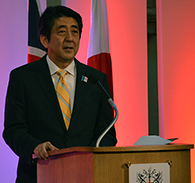
Japan used fiscal and monetary policies to stimulate its economy, which has helped bring down unemployment, but inflation remains stubbornly low. (Credit: modification of “Shinzo Abe, Prime Minister of Japan” by Chatham House/Flickr Creative Commons, CC BY 2.0) · CC BY 2.0 · Source出典

Figure 32.4図 32.4
Japan used fiscal and monetary policies to stimulate its economy, which has helped bring down unemployment, but inflation remains stubbornly low. (Credit: modification of “Shinzo Abe, Prime Minister of Japan” by Chatham House/Flickr Creative Commons, CC BY 2.0)
英語のヒント
日本は財政政策と金融政策を使って経済を刺激し、それは失業の減少に役立ったが、インフレは頑として低いままである。(クレジット:Chatham House/Flickr Creative Commonsによる「Shinzo Abe, Prime Minister of Japan」を改変、CC BY 2.0)
As we discussed in other chapters, macroeconomics needs to have both a short-run and a long-run focus. The challenge for many of the developed countries in the next few years will be to grapple with the consequences of the pandemic. With high unemployment and no end of the virus containment in sight, it will be challenging for these governments to refocus their efforts on new technology, education, and physical capital investment.
英語のヒント
他の章で論じたように、マクロ経済学は短期と長期の両方に焦点を当てる必要がある。多くの先進国にとって、今後数年間の課題は、パンデミックの結果に取り組むことである。失業率が高く、ウイルス封じ込めの終わりが見えないなか、これらの政府が、新技術、教育、実物資本投資へ再び力を向けるのは難しいだろう。