第1章経済学へようこそ
Regulations: The Rules of the Game規制――ゲームのルール
Markets and government regulations are always entangled. There is no such thing as an absolutely free market. Regulations always define the “rules of the game” in the economy. Economies that are primarily market-oriented have fewer regulations—ideally just enough to maintain an even playing field for participants. At a minimum, these laws govern matters like safeguarding private property against theft, protecting people from violence, enforcing legal contracts, preventing fraud, and collecting taxes. Conversely, even the most command-oriented economies operate using markets. How else would buying and selling occur? The government heavily regulates decisions of what to produce and prices to charge. Heavily regulated economies often have underground economies (or black markets), which are markets where the buyers and sellers make transactions without the government’s approval.
英語のヒント
市場と政府の規制は常に結び付いている。完全に自由な市場というものはない。規制は常に、経済における「ゲームのルール」を定める。市場を主に重視する経済では規制が少なく、理想的には参加者の競争条件を公平に保つために必要な範囲にとどまる。少なくとも、私有財産を盗難から守ること、人を暴力から守ること、法的な契約を履行させること、詐欺を防ぐこと、税を徴収することなどが法律で定められる。逆に、指令を最も重視する経済でも市場は使われる。市場がなければ、どうやって売買が行われるのだろうか。政府は何を生産し、どの価格で売るかを強く規制する。規制の強い経済では、買い手と売り手が政府の承認なしに取引する地下経済、すなわち闇市場が存在することが多い。
The question of how to organize economic institutions is typically not a straightforward choice between all market or all government, but instead involves a balancing act over the appropriate combination of market freedom and government rules.
英語のヒント
経済制度の組織の仕方は、通常、すべてを市場に任せるか、すべてを政府に任せるかという単純な選択ではない。市場の自由と政府のルールを、どのように適切に組み合わせるかという調整の問題である。
Globalizationグローバル化
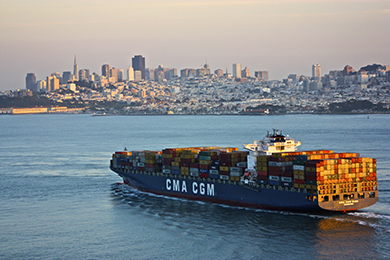
Cargo ships are one mode of transportation for shipping goods in the global economy. (Credit: "Cargo Ship" by Raul Valdez/Flickr Creative Commons, CC BY 2.0) · CC BY 2.0 · Source出典

Figure 1.10図 1.10
Cargo ships are one mode of transportation for shipping goods in the global economy. (Credit: "Cargo Ship" by Raul Valdez/Flickr Creative Commons, CC BY 2.0)
英語のヒント
貨物船は、世界経済で財を運ぶための輸送手段の一つである。(出典:Raul Valdezによる「Cargo Ship」/Flickr Creative Commons、CC BY 2.0)
The Rise of Globalizationグローバル化の進展
Recent decades have seen a trend toward globalization, which is the expanding cultural, political, and economic connections between people around the world. One measure of this is the increased buying and selling of goods, services, and assets across national borders—in other words, international trade and financial capital flows.
英語のヒント
ここ数十年、世界の人々の文化的、政治的、経済的なつながりが広がるグローバル化が進んできた。その一つの指標が、国境を越える財・サービス・資産の売買、すなわち国際貿易と金融資本の移動の増加である。
Globalization has occurred for a number of reasons. Improvements in shipping, as illustrated by the container ship in Figure 1.10, and air cargo have driven down transportation costs. Innovations in computing and telecommunications have made it easier and cheaper to manage long-distance economic connections of production and sales. Many valuable products and services in the modern economy can take the form of information—for example: computer software; financial advice; travel planning; music, books and movies; and blueprints for designing a building. These products and many others can be transported over telephones and computer networks at ever-lower costs. Finally, international agreements and treaties between countries have encouraged greater trade.
英語のヒント
グローバル化が進んだ理由は幾つかある。図1.10のコンテナ船に見られるような海上輸送の改善と航空貨物輸送の改善が、輸送費を下げた。コンピュータや電気通信の革新によって、遠く離れた生産・販売の経済的なつながりを、より簡単かつ安価に管理できるようになった。現代経済の価値ある製品やサービスの多くは、情報の形を取ることができる。たとえばソフトウェア、金融上の助言、旅行の計画、音楽・本・映画、建物の設計図がある。こうした製品などを、電話やコンピュータのネットワークを通じて、ますます低い費用で送れるようになった。さらに、各国間の国際協定や条約も貿易の拡大を促してきた。
Table 1.2 presents one measure of globalization. It shows the percentage of domestic economic production that was exported for a selection of countries from 2010 to 2015, according to an entity known as The World Bank. Exports are the goods and services that one produces domestically and sells abroad. Imports are the goods and services that one produces abroad and then sells domestically. Gross domestic product (GDP) measures the size of total production in an economy. Thus, the ratio of exports divided by GDP measures what share of a country’s total economic production is sold in other countries.
英語のヒント
表1.2はグローバル化を測る一つの指標を示す。世界銀行と呼ばれる機関のデータに基づき、幾つかの国で、国内の経済的な生産のうち輸出された割合を2010~2015年について示している。輸出とは、国内で生産して外国で売る財やサービスである。輸入とは、外国で生産して国内で売る財やサービスである。国内総生産(GDP)は、経済全体の総生産の大きさを測る。したがって輸出額をGDPで割った比率は、国内の総生産のどの割合が外国で売られるかを表す。
Country 国 |
2010 |
2011 |
2012 |
2013 |
2014 |
2015 |
|
|---|---|---|---|---|---|---|---|
Higher Income Countries 高所得国 |
|||||||
United States 米国 |
12.4 |
13.6 |
13.6 |
13.5 |
13.5 |
12.6 |
|
Belgium ベルギー |
76.2 |
81.4 |
82.2 |
82.8 |
84.0 |
84.4 |
|
Canada カナダ |
29.1 |
30.7 |
30.0 |
30.1 |
31.7 |
31.5 |
|
France フランス |
26.0 |
27.8 |
28.1 |
28.3 |
29.0 |
30.0 |
|
Middle Income Countries 中所得国 |
|||||||
China 中国 |
29.4 |
28.5 |
27.3 |
26.4 |
23.9 |
22.4 |
|
Brazil ブラジル |
10.9 |
11.9 |
12.6 |
12.6 |
11.2 |
13.0 |
|
Mexico メキシコ |
29.9 |
31.2 |
32.6 |
31.7 |
32.3 |
35.3 |
|
South Korea 韓国 |
49.4 |
55.7 |
56.3 |
53.9 |
50.3 |
45.9 |
|
Lower Income Countries 低所得国 |
|||||||
Chad チャド |
36.8 |
38.9 |
36.9 |
32.2 |
34.2 |
29.8 |
|
India インド |
22.0 |
23.9 |
24.0 |
24.8 |
22.9 |
- |
|
Nigeria ナイジェリア |
25.3 |
31.3 |
31.4 |
18.0 |
18.4 |
- |
|
In recent decades, the export/GDP ratio has generally risen, both worldwide and for the U.S. economy. Interestingly, the share of U.S. exports in proportion to the U.S. economy is well below the global average, in part because large economies like the United States can contain more of the division of labor inside their national borders. However, smaller economies like Belgium, Korea, and Canada need to trade across their borders with other countries to take full advantage of division of labor, specialization, and economies of scale. In this sense, the enormous U.S. economy is less affected by globalization than most other countries.
英語のヒント
ここ数十年、輸出額のGDPに対する比率は、世界全体でも米国でもおおむね上昇してきた。興味深いことに、米国経済に占める輸出の割合は世界平均を大幅に下回る。その理由の一つは、米国のような大きな経済では、より多くの分業を国境の内側で行えることである。一方、ベルギー、韓国、カナダのような比較的小さな経済は、分業、専門化、規模の経済を十分に活用するため、外国との貿易を必要とする。この意味で、巨大な米国経済は、ほとんどの他国よりグローバル化の影響を受けにくい。
Table 1.2 indicates that many medium and low income countries around the world, like Mexico and China, have also experienced a surge of globalization in recent decades. If an astronaut in orbit could put on special glasses that make all economic transactions visible as brightly colored lines and look down at Earth, the astronaut would see the planet covered with connections.
英語のヒント
表1.2は、メキシコや中国のような世界の多くの中・低所得国でも、ここ数十年にグローバル化が急速に進んだことを示す。軌道上の宇宙飛行士が、すべての経済取引を鮮やかな色の線として見せる特別な眼鏡で地球を見下ろしたなら、地球全体がつながりに覆われているのが見えるだろう。
Despite the rise in globalization over the last few decades, in recent years we've seen significant pushback against globalization from people across the world concerned about loss of jobs, loss of political sovereignty, and increased economic inequality. Prominent examples of this pushback include the 2016 vote in Great Britain to exit the European Union (i.e. Brexit), and the election of Donald J. Trump for President of the United States.
英語のヒント
過去数十年にグローバル化は進んだが、近年は雇用の喪失、政治的主権の喪失、経済格差の拡大を懸念する世界各地の人々から、強い反発も起きている。代表例は、2016年の英国の欧州連合離脱、いわゆるブレグジットを決めた投票と、ドナルド・J・トランプの米国大統領選出である。
Hopefully, you now have an idea about economics. Before you move to any other chapter of study, be sure to read the very important appendix to this chapter called The Use of Mathematics in Principles of Economics. It is essential that you learn more about how to read and use models in economics.
英語のヒント
ここまでで経済学の輪郭がつかめただろう。次の章へ進む前に、本章に付随する重要な付録「経済学原理で使う数学」を必ず読んでおこう。経済学のモデルの読み方と使い方を、さらに学ぶことが不可欠である。