第1章経済学へようこそ
The Division of and Specialization of Labor労働の分業と専門化
The formal study of economics began when Adam Smith (1723–1790) published his famous book The Wealth of Nations in 1776. Many authors had written on economics in the centuries before Smith, but he was the first to address the subject in a comprehensive way. In the first chapter, Smith introduces the concept of division of labor, which means that the way one produces a good or service is divided into a number of tasks that different workers perform, instead of all the tasks being done by the same person.
英語のヒント
経済学の体系的な研究は、アダム・スミス(1723~1790年)が1776年に有名な著書『国富論』を出版したときに始まった。スミス以前の何世紀もの間にも多くの著者が経済について書いていたが、この主題を包括的に扱ったのは彼が初めてであった。第1章でスミスは分業の概念を紹介する。分業とは、同じ人がすべての仕事を行うのではなく、財やサービスを生産する過程を幾つかの作業に分け、異なる労働者がそれぞれを担当することをいう。
To illustrate division of labor, Smith counted how many tasks went into making a pin: drawing out a piece of wire, cutting it to the right length, straightening it, putting a head on one end and a point on the other, and packaging pins for sale, to name just a few. Smith counted 18 distinct tasks that different people performed—all for a pin, believe it or not!
英語のヒント
分業を説明するため、スミスはピンを作るのに幾つの作業が必要かを数えた。針金を引き伸ばす、適切な長さに切る、まっすぐにする、一端に頭を付けてもう一端をとがらせる、販売用に包装する、といった作業である。これだけでも一部にすぎない。スミスは、異なる人が担当する18の作業を数えた。信じられないかもしれないが、たった1本のピンのためにこれだけの作業がある。
Modern businesses divide tasks as well. Even a relatively simple business like a restaurant divides the task of serving meals into a range of jobs like top chef, sous chefs, less-skilled kitchen help, servers to wait on the tables, a greeter at the door, janitors to clean up, and a business manager to handle paychecks and bills—not to mention the economic connections a restaurant has with suppliers of food, furniture, kitchen equipment, and the building where it is located. A complex business like a large manufacturing factory, such as the shoe factory (Figure 1.4), or a hospital can have hundreds of job classifications.
英語のヒント
現代の企業も作業を分担している。レストランのような比較的単純な事業でも、食事を提供する仕事は、料理長、副料理長、熟練度の低い調理補助、テーブルを担当する給仕、入口での案内係、清掃員、給与や請求書を扱う経営管理者など、多くの職務に分かれる。食材、家具、厨房設備の供給者や、店が入る建物との経済的なつながりもある。図1.4の靴工場のような大きな製造工場や病院など、複雑な事業では職種が何百にもなることがある。
Division of Labor分業
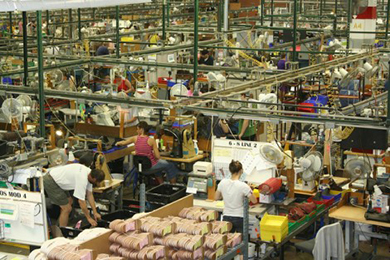
Workers on an assembly line are an example of the divisions of labor. (Credit: "Red Wing Shoe Factory Tour" by Nina Hale/Flickr Creative Commons, CC BY 2.0) · CC BY 2.0 · Source出典

Figure 1.4図 1.4
Workers on an assembly line are an example of the divisions of labor. (Credit: "Red Wing Shoe Factory Tour" by Nina Hale/Flickr Creative Commons, CC BY 2.0)
英語のヒント
組立ラインの労働者は分業の一例である。(出典:Nina Haleによる「Red Wing Shoe Factory Tour」/Flickr Creative Commons、CC BY 2.0)
Why the Division of Labor Increases Productionなぜ分業は生産を増やすのか
When we divide and subdivide the tasks involved with producing a good or service, workers and businesses can produce a greater quantity of output. In his observations of pin factories, Smith noticed that one worker alone might make 20 pins in a day, but that a small business of 10 workers (some of whom would need to complete two or three of the 18 tasks involved with pin-making), could make 48,000 pins in a day. How can a group of workers, each specializing in certain tasks, produce so much more than the same number of workers who try to produce the entire good or service by themselves? Smith offered three reasons.
英語のヒント
財やサービスの生産に必要な仕事を分け、さらに細かく分けると、労働者や企業はより多くの生産物を作れる。ピン工場を観察したスミスは、一人の労働者が単独で作れるピンは1日20本ほどなのに対し、10人の小さな事業所なら1日に4万8000本を作れると気付いた。その10人のうち何人かは、ピン作りに必要な18の作業の二つか三つを担当することになる。特定の作業に専門化した労働者の集団が、同じ人数で各自が財やサービスの全工程を担う場合よりも、はるかに多くを生産できるのはなぜか。スミスは三つの理由を挙げた。
First, specialization in a particular small job allows workers to focus on the parts of the production process where they have an advantage. (In later chapters, we will develop this idea by discussing comparative advantage.) People have different skills, talents, and interests, so they will be better at some jobs than at others. The particular advantages may be based on educational choices, which are in turn shaped by interests and talents. Only those with medical degrees qualify to become doctors, for instance. For some goods, geography affects specialization. For example, it is easier to be a wheat farmer in North Dakota than in Florida, but easier to run a tourist hotel in Florida than in North Dakota. If you live in or near a big city, it is easier to attract enough customers to operate a successful dry cleaning business or movie theater than if you live in a sparsely populated rural area. Whatever the reason, if people specialize in the production of what they do best, they will be more effective than if they produce a combination of things, some of which they are good at and some of which they are not.
英語のヒント
第一に、細分化された特定の仕事への専門化によって、労働者は生産過程のうち自分が優位にある部分に集中できる。後の章では、比較優位を取り上げてこの考えを発展させる。人には異なる技能、才能、関心があるため、仕事によって得意・不得意がある。その優位性は、どの教育を選んだかに基づくことがあり、その選択もまた関心や才能に左右される。たとえば医師になる資格があるのは、医学の学位を持つ人だけである。財によっては、地理が専門化に影響する。たとえば小麦農家になるならフロリダ州よりノースダコタ州が適しているが、観光ホテルの経営ならノースダコタ州よりフロリダ州が適している。大都市やその近くに住む場合は、人口のまばらな農村地域よりも、クリーニング店や映画館を成功させるのに十分な顧客を集めやすい。理由が何であれ、人々が最も得意なものの生産に専門化すれば、得意なものも不得意なものも混ぜて生産するより、効率よく働ける。
Second, workers who specialize in certain tasks often learn to produce more quickly and with higher quality. This pattern holds true for many workers, including assembly line laborers who build cars, stylists who cut hair, and doctors who perform heart surgery. In fact, specialized workers often know their jobs well enough to suggest innovative ways to do their work faster and better.
英語のヒント
第二に、特定の作業に専門化した労働者は、より速く、より高い品質で生産する方法を身に付けることが多い。自動車の組立ラインで働く人、髪を切る美容師、心臓手術を行う医師など、多くの仕事にこのことが当てはまる。実際、専門化した労働者は自分の仕事をよく理解しているため、より速く、よりよく働くための革新的な方法を提案することも多い。
A similar pattern often operates within businesses. In many cases, a business that focuses on one or a few products (sometimes called its “core competency”) is more successful than firms that try to make a wide range of products.
英語のヒント
企業の内部でも、同じような傾向がしばしば見られる。一つ、または少数の商品に集中する企業は、幅広い商品を作ろうとする企業よりも成功する場合が多い。この集中する領域は「中核的能力」と呼ばれることもある。
Third, specialization allows businesses to take advantage of economies of scale, which means that for many goods, as the level of production increases, the average cost of producing each individual unit declines. For example, if a factory produces only 100 cars per year, each car will be quite expensive to make on average. However, if a factory produces 50,000 cars each year, then it can set up an assembly line with huge machines and workers performing specialized tasks, and the average cost of production per car will be lower. The ultimate result of workers who can focus on their preferences and talents, learn to do their specialized jobs better, and work in larger organizations is that society as a whole can produce and consume far more than if each person tried to produce all of their own goods and services. The division and specialization of labor has been a force against the problem of scarcity.
英語のヒント
第三に、専門化によって企業は規模の経済を利用できる。規模の経済とは、多くの財で、生産水準が上がるにつれて1単位当たりの平均生産費用が下がることをいう。たとえば工場が年間100台しか自動車を作らないなら、1台を作る平均費用はかなり高くなる。しかし年間5万台を作るなら、大型の機械と専門作業を担当する労働者からなる組立ラインを設けられ、1台当たりの平均生産費用は下がる。労働者が自分の好みや才能に集中し、専門の仕事をさらに上達させ、より大きな組織の中で働けるようになる結果、社会全体で生産・消費できる量は、一人ひとりが必要な財やサービスをすべて自作する場合よりはるかに多くなる。労働の分業と専門化は、希少性の問題に対抗する力となってきた。