第15章心理的障害
Support For Sufferers of PTSDPTSDに苦しむ人への支援
Research has shown that social support following a traumatic event can reduce the likelihood of PTSD (Ozer, Best, Lipsey, & Weiss, 2003). Social support is often defined as the comfort, advice, and assistance received from relatives, friends, and neighbors. Social support can help individuals cope during difficult times by allowing them to discuss feelings and experiences and providing a sense of being loved and appreciated. A 14-year study of 1,377 people who had served in the Vietnam War found that those who perceived less social support when they came home were more likely to develop PTSD than were those who perceived greater support (Figure 15.14). In addition, those who became involved in the community were less likely to develop PTSD, and they were more likely to experience a remission of PTSD than were those who were less involved (Koenen, Stellman, Stellman, & Sommer, 2003).
英語のヒント
トラウマとなる出来事の後のソーシャル・サポートが、PTSDになる可能性を減らしうることが、研究によって示されている(Ozer, Best, Lipsey, & Weiss, 2003)。ソーシャル・サポートは、親族、友人、近所の人から受ける慰め、助言、援助と定義されることが多い。ソーシャル・サポートは、感情や経験について話し合えるようにし、愛され大切にされているという感覚を与えることで、困難な時期に人が対処するのを助けうる。ベトナム戦争に従軍した1,377人を対象とした14年間の研究では、帰還したときにソーシャル・サポートが少ないと感じていた人は、多いと感じていた人に比べて、PTSDを発症する可能性が高かった(図15.14)。さらに、地域社会にかかわるようになった人はPTSDを発症する可能性が低く、かかわりの少なかった人に比べて、PTSDの寛解を経験する可能性が高かった(Koenen, Stellman, Stellman, & Sommer, 2003)。
OpenStax, Rice University; Psychology 2e. (credit: Kevin Stanchfield) Embedded rights notice: Copyright: Kevin Stanchfield · CC BY 4.0 · Source出典

Figure 15.14図 15.14
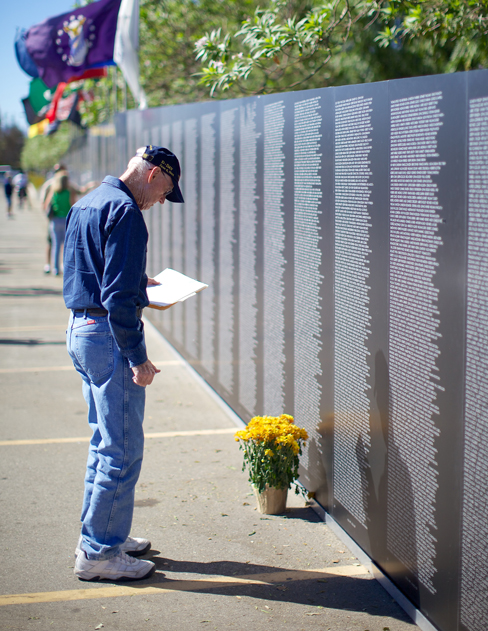
PTSD was first recognized in soldiers who had engaged in combat. Research has shown that strong social support decreases the risk of PTSD. This person stands at the Vietnam Traveling Memorial Wall. (credit: Kevin Stanchfield)
PTSDが最初に認識されたのは、戦闘に従事した兵士においてだった。強いソーシャル・サポートがPTSDのリスクを下げることが、研究によって示されている。この人は、巡回展示されているベトナム戦争記念壁の前に立っている。(出典:Kevin Stanchfield)
Learning and the Development of PTSD学習とPTSDの発症
PTSD learning models suggest that some symptoms are developed and maintained through classical conditioning. The traumatic event may act as an unconditioned stimulus that elicits an unconditioned response characterized by extreme fear and anxiety. Cognitive, emotional, physiological, and environmental cues accompanying or related to the event are conditioned stimuli. These traumatic reminders evoke conditioned responses (extreme fear and anxiety) similar to those caused by the event itself (Nader, 2001). A person who witnessed or experienced a plane crash and who developed PTSD may display excessive hypervigilance and distress when planes fly overhead; this behavior constitutes a conditioned response to the traumatic reminder (conditioned stimulus of the sight and sound of an airplane). Differences in how conditionable individuals are help to explain differences in the development and maintenance of PTSD symptoms (Pittman, 1988). Conditioning studies demonstrate facilitated acquisition of conditioned responses and delayed extinction of conditioned responses in people with PTSD (Orr et al., 2000).
英語のヒント
PTSDの学習モデルは、一部の症状が古典的条件づけを通して形成され、維持されることを示唆している。トラウマとなる出来事は、極度の恐怖と不安を特徴とする無条件反応を引き起こす無条件刺激として働くことがある。その出来事に伴う、あるいはその出来事に関連した認知的、感情的、生理的、環境的な手がかりは、条件刺激である。こうしたトラウマを思い出させるものは、出来事そのものが引き起こす反応に似た条件反応(極度の恐怖と不安)を呼び起こす(Nader, 2001)。飛行機の墜落を目撃または経験し、PTSDを発症した人は、頭上を飛行機が飛ぶと、著しく過剰な警戒と苦痛を示すかもしれない。この行動は、トラウマを思い出させるもの(飛行機の姿と音という条件刺激)に対する条件反応である。人がどれほど条件づけられやすいかの違いは、PTSDの症状の発症と維持の違いを説明する助けとなる(Pittman, 1988)。条件づけの研究は、PTSDのある人では、条件反応の獲得が促進され、条件反応の消去が遅れることを実証している(Orr et al., 2000)。
Cognitive factors are important in the development and maintenance of PTSD. One model suggests that two key processes are crucial: disturbances in memory for the event, and negative appraisals of the trauma and its aftermath (Ehlers & Clark, 2000). According to this theory, some people who experience traumas do not form coherent memories of the trauma; memories of the traumatic event are poorly encoded and, thus, are fragmented, disorganized, and lacking in detail. Therefore, these individuals are unable to remember the event in a way that gives it meaning and context. A rape victim who cannot coherently remember the event may remember only bits and pieces (e.g., the attacker repeating a word or insult); because the victim was unable to develop a fully integrated memory, the fragmentary memory tends to stand out. Although unable to retrieve a complete memory of the event, the victim may be haunted by intrusive fragments involuntarily triggered by stimuli associated with the event (e.g., memories of the attacker’s comments when encountering a person who resembles the attacker). This interpretation fits previously discussed material concerning PTSD and conditioning. The model also proposes that negative appraisals of the event (“I deserved to be raped because I’m stupid”) may lead to dysfunctional behavioral strategies (e.g., avoiding social activities where men are likely to be present) that maintain PTSD symptoms by preventing both a change in the nature of the memory and a change in the problematic appraisals.
英語のヒント
認知的要因は、PTSDの発症と維持において重要である。あるモデルは、二つの鍵となる過程が決定的に重要であることを示唆している。出来事についての記憶の乱れと、トラウマとその余波についての否定的な評価である(Ehlers & Clark, 2000)。この理論によれば、トラウマを経験した人の中には、そのトラウマについてまとまりのある記憶を形成しない人がいる。トラウマとなった出来事の記憶はうまく符号化されず、そのため断片的でまとまりがなく、細部を欠いている。したがって、こうした人は、出来事に意味と文脈を与えるような形でそれを思い出すことができない。出来事をまとまった形で思い出せないレイプの被害者は、断片的な部分(たとえば、加害者がある言葉や侮辱を繰り返していたこと)しか思い出せないかもしれない。被害者は十分に統合された記憶を形成できなかったため、その断片的な記憶が際立ちやすい。出来事の完全な記憶を検索できないにもかかわらず、被害者は、出来事と結びついた刺激によって意図せず引き起こされる侵入的な断片(たとえば、加害者に似た人に出会ったときの、加害者の言葉の記憶)につきまとわれるかもしれない。この解釈は、PTSDと条件づけについて先に論じた内容と合致する。このモデルはまた、出来事についての否定的な評価(「私はばかだから、レイプされて当然だった」)が、機能不全の行動方略(たとえば、男性がいそうな社交の場を避けること)につながりうると提案している。このモデルによれば、こうした方略は、記憶の性質の変化と、問題のある評価の変化の両方を妨げることで、PTSDの症状を維持する。
Summaryまとめ
Posttraumatic stress disorder (PTSD) was described through much of the 20th century and was referred to as shell shock and combat neurosis in the belief that its symptoms were thought to emerge from the stress of active combat. Today, PTSD is defined as a disorder in which the experience of a traumatic or profoundly stressful event, such as combat, sexual assault, or natural disaster, produces a constellation of symptoms that must last for one month or more. These symptoms include intrusive and distressing memories of the event, flashbacks, avoidance of stimuli or situations that are connected to the event, persistently negative emotional states, feeling detached from others, irritability, proneness toward outbursts, and a tendency to be easily startled. Not everyone who experiences a traumatic event will develop PTSD; a variety of risk factors associated with its development have been identified.
心的外傷後ストレス障害(PTSD)は20世紀の大半を通じて記述されてきた。その症状は実際の戦闘のストレスから生じると考えられていたため、砲弾ショックや戦闘神経症と呼ばれていた。今日、PTSDは、戦闘、性的暴行、自然災害のような、トラウマとなる、あるいはきわめて強いストレスとなる出来事を経験したことによって一群の症状が生じる障害と定義されており、その症状は1か月以上続いていなければならない。これらの症状には、その出来事についての侵入的で苦痛な記憶、フラッシュバック、その出来事に結びついた刺激や状況の回避、持続する否定的な感情状態、他者から切り離されていると感じること、いらだちやすさ、感情を爆発させやすいこと、驚きやすい傾向が含まれる。トラウマとなる出来事を経験した人が皆PTSDを発症するわけではなく、その発症と関連するさまざまな危険因子が特定されている。