第3章生物心理学
Introductionはじめに
OpenStax, Rice University; Psychology 2e. (credit “left”: modification of work by Health and Human Services Department, National Institutes of Health; credit “center": modification of work by "Aceofhearts1968"/Wikimedia Commons; credit “right”: modification of work by Kim J, Matthews NL, Park S.) · CC BY 4.0 · Source出典

Figure 3.1図 3.1
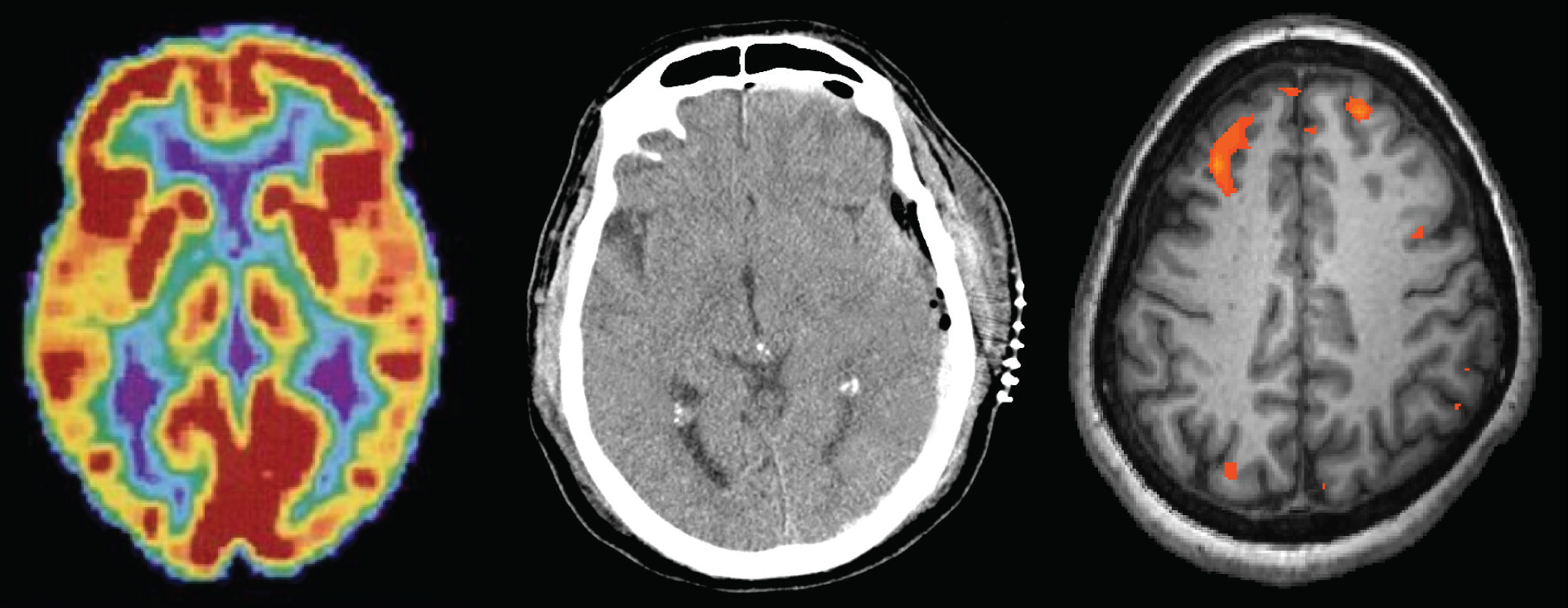
Different brain imaging techniques provide scientists with insight into different aspects of how the human brain functions. Left to right, PET scan (positron emission tomography), CT scan (computerized tomography), and fMRI (functional magnetic resonance imaging) are three types of scans. (credit “left”: modification of work by Health and Human Services Department, National Institutes of Health; credit “center": modification of work by "Aceofhearts1968"/Wikimedia Commons; credit “right”: modification of work by Kim J, Matthews NL, Park S.)
脳画像法にはさまざまな種類があり、それぞれが、人間の脳の働きの異なる側面について科学者に洞察を与えてくれる。左から順に、PETスキャン(陽電子放出断層撮影)、CTスキャン(コンピューター断層撮影)、fMRI(機能的磁気共鳴画像法)という3種類のスキャンである。(出典「左」:Health and Human Services Department, National Institutes of Healthの作品を改変、出典「中央」:“Aceofhearts1968”/Wikimedia Commonsの作品を改変、出典「右」:Kim J, Matthews NL, Park S.の作品を改変)
Have you ever taken a device apart to find out how it works? Many of us have done so, whether to attempt a repair or simply to satisfy our curiosity. A device’s internal workings are often distinct from its user interface on the outside. For example, we don’t think about microchips and circuits when we turn up the volume on a mobile phone; instead, we think about getting the volume just right. Similarly, the inner workings of the human body are often distinct from the external expression of those workings. It is the job of psychologists to find the connection between these—for example, to figure out how the firings of millions of neurons become a thought.
英語のヒント
機器がどのように動いているのかを知ろうとして、分解してみたことはないだろうか。修理を試みるためであれ、単に好奇心を満たすためであれ、私たちの多くはそうしたことがある。機器の内部の仕組みは、外側にあるユーザーインターフェースとは別物であることが多い。たとえば、携帯電話の音量を上げるとき、私たちはマイクロチップや回路のことは考えない。その代わりに考えるのは、音量をちょうどよくすることである。同じように、人体の内部の働きも、その働きが外に表れたものとは別物であることが多い。この二つのつながりを見つけること、たとえば何百万ものニューロンの発火がどのようにして一つの思考になるのかを解き明かすことが、心理学者の仕事である。
This chapter strives to explain the biological mechanisms that underlie behavior. These physiological and anatomical foundations are the basis for many areas of psychology. In this chapter, you will learn how genetics influence both physiological and psychological traits. You will become familiar with the structure and function of the nervous system. And, finally, you will learn how the nervous system interacts with the endocrine system.
英語のヒント
この章は、行動の根底にある生物学的な仕組みを説明しようとするものである。こうした生理学的・解剖学的な基礎は、心理学の多くの領域の土台となっている。この章では、遺伝が生理的な特性と心理的な特性の両方にどのように影響するかを学ぶ。また、神経系の構造と機能についてもよく知るようになる。そして最後に、神経系が内分泌系とどのように相互作用するかを学ぶ。
References参考文献
Anderson, P. J., & Leuzzi, V. (2010). White matter pathology in phenylketonuria. Molecular Genetics and Metabolism, 99, S3–S9.
Anderson, P. J., & Leuzzi, V. (2010). White matter pathology in phenylketonuria. Molecular Genetics and Metabolism, 99, S3–S9.
Arnst, C. (2003, November). Commentary: Getting rational about health-care rationing. Bloomberg Businessweek Magazine. http://www.businessweek.com/stories/2003-11-16/commentary-getting-rational-about-health-care-rationing
Arnst, C. (2003, November). Commentary: Getting rational about health-care rationing. Bloomberg Businessweek Magazine. http://www.businessweek.com/stories/2003-11-16/commentary-getting-rational-about-health-care-rationing
Azevedo, F. A., Carvalho, L. R., Grinberg, L. T., Farfel, J. M., Ferretti, R. E., Leite, R. E., ... & Herculano‐Houzel, S. (2009). Equal numbers of neuronal and nonneuronal cells make the human brain an isometrically scaled‐up primate brain. Journal of Comparative Neurology, 513(5), 532–541.
Azevedo, F. A., Carvalho, L. R., Grinberg, L. T., Farfel, J. M., Ferretti, R. E., Leite, R. E., ... & Herculano‐Houzel, S. (2009). Equal numbers of neuronal and nonneuronal cells make the human brain an isometrically scaled‐up primate brain. Journal of Comparative Neurology, 513(5), 532–541.
Banich, M. T., & Heller, W. (1998). Evolving perspectives on lateralization of function. Current Directions in Psychological Science, 7(1), 1–2.
Banich, M. T., & Heller, W. (1998). Evolving perspectives on lateralization of function. Current Directions in Psychological Science, 7(1), 1–2.
Berridge, K. C., & Robinson, T. E. (1998). What is the role of dopamine in reward: Hedonic impact, reward learning, or incentive salience? Brain Research Reviews, 28, 309–369.
Berridge, K. C., & Robinson, T. E. (1998). What is the role of dopamine in reward: Hedonic impact, reward learning, or incentive salience? Brain Research Reviews, 28, 309–369.
Chandola, T., Brunner, E., & Marmot, M. (2006). Chronic stress at work and the metabolic syndrome: A prospective study. BMJ, 332, 521–524.
Chandola, T., Brunner, E., & Marmot, M. (2006). Chronic stress at work and the metabolic syndrome: A prospective study. BMJ, 332, 521–524.
Comings, D. E., Gonzales, N., Saucier, G., Johnson, J. P., & MacMurray, J. P. (2000). The DRD4 gene and the spiritual transcendence scale of the character temperament index. Psychiatric Genetics, 10, 185–189.
Comings, D. E., Gonzales, N., Saucier, G., Johnson, J. P., & MacMurray, J. P. (2000). The DRD4 gene and the spiritual transcendence scale of the character temperament index. Psychiatric Genetics, 10, 185–189.
Confer, J. C., Easton, J. A., Fleischman, D. S., Goetz, C. D., Lewis, D. M. G, Perilloux, C., & Buss, D. M. (2010). Evolutionary psychology: Controversies, questions, prospects, and limitations. American Psychologist, 65, 110–126.
Confer, J. C., Easton, J. A., Fleischman, D. S., Goetz, C. D., Lewis, D. M. G, Perilloux, C., & Buss, D. M. (2010). Evolutionary psychology: Controversies, questions, prospects, and limitations. American Psychologist, 65, 110–126.
Connors, B. W., & Long, M. A. (2004). Electrical synapses in the mammalian brain. Annual Review of Neuroscience, 27, 393–418.
Connors, B. W., & Long, M. A. (2004). Electrical synapses in the mammalian brain. Annual Review of Neuroscience, 27, 393–418.
Ehret, G. (2006). Hemisphere dominance of brain function—which functions are lateralized and why?. 23 Problems in Systems Neuroscience, 44–61.
Ehret, G. (2006). Hemisphere dominance of brain function—which functions are lateralized and why?. 23 Problems in Systems Neuroscience, 44–61.
Fernandez, A. (2008, October 16). ABC reporter Bob Woodruff's incredible recovery from traumatic brain injury. The Huffington Post. https://www.huffpost.com/entry/abc-reporter-bob-woodruff_b_125863
Fernandez, A. (2008, October 16). ABC reporter Bob Woodruff's incredible recovery from traumatic brain injury. The Huffington Post. https://www.huffpost.com/entry/abc-reporter-bob-woodruff_b_125863
Gaines, C. (2013, August). An A-Rod suspension would save the Yankees as much as $37.5 million in 2014 alone. Business Insider. http://www.businessinsider.com/an-a-rod-suspension-would-save-the-yankees-as-much-as-375-million-in-2014-2013-8
Gaines, C. (2013, August). An A-Rod suspension would save the Yankees as much as $37.5 million in 2014 alone. Business Insider. http://www.businessinsider.com/an-a-rod-suspension-would-save-the-yankees-as-much-as-375-million-in-2014-2013-8
Gardner, E. L. (2011). Addiction and brain reward and antireward pathways. Advances in Psychosomatic Medicine, 30, 22–60.
Gardner, E. L. (2011). Addiction and brain reward and antireward pathways. Advances in Psychosomatic Medicine, 30, 22–60.
Gazzaniga, M. S. (2005). Forty-five years of split-brain research and still going strong. Nature Reviews Neuroscience, 6(8), 653–659.
Gazzaniga, M. S. (2005). Forty-five years of split-brain research and still going strong. Nature Reviews Neuroscience, 6(8), 653–659.
George, O., Le Moal, M., & Koob, G. F. (2012). Allostasis and addiction: Role of the dopamine and corticotropin-releasing factor systems. Physiology & Behavior, 106, 58–64.
George, O., Le Moal, M., & Koob, G. F. (2012). Allostasis and addiction: Role of the dopamine and corticotropin-releasing factor systems. Physiology & Behavior, 106, 58–64.
Glaser, R., & Kiecolt-Glaser, J. K. (2005). Stress-induced immune dysfunction: Implications for health. Nature Reviews Immunology, 5, 243–251.
Glaser, R., & Kiecolt-Glaser, J. K. (2005). Stress-induced immune dysfunction: Implications for health. Nature Reviews Immunology, 5, 243–251.
Gong, L., Parikh, S., Rosenthal, P. J., & Greenhouse, B. (2013). Biochemical and immunological mechanisms by which sickle cell trait protects against malaria. Malaria Journal. Advance online publication. doi:10.1186/1475-2875-12-317
Gong, L., Parikh, S., Rosenthal, P. J., & Greenhouse, B. (2013). Biochemical and immunological mechanisms by which sickle cell trait protects against malaria. Malaria Journal. Advance online publication. doi:10.1186/1475-2875-12-317
Hardt, O., Einarsson, E. Ö., & Nader, K. (2010). A bridge over troubled water: Reconsolidation as a link between cognitive and neuroscientific memory research traditions. Annual Review of Psychology, 61, 141–167.
Hardt, O., Einarsson, E. Ö., & Nader, K. (2010). A bridge over troubled water: Reconsolidation as a link between cognitive and neuroscientific memory research traditions. Annual Review of Psychology, 61, 141–167.
Herculano-Houzel, S. (2009). The human brain in numbers: a linearly scaled-up primate brain. Frontiers in Human Neuroscience, 3, 31.
Herculano-Houzel, S. (2009). The human brain in numbers: a linearly scaled-up primate brain. Frontiers in Human Neuroscience, 3, 31.
Herculano-Houzel, S. (2012). The remarkable, yet not extraordinary, human brain as a scaled-up primate brain and its associated cost. Proceedings of the National Academy of Sciences, 109(Supplement 1), 10661–10668.
Herculano-Houzel, S. (2012). The remarkable, yet not extraordinary, human brain as a scaled-up primate brain and its associated cost. Proceedings of the National Academy of Sciences, 109(Supplement 1), 10661–10668.
Huttenlocher, P. R. (2000). The neuropathology of phenylketonuria: human and animal studies. European Journal of Pediatrics, 159(2), S102–S106.
Huttenlocher, P. R. (2000). The neuropathology of phenylketonuria: human and animal studies. European Journal of Pediatrics, 159(2), S102–S106.
Macmillan, M. (1999). The Phineas Gage Information Page. http://www.uakron.edu/gage
Macmillan, M. (1999). The Phineas Gage Information Page. http://www.uakron.edu/gage
March, J. S., Silva, S., Petrycki, S., Curry, J., Wells, K., Fairbank, J., … Severe, J. (2007). The treatment for adolescents with depression study (TADS): Long-term effectiveness and safety outcomes. Arch Gen Psychiatry, 64, 1132–1143.
March, J. S., Silva, S., Petrycki, S., Curry, J., Wells, K., Fairbank, J., … Severe, J. (2007). The treatment for adolescents with depression study (TADS): Long-term effectiveness and safety outcomes. Arch Gen Psychiatry, 64, 1132–1143.
Miguel, P. M., Pereira, L. O., Silveira, P. P., & Meaney, M. J. (2019). Early environmental influences on the development of children's brain structure and function. Developmental Medicine and Child Neurology, 61, 1127–33.
Miguel, P. M., Pereira, L. O., Silveira, P. P., & Meaney, M. J. (2019). Early environmental influences on the development of children's brain structure and function. Developmental Medicine and Child Neurology, 61, 1127–33.
Mustanski, B. S., DuPree, M. G., Nievergelt, C. M., Bocklandt, S., Schork, N. J., & Hamer, D. H. (2005). A genome wide scan of male sexual orientation. Human Genetics, 116, 272–278.
Mustanski, B. S., DuPree, M. G., Nievergelt, C. M., Bocklandt, S., Schork, N. J., & Hamer, D. H. (2005). A genome wide scan of male sexual orientation. Human Genetics, 116, 272–278.
National Institute on Drug Abuse. (2001, July). Anabolic steroid abuse: What are the health consequences of steroid abuse? National Institutes of Health. http://www.drugabuse.gov/publications/research-reports/anabolic-steroid-abuse/what-are-health-consequences-steroid-abuse
National Institute on Drug Abuse. (2001, July). Anabolic steroid abuse: What are the health consequences of steroid abuse? National Institutes of Health. http://www.drugabuse.gov/publications/research-reports/anabolic-steroid-abuse/what-are-health-consequences-steroid-abuse
Short, A. K., and Baram, T. Z. (2019). Early-life adversity and neurological disease: Age-old questions and novel answers. Nature Reviews Neurology, 15, 657–69.
Short, A. K., and Baram, T. Z. (2019). Early-life adversity and neurological disease: Age-old questions and novel answers. Nature Reviews Neurology, 15, 657–69.
Squire, L. R. (2009). The legacy of patient H. M. for neuroscience. Neuron, 61, 6–9.
Squire, L. R. (2009). The legacy of patient H. M. for neuroscience. Neuron, 61, 6–9.
Tienari, P., Wynne, L. C., Sorri, A., et al. (2004). Genotype–environment interaction in schizophrenia spectrum disorder: long-term follow-up study of Finnish adoptees. British Journal of Psychiatry, 184, 216–222.
Tienari, P., Wynne, L. C., Sorri, A., et al. (2004). Genotype–environment interaction in schizophrenia spectrum disorder: long-term follow-up study of Finnish adoptees. British Journal of Psychiatry, 184, 216–222.
University of Utah Genetic Science Learning Center. (n.d.). What are genetic disorders? http://learn.genetics.utah.edu/content/disorders/whataregd/
University of Utah Genetic Science Learning Center. (n.d.). What are genetic disorders? http://learn.genetics.utah.edu/content/disorders/whataregd/
Yudell, M., Roberts, D., DeSalle, R., & Tishkoff, S. (2016). Taking race out of human genetics. Science, 351(6273), 564–565.
Yudell, M., Roberts, D., DeSalle, R., & Tishkoff, S. (2016). Taking race out of human genetics. Science, 351(6273), 564–565.