第8章記憶
Introductionはじめに
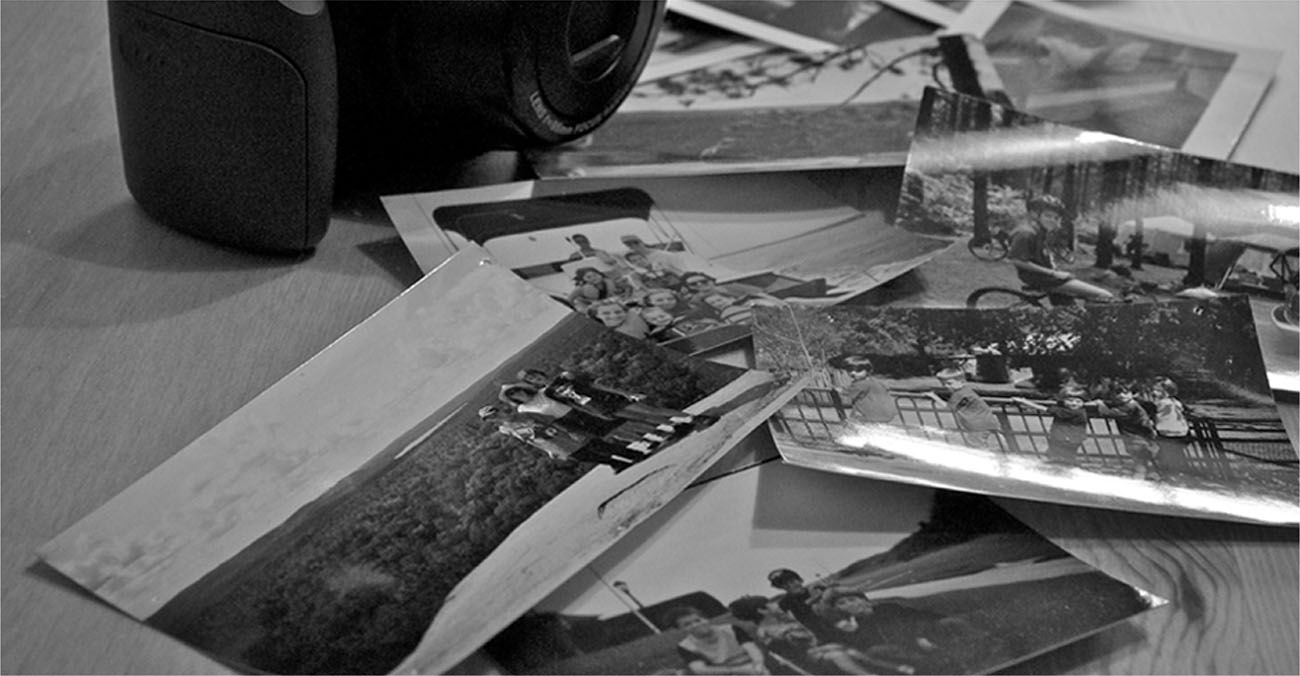
OpenStax, Rice University; Psychology 2e. (credit: modification of work by Cory Zanker) · CC BY 4.0 · Source出典

Figure 8.1図 8.1
Photographs can trigger our memories and bring past experiences back to life. (credit: modification of work by Cory Zanker)
写真は私たちの記憶を呼び起こし、過去の経験をよみがえらせることがある。(出典:Cory Zankerの作品を改変)
We may be top-notch learners, but if we don’t have a way to store what we’ve learned, what good is the knowledge we’ve gained?
英語のヒント
私たちは一流の学び手かもしれない。しかし、学んだことを蓄えておく手段がなければ、身につけた知識が何の役に立つだろうか。
Take a few minutes to imagine what your day might be like if you could not remember anything you had learned. You would have to figure out how to get dressed. What clothing should you wear, and how do buttons and zippers work? You would need someone to teach you how to brush your teeth and tie your shoes. Who would you ask for help with these tasks, since you wouldn’t recognize the faces of these people in your house? Wait . . . is this even your house? Uh oh, your stomach begins to rumble and you feel hungry. You’d like something to eat, but you don’t know where the food is kept or even how to prepare it. Oh dear, this is getting confusing. Maybe it would be best to just go back to bed. A bed . . . what is a bed?
英語のヒント
少し時間をとって、これまでに学んだことを何一つ思い出せないとしたら、自分の一日がどのようなものになるかを想像してみよう。服の着方を自分で考えなければならないだろう。どの服を着ればよいのか。ボタンやファスナーはどういう仕組みになっているのか。歯の磨き方や靴ひもの結び方を教えてくれる人も必要になるだろう。家の中にいるこの人たちの顔を見ても誰だか分からないのだから、こうしたことの手助けを誰に頼めばよいのだろうか。待てよ……そもそもここは自分の家なのだろうか。おっと、おなかが鳴りはじめ、空腹を感じる。何か食べたいが、食べ物がどこにしまってあるのかも、どう調理すればよいのかさえも分からない。やれやれ、だんだん訳が分からなくなってきた。いっそベッドに戻ってしまうのがいちばんかもしれない。ベッド……ベッドって何だろう。
We have an amazing capacity for memory, but how, exactly, do we process and store information? Are there different kinds of memory, and if so, what characterizes the different types? How, exactly, do we retrieve our memories? And why do we forget? This chapter will explore these questions as we learn about memory.
英語のヒント
私たちには驚くほどの記憶の能力がある。しかし、私たちはいったいどのようにして情報を処理し、貯蔵しているのだろうか。記憶には異なる種類があるのか。あるとすれば、それぞれの種類を特徴づけるものは何なのか。私たちは記憶をいったいどのようにして検索しているのだろうか。そして、私たちはなぜ忘れるのか。この章では、記憶について学びながら、これらの問いを探っていく。
References参考文献
Abel, M., & Bäuml, K.-H. T. (2013). Sleep can reduce proactive interference. Memory, 22(4), 332–339. doi:10.1080/09658211.2013.785570. http://www.psychologie.uni-regensburg.de/Baeuml/papers_in_press/sleepPI.pdf
Abel, M., & Bäuml, K.-H. T. (2013). Sleep can reduce proactive interference. Memory, 22(4), 332–339. doi:10.1080/09658211.2013.785570. http://www.psychologie.uni-regensburg.de/Baeuml/papers_in_press/sleepPI.pdf
Adams, J. K. (1957). Laboratory studies of behavior without awareness. Psychological Bulletin, 54, 383–405. https://psycnet.apa.org/record/1959-00483-001
Adams, J. K. (1957). Laboratory studies of behavior without awareness. Psychological Bulletin, 54, 383–405. https://psycnet.apa.org/record/1959-00483-001
Anderson, J. R., & Reder, L. M. (1999). The fan effect: New results and new theories. Journal of Experimental Psychology: General, 128, 186–197. https://psycnet.apa.org/record/1999-05245-004
Anderson, J. R., & Reder, L. M. (1999). The fan effect: New results and new theories. Journal of Experimental Psychology: General, 128, 186–197. https://psycnet.apa.org/record/1999-05245-004
Anderson, N. S. (1969). The influence of acoustic similarity on serial recall of letter sequences. Quarterly Journal of Experimental Psychology, 21(3), 248–255.
Anderson, N. S. (1969). The influence of acoustic similarity on serial recall of letter sequences. Quarterly Journal of Experimental Psychology, 21(3), 248–255.
Anderson, R. C. (1984). Role of the reader's schema in comprehension, learning, and memory. In R. C. Anderson, J. Osborn, & R. J. Tierney (Eds.), Learning to read in American schools: Basal Readers and Content Texts (pp. 243–257). Erlbaum.
Anderson, R. C. (1984). Role of the reader's schema in comprehension, learning, and memory. In R. C. Anderson, J. Osborn, & R. J. Tierney (Eds.), Learning to read in American schools: Basal Readers and Content Texts (pp. 243–257). Erlbaum.
Atkinson, R. C., & Shiffrin, R. M. (1968). Human memory: A proposed system and its control processes. In K. W. Spence & J. T. Spence (Eds.), The psychology of learning and motivation: Volume 2 (pp. 89–195). Academic Press.
Atkinson, R. C., & Shiffrin, R. M. (1968). Human memory: A proposed system and its control processes. In K. W. Spence & J. T. Spence (Eds.), The psychology of learning and motivation: Volume 2 (pp. 89–195). Academic Press.
Baddeley, A. (2004). Your memory: A user's guide. Firefly Books.
Baddeley, A. (2004). Your memory: A user's guide. Firefly Books.
Baddeley, A. D. (2000). The episodic buffer: A new component of working memory? Trends in Cognitive Sciences, 4, 417–423. https://www.ncbi.nlm.nih.gov/pubmed/11058819
Baddeley, A. D. (2000). The episodic buffer: A new component of working memory? Trends in Cognitive Sciences, 4, 417–423. https://www.ncbi.nlm.nih.gov/pubmed/11058819
Baddeley, A. D., & Hitch, G. (1974). Working memory. In G. H. Bower (Ed.), The psychology of learning and motivation: Advances in research and theory (Vol. 8, pp. 47–89). Academic Press.
Baddeley, A. D., & Hitch, G. (1974). Working memory. In G. H. Bower (Ed.), The psychology of learning and motivation: Advances in research and theory (Vol. 8, pp. 47–89). Academic Press.
Bayley, P. J., & Squire, L. R. (2002). Medial temporal lobe amnesia: Gradual acquisition of factual information by nondeclarative memory. Journal of Neuroscience, 22, 5741–5748.
Bayley, P. J., & Squire, L. R. (2002). Medial temporal lobe amnesia: Gradual acquisition of factual information by nondeclarative memory. Journal of Neuroscience, 22, 5741–5748.
Bellezza, F. S. (1981). Mnemonic devices: Classification, characteristics and criteria. Review of Educational Research, 51, 247–275.
Bellezza, F. S. (1981). Mnemonic devices: Classification, characteristics and criteria. Review of Educational Research, 51, 247–275.
Benjamin N. Cardozo School of Law, Yeshiva University. (2009). Reevaluating lineups: Why witnesses make mistakes and how to reduce the chance of a misidentification. The Innocence Project website: http://www.innocenceproject.org/docs/Eyewitness_ID_Report.pdf
Benjamin N. Cardozo School of Law, Yeshiva University. (2009). Reevaluating lineups: Why witnesses make mistakes and how to reduce the chance of a misidentification. The Innocence Project website: http://www.innocenceproject.org/docs/Eyewitness_ID_Report.pdf
Blockland, A. (1996). Acetylcholine: A neurotransmitter for learning and memory? Brain Research Reviews, 21, 285–300.
Blockland, A. (1996). Acetylcholine: A neurotransmitter for learning and memory? Brain Research Reviews, 21, 285–300.
Bodie, G. D., Powers, W. G., & Fitch-Hauser, M. (2006). Chunking, priming, and active learning: Toward an innovative approach to teaching communication-related skills. Interactive Learning Environment, 14(2), 119–135.
Bodie, G. D., Powers, W. G., & Fitch-Hauser, M. (2006). Chunking, priming, and active learning: Toward an innovative approach to teaching communication-related skills. Interactive Learning Environment, 14(2), 119–135.
Bousfield, W. (1935). The occurrence of clustering in the recall of randomly arranged associates. Journal of General Psychology, 49, 229–240.
Bousfield, W. (1935). The occurrence of clustering in the recall of randomly arranged associates. Journal of General Psychology, 49, 229–240.
Bransford, J. D., & McCarrell, N. S. (1974). A sketch of a cognitive approach to comprehension. In W. B. Weimer & D. J. Palermo (Eds.), Cognition and the symbolic processes (pp. 189–229). Lawrence Erlbaum Associates.
Bransford, J. D., & McCarrell, N. S. (1974). A sketch of a cognitive approach to comprehension. In W. B. Weimer & D. J. Palermo (Eds.), Cognition and the symbolic processes (pp. 189–229). Lawrence Erlbaum Associates.
Briere, J., & Conte, J. (1993). Self-reported amnesia for abuse in adults molested as children. Journal of Traumatic Stress, 6, 21–31.
Briere, J., & Conte, J. (1993). Self-reported amnesia for abuse in adults molested as children. Journal of Traumatic Stress, 6, 21–31.
Brown, R., & Kulik, J. (1977). Flashbulb memories. Cognition, 5(1), 73–99. https://doi.org/10.1016/0010-0277(77)90018-X
Brown, R., & Kulik, J. (1977). Flashbulb memories. Cognition, 5(1), 73–99. https://doi.org/10.1016/0010-0277(77)90018-X
Carli, L. (1999). Cognitive reconstruction, hindsight, and reactions to victims and perpetrators. Personality and Social Psychology Bulletin, 25(8), 966–979. doi:10.1177/01461672992511005
Carli, L. (1999). Cognitive reconstruction, hindsight, and reactions to victims and perpetrators. Personality and Social Psychology Bulletin, 25(8), 966–979. doi:10.1177/01461672992511005
Ceci, S. J., & Bruck, M. (1993). Child witness: Translating research into policy. Social Policy Report, 7(3), 1–30.
Ceci, S. J., & Bruck, M. (1993). Child witness: Translating research into policy. Social Policy Report, 7(3), 1–30.
Ceci, S. J., & Bruck, M. (1995). Jeopardy in the courtroom: A scientific analysis of children’s testimony. American Psychological Association.
Ceci, S. J., & Bruck, M. (1995). Jeopardy in the courtroom: A scientific analysis of children’s testimony. American Psychological Association.
Cheit, R. E. (2007). The recovered memory project. http://blogs.brown.edu/recoveredmemory/.
Cheit, R. E. (2007). The recovered memory project. http://blogs.brown.edu/recoveredmemory/.
Christianson, S. A. (1992). The handbook of emotion and memory: Research and theory. Erlbaum.
Christianson, S. A. (1992). The handbook of emotion and memory: Research and theory. Erlbaum.
Clark, R. E., Zola, S. M., & Squire, L. R. (2000). Impaired recognition memory in rats after damage to the hippocampus. The Journal of Neuroscience, 20(23), 8853–8860.
Clark, R. E., Zola, S. M., & Squire, L. R. (2000). Impaired recognition memory in rats after damage to the hippocampus. The Journal of Neuroscience, 20(23), 8853–8860.
Collins, A. M., & Loftus, E. F. (1975). A spreading-activation theory of semantic processing. Psychological Review, 82, 407–428. https://psycnet.apa.org/record/1976-03421-001
Collins, A. M., & Loftus, E. F. (1975). A spreading-activation theory of semantic processing. Psychological Review, 82, 407–428. https://psycnet.apa.org/record/1976-03421-001
Corkin, S. (1965). Tactually-guided maze learning in man: Effects of unilateral cortical excisions and bilateral hippocampal lesions. Neuropsychologia, 3, 339–351.
Corkin, S. (1965). Tactually-guided maze learning in man: Effects of unilateral cortical excisions and bilateral hippocampal lesions. Neuropsychologia, 3, 339–351.
Corkin, S. (1968). Acquisition of motor skill after bilateral medial temporal-lobe excision. Neuropsychologia, 6, 255–264.
Corkin, S. (1968). Acquisition of motor skill after bilateral medial temporal-lobe excision. Neuropsychologia, 6, 255–264.
Corkin, S., Amaral D. G., González, R. G., Johnson, K. A., & Hyman, B. T. (1997). H. M.’s medial temporal lobe lesion: Findings from magnetic resonance imaging. Journal of Neuroscience, 17(10), 3964–3979.
Corkin, S., Amaral D. G., González, R. G., Johnson, K. A., & Hyman, B. T. (1997). H. M.’s medial temporal lobe lesion: Findings from magnetic resonance imaging. Journal of Neuroscience, 17(10), 3964–3979.
Cowan, N. (2010). The magical mystery tour: How is working memory capacity limited, and why? Current Directions in Psychological Science, 19, 51–57. https://www.ncbi.nlm.nih.gov/pmc/articles/PMC2864034/
Cowan, N. (2010). The magical mystery tour: How is working memory capacity limited, and why? Current Directions in Psychological Science, 19, 51–57. https://www.ncbi.nlm.nih.gov/pmc/articles/PMC2864034/
Craik, F. I. M., & Lockhart, R. S. (1972). Levels of processing: A framework for memory research. Journal of Verbal Learning and Verbal Behavior, 11, 671–684.
Craik, F. I. M., & Lockhart, R. S. (1972). Levels of processing: A framework for memory research. Journal of Verbal Learning and Verbal Behavior, 11, 671–684.
Craik, F. I. M., Moroz, T. M., Moscovitch, M., Stuss, D. T., Winocur, G., Tulving, E., & Kapur, S. (1999). In search of the self: A positron emission tomography study. Psychological Science, 10(1), 26–34.
Craik, F. I. M., Moroz, T. M., Moscovitch, M., Stuss, D. T., Winocur, G., Tulving, E., & Kapur, S. (1999). In search of the self: A positron emission tomography study. Psychological Science, 10(1), 26–34.
Craik, F. I. M., & Tulving, E. (1975). Depth of processing and the retention of words in episodic memory. Journal of Experimental Psychology, 104(3), 268–294.
Craik, F. I. M., & Tulving, E. (1975). Depth of processing and the retention of words in episodic memory. Journal of Experimental Psychology, 104(3), 268–294.
Craik, F. I. M., & Watkins, M. J. (1973). The role of rehearsal in short-term memory. Journal of Verbal Learning and Verbal Behavior, 12, 599–607.
Craik, F. I. M., & Watkins, M. J. (1973). The role of rehearsal in short-term memory. Journal of Verbal Learning and Verbal Behavior, 12, 599–607.
Green, J. T., & Woodruff-Pak, D. S. (2000). Eyeblink classical conditioning in aging animals. In D. S. Woodruff-Pak & J. E. Steinmetz (Eds.), Eyeblink classical conditioning: Animal models (Vol. 2, pp.155–178). Kluwer Academic.
Green, J. T., & Woodruff-Pak, D. S. (2000). Eyeblink classical conditioning in aging animals. In D. S. Woodruff-Pak & J. E. Steinmetz (Eds.), Eyeblink classical conditioning: Animal models (Vol. 2, pp.155–178). Kluwer Academic.
Greenberg, D. L. (2004). President Bush's false [flashbulb] memory of 9/11/01. Applied. Cognitive Psychology, 18(3), 363–370. doi:10.1002/acp.1016
Greenberg, D. L. (2004). President Bush's false [flashbulb] memory of 9/11/01. Applied. Cognitive Psychology, 18(3), 363–370. doi:10.1002/acp.1016
Devilly, G. J. (2007). If nothing happened why do I still hurt? An update on the memory wars. InPsych, 29(2), 16–18.
Devilly, G. J. (2007). If nothing happened why do I still hurt? An update on the memory wars. InPsych, 29(2), 16–18.
Ebbinghaus, H. (1964). Memory: A contribution to experimental psychology (H. A. Ruger & C. E. Bussenius, Trans.). Dover. (Original work published 1885)
Ebbinghaus, H. (1964). Memory: A contribution to experimental psychology (H. A. Ruger & C. E. Bussenius, Trans.). Dover. (Original work published 1885)
Giddan, N. S., & Eriksen, C. W. (1959). Generalization of response biases acquired with and without verbal awareness. Journal of Personality, 27, 104–115. https://psycnet.apa.org/record/1960-03930-001
Giddan, N. S., & Eriksen, C. W. (1959). Generalization of response biases acquired with and without verbal awareness. Journal of Personality, 27, 104–115. https://psycnet.apa.org/record/1960-03930-001
Goodman, G. S. (2006). Children’s eyewitness memory: A modern history and contemporary commentary. Journal of Social Issues, 62, 811–832.
Goodman, G. S. (2006). Children’s eyewitness memory: A modern history and contemporary commentary. Journal of Social Issues, 62, 811–832.
Greenspoon, J. (1955). The reinforcing effect of two spoken sounds on the frequency of two responses. American Journal of Psychology, 68, 409–416. https://psycnet.apa.org/record/1956-04488-001
Greenspoon, J. (1955). The reinforcing effect of two spoken sounds on the frequency of two responses. American Journal of Psychology, 68, 409–416. https://psycnet.apa.org/record/1956-04488-001
Hassabis D., & Maguire E. A. (2007). Deconstructing episodic memory with construction. Trends in Cognitive Sciences, 11(7), 299–306.
Hassabis D., & Maguire E. A. (2007). Deconstructing episodic memory with construction. Trends in Cognitive Sciences, 11(7), 299–306.
Hirst, W., & Phelps, E. A. (2016). Flashbulb Memories. Current directions in psychological science, 25(1), 36–41. https://doi.org/10.1177/0963721415622487
Hirst, W., & Phelps, E. A. (2016). Flashbulb Memories. Current directions in psychological science, 25(1), 36–41. https://doi.org/10.1177/0963721415622487
Jacobs, J. (1887). Experiments on “prehension.” Mind, 12, 75–79.
Jacobs, J. (1887). Experiments on “prehension.” Mind, 12, 75–79.
Jacoby, L. L. (1983). Perceptual enhancement: Persistent effects of an experience. Journal of Experimental Psychology: Learning, Memory, and Cognition, 9, 21–38. https://www.ncbi.nlm.nih.gov/pubmed/6220114
Jacoby, L. L. (1983). Perceptual enhancement: Persistent effects of an experience. Journal of Experimental Psychology: Learning, Memory, and Cognition, 9, 21–38. https://www.ncbi.nlm.nih.gov/pubmed/6220114
Jacoby, L. L., & Witherspoon, D. (1982). Remembering without awareness. Canadian Journal of Psychology, 36, 300–324. https://psycnet.apa.org/record/1983-04928-001
Jacoby, L. L., & Witherspoon, D. (1982). Remembering without awareness. Canadian Journal of Psychology, 36, 300–324. https://psycnet.apa.org/record/1983-04928-001
Johnson, K. E., & Mervis, C. B. (1997). Effects of varying levels of expertise on the basic level of categorization. Journal of Experimental Psychology, General, 126, 248–277. https://psycnet.apa.org/record/1997-05801-003
Johnson, K. E., & Mervis, C. B. (1997). Effects of varying levels of expertise on the basic level of categorization. Journal of Experimental Psychology, General, 126, 248–277. https://psycnet.apa.org/record/1997-05801-003
Johnson, K. E., & Mervis, C. B. (1998). Impact of intuitive theories on feature recruitment throughout the continuum of expertise. Memory & Cognition, 26, 382–401. https://link.springer.com/article/10.3758/BF03201148
Johnson, K. E., & Mervis, C. B. (1998). Impact of intuitive theories on feature recruitment throughout the continuum of expertise. Memory & Cognition, 26, 382–401. https://link.springer.com/article/10.3758/BF03201148
Josselyn, J. A. (2010). Continuing the search for the engram: Examining the mechanism of fear memories. Journal of Psychiatry Neuroscience, 35(4), 221–228.
Josselyn, J. A. (2010). Continuing the search for the engram: Examining the mechanism of fear memories. Journal of Psychiatry Neuroscience, 35(4), 221–228.
Kapur, S., Craik, F. I. M., Tulving, E., Wilson, A. A., Houle, S., & Brown, G. M. (1994). Neuroanatomical correlates of encoding in episodic memory: Levels of processing effect. Proceedings of the National Academy of Sciences of the United States of America, 91(6), 208–2011.
Kapur, S., Craik, F. I. M., Tulving, E., Wilson, A. A., Houle, S., & Brown, G. M. (1994). Neuroanatomical correlates of encoding in episodic memory: Levels of processing effect. Proceedings of the National Academy of Sciences of the United States of America, 91(6), 208–2011.
Keppel, G., & Underwood, B. J. (1962). Proactive inhibition in short-term retention of single items. Journal of Verbal Learning & Verbal Behavior, 1, 153–161. https://www.sciencedirect.com/science/article/abs/pii/S0022537162800231
Keppel, G., & Underwood, B. J. (1962). Proactive inhibition in short-term retention of single items. Journal of Verbal Learning & Verbal Behavior, 1, 153–161. https://www.sciencedirect.com/science/article/abs/pii/S0022537162800231
Krieckhaus, E. E., & Eriksen, C. W. (1960). A study of awareness and its effects on learning and generalization. Journal of Personality, 28, 503–517. https://psycnet.apa.org/record/1961-04444-001
Krieckhaus, E. E., & Eriksen, C. W. (1960). A study of awareness and its effects on learning and generalization. Journal of Personality, 28, 503–517. https://psycnet.apa.org/record/1961-04444-001
Lacey, J. L., & Smith, R. L. (1954). Conditioning and generalization of unconscious anxiety. Science, 120, 1045–1052. https://www.ncbi.nlm.nih.gov/pubmed/13216221
Lacey, J. L., & Smith, R. L. (1954). Conditioning and generalization of unconscious anxiety. Science, 120, 1045–1052. https://www.ncbi.nlm.nih.gov/pubmed/13216221
Lashley K. S. (1950). In search of the engram. Society of Experimental Biology Symposium, 4: Psychological Mechanisms in Animal Behavior. Cambridge University Press.
Lashley K. S. (1950). In search of the engram. Society of Experimental Biology Symposium, 4: Psychological Mechanisms in Animal Behavior. Cambridge University Press.
Lazarus, R. S., & McCleary, R. (1951). Autonomic discrimination without awareness: A study of subception. Psychological Review, 58, 113–122. https://www.ncbi.nlm.nih.gov/pubmed/14834294
Lazarus, R. S., & McCleary, R. (1951). Autonomic discrimination without awareness: A study of subception. Psychological Review, 58, 113–122. https://www.ncbi.nlm.nih.gov/pubmed/14834294
Loftus, E. F., & Palmer, J. C. (1974). Reconstruction of auto-mobile destruction: An example of the interaction between language and memory. Journal of Verbal Learning and Verbal Behavior, 13, 585–589.
Loftus, E. F., & Palmer, J. C. (1974). Reconstruction of auto-mobile destruction: An example of the interaction between language and memory. Journal of Verbal Learning and Verbal Behavior, 13, 585–589.
MacLeod, C. M., Gopie, N., Hourihan, K. L., Neary, K. R., & Ozubko, J. D. (2010). The production effect: Delineation of a phenomenon. Journal of Experimental Psychology: Learning, Memory, and Cognition, 36(3), 671–685.
MacLeod, C. M., Gopie, N., Hourihan, K. L., Neary, K. R., & Ozubko, J. D. (2010). The production effect: Delineation of a phenomenon. Journal of Experimental Psychology: Learning, Memory, and Cognition, 36(3), 671–685.
Mayford, M., Siegelbaum, S. A., & Kandel, E. R. (2012). Synapses and memory storage. Cold Spring Harbor Perspectives in Biology, Cold Spring Harbor Laboratory Press.
Mayford, M., Siegelbaum, S. A., & Kandel, E. R. (2012). Synapses and memory storage. Cold Spring Harbor Perspectives in Biology, Cold Spring Harbor Laboratory Press.
McGaugh, J. L. (2003). Memory and emotion: The making of lasting memories. Columbia University Press.
McGaugh, J. L. (2003). Memory and emotion: The making of lasting memories. Columbia University Press.
McLeod, S. A. (2011). Anterograde amnesia. http://www.simplypsychology.org/anterograde-amnesia.html
McLeod, S. A. (2011). Anterograde amnesia. http://www.simplypsychology.org/anterograde-amnesia.html
Miller, G. A. (1956). The magical number seven, plus or minus two: Some limits on our capacity for processing information. Psychological Review, 68, 81–87.
Miller, G. A. (1956). The magical number seven, plus or minus two: Some limits on our capacity for processing information. Psychological Review, 68, 81–87.
Myhrer, T. (2003). Neurotransmitter systems involved in learning and memory in the rat: A meta-analysis based on studies of four behavioral tasks. Brain Research Reviews, 41(2–3), 268–287.
Myhrer, T. (2003). Neurotransmitter systems involved in learning and memory in the rat: A meta-analysis based on studies of four behavioral tasks. Brain Research Reviews, 41(2–3), 268–287.
Newseum. (n.d.). G-men and journalists: D. C. sniper. http://www.newseum.org/exhibits-and-theaters/temporary-exhibits/g-men-and-journalists/sniper/
Newseum. (n.d.). G-men and journalists: D. C. sniper. http://www.newseum.org/exhibits-and-theaters/temporary-exhibits/g-men-and-journalists/sniper/
Nickerson, R. S., & Adams, M. J. (1979). Long-term memory for a common object. Cognitive Psychology, 11(3), 287–307.
Nickerson, R. S., & Adams, M. J. (1979). Long-term memory for a common object. Cognitive Psychology, 11(3), 287–307.
Olson, M. A., & Fazio, R. H. (2001). Implicit attitude formation through classical conditioning. Psychological Science, 12, 413–417. https://www.ncbi.nlm.nih.gov/pubmed/11554676
Olson, M. A., & Fazio, R. H. (2001). Implicit attitude formation through classical conditioning. Psychological Science, 12, 413–417. https://www.ncbi.nlm.nih.gov/pubmed/11554676
Paivio, A. (1986). Mental representations: A dual coding approach. Oxford University Press.
Paivio, A. (1986). Mental representations: A dual coding approach. Oxford University Press.
Palmer, C. F., Jones, R. K., Hennessy, B. L., Unze, M. G., & Pick, A. D. (1989). How is a trumpet known? The “basic object level” concept and perception of musical instruments. American Journal of Psychology, 102, 17–37. https://www.jstor.org/stable/1423114?seq=1
Palmer, C. F., Jones, R. K., Hennessy, B. L., Unze, M. G., & Pick, A. D. (1989). How is a trumpet known? The “basic object level” concept and perception of musical instruments. American Journal of Psychology, 102, 17–37. https://www.jstor.org/stable/1423114?seq=1
Parker, E. S., Cahill, L., & McGaugh, J. L. (2006). A case of unusual autobiographical remembering. Neurocase, 12, 35–49.
Parker, E. S., Cahill, L., & McGaugh, J. L. (2006). A case of unusual autobiographical remembering. Neurocase, 12, 35–49.
Payne, B. K., Jacoby, L. L., & Lambert, A. J. (2004). Memory monitoring and the control of stereotype distortion. Journal of Experimental Social Psychology, 40, 52–64.
Payne, B. K., Jacoby, L. L., & Lambert, A. J. (2004). Memory monitoring and the control of stereotype distortion. Journal of Experimental Social Psychology, 40, 52–64.
Peterson, L., & Peterson, M. J. (1959). Short-term retention of individual verbal items. Journal of Experimental Psychology, 58(3), 193–198. https://psycnet.apa.org/record/1960-05499-001
Peterson, L., & Peterson, M. J. (1959). Short-term retention of individual verbal items. Journal of Experimental Psychology, 58(3), 193–198. https://psycnet.apa.org/record/1960-05499-001
Pew Research Center (2011, September 1). Ten years after 9/11: United in remembrance, divided over policies. People Press.
Pew Research Center (2011, September 1). Ten years after 9/11: United in remembrance, divided over policies. People Press.
Pipe, M.-E. (1996). Children’s eyewitness memory. New Zealand Journal of Psychology, 25(2), 36–43.
Pipe, M.-E. (1996). Children’s eyewitness memory. New Zealand Journal of Psychology, 25(2), 36–43.
Pipe, M.-E., Lamb, M., Orbach, Y., & Esplin, P. W. (2004). Recent research on children’s testimony about experienced and witnessed events. Developmental Review, 24, 440–468.
Pipe, M.-E., Lamb, M., Orbach, Y., & Esplin, P. W. (2004). Recent research on children’s testimony about experienced and witnessed events. Developmental Review, 24, 440–468.
Reber, A. S. (1976). Implicit learning of synthetic languages: The role of instructional set. Journal of Experimental Psychology: Human Learning and Memory, 2, 88–94. https://psycnet.apa.org/doiLanding?doi=10.1037%2F0278-7393.2.1.88
Reber, A. S. (1976). Implicit learning of synthetic languages: The role of instructional set. Journal of Experimental Psychology: Human Learning and Memory, 2, 88–94. https://psycnet.apa.org/doiLanding?doi=10.1037%2F0278-7393.2.1.88
Roediger, H. L., III. (1990). Implicit memory: Retention without remembering. American Psychologist, 45, 1043–1056. https://www.ncbi.nlm.nih.gov/pubmed/2221571
Roediger, H. L., III. (1990). Implicit memory: Retention without remembering. American Psychologist, 45, 1043–1056. https://www.ncbi.nlm.nih.gov/pubmed/2221571
Roediger, H. L., & DeSoto, K. A. (2015). The psychology of reconstructive memory. In J. Wright (Ed.), International Encyclopedia of the Social and Behavioral sciences, 2e. Elsevier.
Roediger, H. L., & DeSoto, K. A. (2015). The psychology of reconstructive memory. In J. Wright (Ed.), International Encyclopedia of the Social and Behavioral sciences, 2e. Elsevier.
Roediger, H. L., III, & McDermott, K. B. (2000). Tricks of memory. Current Directions in Psychological Science, 9, 123–127.
Roediger, H. L., III, & McDermott, K. B. (2000). Tricks of memory. Current Directions in Psychological Science, 9, 123–127.
Rogers, T. B., Kuiper, N. A., & Kirker, W. S. (1977). Self-reference and the encoding of personal information. Journal of Personal Social Psychology, 35(9), 677–688.
Rogers, T. B., Kuiper, N. A., & Kirker, W. S. (1977). Self-reference and the encoding of personal information. Journal of Personal Social Psychology, 35(9), 677–688.
Rosch, E., Mervis, C. B., Gray, W. D., Johnson, D. M., & Boyes-Braem, P. (1976). Basic objects in natural categories. Cognitive Psychology, 8(3), 382–439. https://psycnet.apa.org/record/1976-27194-001
Rosch, E., Mervis, C. B., Gray, W. D., Johnson, D. M., & Boyes-Braem, P. (1976). Basic objects in natural categories. Cognitive Psychology, 8(3), 382–439. https://psycnet.apa.org/record/1976-27194-001
Schacter, D. L. (1987). Implicit memory: History and current status. Journal of Experimental Psychology: Learning, Memory, and Cognition, 13, 501–551. https://pdfs.semanticscholar.org/8c35/06e3c78a987fb5a704bc60611680fcb5365b.pdf
Schacter, D. L. (1987). Implicit memory: History and current status. Journal of Experimental Psychology: Learning, Memory, and Cognition, 13, 501–551. https://pdfs.semanticscholar.org/8c35/06e3c78a987fb5a704bc60611680fcb5365b.pdf
Schacter, D. L. (1992). Priming and multiple memory systems: Perceptual mechanisms of implicit memory. Journal of Cognitive Neuroscience 4, 244–256. https://dash.harvard.edu/bitstream/handle/1/3627272/Schacter_PrimingMultiple.pdf?sequence=2
Schacter, D. L. (1992). Priming and multiple memory systems: Perceptual mechanisms of implicit memory. Journal of Cognitive Neuroscience 4, 244–256. https://dash.harvard.edu/bitstream/handle/1/3627272/Schacter_PrimingMultiple.pdf?sequence=2
Schacter, D. (2001). The seven sins of memory: How the mind forgets and remembers. Houghton Mifflin.
Schacter, D. (2001). The seven sins of memory: How the mind forgets and remembers. Houghton Mifflin.
Steinmetz, J. E. (1999). A renewed interest in human classical eyeblink conditioning. Psychological Science, 10, 24–25.
Steinmetz, J. E. (1999). A renewed interest in human classical eyeblink conditioning. Psychological Science, 10, 24–25.
Tanaka, J. M., & Taylor, M. (1991). Object categories and expertise: Is the basic level in the eye of the beholder? Cognitive Psychology, 23, 457–482. http://citeseerx.ist.psu.edu/viewdoc/download?doi=10.1.1.320.9949&rep=rep1&type=pdf
Tanaka, J. M., & Taylor, M. (1991). Object categories and expertise: Is the basic level in the eye of the beholder? Cognitive Psychology, 23, 457–482. http://citeseerx.ist.psu.edu/viewdoc/download?doi=10.1.1.320.9949&rep=rep1&type=pdf
Tigner, R. B. (1999). Putting memory research to good use. College Teaching, 47(4), 149–152.
Tigner, R. B. (1999). Putting memory research to good use. College Teaching, 47(4), 149–152.
Tulving, E. (1972). Episodic and semantic memory. In E. Tulving & W. Dolandson (Eds.), Organization of memory (pp. 381–403). Academic Press.
Tulving, E. (1972). Episodic and semantic memory. In E. Tulving & W. Dolandson (Eds.), Organization of memory (pp. 381–403). Academic Press.
Tulving, E. (2002, February). Episodic memory: From mind to brain. Annual Review of Psychology, 53, 1–25. doi:10.1146/annurev.psych.53.100901.135114
Tulving, E. (2002, February). Episodic memory: From mind to brain. Annual Review of Psychology, 53, 1–25. doi:10.1146/annurev.psych.53.100901.135114
van Praag, H. (2008). Neurogenesis and exercise: Past and future directions. NeuroMolecular Medicine, 10(2), 128–140.
van Praag, H. (2008). Neurogenesis and exercise: Past and future directions. NeuroMolecular Medicine, 10(2), 128–140.
Wells, G. L., & Quinlivan, D. S. (2009). Suggestive eyewitness identification procedures and the Supreme Court’s reliability test in light of eyewitness science: 30 years later. Law and Human Behavior, 33, 1–24. doi:10.1007/s10979-008-9130-3
Wells, G. L., & Quinlivan, D. S. (2009). Suggestive eyewitness identification procedures and the Supreme Court’s reliability test in light of eyewitness science: 30 years later. Law and Human Behavior, 33, 1–24. doi:10.1007/s10979-008-9130-3
Wrubel, B. (Writer), & Spiller, M. (Director). (2010). The Old Wagon. In S. Levitan & C. Lloyd (Executive producers), Modern Family. 20th Century Fox Television.
Wrubel, B. (Writer), & Spiller, M. (Director). (2010). The Old Wagon. In S. Levitan & C. Lloyd (Executive producers), Modern Family. 20th Century Fox Television.
Yang, J., Xu, X., Du, X., Shi, C., & Fang, F. (2011). Effects of unconscious processing on implicit memory for fearful faces. PLoS One, 6(2). https://journals.plos.org/plosone/article?id=10.1371/journal.pone.0014641
Yang, J., Xu, X., Du, X., Shi, C., & Fang, F. (2011). Effects of unconscious processing on implicit memory for fearful faces. PLoS One, 6(2). https://journals.plos.org/plosone/article?id=10.1371/journal.pone.0014641
Yogo, M., & Fujihara, S. (2008). Working memory capacity can be improved by expressive writing: A randomized experiment in a Japanese sample. British Journal of Health Psychology, 13(1), 77–80. doi:10.1348/135910707X252440
Yogo, M., & Fujihara, S. (2008). Working memory capacity can be improved by expressive writing: A randomized experiment in a Japanese sample. British Journal of Health Psychology, 13(1), 77–80. doi:10.1348/135910707X252440