第8章記憶
8.1 How Memory Functions8.1 記憶はどのように働くか
Learning Objectives学習目標
By the end of this section, you will be able to:
この節を学び終えると、次のことができるようになる。
- Discuss the three basic functions of memory記憶の三つの基本的な機能について論じる
- Describe the three stages of memory storage記憶の貯蔵の三つの段階を説明する
- Describe and distinguish between procedural and declarative memory and semantic and episodic memory手続き記憶と宣言的記憶、意味記憶とエピソード記憶について説明し、それぞれを区別する
Memory is an information processing system; therefore, we often compare it to a computer. Memory is the set of processes used to encode, store, and retrieve information over different periods of time (Figure 8.2).
英語のヒント
記憶は情報処理のシステムである。そのため、私たちはしばしば記憶をコンピューターにたとえる。記憶とは、さまざまな長さの期間にわたって情報を符号化し、貯蔵し、検索するために使われる一連の過程である(図8.2)。
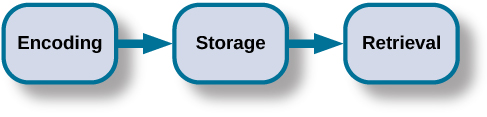
Figure 8.2図 8.2
Encoding involves the input of information into the memory system. Storage is the retention of the encoded information. Retrieval, or getting the information out of memory and back into awareness, is the third function.
符号化とは、記憶システムに情報を入力することである。貯蔵とは、符号化された情報を保持することである。検索、すなわち情報を記憶から取り出して再び意識にのぼらせることが、第三の機能である。
Encoding符号化
We get information into our brains through a process called encoding, which is the input of information into the memory system. Once we receive sensory information from the environment, our brains label or code it. We organize the information with other similar information and connect new concepts to existing concepts. Encoding information occurs through automatic processing and effortful processing.
英語のヒント
私たちは、符号化と呼ばれる過程を通して情報を脳に取り込む。符号化とは、記憶システムに情報を入力することである。環境から感覚情報を受け取ると、脳はそれにラベルを付ける、つまりコードを割り当てる。私たちは、その情報をほかの似た情報とまとめて整理し、新しい概念を既存の概念に結びつける。情報の符号化は、自動的処理と努力を要する処理を通して行われる。
If someone asks you what you ate for lunch today, more than likely you could recall this information quite easily. This is known as automatic processing, or the encoding of details like time, space, frequency, and the meaning of words. Automatic processing is usually done without any conscious awareness. Recalling the last time you studied for a test is another example of automatic processing. But what about the actual test material you studied? It probably required a lot of work and attention on your part in order to encode that information. This is known as effortful processing (Figure 8.3).
英語のヒント
今日の昼食に何を食べたかと誰かに尋ねられたら、おそらくかなり簡単にその情報を思い出せるだろう。これは自動的処理として知られている。自動的処理とは、時間、空間、頻度、語の意味といった細かな情報の符号化である。自動的処理は、ふつうまったく意識しないうちに行われる。最後にテスト勉強をしたのがいつだったかを思い出すことも、自動的処理のもう一つの例である。では、実際に勉強したテストの内容についてはどうだろうか。その情報を符号化するために、おそらくあなた自身がかなりの労力と注意を払う必要があっただろう。これは努力を要する処理として知られている(図8.3)。
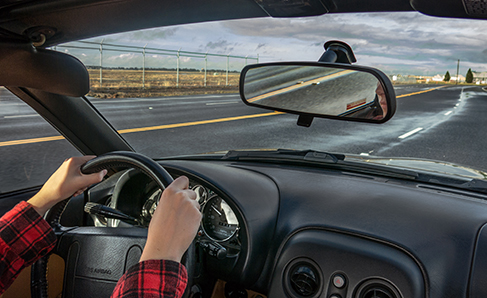


Figure 8.3図 8.3
When you first learn new skills such as driving a car, you have to put forth effort and attention to encode information about how to start a car, how to brake, how to handle a turn, and so on. Once you know how to drive, you can encode additional information about this skill automatically. (credit: Robert Couse-Baker)
車の運転のような新しい技能を初めて学ぶときには、エンジンのかけ方、ブレーキのかけ方、カーブの曲がり方などについての情報を符号化するために、努力と注意を注がなければならない。いったん運転の仕方が分かれば、この技能についての追加の情報は自動的に符号化できる。(出典:Robert Couse-Baker)
What are the most effective ways to ensure that important memories are well encoded? Even a simple sentence is easier to recall when it is meaningful (Anderson, 1984). Read the following sentences (Bransford & McCarrell, 1974), then look away and count backwards from 30 by threes to zero, and then try to write down the sentences (no peeking back at this page!).
英語のヒント
重要な記憶がしっかり符号化されるようにするには、どのような方法が最も効果的だろうか。単純な文でさえ、意味があるときのほうが思い出しやすい(Anderson, 1984)。次の文を読み(Bransford & McCarrell, 1974)、それから目をそらして30から3ずつ0まで逆に数え、その後で文を書き出してみよう(このページを見返してはいけない!)。
- The notes were sour because the seams split.音が調子外れになったのは、縫い目が裂けたからだ。
- The voyage wasn't delayed because the bottle shattered.航海が遅れなかったのは、瓶が粉々に割れたからだ。
- The haystack was important because the cloth ripped.干し草の山が重要だったのは、布が裂けたからだ。
How well did you do? By themselves, the statements that you wrote down were most likely confusing and difficult for you to recall. Now, try writing them again, using the following prompts: bagpipe, ship christening, and parachutist. Next count backwards from 40 by fours, then check yourself to see how well you recalled the sentences this time. You can see that the sentences are now much more memorable because each of the sentences was placed in context. Material is far better encoded when you make it meaningful.
英語のヒント
どれくらいうまくできただろうか。書き出した文は、それだけでは、おそらくわけが分からず、思い出すのも難しかったはずである。では、バグパイプ、船の命名式、パラシュート降下者という手がかりを使って、もう一度書いてみよう。次に40から4ずつ逆に数え、それから、今回は文をどれくらいうまく思い出せたかを自分で確かめてみよう。それぞれの文が文脈の中に置かれたので、今度はずっと覚えやすくなっていることが分かるだろう。題材は、意味のあるものにしたときのほうがはるかによく符号化される。
There are three types of encoding. The encoding of words and their meaning is known as semantic encoding. It was first demonstrated by William Bousfield (1935) in an experiment in which he asked people to memorize words. The 60 words were actually divided into 4 categories of meaning, although the participants did not know this because the words were randomly presented. When they were asked to remember the words, they tended to recall them in categories, showing that they paid attention to the meanings of the words as they learned them.
英語のヒント
符号化には三つの種類がある。語とその意味の符号化は、意味的符号化として知られている。意味的符号化を初めて実証したのはウィリアム・バウスフィールド(1935)で、その実験では人々に単語を覚えるよう求めた。60個の単語は実は意味によって4つのカテゴリーに分けられていたが、単語はランダムな順序で提示されたので、参加者はそのことを知らなかった。単語を思い出すよう求められると、参加者はカテゴリーごとにまとめて再生する傾向があった。これは、参加者が単語を覚えながら、その意味に注意を向けていたことを示している。
Visual encoding is the encoding of images, and acoustic encoding is the encoding of sounds, words in particular. To see how visual encoding works, read over this list of words: car, level, dog, truth, book, value. If you were asked later to recall the words from this list, which ones do you think you’d most likely remember? You would probably have an easier time recalling the words car, dog, and book, and a more difficult time recalling the words level, truth, and value. Why is this? Because you can recall images (mental pictures) more easily than words alone. When you read the words car, dog, and book you created images of these things in your mind. These are concrete, high-imagery words. On the other hand, abstract words like level, truth, and value are low-imagery words. High-imagery words are encoded both visually and semantically (Paivio, 1986), thus building a stronger memory.
英語のヒント
視覚的符号化はイメージの符号化であり、音響的符号化は音、とりわけ言葉の符号化である。視覚的符号化がどのように働くかを確かめるために、次の単語のリストに目を通してみよう。車、水準、犬、真実、本、価値。後でこのリストの単語を思い出すよう求められたら、どの単語を最も思い出しやすいと思うだろうか。おそらく、車、犬、本という単語は比較的楽に思い出せるが、水準、真実、価値という単語を思い出すのはより難しいだろう。それはなぜだろうか。イメージ(心に浮かぶ絵)は、言葉だけよりも思い出しやすいからである。車、犬、本という単語を読んだとき、あなたは心の中でそれらの物のイメージをつくり出した。これらは具体的で心像性の高い語である。一方、水準、真実、価値のような抽象的な語は、心像性の低い語である。心像性の高い語は視覚的にも意味的にも符号化され(Paivio, 1986)、そのためより強い記憶がつくられる。
Now let’s turn our attention to acoustic encoding. You are driving in your car and a song comes on the radio that you haven’t heard in at least 10 years, but you sing along, recalling every word. In the United States, children often learn the alphabet through song, and they learn the number of days in each month through rhyme: “Thirty days hath September, / April, June, and November; / All the rest have thirty-one, / Save February, with twenty-eight days clear, / And twenty-nine each leap year.” These lessons are easy to remember because of acoustic encoding. We encode the sounds the words make. This is one of the reasons why much of what we teach young children is done through song, rhyme, and rhythm.
英語のヒント
次に、音響的符号化に目を向けよう。車を運転していると、少なくとも10年は聞いていなかった歌がラジオから流れてくる。それでもあなたは、歌詞を一語残らず思い出しながら一緒に歌う。アメリカでは、子どもたちはしばしば歌でアルファベットを覚え、各月の日数を韻を踏んだ詩で覚える。「30日あるのは9月、/4月、6月、そして11月。/残りはみな31日、/ただし2月は28日きっかり、/うるう年ごとに29日。」こうした教えが覚えやすいのは、音響的符号化のおかげである。私たちは、言葉が発する音を符号化している。幼い子どもに教えることの多くが歌や韻、リズムを通して行われるのは、これが理由の一つである。
Which of the three types of encoding do you think would give you the best memory of verbal information? Some years ago, psychologists Fergus Craik and Endel Tulving (1975) conducted a series of experiments to find out. Participants were given words along with questions about them. The questions required the participants to process the words at one of the three levels. The visual processing questions included such things as asking the participants about the font of the letters. The acoustic processing questions asked the participants about the sound or rhyming of the words, and the semantic processing questions asked the participants about the meaning of the words. After participants were presented with the words and questions, they were given an unexpected recall or recognition task.
英語のヒント
三つの符号化のうち、言語情報を最もよく記憶できるのはどれだと思うだろうか。以前、心理学者のファーガス・クレイクとエンデル・タルヴィング(1975)は、それを確かめるために一連の実験を行った。参加者には、単語とともに、その単語についての質問が与えられた。質問は、参加者が三つの水準のいずれかで単語を処理するよう求めるものだった。視覚的処理の質問には、たとえば文字の書体について参加者に尋ねるものがあった。音響的処理の質問は単語の音や韻について、意味的処理の質問は単語の意味について参加者に尋ねた。単語と質問を提示された後、参加者は予告なしに再生課題または再認課題を与えられた。
Words that had been encoded semantically were better remembered than those encoded visually or acoustically. Semantic encoding involves a deeper level of processing than the shallower visual or acoustic encoding. Craik and Tulving concluded that we process verbal information best through semantic encoding, especially if we apply what is called the self-reference effect. The self-reference effect is the tendency for an individual to have better memory for information that relates to oneself in comparison to material that has less personal relevance (Rogers, Kuiper, & Kirker, 1977). Could semantic encoding be beneficial to you as you attempt to memorize the concepts in this chapter?
英語のヒント
意味的に符号化された単語は、視覚的または音響的に符号化された単語よりもよく記憶されていた。意味的符号化は、より浅い視覚的符号化や音響的符号化よりも、深い水準の処理を伴う。クレイクとタルヴィングは、私たちが言語情報を最もよく処理するのは意味的符号化を通してであり、とくに自己関連づけ効果と呼ばれるものを利用する場合にそうだ、と結論づけた。自己関連づけ効果とは、個人的な関連の薄い題材に比べて、自分に関係する情報のほうをよりよく記憶する傾向のことである(Rogers, Kuiper, & Kirker, 1977)。この章の概念を覚えようとするとき、意味的符号化はあなたの役に立ちうるだろうか。