第8章記憶
How to Study Effectively効果的な勉強の方法
Based on the information presented in this chapter, here are some strategies and suggestions to help you hone your study techniques (Figure 8.19). The key with any of these strategies is to figure out what works best for you.
英語のヒント
この章で示した情報をもとに、勉強の技術を磨くのに役立つ方略と提案をいくつか挙げる(図8.19)。どの方略についても、鍵となるのは、自分にとって何がいちばん効果的かを見つけ出すことである。
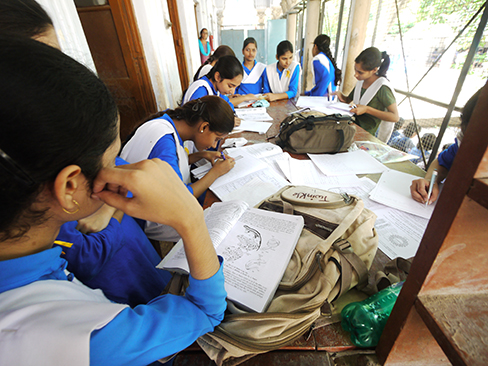

Figure 8.19図 8.19
Memory techniques can be useful when studying for class. (credit: Barry Pousman)
記憶の技法は、授業のための勉強に役立ちうる。(出典:Barry Pousman)
- Use elaborative rehearsal: In a famous article, Fergus Craik and Robert Lockhart (1972) discussed their belief that information we process more deeply goes into long-term memory. Their theory is called levels of processing. If we want to remember a piece of information, we should think about it more deeply and link it to other information and memories to make it more meaningful. For example, if we are trying to remember that the hippocampus is involved with memory processing, we might envision a hippopotamus with excellent memory and then we could better remember the hippocampus.
英語のヒント
精緻化リハーサルを使おう:有名な論文の中で、ファーガス・クレイクとロバート・ロックハート(1972)は、私たちがより深く処理した情報は長期記憶に入る、という自分たちの考えを論じた。二人の理論は処理水準と呼ばれる。ある情報を覚えたいなら、それについてより深く考え、ほかの情報や記憶と結びつけて、より意味のあるものにするべきである。たとえば、海馬(hippocampus)が記憶の処理にかかわっていることを覚えようとしているなら、抜群の記憶力を持つカバ(hippopotamus)を思い浮かべるとよいかもしれない。そうすれば、海馬をよりよく覚えられるだろう。 - Apply the self-reference effect: As you go through the process of elaborative rehearsal, it would be even more beneficial to make the material you are trying to memorize personally meaningful to you. In other words, make use of the self-reference effect. Write notes in your own words. Write definitions from the text, and then rewrite them in your own words. Relate the material to something you have already learned for another class, or think how you can apply the concepts to your own life. When you do this, you are building a web of retrieval cues that will help you access the material when you want to remember it.
英語のヒント
自己関連づけ効果を活用しよう:精緻化リハーサルを進めていく中で、覚えようとしている内容を自分にとって個人的に意味のあるものにすると、さらに効果的だろう。言い換えれば、自己関連づけ効果を利用するのである。ノートは自分の言葉で書こう。教科書から定義を書き写し、それから自分の言葉で書き直そう。学んでいる内容を、ほかの授業ですでに学んだことと関連づけたり、その概念を自分の生活にどう当てはめられるかを考えたりしよう。そうすると、覚えておきたいときにその内容にアクセスするのを助ける、検索手がかりの網の目を築いていることになる。 - Use distributed practice: Study across time in short durations rather than trying to cram it all in at once. Memory consolidation takes time, and studying across time allows time for memories to consolidate. In addition, cramming can cause the links between concepts to become so active that you get stuck in a link, and it prevents you from accessing the rest of the information that you learned.
英語のヒント
分散学習を使おう:一度に全部を詰め込もうとするのではなく、短い時間に分けて、時間をかけて勉強しよう。記憶の固定化には時間がかかる。時間をかけて勉強すれば、記憶が固定化するための時間ができる。さらに、詰め込み勉強をすると、概念どうしのつながりがあまりに活性化して、一つのつながりにはまって抜け出せなくなることがあり、そのせいで、学んだほかの情報にアクセスできなくなってしまう。 - Rehearse, rehearse, rehearse: Review the material over time, in spaced and organized study sessions. Organize and study your notes, and take practice quizzes/exams. Link the new information to other information you already know well.
英語のヒント
リハーサル、リハーサル、リハーサル:間隔を空け、計画的に組んだ勉強の時間を設けて、時間をかけて内容を復習しよう。ノートを整理して勉強し、練習用の小テストや模擬試験を受けよう。新しい情報を、すでによく知っているほかの情報と結びつけよう。 - Study efficiently: Students are great highlighters, but highlighting is not very efficient because students spend too much time studying the things they already learned. Instead of highlighting, use index cards. Write the question on one side and the answer on the other side. When you study, separate your cards into those you got right and those you got wrong. Study the ones you got wrong and keep sorting. Eventually, all your cards will be in the pile you answered correctly.
英語のヒント
効率よく勉強しよう:学生はマーカーを引くのが大得意だが、マーカーを引くのはあまり効率的ではない。すでに覚えたことの勉強に時間をかけすぎてしまうからである。マーカーを引く代わりに、インデックスカードを使おう。片面に問題を、もう片面に答えを書こう。勉強するときには、カードを正解したものと間違えたものに分けよう。間違えたカードを勉強し、分け続けよう。最終的には、すべてのカードが正解した山に入るだろう。 - Be aware of interference: To reduce the likelihood of interference, study during a quiet time without interruptions or distractions (like television or music).
英語のヒント
干渉に気をつけよう:干渉が起こる可能性を減らすために、邪魔や気を散らすもの(テレビや音楽など)のない静かな時間に勉強しよう。 - Keep moving: Of course you already know that exercise is good for your body, but did you also know it’s also good for your mind? Research suggests that regular aerobic exercise (anything that gets your heart rate elevated) is beneficial for memory (van Praag, 2008). Aerobic exercise promotes neurogenesis: the growth of new brain cells in the hippocampus, an area of the brain known to play a role in memory and learning.
英語のヒント
体を動かし続けよう:運動が体によいことはもちろん知っているだろう。では、運動が心にもよいことは知っていただろうか。研究は、定期的な有酸素運動(心拍数を上げるものなら何でもよい)が記憶に有益であることを示唆している(van Praag, 2008)。有酸素運動は神経新生、すなわち海馬における新しい脳細胞の成長を促す。海馬は、記憶と学習に役割を果たすことが知られている脳の領域である。 - Get enough sleep: While you are sleeping, your brain is still at work. During sleep the brain organizes and consolidates information to be stored in long-term memory (Abel & Bäuml, 2013).
英語のヒント
十分に眠ろう:眠っているあいだも、脳は働き続けている。睡眠中、脳は長期記憶に蓄えられることになる情報を整理し、固定化する(Abel & Bäuml, 2013)。 - Make use of mnemonic devices: As you learned earlier in this chapter, mnemonic devices often help us to remember and recall information. There are different types of mnemonic devices, such as the acronym. An acronym is a word formed by the first letter of each of the words you want to remember. For example, even if you live near one, you might have difficulty recalling the names of all five Great Lakes. What if I told you to think of the word Homes? HOMES is an acronym that represents Huron, Ontario, Michigan, Erie, and Superior: the five Great Lakes. Another type of mnemonic device is an acrostic: you make a phrase of all the first letters of the words. For example, if you are taking a math test and you are having difficulty remembering the order of operations, recalling the following sentence will help you: “Please Excuse My Dear Aunt Sally,” because the order of mathematical operations is Parentheses, Exponents, Multiplication, Division, Addition, Subtraction. There also are jingles, which are rhyming tunes that contain key words related to the concept, such as i before e, except after c.
英語のヒント
記憶術を活用しよう:この章の前の方で学んだように、記憶術は情報を覚えたり思い出したりするのに役立つことが多い。記憶術にはさまざまな種類があり、頭字語もその一つである。頭字語とは、覚えたい語それぞれの最初の文字を並べてつくった語である。たとえば、五大湖のどれかの近くに住んでいても、五つの湖すべての名前を思い出すのは難しいかもしれない。では、Homesという語を思い浮かべるように私が言ったらどうだろうか。HOMESは、ヒューロン湖(Huron)、オンタリオ湖(Ontario)、ミシガン湖(Michigan)、エリー湖(Erie)、スペリオル湖(Superior)という五大湖を表す頭字語である。記憶術のもう一つの種類はアクロスティックで、これは語の最初の文字をすべて使って一つの文句をつくるものである。たとえば、数学のテストを受けていて、演算の順序がなかなか思い出せないなら、「Please Excuse My Dear Aunt Sally」という文を思い出せば助けになる。演算の順序は、かっこ(Parentheses)、累乗(Exponents)、掛け算(Multiplication)、割り算(Division)、足し算(Addition)、引き算(Subtraction)だからである。また、ジングルというものもある。これは、概念に関連するキーワードを含んだ、韻を踏んだ歌であり、たとえば「i before e, except after c(cの後を除き、iはeの前)」がそうである。