第8章記憶
Memory Construction and Reconstruction記憶の構築と再構成
The formulation of new memories is sometimes called construction, and the process of bringing up old memories is called reconstruction. Yet as we retrieve our memories, we also tend to alter and modify them. A memory pulled from long-term storage into short-term memory is flexible. New events can be added and we can change what we think we remember about past events, resulting in inaccuracies and distortions. People may not intend to distort facts, but it can happen in the process of retrieving old memories and combining them with new memories (Roediger & DeSoto, 2015).
英語のヒント
新しい記憶の形成は構築と呼ばれることがあり、古い記憶を呼び起こす過程は再構成と呼ばれる。しかし、私たちは記憶を検索するとき、同時にそれを変えたり修正したりしがちでもある。長期貯蔵から短期記憶へ引き出された記憶は、柔軟である。新しい出来事が付け加えられることもあれば、過去の出来事について自分が覚えていると思っている内容を私たちが変えてしまうこともあり、その結果、不正確さや歪みが生じる。人は事実を歪めるつもりはないのかもしれないが、古い記憶を検索し、それを新しい記憶と組み合わせる過程で、歪みは起こりうる(Roediger & DeSoto, 2015)。
Suggestibility被暗示性
When someone witnesses a crime, that person’s memory of the details of the crime is very important in catching the suspect. Because memory is so fragile, witnesses can be easily (and often accidentally) misled due to the problem of suggestibility. Suggestibility describes the effects of misinformation from external sources that leads to the creation of false memories. In the fall of 2002, a sniper in the DC area shot people at a gas station, leaving Home Depot, and walking down the street. These attacks went on in a variety of places for over three weeks and resulted in the deaths of ten people. During this time, as you can imagine, people were terrified to leave their homes, go shopping, or even walk through their neighborhoods. Police officers and the FBI worked frantically to solve the crimes, and a tip hotline was set up. Law enforcement received over 140,000 tips, which resulted in approximately 35,000 possible suspects (Newseum, n.d.).
英語のヒント
誰かが犯罪を目撃したとき、その人が覚えている犯罪の細部は、容疑者を捕まえるうえで非常に重要である。記憶はとてももろいので、目撃者は被暗示性という問題のために、たやすく(しかも多くの場合、意図しない形で)誤った方向へ導かれうる。被暗示性とは、外部の情報源からの誤情報が及ぼす影響のうち、偽記憶の形成につながるものをいう。2002年の秋、ワシントンDC周辺で、狙撃犯が、ガソリンスタンドにいた人、ホーム・デポから出てきた人、通りを歩いていた人を撃った。こうした襲撃はさまざまな場所で3週間以上続き、10人が死亡した。想像がつくように、この間、人々は家を出ることも、買い物に行くことも、自分の住む地域を歩くことさえも怖がった。警察官とFBIは事件を解決しようと必死に動き、情報提供のためのホットラインが設けられた。捜査当局には14万件を超える情報が寄せられ、その結果、容疑者の可能性がある人は約3万5000人にのぼった(Newseum, n.d.)。
Most of the tips were dead ends, until a white van was spotted at the site of one of the shootings. The police chief went on national television with a picture of the white van. After the news conference, several other eyewitnesses called to say that they too had seen a white van fleeing from the scene of the shooting. At the time, there were more than 70,000 white vans in the area. Police officers, as well as the general public, focused almost exclusively on white vans because they believed the eyewitnesses. Other tips were ignored. When the suspects were finally caught, they were driving a blue sedan.
英語のヒント
銃撃現場の一つで白いバンが目撃されるまで、寄せられた情報のほとんどは手がかりにならなかった。警察署長は、白いバンの写真を持って全国放送のテレビに出演した。記者会見の後、ほかにも何人かの目撃者が電話をかけてきて、自分たちも白いバンが銃撃現場から逃げていくのを見たと述べた。当時、その地域には7万台を超える白いバンがあった。警察官も一般の人々も、目撃者の言うことを信じたので、ほとんど白いバンだけに注目した。ほかの情報は無視された。容疑者たちがようやく捕まったとき、彼らが運転していたのは青いセダンだった。
As illustrated by this example, we are vulnerable to the power of suggestion, simply based on something we see on the news. Or we can claim to remember something that in fact is only a suggestion someone made. It is the suggestion that is the cause of the false memory.
英語のヒント
この例が示すように、私たちは、ニュースで見た何かに基づくだけで、暗示の力に影響されやすい。あるいは、実際には誰かがした暗示にすぎないことを、覚えていると主張することもありうる。偽記憶の原因となっているのは、その暗示なのである。
Eyewitness Misidentification目撃者による誤認
Even though memory and the process of reconstruction can be fragile, police officers, prosecutors, and the courts often rely on eyewitness identification and testimony in the prosecution of criminals. However, faulty eyewitness identification and testimony can lead to wrongful convictions (Figure 8.11).
英語のヒント
記憶と再構成の過程はもろいことがあるにもかかわらず、警察官、検察官、裁判所は、犯罪者を訴追する際に、目撃者による犯人の識別と証言にしばしば頼っている。しかし、目撃者による誤った識別や証言は、冤罪につながりうる(図8.11)。
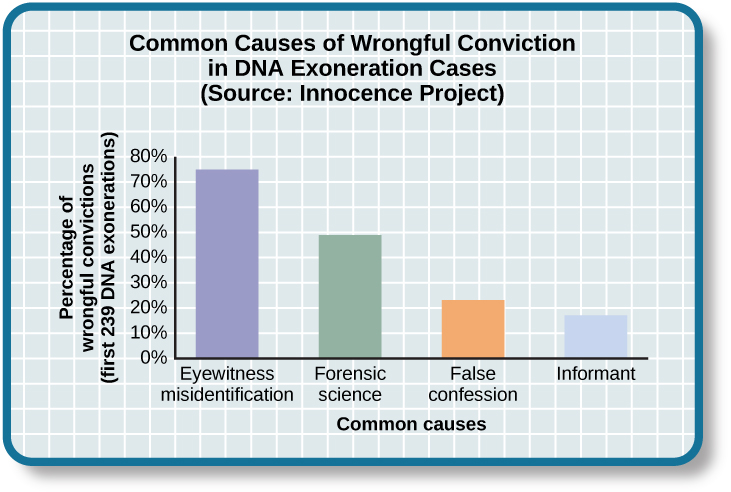

Figure 8.11図 8.11
In studying cases where DNA evidence has exonerated people from crimes, the Innocence Project discovered that eyewitness misidentification is a leading cause of wrongful convictions (Benjamin N. Cardozo School of Law, Yeshiva University, 2009). Note: Multiple causes may play a role in a wrongful conviction.
DNA証拠によって人々の無実が証明された事件を調べる中で、イノセンス・プロジェクトは、目撃者による誤認が冤罪の主な原因の一つであることを見いだした(Benjamin N. Cardozo School of Law, Yeshiva University, 2009)。注:一つの冤罪に複数の原因がかかわっていることもある。
How does this happen? In 1984, Jennifer Thompson, then a 22-year-old college student in North Carolina, was brutally raped at knifepoint. As she was being raped, she tried to memorize every detail of her rapist’s face and physical characteristics, vowing that if she survived, she would help get him convicted. After the police were contacted, a composite sketch was made of the suspect, and Jennifer was shown six photos. She chose two, one of which was of Ronald Cotton. After looking at the photos for 4–5 minutes, she said, “Yeah. This is the one,” and then she added, “I think this is the guy.” When questioned about this by the detective who asked, “You’re sure? Positive?” She said that it was him. Then she asked the detective if she did OK, and he reinforced her choice by telling her she did great. These kinds of unintended cues and suggestions by police officers can lead witnesses to identify the wrong suspect. The district attorney was concerned about her lack of certainty the first time, so she viewed a lineup of seven men. She said she was trying to decide between numbers 4 and 5, finally deciding that Cotton, number 5, “Looks most like him.” He was 22 years old.
英語のヒント
なぜこのようなことが起こるのだろうか。1984年、当時ノースカロライナ州の22歳の大学生だったジェニファー・トンプソンは、ナイフを突きつけられて残忍に強姦された。強姦されているあいだ、彼女は犯人の顔と身体的特徴を細部まで一つ残らず記憶しようとし、もし生き延びたら、犯人を有罪にする手助けをすると心に誓った。警察に通報した後、容疑者の似顔絵が作成され、ジェニファーは6枚の写真を見せられた。彼女は2枚を選び、そのうちの1枚がロナルド・コットンの写真だった。4〜5分間写真を見た後、彼女は「ええ。この人です」と言い、それから「この男だと思います」と付け加えた。刑事に「確かですか。間違いありませんか」と尋ねられると、彼女は、この男だと答えた。それから彼女は、自分はちゃんとできたかと刑事に尋ね、刑事は、よくやったと言って彼女の選択を後押しした。警察官によるこうした意図しない手がかりや暗示は、目撃者に誤った容疑者を識別させてしまうことがある。地方検事は、最初の識別で彼女に確信がなかったことを気にかけていたため、彼女は7人の男性が並ぶ面通しに臨んだ。彼女は4番と5番のどちらにするか決めかねていると言い、最終的に、5番のコットンが「いちばん彼に似ている」と判断した。コットンは22歳だった。
By the time the trial began, Jennifer Thompson had absolutely no doubt that she was raped by Ronald Cotton. She testified at the court hearing, and her testimony was compelling enough that it helped convict him. How did she go from, “I think it’s the guy” and it “Looks most like him,” to such certainty? Gary Wells and Deah Quinlivan (2009) assert it’s suggestive police identification procedures, such as stacking lineups to make the defendant stand out, telling the witness which person to identify, and confirming witnesses choices by telling them “Good choice,” or “You picked the guy.”
英語のヒント
裁判が始まるころには、ジェニファー・トンプソンは、自分を強姦したのはロナルド・コットンだと、まったく疑わなくなっていた。彼女は法廷の審理で証言し、その証言は、彼を有罪にするのに役立つほど説得力のあるものだった。「この男だと思います」「いちばん彼に似ている」という段階から、彼女はどうしてこれほどの確信にまで至ったのだろうか。ゲイリー・ウェルズとディア・クインリヴァン(2009)は、その原因は暗示的な警察の識別手続きにあると主張する。たとえば、被告人が目立つように面通しの顔ぶれを仕組むこと、どの人物を選ぶべきかを目撃者に伝えること、そして「いい選択です」「あなたは犯人を選びました」と言って目撃者の選択を裏づけることである。
After Cotton was convicted of the rape, he was sent to prison for life plus 50 years. After 4 years in prison, he was able to get a new trial. Jennifer Thompson once again testified against him. This time Ronald Cotton was given two life sentences. After serving 11 years in prison, DNA evidence finally demonstrated that Ronald Cotton did not commit the rape, was innocent, and had served over a decade in prison for a crime he did not commit.
英語のヒント
コットンは強姦で有罪とされた後、終身刑に50年を加えた刑で刑務所に送られた。4年間服役した後、彼は新たな裁判を受けることができた。ジェニファー・トンプソンは再び、彼に不利な証言をした。今度は、ロナルド・コットンに二つの終身刑が言い渡された。11年間服役した後、ついにDNA証拠によって、ロナルド・コットンはその強姦を犯しておらず、無実であり、自分が犯していない罪のために10年以上も刑務所で過ごしていたことが証明された。
Ronald Cotton’s story, unfortunately, is not unique. There are also people who were convicted and placed on death row, who were later exonerated. The Innocence Project is a non-profit group that works to exonerate falsely convicted people, including those convicted by eyewitness testimony. To learn more, you can visit http://www.innocenceproject.org.
英語のヒント
残念なことに、ロナルド・コットンの話は特異な例ではない。有罪とされて死刑囚となり、後に無実が証明された人々もいる。イノセンス・プロジェクトは、誤って有罪とされた人々の無実を証明するために活動している非営利団体で、その対象には、目撃証言によって有罪とされた人々も含まれる。さらに詳しく知りたければ、http://www.innocenceproject.org を訪れるとよい。