第8章記憶
Interference干渉
Sometimes information is stored in our memory, but for some reason it is inaccessible. This is known as interference, and there are two types: proactive interference and retroactive interference (Figure 8.17). Have you ever gotten a new phone number or moved to a new address, but right after you tell people the old (and wrong) phone number or address? When the new year starts, do you find you accidentally write the previous year? These are examples of proactive interference: when old information hinders the recall of newly learned information. Retroactive interference happens when information learned more recently hinders the recall of older information. For example, this week you are studying about memory and learn about the Ebbinghaus forgetting curve. Next week you study lifespan development and learn about Erikson's theory of psychosocial development, but thereafter have trouble remembering Ebbinghaus's work because you can only remember Erickson's theory.
英語のヒント
情報が記憶に貯蔵されているのに、何らかの理由でアクセスできないことがある。これは干渉として知られており、順向干渉と逆向干渉の2種類がある(図8.17)。新しい電話番号を手に入れたり、新しい住所に引っ越したりしたのに、その直後に人に古い(間違った)電話番号や住所を教えてしまったことはないだろうか。新しい年が始まったとき、うっかり前の年を書いてしまうことはないだろうか。これらは順向干渉の例である。順向干渉とは、古い情報が、新しく学習した情報の再生を妨げることである。逆向干渉は、より最近学習した情報が、それより古い情報の再生を妨げるときに起こる。たとえば、今週あなたは記憶について勉強し、エビングハウスの忘却曲線について学ぶとする。翌週には生涯発達を勉強してエリクソンの心理社会的発達理論について学ぶが、その後、エリクソンの理論しか思い出せず、エビングハウスの研究を思い出すのに苦労する。
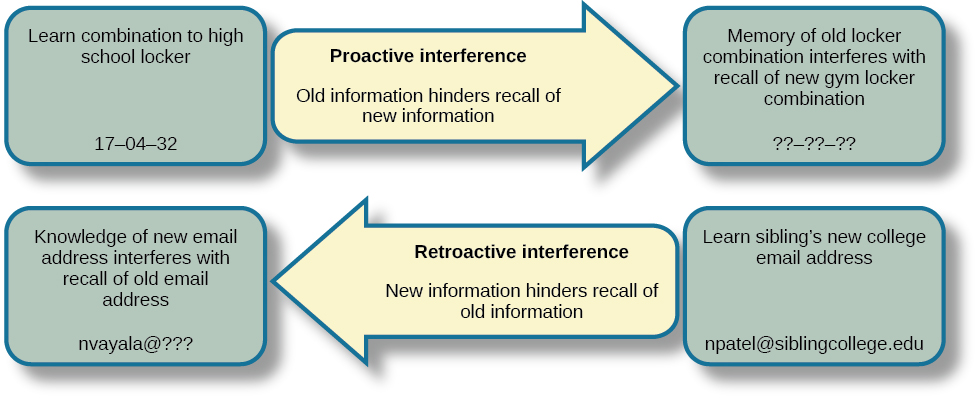

Figure 8.17図 8.17
Sometimes forgetting is caused by a failure to retrieve information. This can be due to interference, either retroactive or proactive.
忘却は、情報を検索できないことによって起こることがある。これは干渉によるものでありうる。その干渉は、逆向干渉のこともあれば順向干渉のこともある。
Summaryまとめ
All of us at times have felt dismayed, frustrated, and even embarrassed when our memories have failed us. Our memory is flexible and prone to many errors, which is why eyewitness testimony has been found to be largely unreliable. There are several reasons why forgetting occurs. In cases of brain trauma or disease, forgetting may be due to amnesia. Another reason we forget is due to encoding failure. We can’t remember something if we never stored it in our memory in the first place. Schacter presents seven memory errors that also contribute to forgetting. Sometimes, information is actually stored in our memory, but we cannot access it due to interference. Proactive interference happens when old information hinders the recall of newly learned information. Retroactive interference happens when information learned more recently hinders the recall of older information.
私たちは誰でも、記憶に裏切られて、ときにうろたえ、いらだち、さらには恥ずかしい思いまでしたことがある。私たちの記憶は柔軟で、多くの誤りを犯しやすい。目撃証言がおおむね信頼できないことが明らかにされてきたのは、そのためである。忘却が起こる理由はいくつかある。脳の外傷や病気の場合には、忘却は健忘によるものかもしれない。私たちが忘れるもう一つの理由は、符号化の失敗である。そもそも記憶に貯蔵していなければ、それを思い出すことはできない。シャクターは、同じく忘却の一因となる七つの記憶の誤りを示している。情報が実際には記憶に貯蔵されているのに、干渉のためにアクセスできないこともある。順向干渉は、古い情報が新しく学習した情報の再生を妨げるときに起こる。逆向干渉は、より最近学習した情報が、それより古い情報の再生を妨げるときに起こる。
Review Questions確認問題
Exercise 13問題 13
________ is when our recollections of the past are done in a self-enhancing manner.
________とは、過去の想起が自己を高める方向で行われることである。
- stereotypical biasステレオタイプ的バイアス
- egocentric bias自己中心性バイアス
- hindsight bias後知恵バイアス
- enhancement bias高揚バイアス
Solution解き方
B
B
Exercise 14問題 14
Tip-of-the-tongue phenomenon is also known as ________.
舌先現象は、________とも呼ばれる。
- persistence持続性
- misattribution誤帰属
- transience一過性
- blocking妨害
Solution解き方
D
D
Exercise 15問題 15
The formulation of new memories is sometimes called ________, and the process of bringing up old memories is called ________.
新しい記憶の形成は________と呼ばれることがあり、古い記憶を呼び起こす過程は________と呼ばれる。
- construction; reconstruction構築;再構成
- reconstruction; construction再構成;構築
- production; reproduction生産;再生産
- reproduction; production再生産;生産
Solution解き方
A
A
Critical Thinking Questions考察問題
Exercises 16–17練習問題 16–17
Exercise 16問題 16
Compare and contrast the two types of interference.
2種類の干渉を比較し、対比せよ。
Solution解き方
There are two types of interference: retroactive and proactive. Both are types of forgetting caused by a failure to retrieve information. With retroactive interference, new information hinders the ability to recall older information. With proactive interference, it’s the opposite: old information hinders the recall of newly learned information.
干渉には、逆向干渉と順向干渉の2種類がある。どちらも、情報を検索できないことによって起こる忘却の一種である。逆向干渉では、新しい情報が、より古い情報を再生する能力を妨げる。順向干渉ではその逆で、古い情報が、新しく学習した情報の再生を妨げる。
Exercise 17問題 17
Compare and contrast the two types of amnesia.
2種類の健忘を比較し、対比せよ。
Solution解き方
There are two types of amnesia: retrograde and anterograde. Both involve the loss of long-term memory that occurs as the result of disease, physical trauma, or psychological trauma. With anterograde amnesia, you cannot remember new information; however, you can remember information and events that happened prior to your injury. Retrograde amnesia is the exact opposite: you experience loss of memory for events that occurred before the trauma.
健忘には、逆向性健忘と前向性健忘の2種類がある。どちらも、病気、身体的外傷、心理的外傷の結果として生じる長期記憶の喪失を伴う。前向性健忘では、新しい情報を記憶できないが、けがをする前に起こった情報や出来事は思い出すことができる。逆向性健忘はそのちょうど逆で、外傷より前に起こった出来事についての記憶を失う。
Personal Application Questions自分に当てはめて考える問題
Exercise 18問題 18
Which of the seven memory errors presented by Schacter have you committed? Provide an example of each one.
シャクターが示した七つの記憶の誤りのうち、あなたはどれを犯したことがあるか。それぞれについて例を一つ挙げよ。
Exercise 19問題 19
Jurors place a lot of weight on eyewitness testimony. Imagine you are an attorney representing a defendant who is accused of robbing a convenience store. Several eyewitnesses have been called to testify against your client. What would you tell the jurors about the reliability of eyewitness testimony?
陪審員は目撃証言を非常に重視する。あなたが、コンビニエンスストアで強盗をしたとして訴えられている被告人の弁護士だと想像してみよう。何人かの目撃者が、あなたの依頼人に不利な証言をするために呼ばれている。あなたは、目撃証言の信頼性について陪審員に何と言うだろうか。
absentmindedness
不注意
lapses in memory that are caused by breaks in attention or our focus being somewhere else
注意が途切れたり、注意がどこか別のところに向いていたりすることによって起こる記憶の欠落
amnesia
健忘
loss of long-term memory that occurs as the result of disease, physical trauma, or psychological trauma
病気、身体的外傷、心理的外傷の結果として生じる長期記憶の喪失
anterograde amnesia
前向性健忘
loss of memory for events that occur after the brain trauma
脳の外傷の後に起こる出来事についての記憶の喪失
bias
バイアス
how feelings and view of the world distort memory of past events
感情や世界観が、過去の出来事の記憶を歪めること
blocking
妨害
memory error in which you cannot access stored information
貯蔵されている情報にアクセスできない記憶の誤り
construction
構築
formulation of new memories
新しい記憶の形成
false memory syndrome
偽記憶症候群
recall of false autobiographical memories
偽りの自伝的記憶の想起
forgetting
忘却
loss of information from long-term memory
長期記憶から情報が失われること
misattribution
誤帰属
memory error in which you confuse the source of your information
情報の出どころを混同する記憶の誤り
misinformation effect paradigm
誤情報効果パラダイム
after exposure to additional and possibly inaccurate information, a person may misremember the original event
付け加えられた、不正確かもしれない情報にさらされた後で、人がもとの出来事を誤って記憶することがある、という考え
persistence
持続性
failure of the memory system that involves the involuntary recall of unwanted memories, particularly unpleasant ones
望まない記憶、とりわけ不快な記憶を意図せずに想起してしまうという、記憶システムの失敗
proactive interference
順向干渉
old information hinders the recall of newly learned information
古い情報が、新しく学習した情報の再生を妨げること
reconstruction
再構成
process of bringing up old memories that might be distorted by new information
新しい情報によって歪められているかもしれない古い記憶を呼び起こす過程
retroactive interference
逆向干渉
information learned more recently hinders the recall of older information
より最近学習した情報が、それより古い情報の再生を妨げること
retrograde amnesia
逆向性健忘
loss of memory for events that occurred prior to brain trauma
脳の外傷より前に起こった出来事についての記憶の喪失
suggestibility
被暗示性
effects of misinformation from external sources that leads to the creation of false memories
外部の情報源からの誤情報が及ぼす影響のうち、偽記憶の形成につながるもの
transience
一過性
memory error in which unused memories fade with the passage of time
使われない記憶が、時の経過とともに薄れていく記憶の誤り